
Early Life and Roots
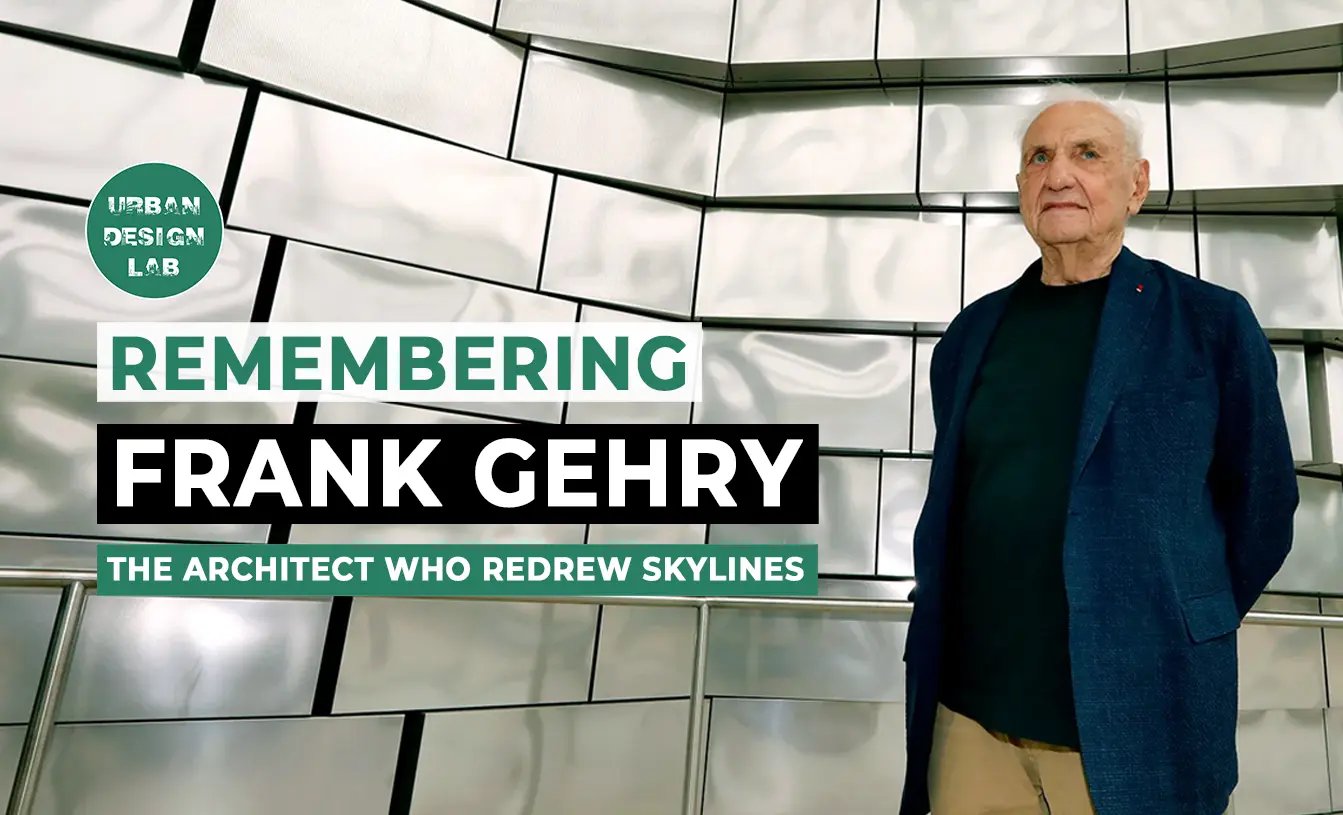
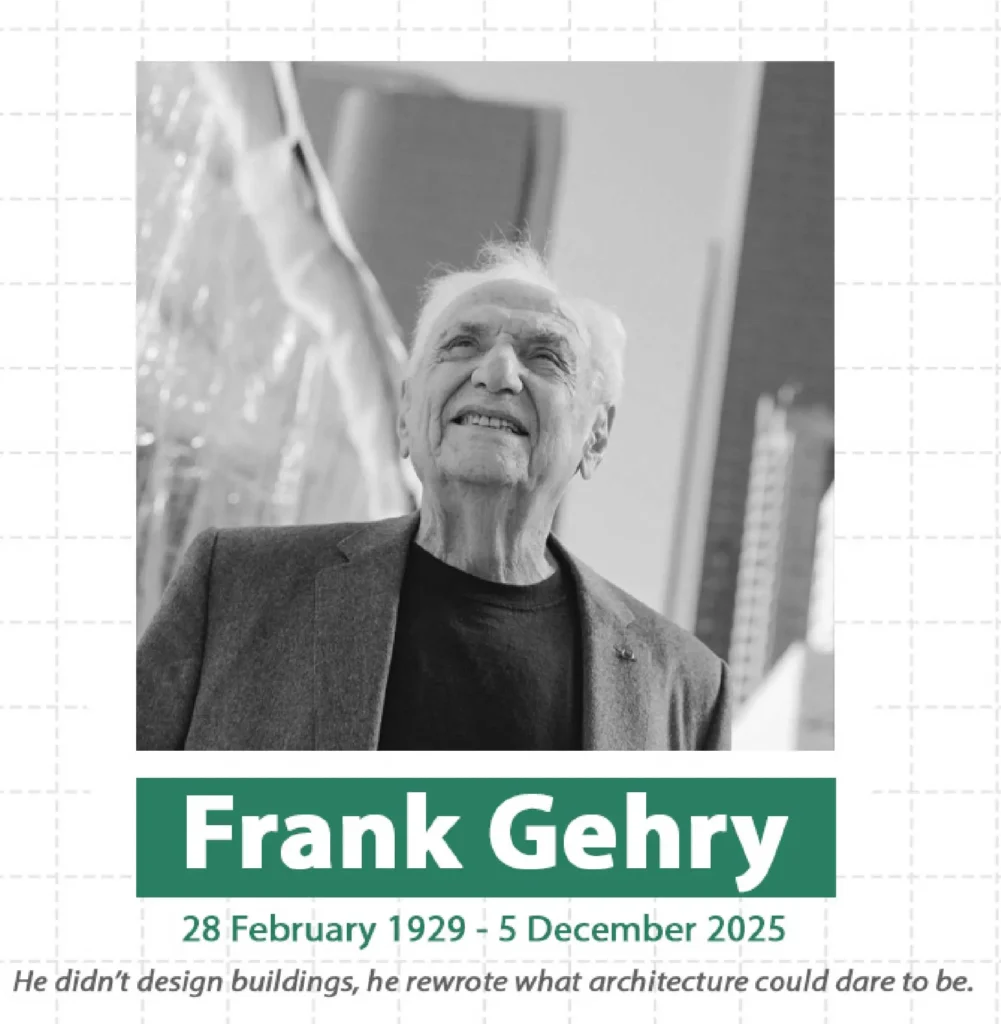
Frank Gehry entered the world in 1929 in Toronto as Frank Owen Goldberg, growing up in a family shaped by immigrant resilience and cultural heritage. His Polish-Jewish mother and American Jewish father exposed him early to stories of adaptation and reinvention, themes that would later echo in his architectural philosophy. Childhood afternoons spent building imaginary cities from scrap wood under the encouraging gaze of his grandmother planted the earliest seeds of spatial curiosity. Those miniature constructions were not just childish play, but an early rehearsal for a lifetime spent challenging the boundaries of form and material.
In 1947 his family relocated to Los Angeles, a move that transformed the trajectory of his life. The vast Californian cityscape, stitched together by freeways, billboards, sun-bleached sheds, and improvised architectural cultures, provided a living laboratory of eclectic influences. LA became an unconventional classroom, offering Gehry a visual and cultural vocabulary unlike anything he could have encountered in Toronto. Even before he took his first professional steps, the city’s chaotic energy began shaping his understanding of structure, texture, and visual rhythm.
Gehry formalised his creative ambitions at the University of Southern California, completing his B.Arch in 1954. USC gave him the discipline and technical grounding that his restless imagination needed. Yet even in these early academic years, he resisted the constraints of conventional modernism, displaying a curiosity for asymmetry, roughness, and experimentation. These foundational years set the stage for an architectural career that would ultimately rewrite how buildings could look, feel, and function.
From Apprenticeship to Independent Vision
Gehry’s professional beginnings unfolded in the structured world of Victor Gruen Associates in Los Angeles, a pioneering practice best known for shaping the modern shopping mall. Here Gehry learned precision, urban logic, and client-driven decision making — skills he would later fracture and rearrange into his own expressive language. His tenure in Paris, working under the refined sensibility of André Remondet, immersed him in European craftsmanship and architectural tradition. The contrast between LA’s improvisation and Paris’s disciplined formalism widened Gehry’s understanding of how buildings negotiate culture, context, and time.
These years of apprenticeship grounded him in the realities of construction, budgets, and professional responsibility, but they also clarified a creative tension. Gehry knew he had something different to say. By 1962, he made the defining decision of his early career: founding his own practice in Los Angeles. That move marked a break from the expected path and allowed him to pursue an expressive freedom that mainstream firms were not prepared to accommodate.
His newly independent studio quickly became a place of experimentation, where unconventional materials, rough surfaces, and sculptural compositions replaced the orthodoxy of postwar modernism. This shift laid the groundwork for the decades of boundary-pushing work that followed. What began as a small, local practice would evolve into Gehry Partners, LLP, a global force associated with some of the most recognizable and culturally transformative buildings of the modern era.
Reinventing Materials and Aesthetic Language
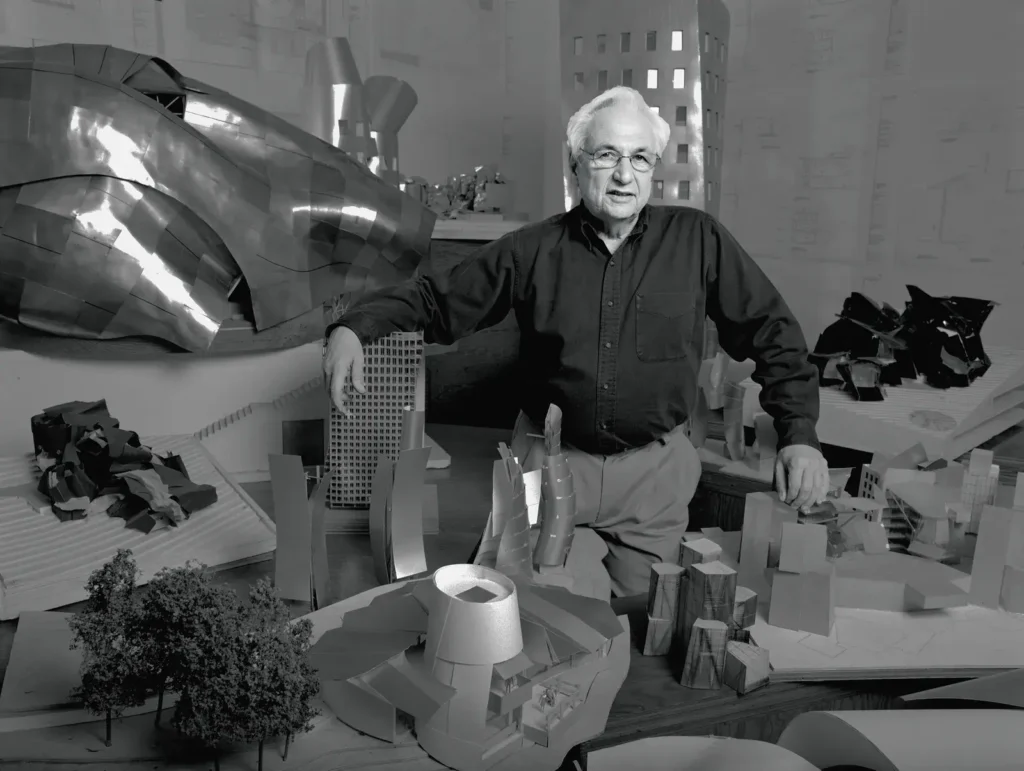
Long before Frank Gehry was celebrated for titanium curves and digitally modelled geometries, his architectural imagination was shaped by the textures of ordinary life. Plywood sheets, corrugated metal, exposed timber, and even chain-link fencing were not mere building supplies in his early work; they were expressive devices. Gehry embraced these modest, utilitarian materials not out of necessity alone, but as a deliberate rejection of the polished perfection that defined mid-century modernism. While many architects of his generation pursued smooth surfaces and elegant minimalism, Gehry gravitated toward the unfinished, the improvised, the raw.
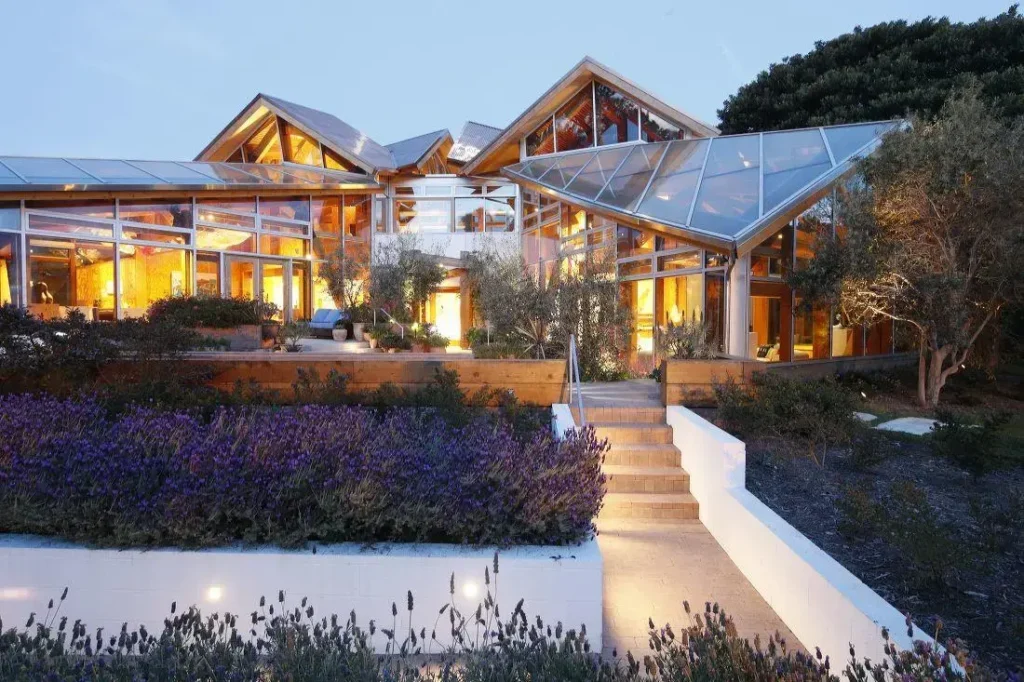
This approach gave his projects a sense of immediacy and human presence. The materials carried the marks of their making, dents, seams, grain, rough cuts, which Gehry elevated into defining visual features. His own Santa Monica residence became a manifesto for this ethos, an experiment in turning everyday material culture into architectural expression. In an era when architecture often distanced itself from messiness, Gehry leaned into it, challenging the profession’s aesthetic hierarchies. Critics labelled him a rebel, but his work revealed something larger: a belief that beauty can emerge from irregularity, from risk, and from the unpolished honesty of the built environment.
GIS Made Easy – Learn to Map, Analyse, and Transform Urban Futures
Global Icons: Rewriting the Skyline
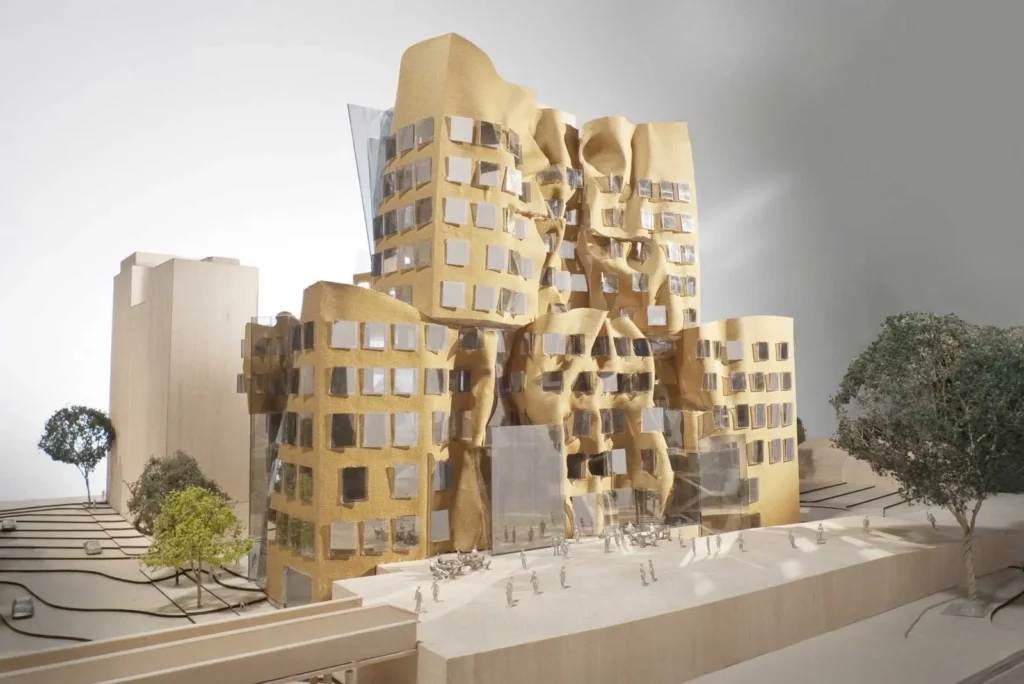
Frank Gehry’s ascent from unconventional Los Angeles experimenter to global architectural figure crystallised with the opening of the Guggenheim Museum Bilbao in 1997. The building, with its sweeping titanium panels and dynamic, almost liquid form, expanded the possibilities of architectural expression and demonstrated how a single structure could catalyse cultural and economic transformation. Bilbao became more than a museum; it became a symbol of urban reinvention, giving rise to what would later be called the “Bilbao effect”, the notion that visionary architecture could reshape a city’s identity and trajectory.
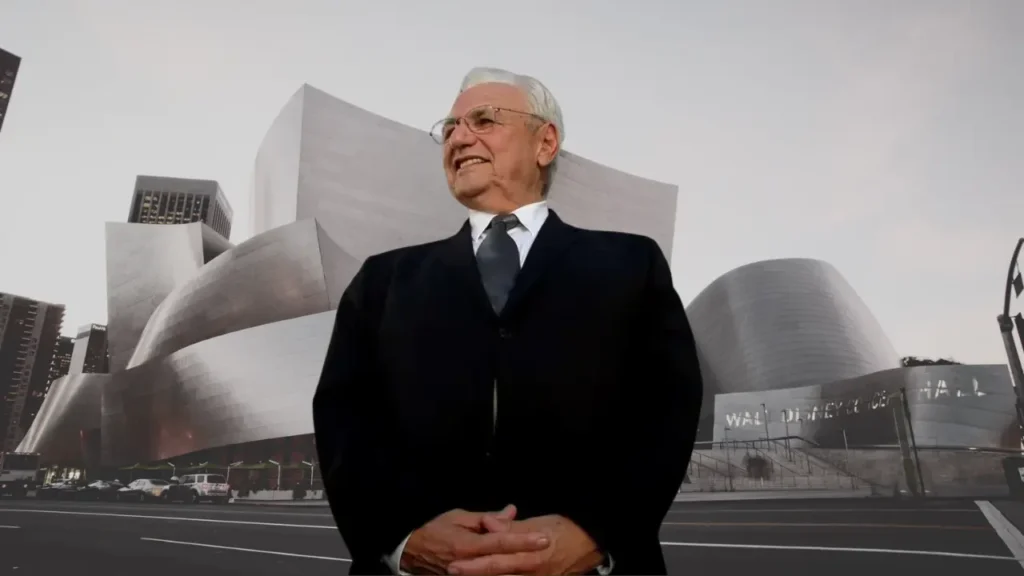
The Walt Disney Concert Hall in Los Angeles, completed in 2003, further solidified Gehry’s stature. Its stainless-steel sails curve outward like a frozen explosion of movement, capturing both the energy of the city and the precision of world-class acoustics inside. It showed that Gehry’s bold forms were not superficial gestures but deeply considered responses to performance, experience, and civic presence. With these works he bridged the distance between sculpture and architecture, creating spaces that were as much cultural icons as functional buildings. Across continents, Gehry’s projects challenged engineers, delighted audiences, and redefined what cities could aspire to. His architecture became a form of public theatre, reshaping skylines while provoking debate about spectacle, innovation, and the role of the architect in shaping collective memory.
Innovation Beyond Form: Technology, Scale, Influence
His firm became a testing ground for new technologies, sophisticated modelling, and collaborative design workflows, influencing generations of architects and reshaping what “buildable vision” meant in the 21st century.
Legacy: A Life That Changed What We Build, and How We Think About Buildings
On December 5, 2025, Gehry died at age 96 in Santa Monica following a brief respiratory illness.

His passing marks the end of a remarkable era. Yet his legacy, in titanium curves, wooden concert halls, daring homes, and the many architects inspired by his example, will endure. Gehry proved that architecture need not be sober, symmetrical, or restrained. It can be playful, expressive, even rebellious. He reminded the world that buildings are storytelling, about identity, possibility, and the power of imagination.
GIS Made Easy – Learn to Map, Analyse, and Transform Urban Futures
Urban Design Lab
About the Author
This is the admin account of Urban Design Lab. This account publishes articles written by team members, contributions from guest writers, and other occasional submissions. Please feel free to contact us if you have any questions or comments.