pritzker architecture prize 2026

The Architect of Unspoken Architecture

Pritzker Architecture Prize 2026: The 2026 Pritzker Architecture Prize, widely regarded as the highest honour in architecture, has been awarded to Chilean architect Smiljan Radić Clarke. Recognized for his experimental and deeply atmospheric architectural work, Radić’s projects explore the emotional and sensory dimensions of space rather than relying on iconic spectacle or formal signatures.

Based in Santiago, Chile, Radić leads the practice Smiljan Radić Clarke, which he founded in 1995. Over three decades, he has developed a body of work characterized by material experimentation, strong connections to landscape, and an architectural language that prioritizes perception, movement, and atmosphere.

With this recognition, Radić becomes the second Chilean architect to win the Pritzker Prize, following Alejandro Aravena, who received the award in 2016.

pritzker architecture prize 2026

Architecture That Resists Easy Explanation

Radić’s architecture often operates in a territory where the experience of space precedes explanation. His buildings appear quiet, elemental, and at times even fragile, encouraging visitors to interpret them through bodily presence rather than visual spectacle.


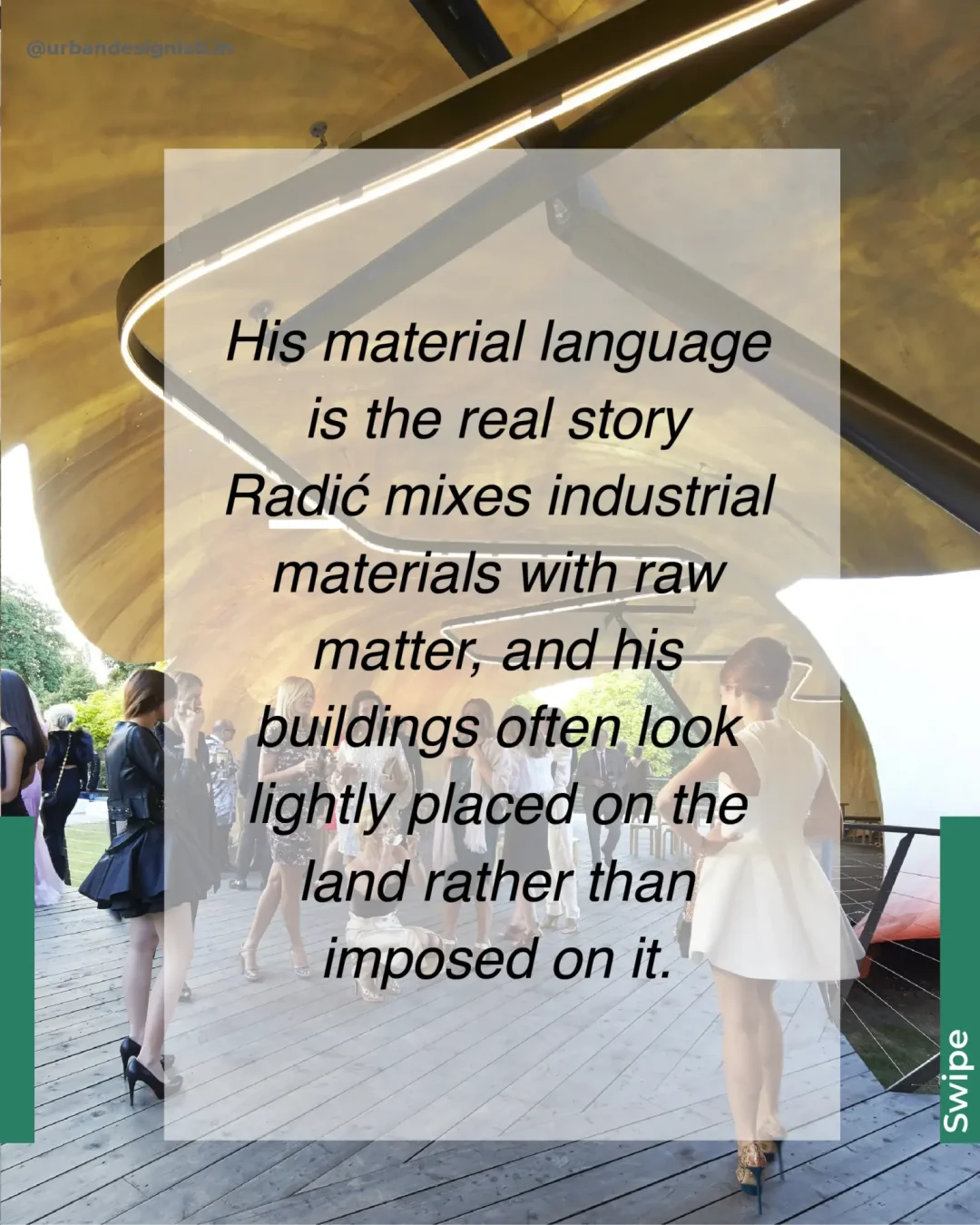
Rather than presenting a fixed style, Radić approaches each project individually, responding carefully to site conditions, material availability, and cultural context. Many of his buildings appear lightly placed on the ground, suggesting a temporary presence rather than a dominating intervention.


The 2026 Pritzker Prize jury highlighted this quality in their citation, noting that Radić’s architecture embraces fragility, impermanence, and experimentation while still creating spaces that are socially open and emotionally powerful.

Pritzker Architecture Prize 2026 Awarded to Smiljan Radić Clarke 2

Early Life and Influences

Smiljan Radić was born in Santiago, Chile, in 1965, into a family shaped by migration and cultural displacement. His paternal grandparents emigrated from the Croatian island of Brač, while his mother’s family had roots in the United Kingdom. Growing up within this mixed cultural background contributed to Radić’s understanding of identity as something that is gradually assembled through experience rather than something fixed or inherited. This awareness of layered identity and place later informed his architectural thinking, particularly his interest in memory, landscape, and the idea that architecture should respond carefully to its surroundings.


Radić studied architecture at the Pontificia Universidad Católica de Chile, one of the country’s leading architecture schools. During his student years he experienced academic difficulties and nearly failed the program, an episode he later described as formative. The setback led him to travel and study architectural history more deeply, broadening his intellectual outlook and reinforcing his interest in architecture as a cultural and philosophical discipline rather than merely a technical profession.


After completing his degree, Radić continued his education at the Istituto Universitario di Architettura di Venezia (IUAV) in Venice, Italy. His time in Venice exposed him to European architectural discourse, historical urban environments, and theoretical debates surrounding architecture and art. These experiences helped shape his experimental approach and his sensitivity to the relationship between built form, history, and landscape.


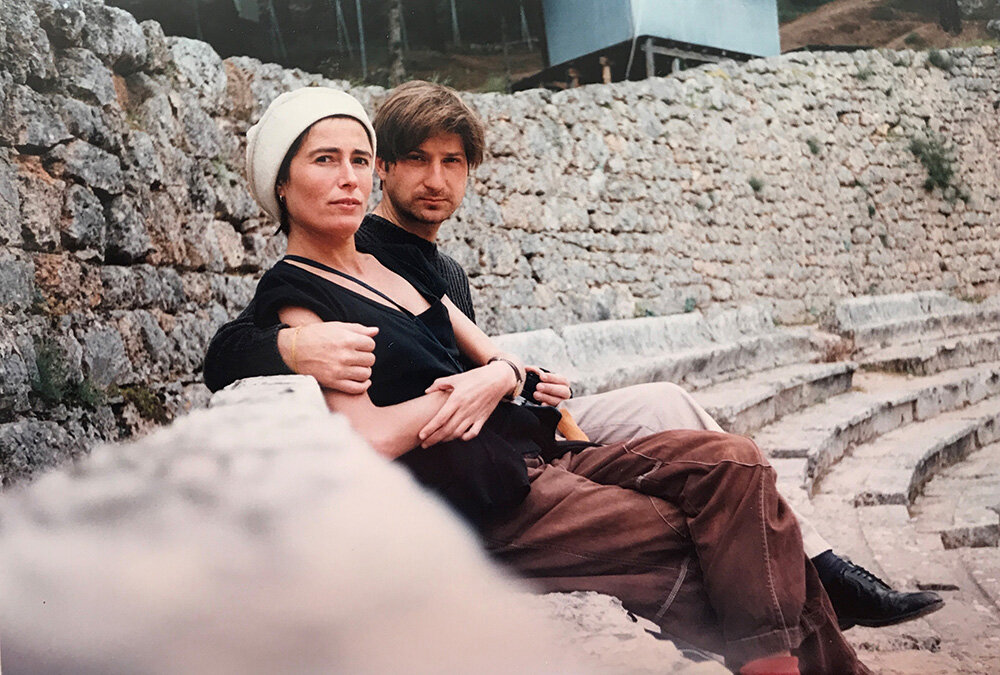
During his early professional years, Radić began a long-standing creative exchange with sculptor Marcela Correa, who later became both his partner and an important collaborator. Correa’s sculptural practice influenced Radić’s approach to materiality and spatial composition, encouraging him to think about architecture not only as construction but also as an artistic exploration of form, texture, and atmosphere.


One of their early collaborative experiments was Casa Chica (1997) in Vilches, Chile. The small house served as a testing ground for ideas that would later appear throughout Radić’s work: an interest in raw materials, close engagement with landscape, and architecture understood as both physical structure and conceptual inquiry. These early influences, including migration, artistic collaboration, and attentive observation of the natural environment, continue to shape the direction of Radić’s architectural practice today.

Allan Jacobs

Material Intelligence and Spatial Experimentation

Material experimentation plays a central role in Smiljan Radić’s architectural practice. Rather than relying on a fixed stylistic language, he often approaches each project as a material investigation, carefully selecting construction systems and materials according to the specific conditions of the site. His buildings frequently combine industrial components with raw or locally sourced materials, creating spaces that feel both tactile and conceptually unexpected. This juxtaposition of refined and rough materials allows his architecture to challenge conventional hierarchies between what is considered permanent or provisional.


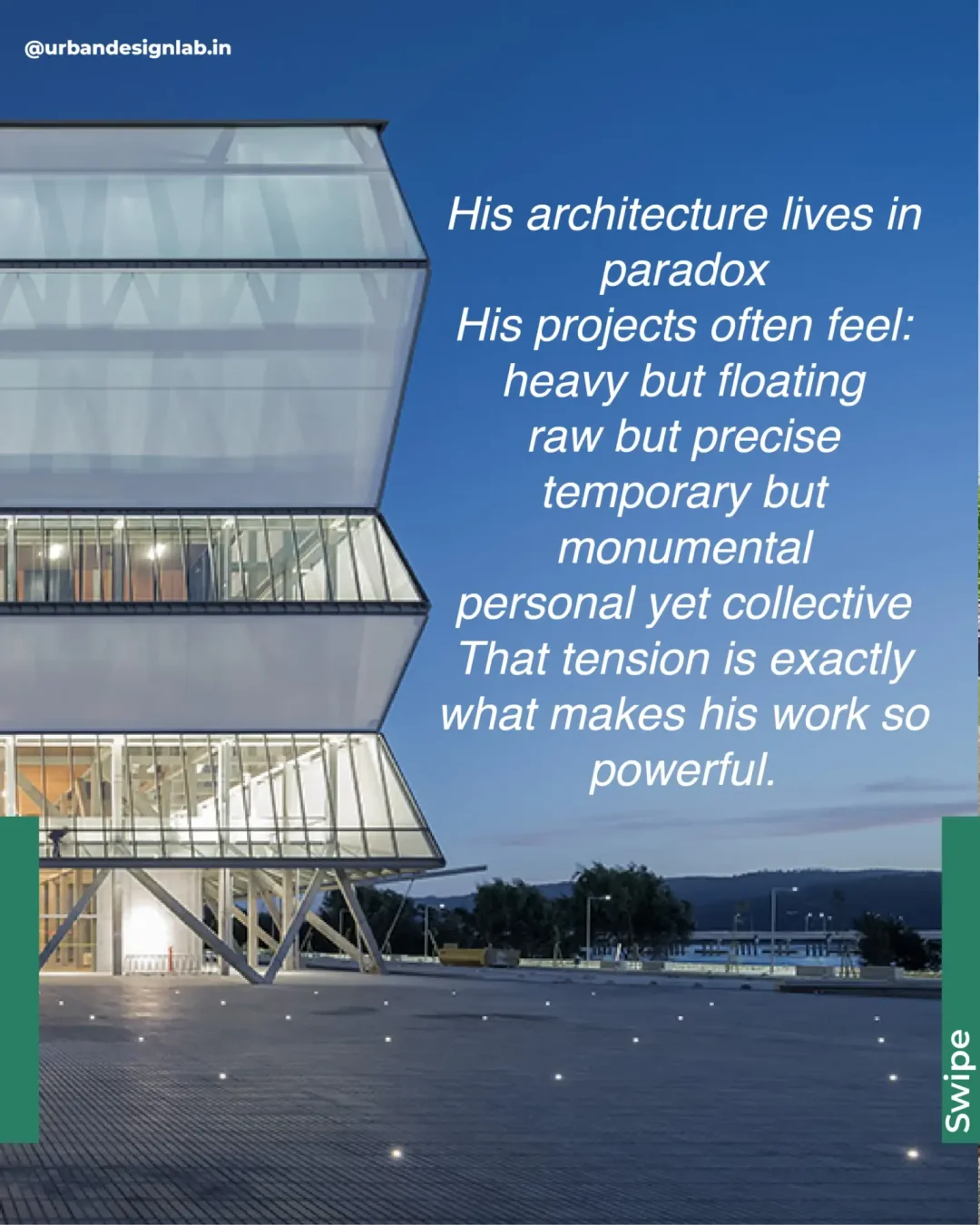
Radić’s work often explores the tension between mass and lightness, where heavy geological materials coexist with delicate membranes or lightweight structural systems. Through this approach, architecture becomes less about visual form and more about how materials interact with light, landscape, and human movement.


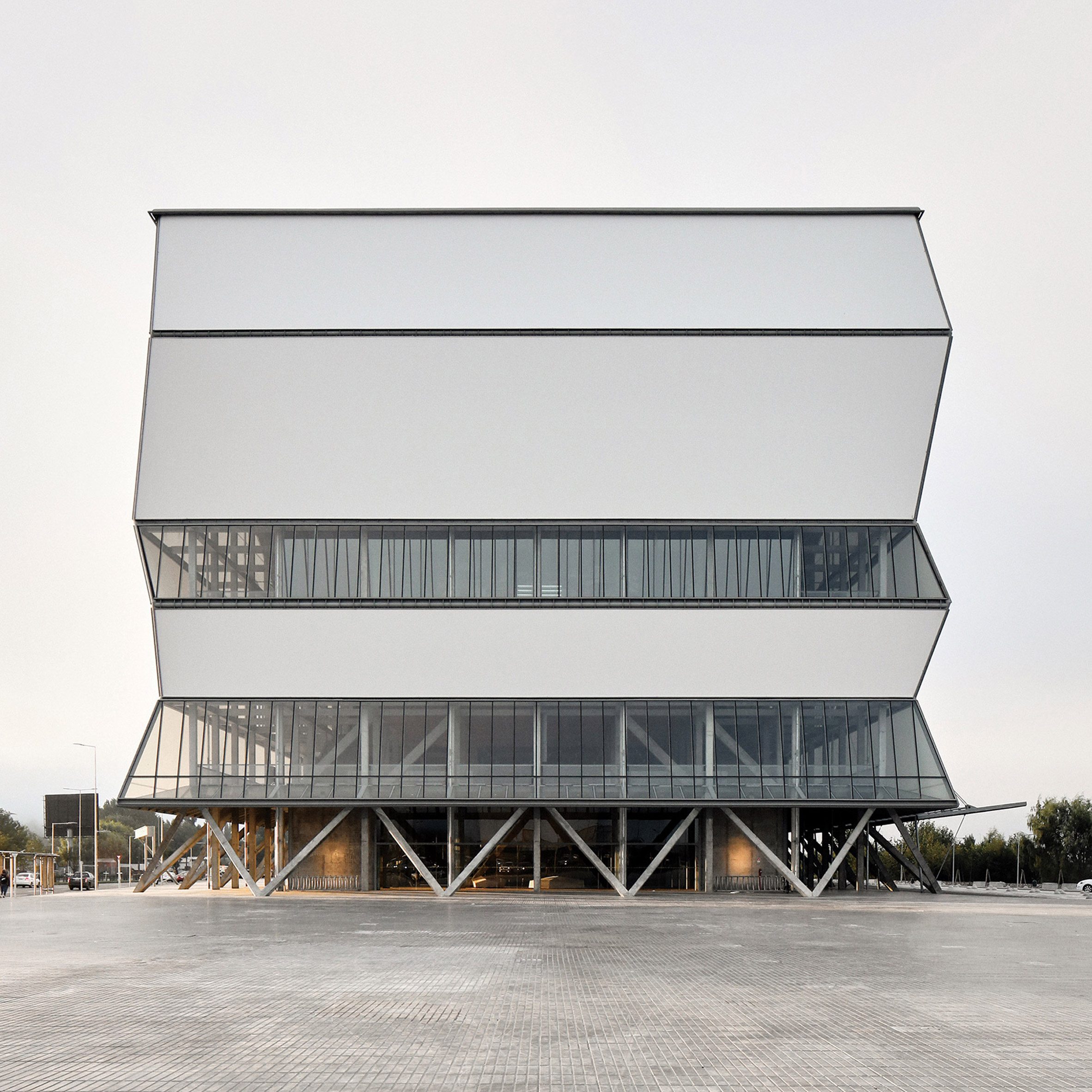
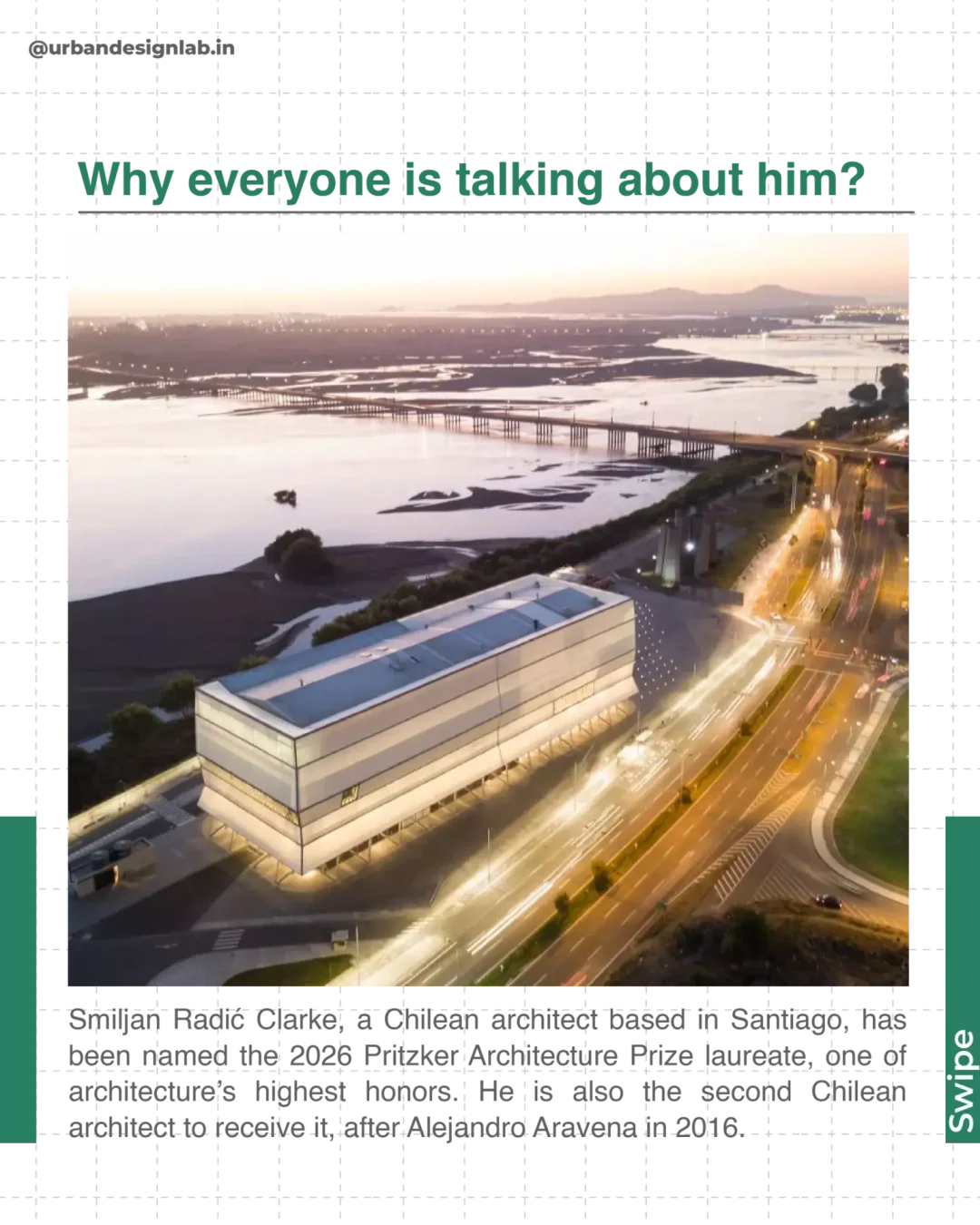
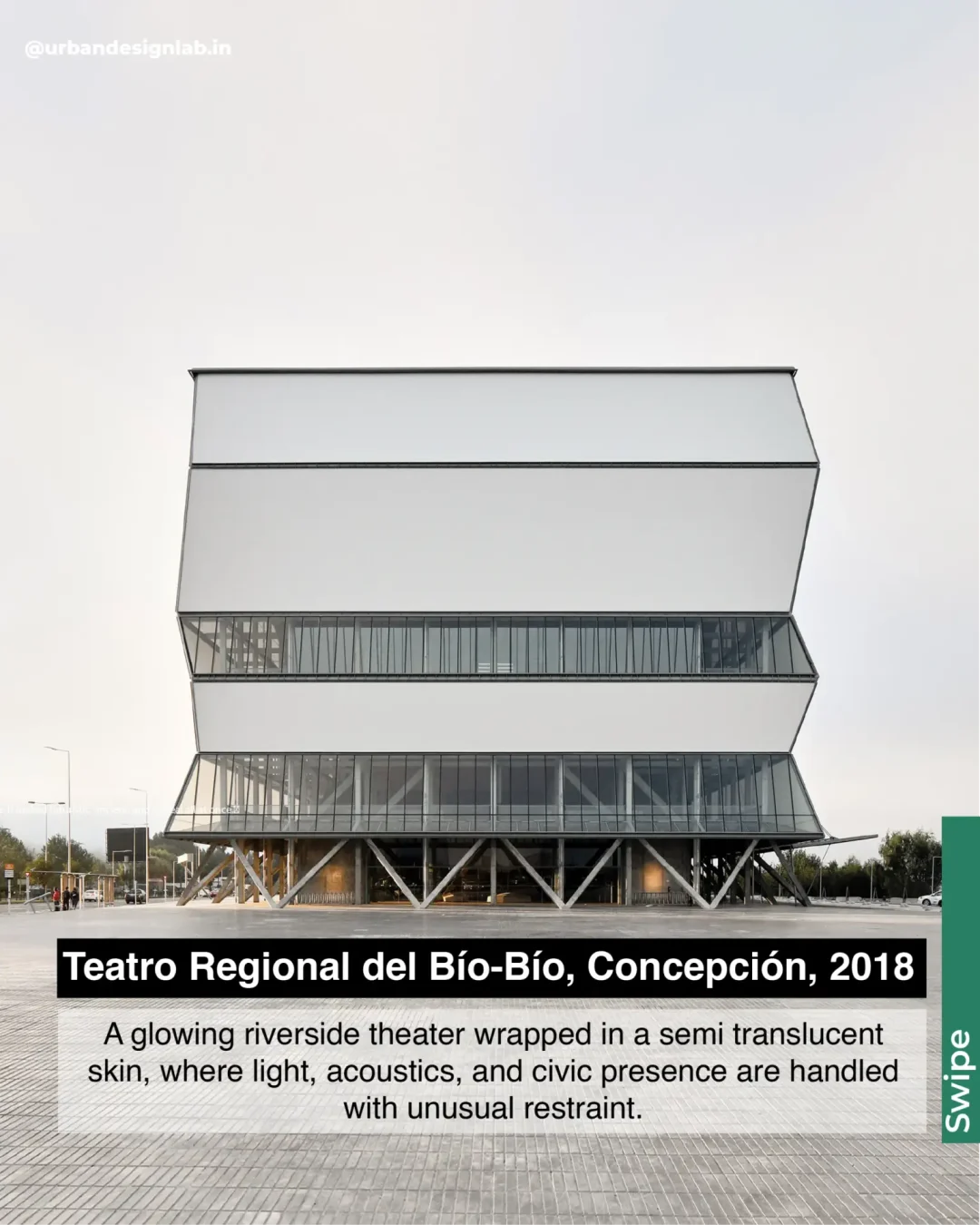
A clear example of this approach can be seen in the Teatro Regional del Bío-Bío in Concepción. The performing arts center is wrapped in a translucent polycarbonate envelope mounted on a steel frame. During the day the façade filters natural light into the interior, while at night the building glows softly along the riverfront, transforming the theater into a luminous urban landmark without relying on monumental mass or elaborate ornamentation.


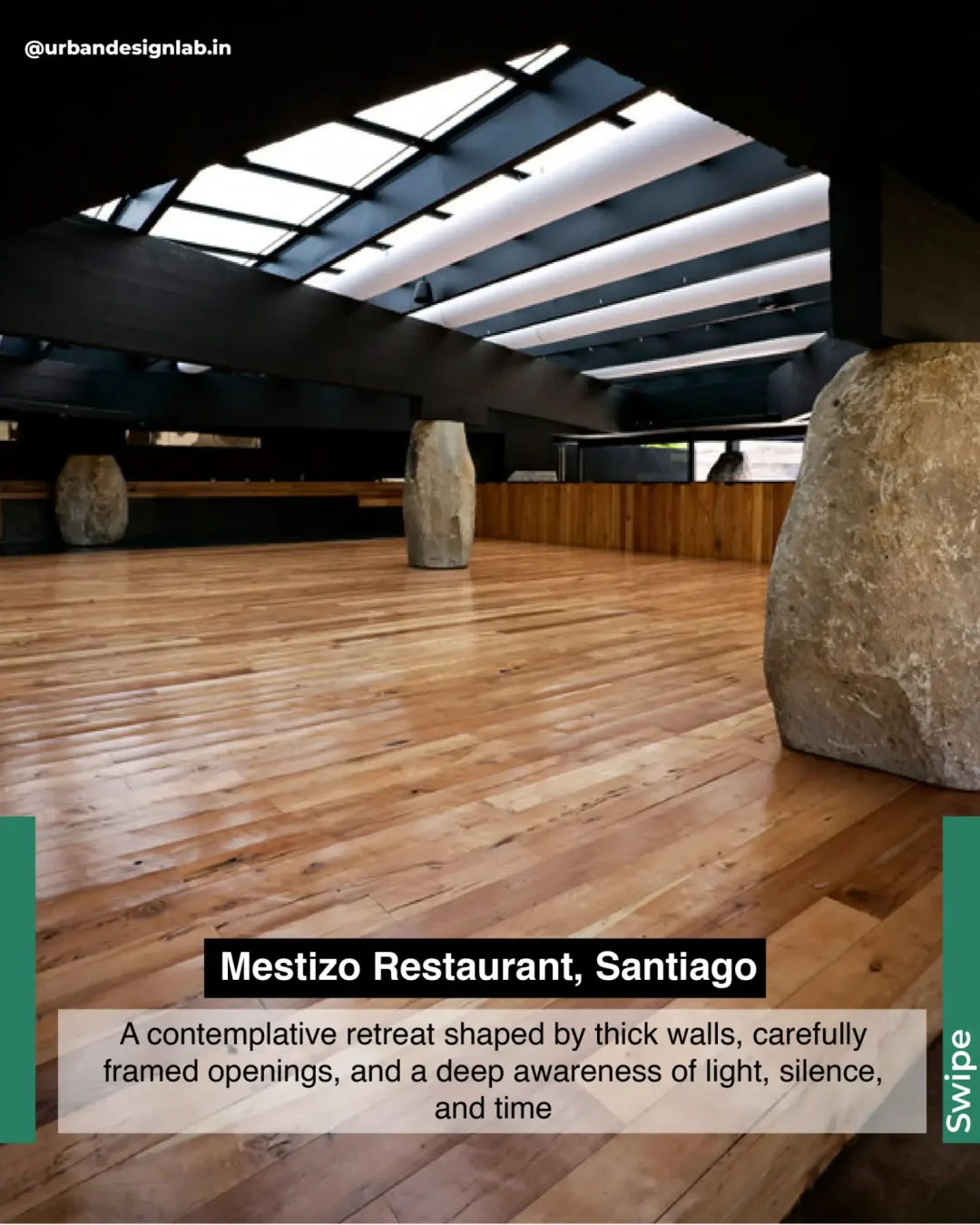
Another well known project is Restaurant Mestizo in Santiago’s Bicentenario Park. Here Radić designed a large horizontal roof supported by massive quarry stones extracted from the surrounding landscape. The stones function both structurally and symbolically, anchoring the building within the terrain while simultaneously creating the impression that the roof is floating above the park. The project dissolves the conventional boundary between building and landscape, turning architecture into an extension of the terrain itself.


This dialogue between natural and industrial materials also appears in many of Radić’s other works. In several projects, rough stone, timber, and concrete are paired with translucent surfaces, steel structures, or lightweight membranes. The resulting buildings often appear simultaneously heavy and fragile, conveying a sense that they are lightly placed on the ground rather than permanently imposed upon it.


Through this material intelligence, Radić transforms ordinary construction elements into spatial experiences that are atmospheric and emotionally resonant. His architecture demonstrates how material choices, when handled with precision and sensitivity to context, can produce powerful architectural environments without relying on spectacle or formal excess.

Pritzker Architecture Prize 2026 Awarded to Smiljan Radić Clarke 5
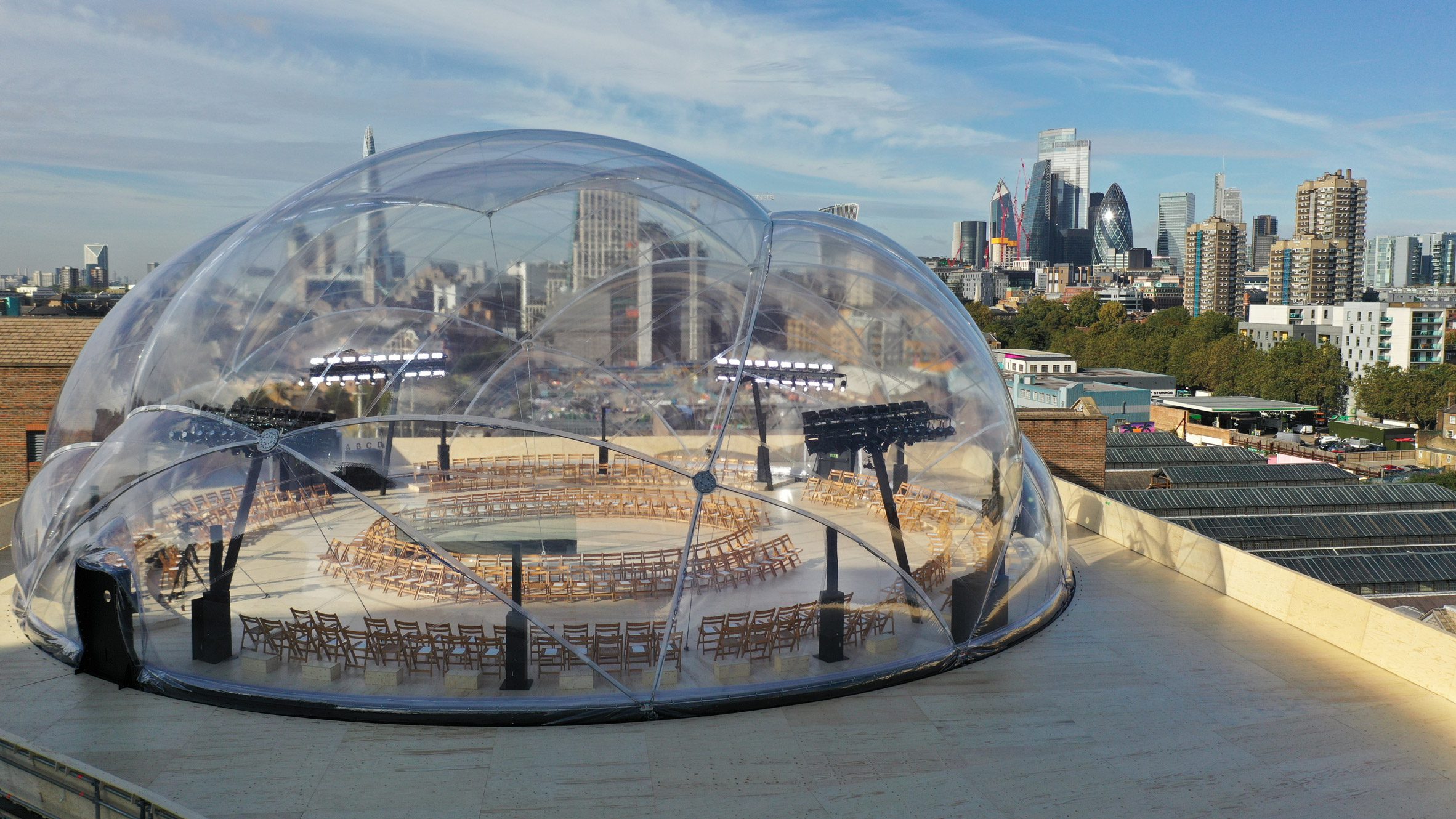
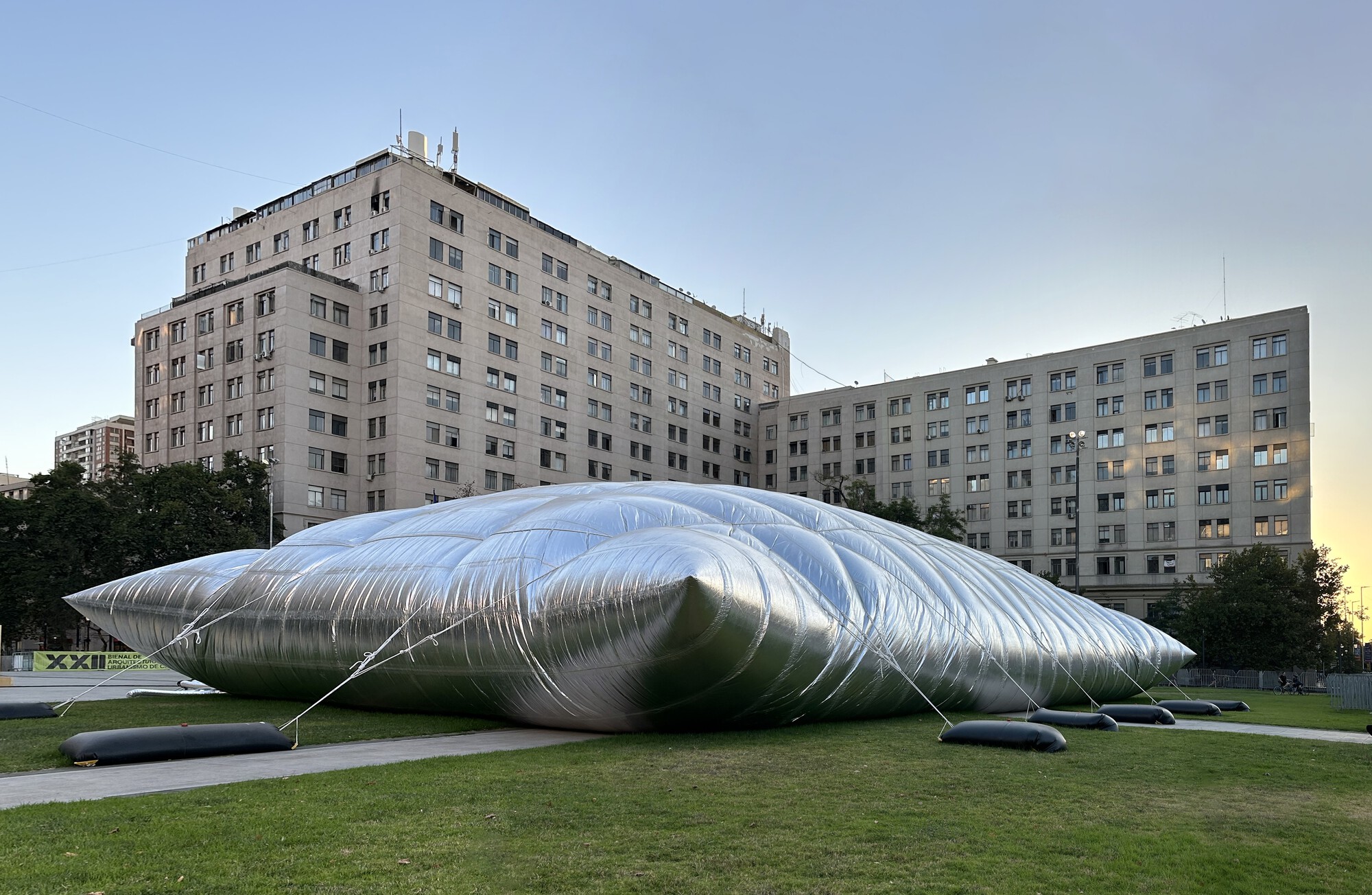
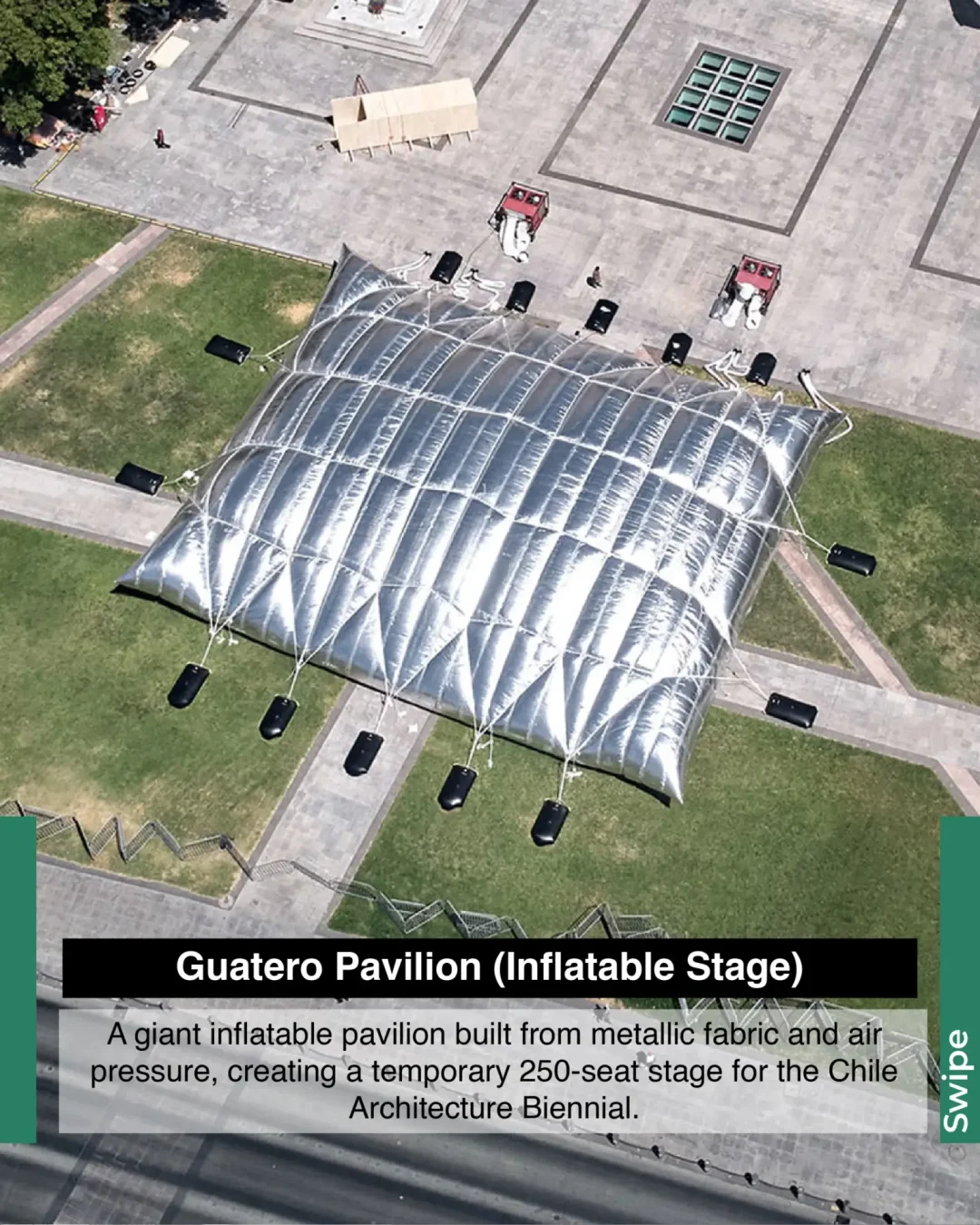
Smiljan Radić creates inflatable stage for Chile's architecture biennial

Key Projects by Smiljan Radić

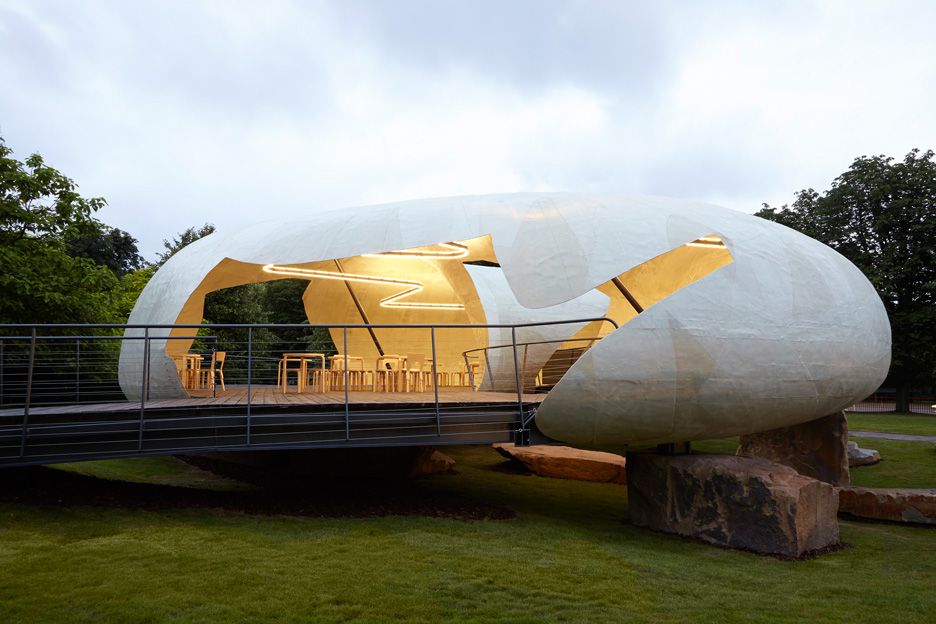
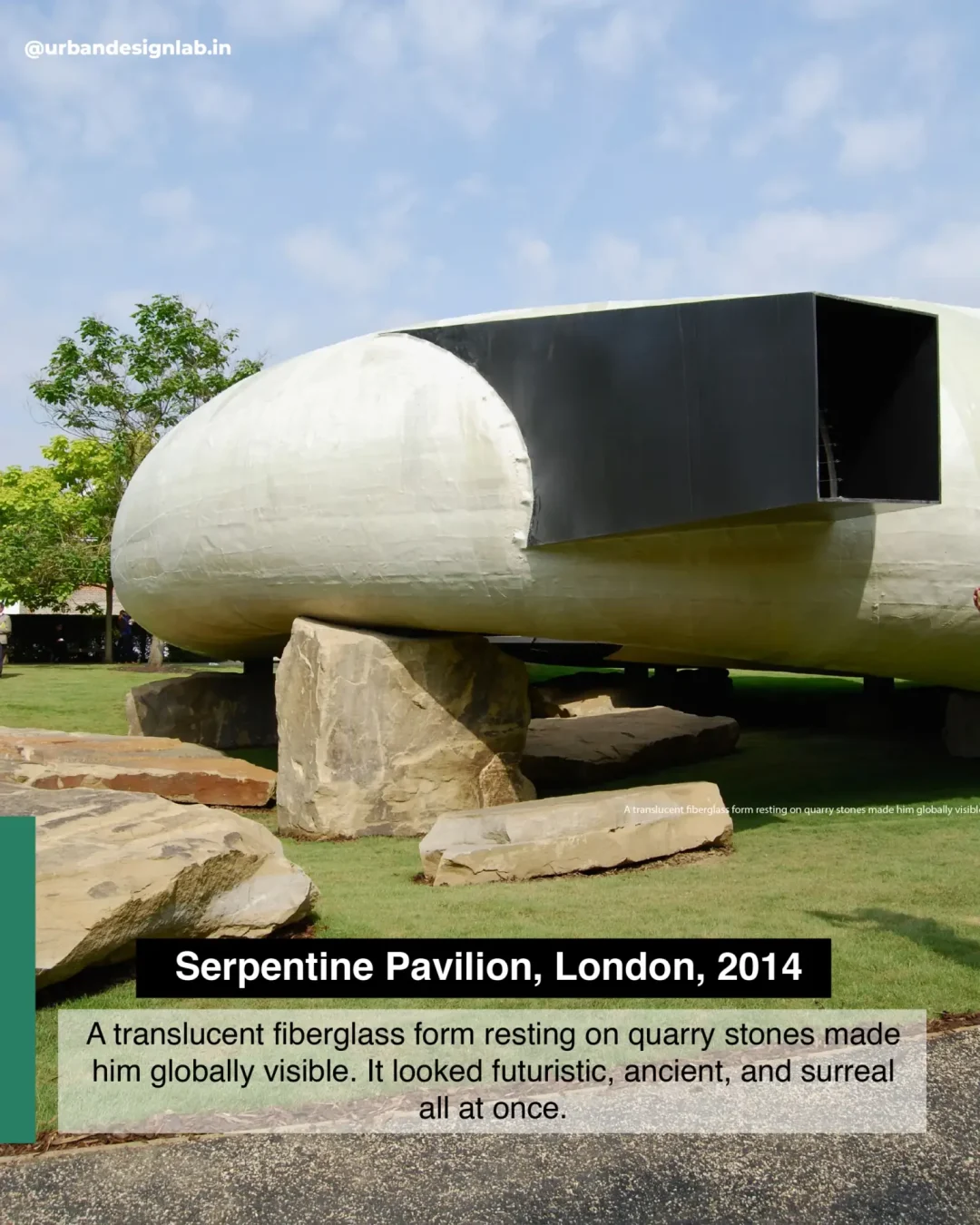
  1. Serpentine Pavilion, London (2014)- Radić gained global recognition when he was invited to design the Serpentine Pavilion in London’s Kensington Gardens. The pavilion featured a translucent fiberglass shell resting on large quarry stones, creating a structure that appeared both futuristic and prehistoric.
  2. Teatro Regional del Bío-Bío, Concepción (2018) – A major cultural building along the Bío-Bío River, this performing arts center uses a semi-translucent façade that glows like a lantern at night. The building demonstrates how civic architecture can achieve monumentality through atmosphere rather than scale.
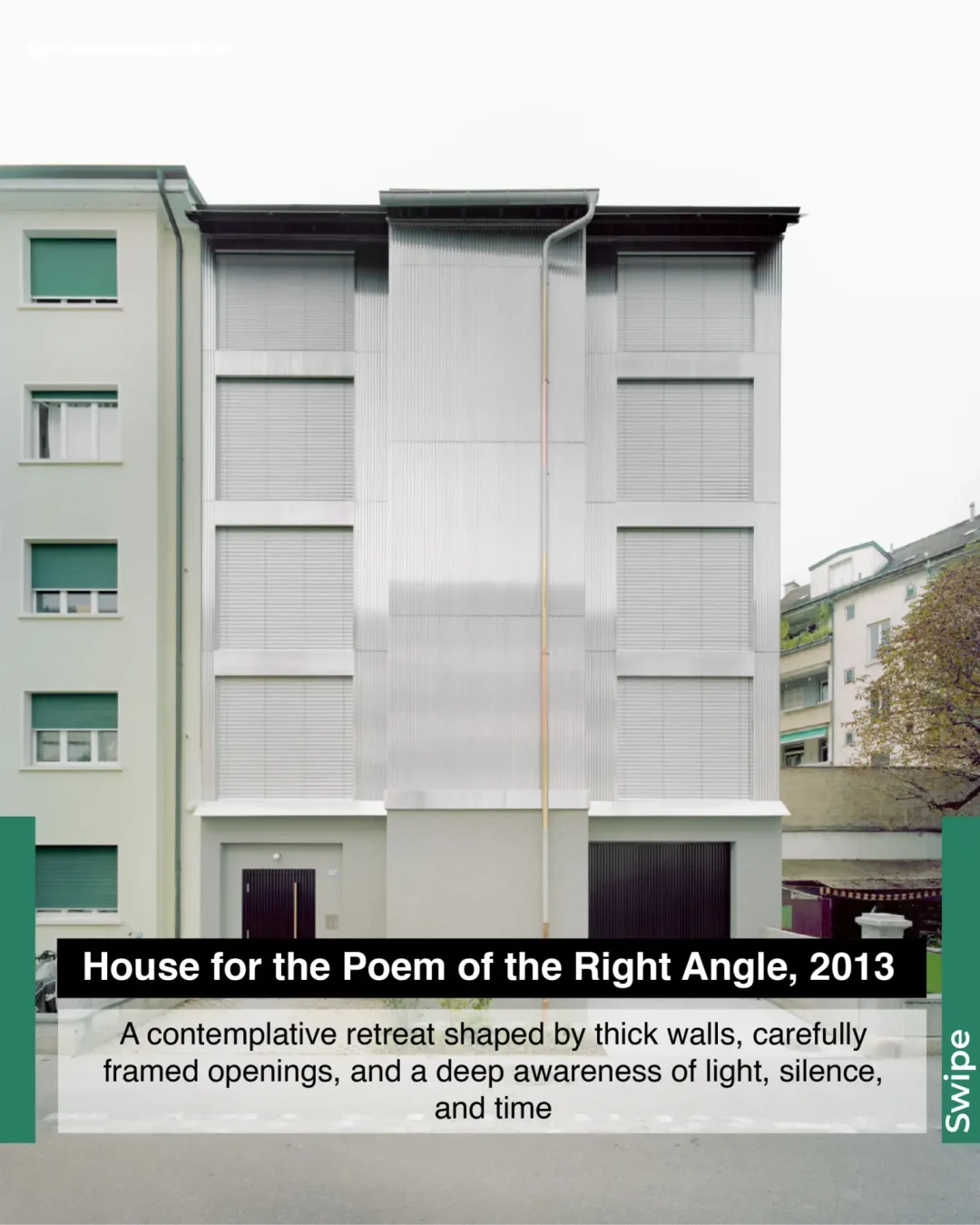
  3. House for the Poem of the Right Angle, Vilches (2013) – Inspired by Le Corbusier’s painting Poème de l’angle droit, this secluded house in a forest organizes domestic life around thick walls and carefully framed openings that capture light and time.
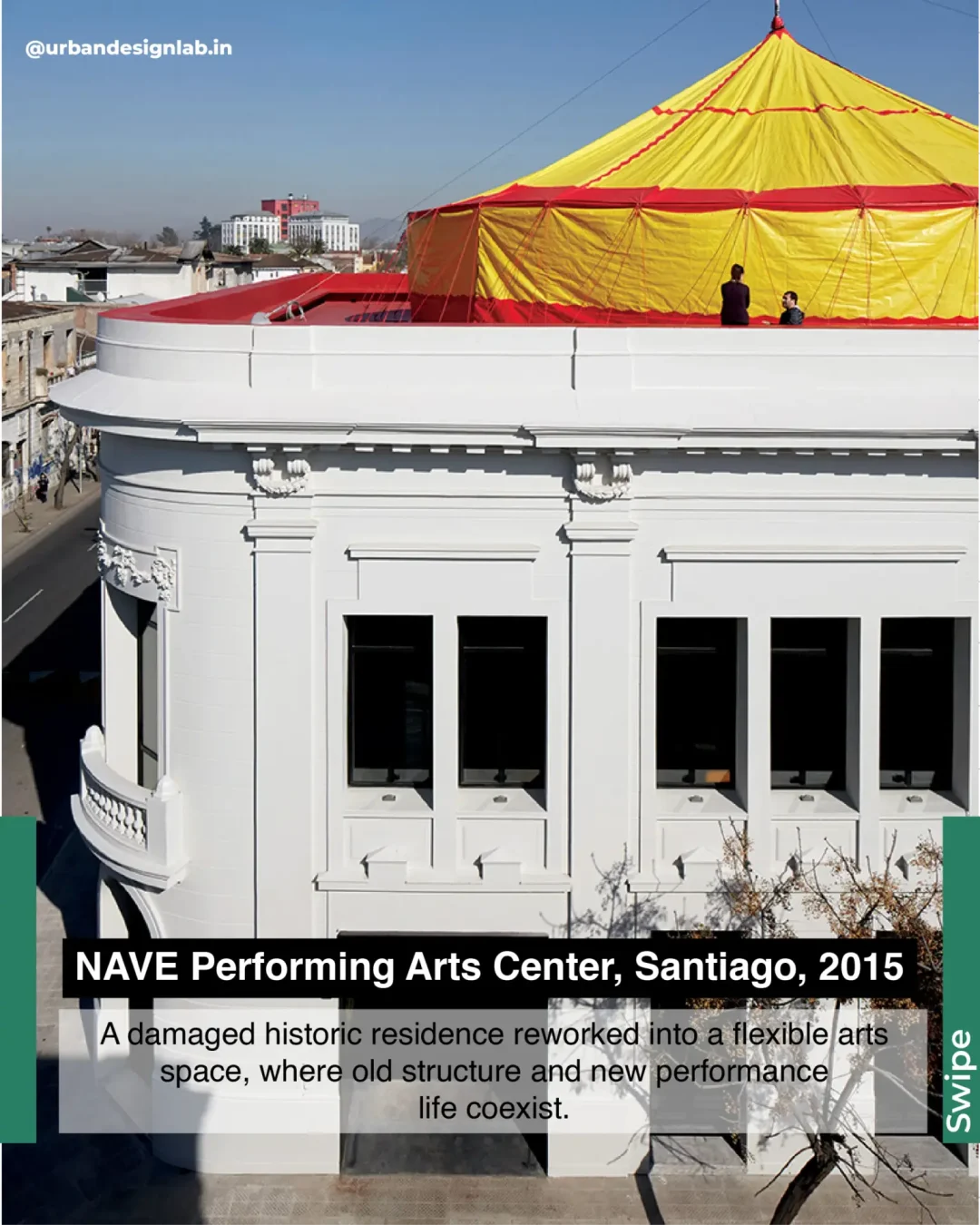
  4. NAVE Performing Arts Center, Santiago (2015) – Created from a damaged early twentieth century residence, NAVE transforms an existing structure into a flexible cultural space where artists rehearse, perform, and gather.
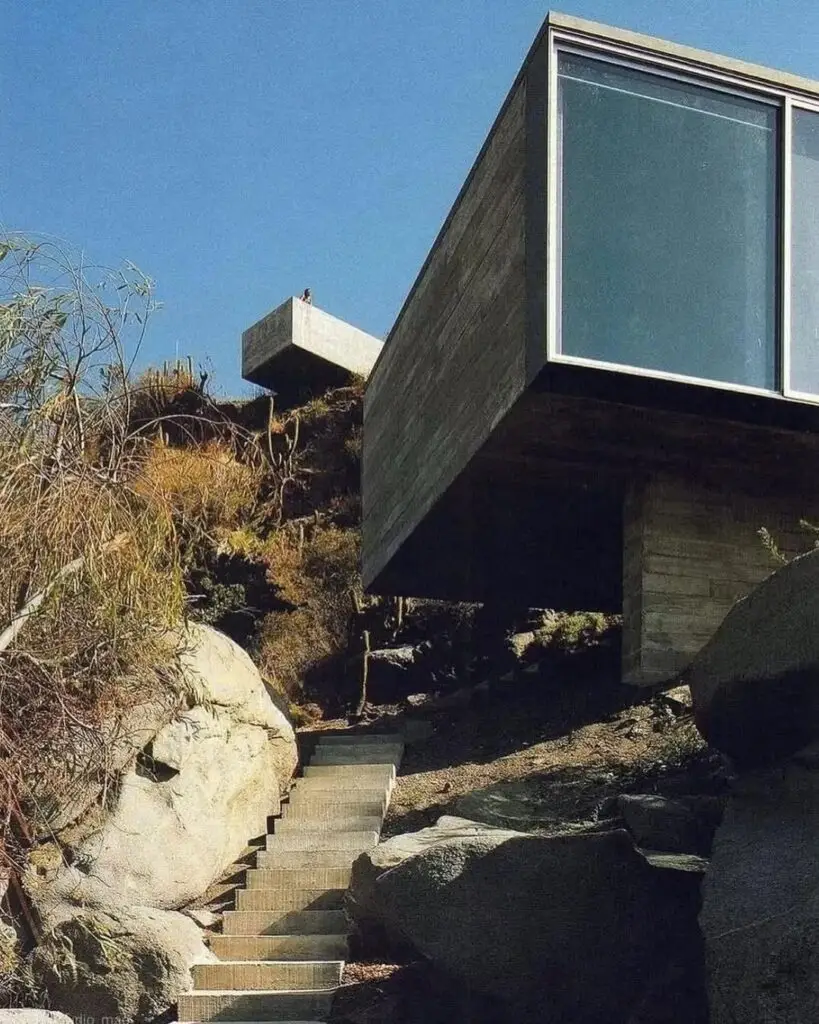
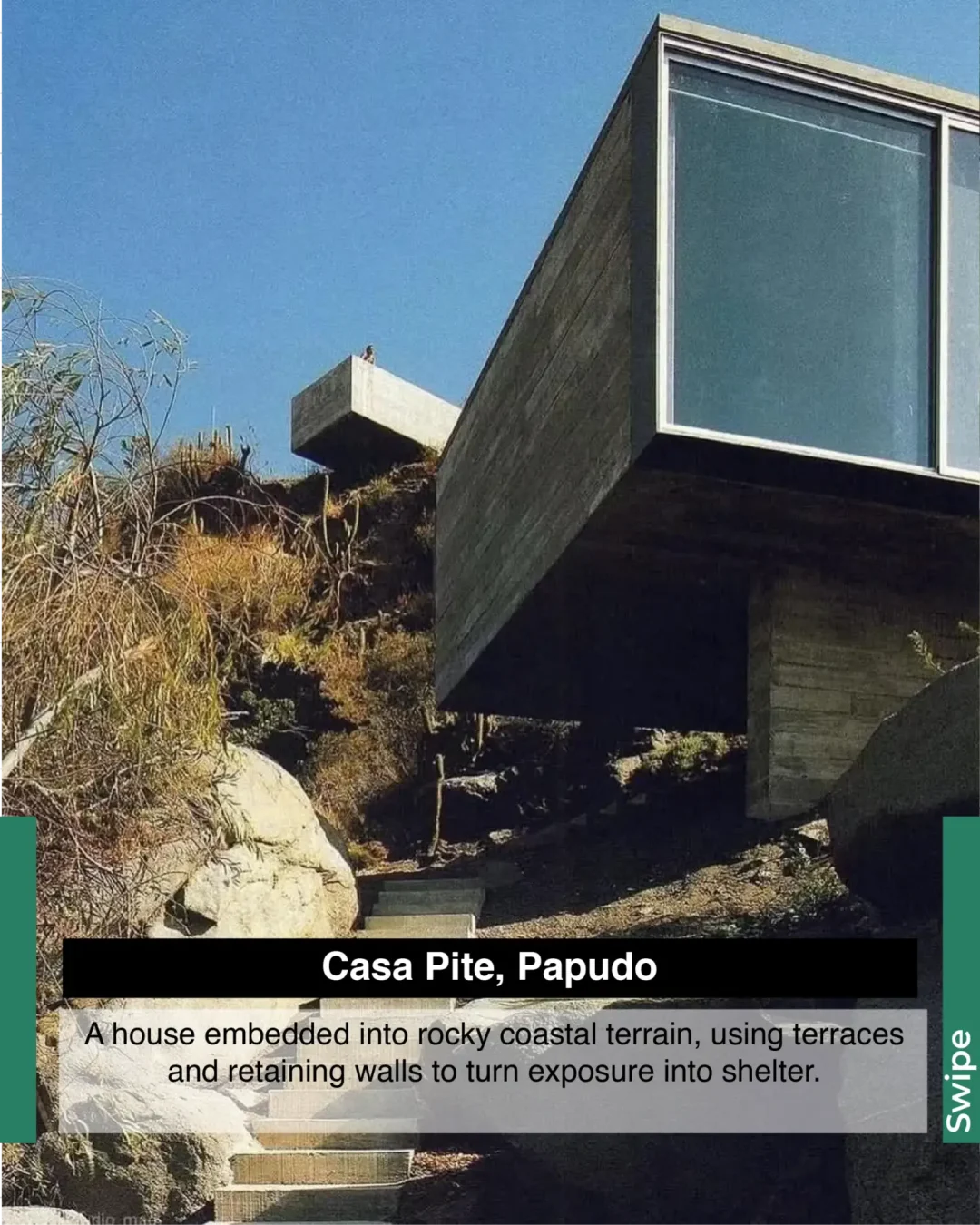
  5. Casa Pite, Papudo – Located on Chile’s rocky coastline, this residence is embedded within the terrain itself. Terraces and retaining walls frame views of the Pacific Ocean while protecting the house from strong coastal winds.
  6. VIK Winery, Millahue – This winery stretches across the valley landscape, integrating production spaces and visitor areas within a dramatic sequence of concrete structures embedded in the terrain.
  7. Guatero Pavilion, Chile Architecture Biennial (2023) – An inflatable pavilion designed as a temporary stage for the Chile Architecture Biennial. The air supported structure demonstrates Radić’s fascination with fragility and ephemeral architecture.
Pritzker Architecture Prize 2026 Awarded to Smiljan Radić Clarke 7
Serpentine Pavilion, London, 2014
Pritzker Architecture Prize 2026 Awarded to Smiljan Radić Clarke 9
Teatro Regional del Bío-Bío
Pritzker Architecture Prize 2026 Awarded to Smiljan Radić Clarke 11
NAVE Performing Arts Center
Pritzker Architecture Prize 2026 Awarded to Smiljan Radić Clarke 13
Casa Pite, Papudo, Chile | 2005

Recognition and Awards

Over the years, Radić’s work has received numerous international recognitions, including:


  1. Best Architect Under 35 – Colegio de Arquitectos de Chile
  2. Oris Award for Architecture
  3. Arnold W. Brunner Memorial Prize (American Academy of Arts and Letters)
  4. Pan-American Architecture Biennial of Quito Grand Prize


His work has also been exhibited internationally in Tokyo, Hiroshima, Austria, and other cultural venues, demonstrating the global interest in his experimental architectural language.

Why the 2026 Pritzker Prize Matters

The selection of Smiljan Radić Clarke reflects a broader shift in contemporary architecture. Rather than rewarding spectacle or monumental scale, the jury recognized an architect whose work emphasizes fragility, experimentation, and human experience. Radić’s projects remind us that architecture can be subtle yet transformative. His buildings do not demand attention through size or iconic imagery. Instead, they create quiet spaces that encourage reflection, movement, and emotional engagement. In a time when cities are often shaped by speed and visual spectacle, Radić’s architecture offers something different: a slower, more thoughtful approach to building and inhabiting space.
Leave a Reply

Your email address will not be published. Required fields are marked *

This site uses Akismet to reduce spam. Learn how your comment data is processed.

Related articles

UDL Thesis Publication 2025

Call for Abstracts now open!

UDL Illustrator

Masterclass

Visualising Urban and Architecture Diagrams

Session Dates

28th-29th March 2026

Urban Design Lab

Be the part of our Network

  • Stay updated on workshops, design tools, and calls for collaboration

  • Curating the best graduate thesis project globally!

    Free E-Book

    From thesis to Portfolio

    A Guide to Convert Academic Work into a Professional Portfolio”

    Thesis Report Writing for Architecture and Urban Studies

    Join Our WhatsApp Group

    Sign up for our Newsletter

    “Let’s explore the new avenues of Urban environment together “

    E-Book- From Thesis To Portfolio

    A Guide to Convert Academic Work into a Professional Portfolio