The discipline of architecture is entering a decisive moment. Artificial intelligence is no longer just a visualization tool or a rendering assistant. It is reshaping how architects research, design, analyze data, and imagine future cities. As studios shift toward computational thinking, students are actively searching for Architecture Thesis Ideas that reflect the realities of the digital age rather than repeating outdated typologies or conventional design methods.


Today, an architecture thesis is not only about form making. It is about systems, intelligence, climate responsiveness, ethics, and human experience within rapidly evolving technological environments. From generative design workflows to smart urban infrastructure, artificial intelligence is expanding the boundaries of architectural inquiry. This shift is forcing a new question inside design schools worldwide: what should an architecture thesis explore when machines can already generate thousands of design options in seconds?


This blog compiles a curated list of forward thinking Architecture Thesis Ideas grounded in contemporary research themes such as AI driven urbanism, responsive environments, data informed sustainability, and speculative futures. The goal is not to promote technology for its own sake, but to help architecture students identify meaningful research directions that balance human creativity with computational intelligence.


Whether you are an undergraduate preparing your first major thesis or a graduate researcher exploring advanced design methodologies, choosing the right topic is critical. A strong thesis should position you within current architectural discourse while allowing room for experimentation and critical thinking. The ideas below are structured to help you explore emerging design territories, question traditional architectural authorship, and engage with the ethical and environmental challenges shaping the built environment today.


In the following sections, you will find carefully organized Architecture Thesis Ideas across multiple themes including generative architecture, intelligent cities, climate responsive design, robotic construction, and cultural futures in the AI era. Each topic reflects a growing shift in architectural research toward hybrid human machine collaboration and a deeper understanding of how digital intelligence influences space, society, and design practice.

1. AI and Design Intelligence (Conceptual Architecture)

Artificial intelligence is rapidly transforming the way architects think, speculate, and generate ideas during the early stages of design. Instead of functioning only as a technical tool, AI is emerging as an active conceptual partner that challenges traditional notions of authorship, creativity, and aesthetic control. Within this evolving landscape, architecture students are exploring new Architecture Thesis Ideas that question who designs, how form is produced, and what it means to create architecture in collaboration with intelligent systems. The following topics investigate how neural networks, machine learning, and hybrid human machine workflows are reshaping architectural imagination and redefining the future language of design.

  1. Architecture Without Authors: Human vs Algorithmic Creativity
  2. Designing with Neural Networks: A New Language of Form
  3. Machine Learning as a Concept Generator in Architecture Studios
  4. AI as a Co Designer: Rethinking Architectural Authorship
  5. Algorithmic Aesthetics and the Future of Architectural Style
  6. Post Human Architecture: Designing for Hybrid Intelligence
50 Architecture Thesis Ideas for the Artificial Intelligence Age 1

2. Generative Design and Computational Form

Generative design and advanced computational workflows are redefining how architects approach form making, spatial organization, and structural logic. Through deep learning, simulation, and optimization algorithms, designers can now test thousands of variations based on performance data rather than relying only on intuition. This shift is opening new directions for Architecture Thesis Ideas that explore data driven geometry, adaptive systems, and automated design processes. The topics below examine how artificial intelligence can reshape urban morphology, facade intelligence, and housing models while raising important questions about control, efficiency, and the evolving role of the architect in algorithmic design environments.

  1. Generative Architecture: Buildings Designed by Data
  2. AI Driven Parametric Urban Morphology
  3. Evolutionary Design Systems for High Density Cities
  4. Neural Networks for Adaptive Facade Systems
  5. Automated Spatial Organization Using AI
  6. Machine Generated Housing Typologies

4. Sustainable and Climate Responsive Architecture

As environmental challenges intensify, artificial intelligence is becoming a powerful tool for improving building performance and guiding climate responsive design strategies. From energy simulations to predictive environmental analysis, AI allows architects to evaluate complex datasets and optimize decisions related to material use, thermal comfort, and long term sustainability. These emerging conditions are shaping new Architecture Thesis Ideas that focus on net zero design, adaptive climate systems, and data informed ecological planning. The following topics explore how computational intelligence can support resilient architecture while balancing environmental responsibility with spatial innovation.

  1. AI Optimized Net Zero Architecture
  2. Climate Adaptive Buildings Using Predictive Modeling
  3. AI Based Passive Cooling Strategies for Hot Climates
  4. Machine Learning for Material Efficiency in Architecture
  5. Data Driven Water Sensitive Urban Design
  6. Carbon Neutral Design through Generative Optimization

5. Intelligent Buildings and Smart Environments

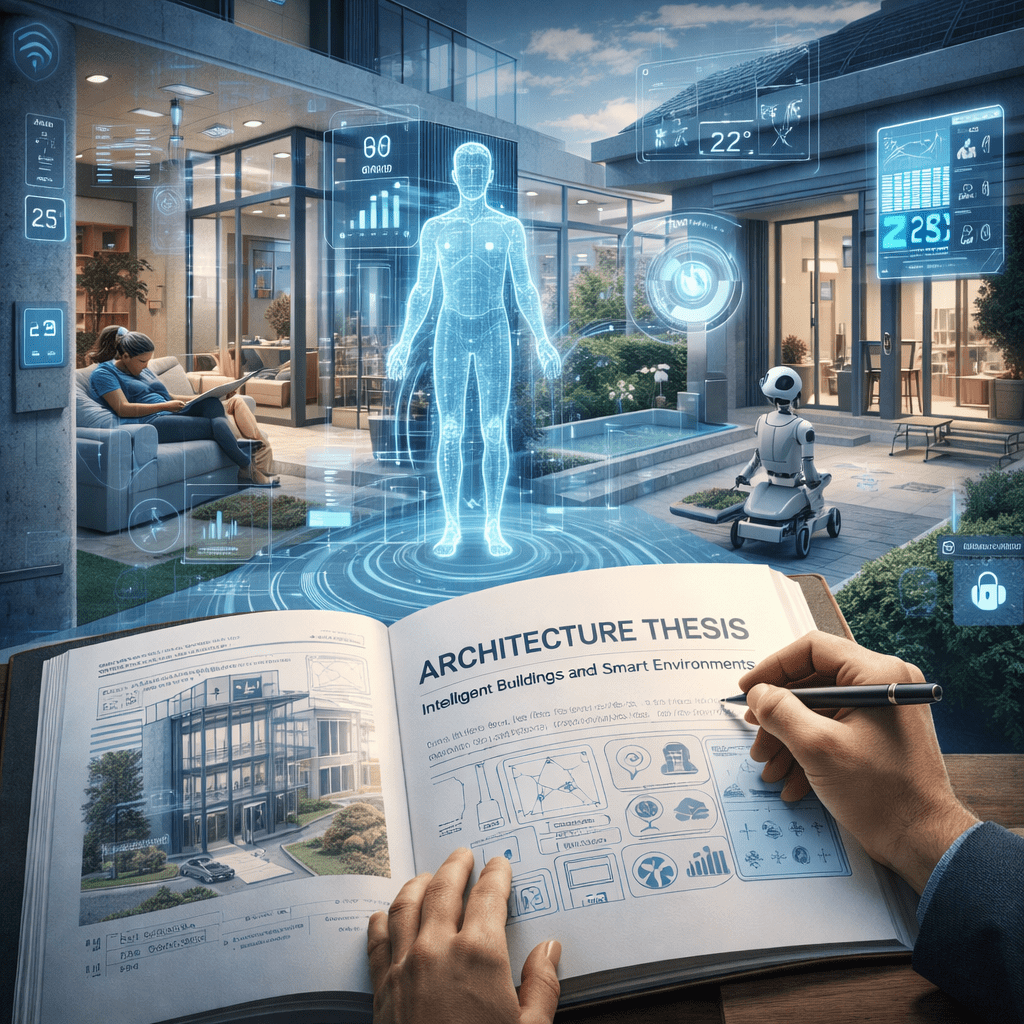
The rise of intelligent technologies is transforming buildings from static structures into responsive environments that learn from occupants and adapt over time. Artificial intelligence enables predictive maintenance, automated energy management, and real time behavioral analysis, creating opportunities for architects to rethink how spaces interact with users. Within this context, new Architecture Thesis Ideas are emerging that examine cognitive architecture, autonomous campuses, and adaptive living environments shaped by data driven systems. These topics investigate how smart environments can enhance comfort, accessibility, and efficiency while raising critical questions about privacy, ethics, and the future relationship between humans and intelligent spaces.

  1. Self Learning Buildings That Adapt to Users
  2. AI Powered Building Management Systems
  3. Cognitive Architecture: Spaces That Sense and Respond
  4. Autonomous Smart Campus Design
  5. Adaptive Housing for Aging Populations Using AI
  6. Behavioral Data Driven Interior Architecture

5. Intelligent Buildings and Smart Environments

The rise of intelligent technologies is transforming buildings from static structures into responsive environments that learn from occupants and adapt over time. Artificial intelligence enables predictive maintenance, automated energy management, and real time behavioral analysis, creating opportunities for architects to rethink how spaces interact with users. Within this context, new Architecture Thesis Ideas are emerging that examine cognitive architecture, autonomous campuses, and adaptive living environments shaped by data driven systems. These topics investigate how smart environments can enhance comfort, accessibility, and efficiency while raising critical questions about privacy, ethics, and the future relationship between humans and intelligent spaces.

  1. Self Learning Buildings That Adapt to Users
  2. AI Powered Building Management Systems
  3. Cognitive Architecture: Spaces That Sense and Respond
  4. Autonomous Smart Campus Design
  5. Adaptive Housing for Aging Populations Using AI
  6. Behavioral Data Driven Interior Architecture
50 Architecture Thesis Ideas for the Artificial Intelligence Age 3

6. Architecture Education and AI Studio Culture

Artificial intelligence is reshaping not only professional practice but also the culture of architectural education. Design studios are increasingly integrating computational tools into research workflows, critique sessions, and conceptual development, changing how students learn and how ideas are evaluated. This shift is opening new Architecture Thesis Ideas that question traditional pedagogy and explore hybrid design processes where human intuition works alongside algorithmic intelligence. The following topics investigate evolving studio models, emerging skill sets for future architects, and the role of AI in redefining research methodologies within academic environments.

  1. The AI Design Studio: Rethinking Architectural Pedagogy
  2. Algorithmic Critique: AI as Jury in Design Studios
  3. Hybrid Human Machine Design Processes
  4. Future Architect Skills in the Machine Age
  5. Designing Research Methodologies with AI

7. Ethics, Identity and Philosophy of AI Architecture

As artificial intelligence becomes embedded in architectural workflows, critical debates are emerging around ethics, authorship, and cultural identity. Scholars are increasingly examining how algorithms influence design decisions, shape aesthetic values, and potentially reinforce bias within the built environment. These discussions are generating deeper Architecture Thesis Ideas that move beyond technical innovation toward philosophical inquiry and social responsibility. The topics below explore questions of data ethics, post human design thinking, surveillance driven urbanism, and the broader implications of architecture created within algorithmic systems.

  1. Algorithmic Bias in Architectural Form Making
  2. Ethical Frameworks for AI Generated Architecture
  3. Data Colonialism and Global Urban Design
  4. Architecture Beyond the Human: Post Anthropocentric Design
  5. Surveillance Urbanism and Spatial Control

8. Construction, Robotics and Automated Fabrication

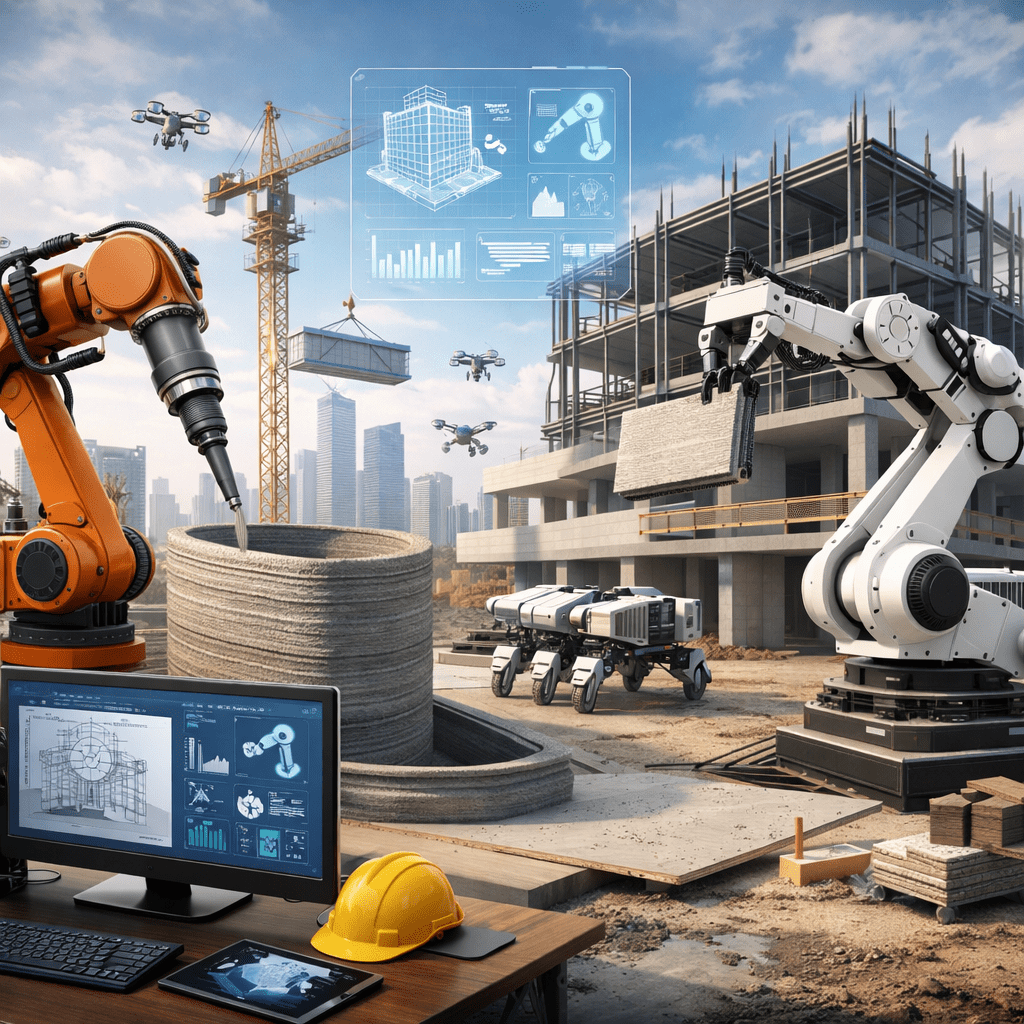
Artificial intelligence is redefining the relationship between architectural design and construction by enabling automated workflows that connect digital models directly to fabrication processes. Recent research highlights how AI driven robotics can plan, sense, and execute complex building tasks through intelligent systems that translate data into physical construction actions.
This evolution opens powerful Architecture Thesis Ideas that investigate robotic construction, generative prefabrication, and structural optimization beyond traditional manual workflows. As AI and robotics mature, architects are beginning to explore how automated fabrication can reshape material logic, efficiency, and design experimentation across the building industry.

  1. Robotic Construction Systems and AI Planning
  2. Automated Prefabrication Through Generative Algorithms
  3. AI Driven Structural Optimization for Mega Structures
  4. Autonomous Construction Sites
Architecture Thesis Ideas

9. Cultural and Experiential Futures

While much discussion around AI focuses on efficiency and automation, emerging research emphasizes its impact on architectural experience, perception, and cultural meaning. Artificial intelligence can now analyze behavioral data, simulate sensory environments, and generate narrative driven spaces, expanding architecture beyond purely visual design approaches.
These evolving conditions inspire new Architecture Thesis Ideas that explore multisensory environments, digital rituals, and machine generated interpretations of memory and heritage. Rather than replacing human creativity, AI is pushing architects to reconsider how emotion, spirituality, and storytelling can exist within algorithmic design frameworks.
  1. Designing Multisensory Architecture Beyond Visual AI
  2. Sacred Spaces in the Algorithmic Age
  3. Digital Ritual Landscapes and Virtual Architecture
  4. Memory, Heritage and Machine Generated Narratives

10. Speculative Futures and Radical Research

Speculative research has become central to contemporary architectural discourse, especially as artificial intelligence reshapes infrastructure and urban systems. From intelligent data center architecture to cities guided by collective intelligence networks, AI is enabling designers to imagine built environments that continuously learn and adapt.

  1. Architecture for AI Data Centers as New Civic Typologies
  2. Cities Designed by Collective Intelligence Networks

GIS Made Easy – Learn to Map, Analyse, and Transform Urban Futures

50 Architecture Thesis Ideas for the Artificial Intelligence Age 6

Urban Design Lab

About the Author

This is the admin account of Urban Design Lab. This account publishes articles written by team members, contributions from guest writers, and other occasional submissions. Please feel free to contact us if you have any questions or comments.

Leave a Reply

Your email address will not be published. Required fields are marked *

This site uses Akismet to reduce spam. Learn how your comment data is processed.

Related articles

UDL Thesis Publication 2025

Call for Abstracts now open!

UDL GIS

Masterclass

GIS Made Easy – Learn to Map, Analyse, and Transform Urban Futures

Session Dates

23rd-27th February 2026

Urban Design Lab

Be the part of our Network

  • Stay updated on workshops, design tools, and calls for collaboration

  • Curating the best graduate thesis project globally!

    Free E-Book

    From thesis to Portfolio

    A Guide to Convert Academic Work into a Professional Portfolio”

    Thesis Report Writing for Architecture and Urban Studies

    Join Our WhatsApp Group

    Sign up for our Newsletter

    “Let’s explore the new avenues of Urban environment together “

    E-Book- From Thesis To Portfolio

    A Guide to Convert Academic Work into a Professional Portfolio