This article examines the transformative impact of the 15th Finance Commission’s recommendations for India’s Urban Local Bodies (ULBs) for the 2021-2026 period. It details a significant paradigm shift from unconditional financial devolution to a robust performance-linked grant system designed to catalyse deep-rooted governance reforms. The article explores the structure of these grants, highlighting the critical distinction between basic untied funds and conditional tied grants. These tied grants are strategically linked to national priorities, including improving air quality in million-plus cities and enhancing water supply and sanitation services. A central theme is the commission’s push for municipal financial self-sufficiency, with grant disbursal being conditional on ULBs improving their property tax regimes and financial accountability. This approach transforms grants from mere financial aid into a powerful policy lever for change. By incentivising better data management, service delivery, and revenue generation, these recommendations are not just funding Indian cities; they are actively reshaping their governance structures, fostering accountability, and paving the way for more resilient and self-reliant urban futures.
A New Paradigm for Urban Funding in India
The recommendations of the 15th Finance Commission (15th FC) for the 2021-2026 period represent one of the most significant shifts in Indian urban finance and governance in recent history. Chaired by N.K. Singh, the commission moved beyond the traditional role of simply allocating funds and instead designed a new paradigm for fiscal transfers to Urban Local Bodies (ULBs). This approach embeds a powerful reform agenda directly into the grant structure, using financial incentives to nudge cities towards better governance, enhanced service delivery, and greater self-sufficiency. The grants are no longer just a financial lifeline; they are a strategic tool intended to build the institutional capacity of cities to tackle critical challenges like air pollution, water scarcity, and sanitation. This article explores the structure of these urban grants and analyses how their performance-linked conditions are fundamentally reshaping the way Indian cities are governed, financed, and managed.
Funding India’s Urban Future: The 15th FC’s Strategic Agenda
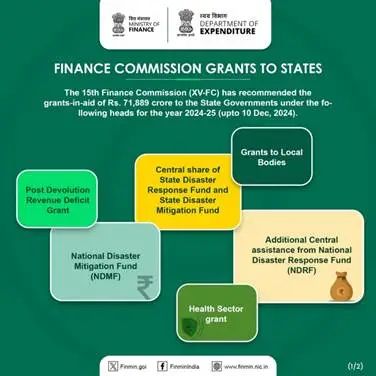
For the period of 2021-26, the 15th FC has recommended a total of ₹1.21 lakh crore (approx. $15 billion) in grants to ULBs. The defining feature of this allocation is its division into two distinct types of grants, creating a balanced approach between support and reform.
Untied Grants: A portion of the funds is untied, providing cities with the flexibility to use the money for basic services like maintenance of roads, water supply, and sanitation, based on local needs. This ensures that essential municipal functions are not compromised.
Tied/Performance-Linked Grants: The majority of the grants are tied to specific conditions and performance indicators. These funds are earmarked for critical national priorities and are disbursed only when cities meet pre-defined reform milestones. This dual structure ensures that while cities receive the basic support they need, they are also strongly incentivised to improve their performance and align their development goals with the national agenda, marking a clear departure from the unconditional grants of the past.
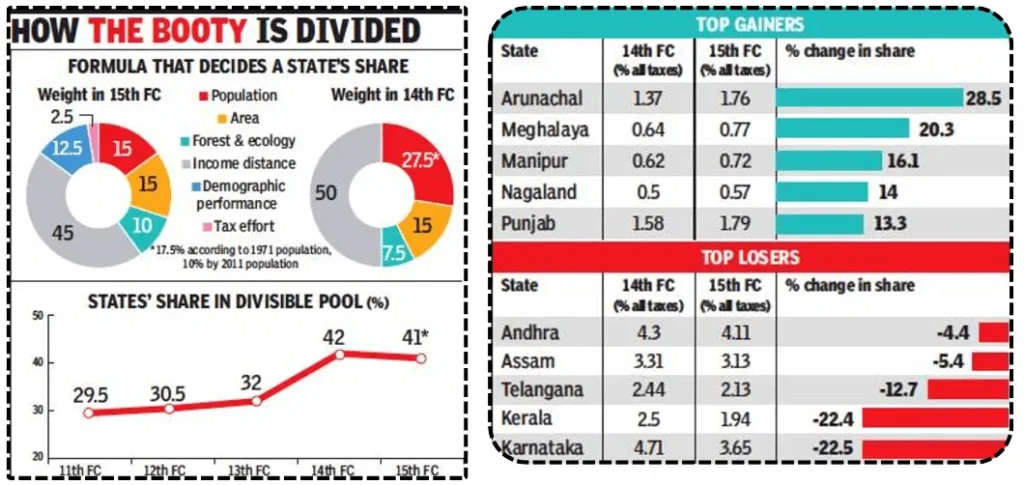
Evolution of Performance Based Grants for cities
Source: Website Link
Tackling Urban Air Quality Through Funding
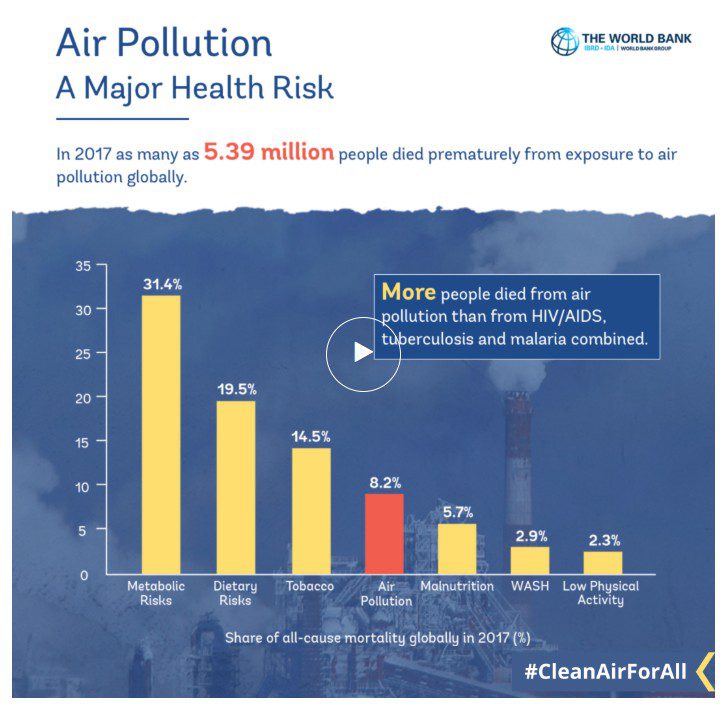
One of the most innovative recommendations of the 15th FC is the creation of a specific grant for cities to combat air pollution. A significant sum of the tied grants has been exclusively earmarked for 42 cities with populations exceeding one million. The disbursal of these funds is directly linked to demonstrable improvements in their ambient air quality, measured against a baseline. This is the first time a Finance Commission has used fiscal transfers as a direct policy instrument to address a critical environmental challenge. To access these funds, cities must develop and implement robust action plans, monitor their air quality index (AQI) improvements, and report progress. This conditionality forces municipal governments to move beyond rhetoric and take concrete, measurable steps to improve the air their citizens breathe, directly linking financial health to environmental performance.
Tackling Air Pollution in India: The 15th FC’s Strategic Grant
A substantial portion of the tied grants is also linked to improving water and sanitation (WSS) services, aligning with national flagship programs like the Atal Mission for Rejuvenation and Urban Transformation (AMRUT) and the Swachh Bharat Mission (SBM). To receive these funds, cities must show improvements in key service level benchmarks. This includes increasing the supply of potable drinking water, reducing non-revenue water (leakages), expanding sewerage networks, and achieving targets in solid waste management. By making grants conditional on these outcomes, the 15th FC is effectively using its financial leverage to accelerate the implementation of national missions at the local level. This ensures that ULBs are not only funded but are also held accountable for delivering essential services that directly impact public health and the quality of urban life for millions of residents.
15th FC Grants: Accelerating Water and Sanitation Missions
Perhaps the most transformative conditionality of the 15th FC grants is the strong emphasis on improving the internal revenue generation of cities. A key performance metric for accessing tied grants is the demonstrable improvement in property tax collection. Cities are required to notify floor rates for property taxes and show consistent growth in collections that is at least in line with the state’s own GSDP growth rate. This measure directly addresses the chronic financial weakness of most Indian ULBs, which are heavily dependent on transfers from state and central governments. By forcing municipalities to reform and strengthen their own revenue base, the commission aims to foster greater financial autonomy and accountability. This push is complemented by the requirement for audited annual accounts, which improves financial discipline and transparency, fundamentally reshaping municipal governance from within.
15th FC Grants: Incentivizing Property Tax Reforms in Cities
A crucial, albeit implicit, consequence of the 15th FC’s performance-linked grants is the mandatory push towards data-driven governance. To claim tied funds, ULBs must go beyond mere reporting and provide robust, verifiable data to demonstrate compliance and performance improvement. This necessitates the creation of sophisticated data collection, monitoring, and management systems. Cities are now required to maintain updated digital records of property tax collections, track air quality metrics in real-time, and provide evidence of service-level benchmarks in water and sanitation. This aligns perfectly with the objectives of India’s Smart Cities Mission, which promotes the use of technology for better urban management. The grants effectively institutionalise the use of data as the basis for financial transfers, shifting municipal administration from a reactive, anecdotal model to a proactive, evidence-based one, thereby enhancing transparency and public accountability.
Addressing Capacity Constraints and Key Challenges
While the reformist agenda of the 15th FC is commendable, its implementation is not without significant challenges. A primary concern is the varying institutional capacity among India’s thousands of ULBs. While larger municipal corporations may have the technical expertise and human resources to meet the stringent data reporting and reform conditionalities, smaller municipalities often lack these capabilities. This creates a risk of inequity, where less-resourced cities may be unable to access crucial performance-linked funds, potentially widening the development gap between large and small urban centres. Furthermore, some critics argue that the highly prescriptive nature of the tied grants could undermine the principle of local self-governance, shifting the focus of ULBs from locally determined priorities to meeting the centrally mandated targets required to unlock funding. Balancing national objectives with local autonomy remains a key challenge.
A Blueprint for Incubating New Indian Cities
Beyond reforming existing cities, the 15th FC report introduced a forward-looking and novel recommendation: a performance-based challenge fund of ₹8,000 crore for incubating new, well-planned cities. This proposal addresses the need to manage the projected massive wave of future urbanization in India by creating new urban centres rather than simply retrofitting existing ones. The idea is to promote a competitive process where states bid for funds to develop new cities with exemplary standards of living, sustainability, and economic dynamism. This grant is designed to encourage innovative urban planning and financing models from the outset, including land value capture and public-private partnerships. While this is a recommendation for the central government to act upon, it signals a major strategic pivot in urban policy, from solely managing the problems of the present to proactively shaping the urban landscape of the future.
-1
Conclusion
The 15th Finance Commission’s urban grants are far more than a simple financial package; they represent a strategic and ambitious roadmap for the future of city governance in India. By embedding a reform agenda into the very structure of fiscal transfers, the commission has created a powerful mechanism to drive change from the ground up. The shift towards performance-linked funding for critical areas like air quality, water supply, and sanitation ensures that financial outlays are directly translated into measurable improvements in the quality of urban life. Most importantly, the insistence on property tax reforms aims to cure the foundational weakness of Indian cities: their lack of financial autonomy. While challenges in implementation and capacity remain, the principles laid out by the 15th FC have set a new benchmark. They are designed to forge a new generation of Indian cities that are not only better serviced but are also more financially resilient, data-driven, and accountable to their citizens.
References
Finance Commission of India. (2021). Finance Commission in Covid Times: Report for 2021-26 (Volume I). Government of India.
PRS Legislative Research. (2021). Report of the 15th Finance Commission (2021-26).
Anand, S., & Aijaz, R. (2021). Reading the 15th Finance Commission Report for India’s Cities. Observer Research Foundation.
Kapur, A., & Vaishnav, M. (2021). Strengthening India’s City-Systems: A Carnegie India Report. Carnegie Endowment for International Peace.
Mohanty, P. K. (2022). Financing Cities in India: A Roadmap for Municipal Financial Empowerment. NIPFP.
Ministry of Housing and Urban Affairs. (n.d.). Atal Mission for Rejuvenation and Urban Transformation (AMRUT). Government of India.
Ministry of Environment, Forest and Climate Change. (n.d.). National Clean Air Programme (NCAP). Government of India.
Ahluwalia, I. J. (2014). Transforming Our Cities: Postcards of Change. HarperCollins India.
Sivaramakrishnan, K. C. (2011). Re-visioning Indian Cities: The Urban Renewal Mission. SAGE Publications India.
Shatakshi Prabhakar Patil
About the Author
Shatakshi Patil is a passionate urban designer with a strong foundation in architecture and a commitment to creating inclusive, sustainable spaces. She brings a global perspective to her work, combining strategic thinking with technical proficiency in urban planning and design. Known for her initiative and research-driven approach, she excels at transforming complex urban challenges into people-focused solutions. Her work reflects a balance of creativity, precision, and a deep sensitivity to context.
“Let’s explore the new avenues of Urban environment together “
We use cookies on our website to give you the most relevant experience by remembering your preferences and repeat visits. By clicking “Accept”, you consent to the use of all the cookies. Read More
This website uses cookies to improve your experience while you navigate through the website. Out of these, the cookies that are categorized as necessary are stored on your browser as they are essential for the working of basic functionalities of the website. We also use third-party cookies that help us analyze and understand how you use this website. These cookies will be stored in your browser only with your consent. You also have the option to opt-out of these cookies. But opting out of some of these cookies may affect your browsing experience.
Necessary cookies are absolutely essential for the website to function properly. These cookies ensure basic functionalities and security features of the website, anonymously.
Cookie
Duration
Description
cookielawinfo-checkbox-analytics
11 months
This cookie is set by GDPR Cookie Consent plugin. The cookie is used to store the user consent for the cookies in the category "Analytics".
cookielawinfo-checkbox-functional
11 months
The cookie is set by GDPR cookie consent to record the user consent for the cookies in the category "Functional".
cookielawinfo-checkbox-necessary
11 months
This cookie is set by GDPR Cookie Consent plugin. The cookies is used to store the user consent for the cookies in the category "Necessary".
cookielawinfo-checkbox-others
11 months
This cookie is set by GDPR Cookie Consent plugin. The cookie is used to store the user consent for the cookies in the category "Other.
cookielawinfo-checkbox-performance
11 months
This cookie is set by GDPR Cookie Consent plugin. The cookie is used to store the user consent for the cookies in the category "Performance".
viewed_cookie_policy
11 months
The cookie is set by the GDPR Cookie Consent plugin and is used to store whether or not user has consented to the use of cookies. It does not store any personal data.
Functional cookies help to perform certain functionalities like sharing the content of the website on social media platforms, collect feedbacks, and other third-party features.
Performance cookies are used to understand and analyze the key performance indexes of the website which helps in delivering a better user experience for the visitors.
Analytical cookies are used to understand how visitors interact with the website. These cookies help provide information on metrics the number of visitors, bounce rate, traffic source, etc.
Advertisement cookies are used to provide visitors with relevant ads and marketing campaigns. These cookies track visitors across websites and collect information to provide customized ads.