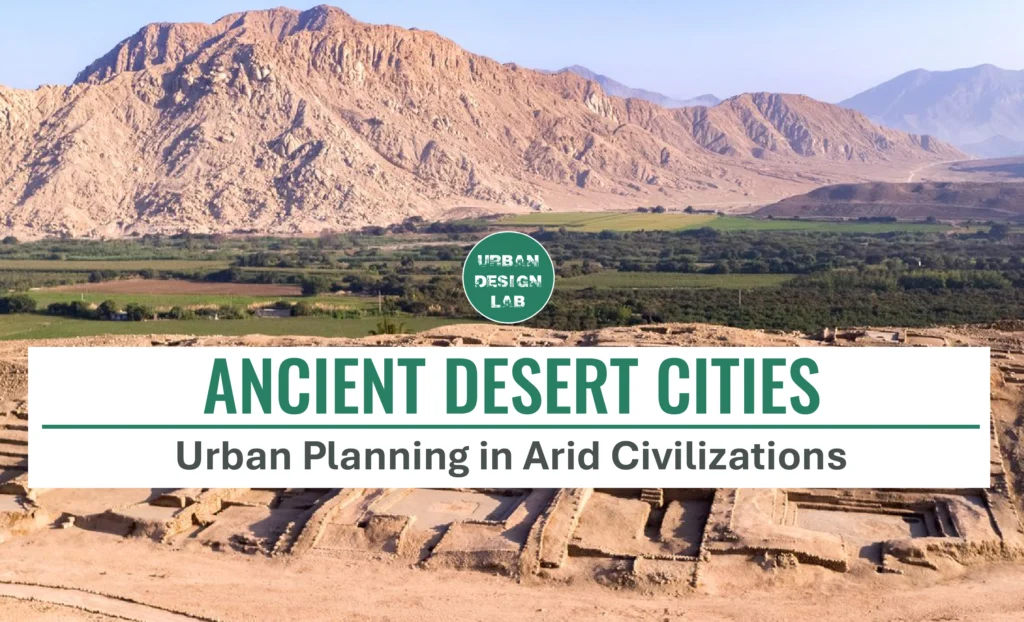
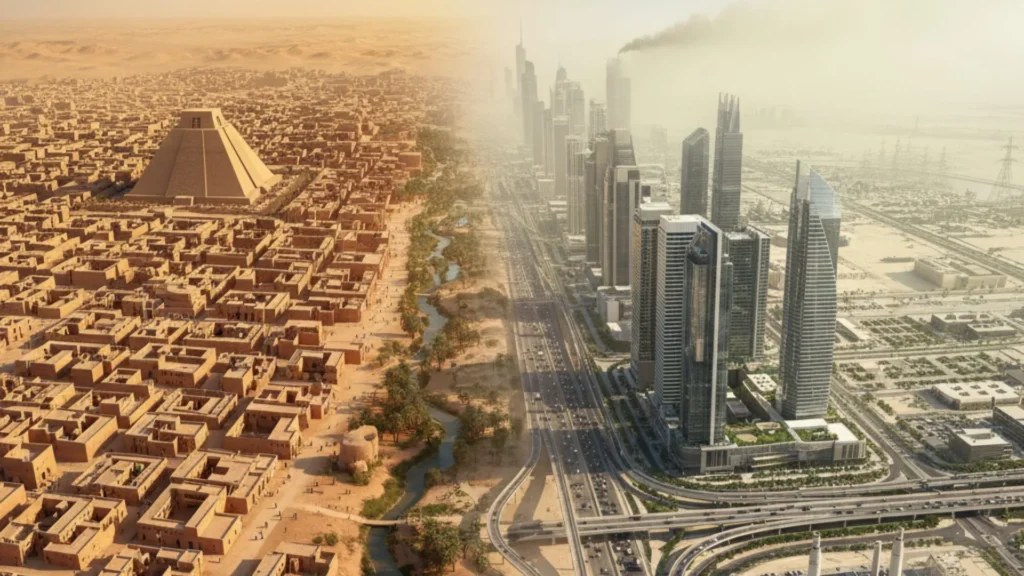
Across the world’s harshest deserts, ancient civilizations built thriving cities using ingenious planning, water management, and community-centered design. From Mesopotamia’s canals to Petra’s rock-cut reservoirs, these societies turned scarcity into resilience. Strategies balanced survival with cultural expression, blending practicality and spirituality in the urban form. Today, as modern cities face rising heat and dwindling water, these desert legacies offer powerful lessons in sustainable living.
Introduction
“As modern cities grapple with water scarcity and extreme heat, it is easy to forget that ancient civilizations thrived for centuries in harsher deserts with fewer resources.”
Throughout history, civilizations have emerged in some of the harshest desert landscapes. Despite limited water, scorching temperatures, and barren landscapes, these communities developed urban planning strategies that sustained life and culture. Unlike fertile river valleys, where abundance supported growth, desert settlements demanded innovation in resource management and architecture. Examining desert cities reveals how environmental constraints influenced spatial planning and how cultural practices were intertwined with survival strategies.
This article explores urban planning in key desert civilizations, including Ancient Egypt, Mesopotamia, Petra, the Persian Empire, the Indus Valley, and Islamic desert cities. Each case study illustrates different approaches to water systems, architecture, and urban form, showing how ancient societies adapted to scarcity with creativity. These lessons remain relevant today as modern cities in arid regions face increasing challenges from climate change, drought, and urban expansion (Arezou, 2008; Planetizen, 2024).
Desert cities, shaped by heat, aridity, and scarcity, demand innovative urban planning to ensure resilience, sustainability, and thriving communities.
Ancient Egypt flourished within one of the world’s most extreme deserts, yet the Nile River transformed the barren environment into a fertile corridor of life. Urban planning in Egypt was defined by this unique geography. Cities such as Thebes and Memphis were strategically located along the Nile to access irrigation and trade. Agricultural fields were carefully laid out on floodplains, while settlement clusters occupied elevated areas safe from annual inundations. Egyptian towns reflected a balance between religious order and practical necessity, with temples and palaces forming central nodes surrounded by dense residential quarters.
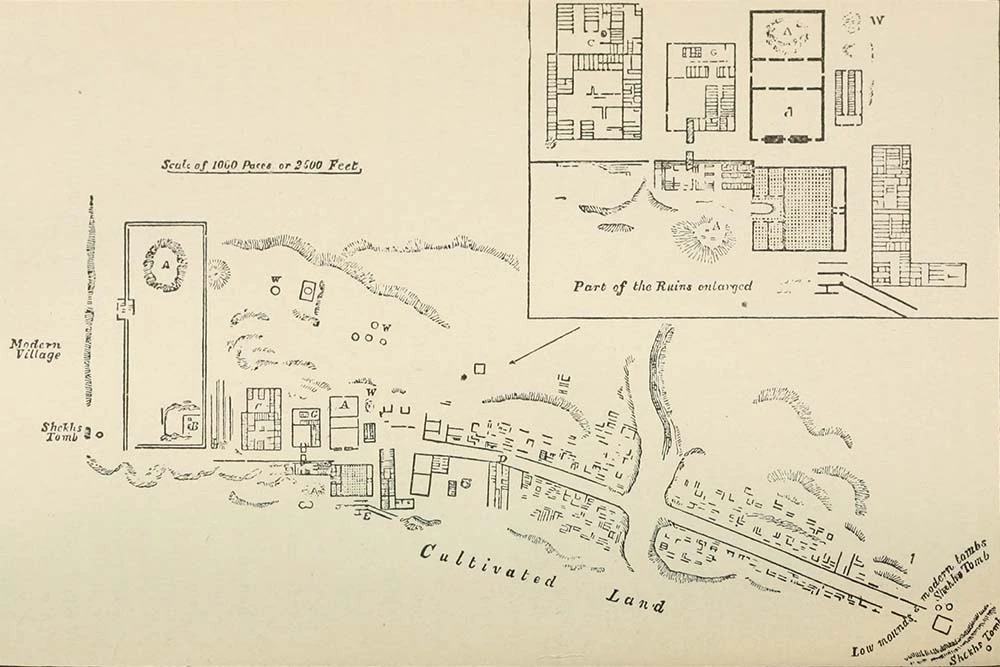
The design of cities like Amarna also revealed strict axial planning, aligning streets and structures with cosmological beliefs (Ierek, 2018). At the same time, mudbrick construction, narrow streets, and shaded courtyards helped mitigate heat in the arid climate. This integration of environmental management and symbolism created one of history’s most resilient civilizations (UNESCO, 2024).
Amarna’s axial plan aligned with the Nile, linking Palace, Sun Temple, Aten Temple, with floodplain cultivated for agriculture.
Source: Website Link
Mesopotamia: Irrigation and the Birth of Cities
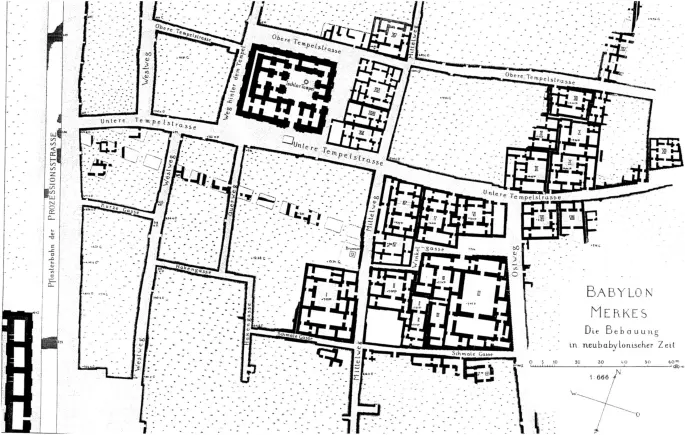
If Egypt depended on one river, Mesopotamia thrived between two. The Tigris and Euphrates rivers supported some of the earliest urban centers, including Ur, Uruk, and Babylon. Here, irrigation networks were the foundation of city planning. Complex canal systems distributed water across arid plains, enabling intensive agriculture and urban growth. Unlike Egypt’s linear Nile settlements, Mesopotamian cities were compact and circular, often fortified with mudbrick walls to protect against both enemies and desert winds. The city of Uruk, considered the world’s first true city, featured monumental architecture like ziggurats that dominated skylines while residential zones spread around them (Childe, 1950; Arezou, 2008). Babylon further exemplified advanced planning, with wide ceremonial avenues, gardens, and a sophisticated drainage system. Housing blocks were arranged in dense clusters, maximizing shade and minimizing heat exposure.
Mesopotamia demonstrated how hydraulic engineering and urban form could transform arid landscapes. However, over-irrigation and salinization eventually degraded soils, reminding us that unsustainable water management could destabilize desert societies (Decade on Restoration, 2022).
Plan of Babylon showcased ziggurats, ceremonial avenues, gardens, drainage, with dense housing clusters spreading around monumental architecture.
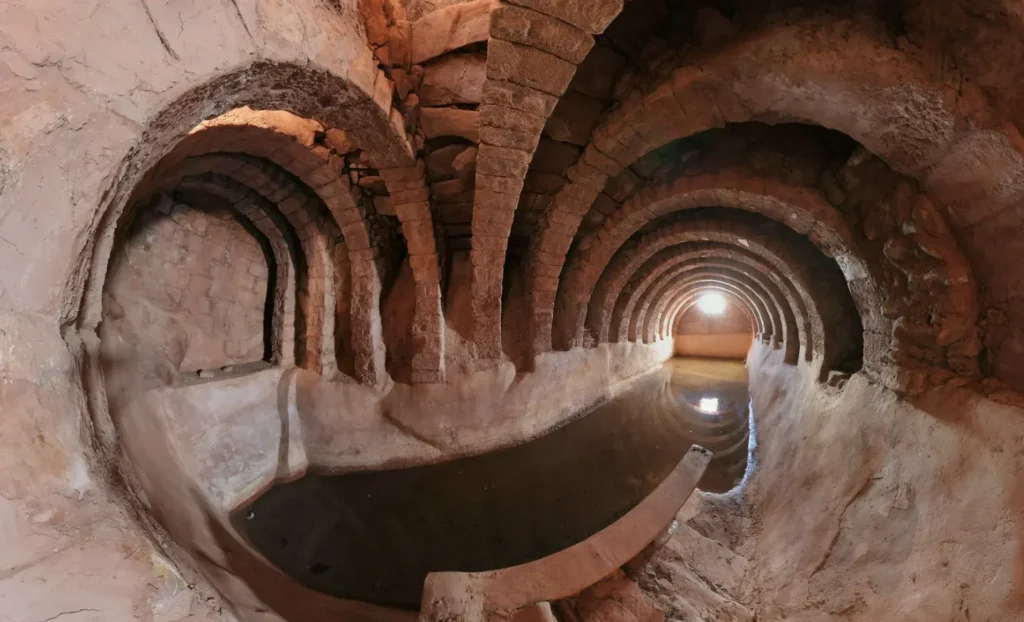
In southern Jordan, the Nabataean city of Petra represents one of the most remarkable adaptations to desert conditions. Located in rugged sandstone mountains with minimal natural water, Petra survived by harnessing every drop through a sophisticated hydraulic system. Channels carved into cliffs, rock-cut cisterns, and covered storage tanks captured rainwater and redirected flash floods into reservoirs (StoryMaps, 2023). This mastery of water engineering allowed Petra to support tens of thousands of inhabitants and serve as a vital trading hub along caravan routes connecting Arabia, Egypt, and the Mediterranean.
The city’s layout was carefully integrated into its rocky environment, with monumental tombs and temples carved directly into cliffs, blending architecture with geology. Streets were colonnaded and lined with markets, reflecting both functional needs and cultural grandeur. Petra’s planning emphasized resilience in an unforgiving climate while projecting the wealth of a cosmopolitan society. Although the city declined after shifts in trade routes and earthquakes, Petra remains a striking example of ecological adaptation and urban ingenuity (UNESCO, 2024).
Ancient Nabatean cistern on Jabal Haroun, Petra, shows low water levels after an exceptionally dry rainy season
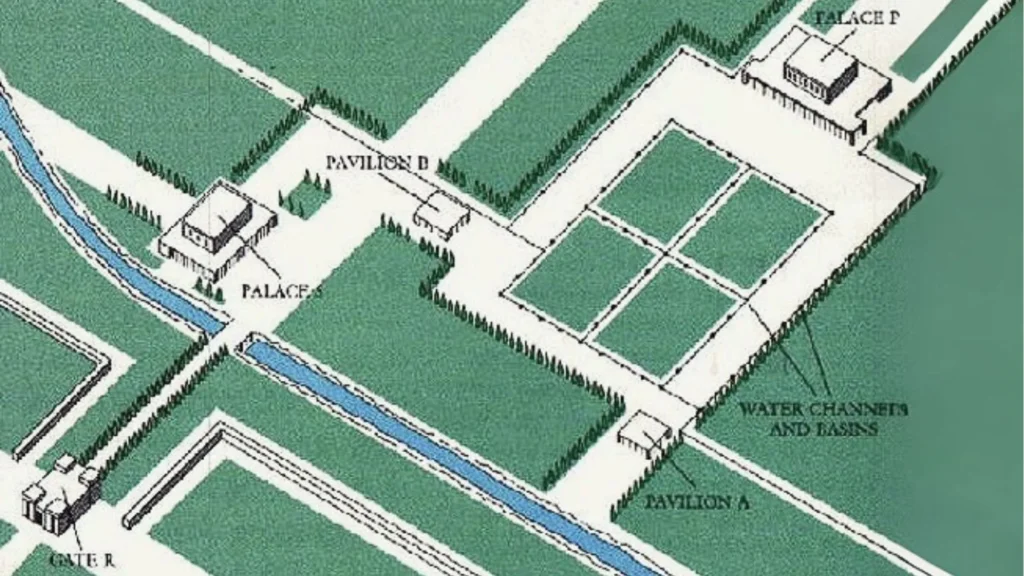
Persian urban planning introduced a new layer of sophistication in desert environments. Cities such as Pasargadae and Ardashir-Xwarrah demonstrated highly organized layouts combining geometric order with environmental responsiveness. Unlike earlier organic settlements, Persian cities were often designed on orthogonal grids with monumental axes linking palaces, gardens, and religious complexes (ResearchGate, 2019). Water played a central role in this design. The Persians perfected qanats, underground channels that transported water across long distances without evaporation, sustaining agriculture and urban life in arid landscapes.
The city of Ardashir-Xwarrah was deliberately planned to reflect Sasanian cosmology, with circular layouts symbolizing unity and divine order. Persian urbanism also emphasized gardens, known as pairidaeza, which provided green relief in harsh desert climates and later inspired Islamic garden traditions. These cities reveal how ideology and environmental engineering were fused into spatial form. (Arezou, 2008).
Persian Gardens at Pasargadae used geometric designs with 900 meters of carved limestone channels transporting water across the landscape.
Indus Valley: Desert Margins and Planned Settlements
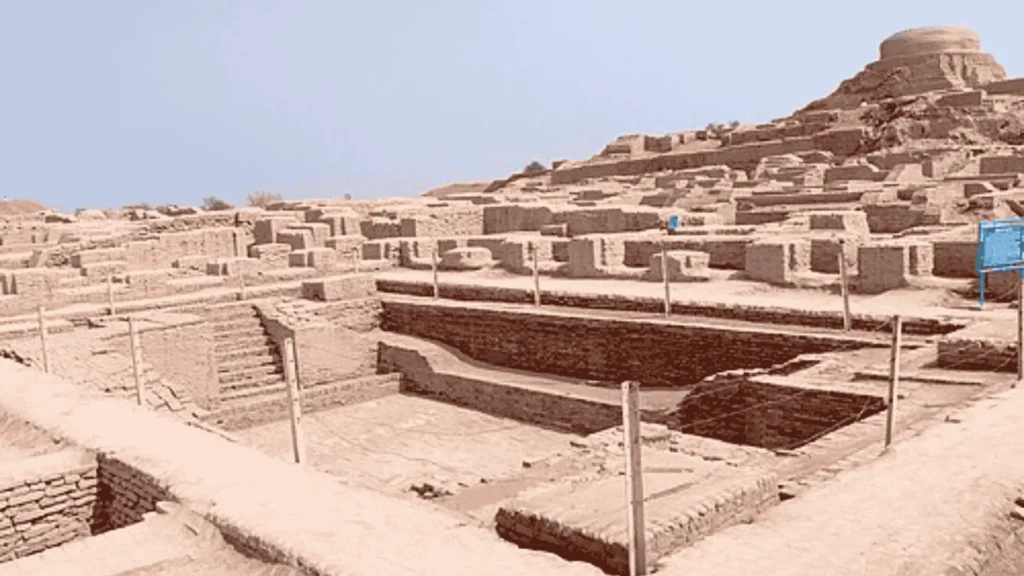
The Indus Valley Civilization, though often associated with fertile floodplains, also extended into semi-arid zones where planning adapted to scarce water. Cities such as Mohenjo-Daro and Harappa featured some of the most advanced planning of the ancient world, with grid-based streets, standardized housing blocks, and well-planned drainage systems (ScienceDirect, 1992). In these settlements, water storage was central. Great reservoirs, wells, and bathing platforms were distributed across neighborhoods, ensuring accessibility even in dry seasons. The orientation of streets optimized airflow, reducing heat in hot climates, while thick mudbrick walls provided insulation. What distinguished the Indus Valley was its emphasis on civic infrastructure rather than monumental palaces or temples. This suggests an urban culture focused on collective well-being and resilience. Semi-arid settlements such as Dholavira in Gujarat further highlight adaptation, with large water tanks carved into bedrock and stepwell-like systems for capturing rainwater. The Indus Valley demonstrates how rational planning, hygiene, and water management enabled arid cities to flourish sustainably for centuries (UNESCO, 2024).
The Great Bath with neighborhood bathing platforms provided communal access to water, ensuring hygiene and resilience during dry seasons
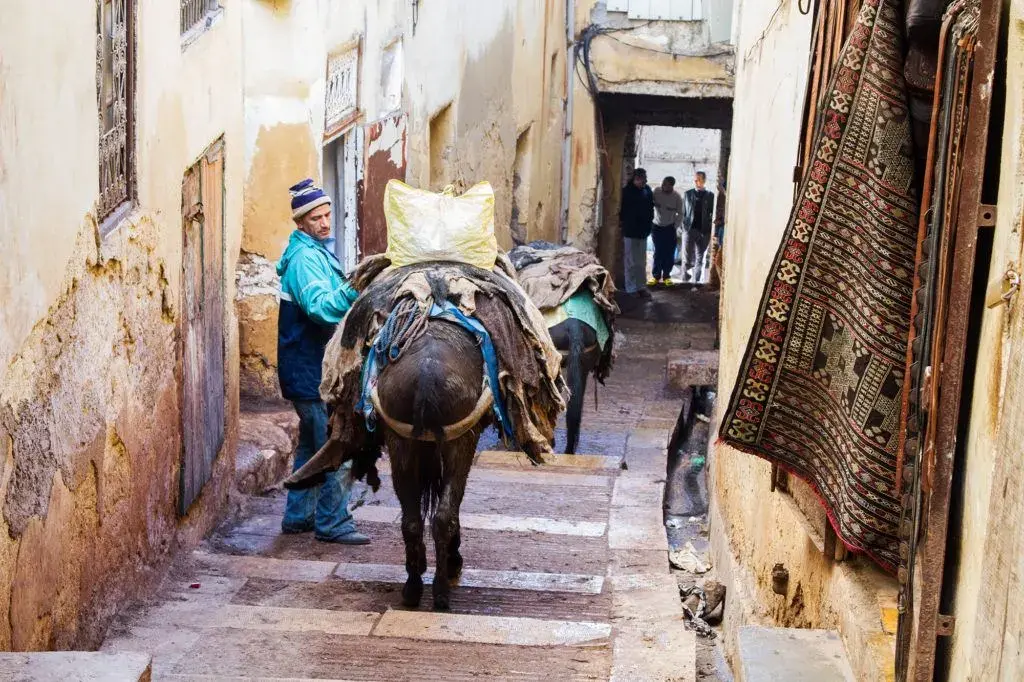
In the medieval period, Islamic urbanism reshaped desert city planning with a focus on climate responsiveness and religious function. Cities such as Cairo, Baghdad, and Marrakesh developed compact layouts with winding streets that created shade and reduced wind exposure (Sage, 2006). At the heart of these cities were mosques, markets (souks), and caravanserais that structured urban life around community and commerce. A defining feature was the courtyard house, an inward-facing dwelling that preserved privacy while creating a cool microclimate with gardens and fountains. Water systems, often inherited from Persian qanats, were integrated into fountains, hammams, and public cisterns.
Walls and gates controlled access, providing both defense and climate regulation. Unlike earlier empires that emphasized monumental order, Islamic desert cities developed organically, adapting to the terrain and the needs of trade. Their flexible yet climate-sensitive forms allowed them to thrive across North Africa, Arabia, and Persia (Arezou, 2008; WHC, 2024).
Narrow winding streets in the souks of Marrakesh created shade, minimized wind exposure, and nurtured cooler, vibrant marketplaces
Looking across these civilizations reveals both shared strategies and unique innovations in desert urban planning. Water management was the common foundation, from Nile irrigation and Mesopotamian canals to Petra’s reservoirs and Persian qanats. Architecture responded to climate with shaded streets, thick walls, and courtyards that moderated heat. At the same time, cultural values shaped spatial forms: Egyptian axial planning reflected cosmology, Persian cities embodied geometric symbolism, and Islamic cities prioritized community and privacy.
Another key lesson is the fragility of desert urbanism. Many civilizations declined due to over-irrigation, shifting trade routes, or environmental shocks. Yet their resilience strategies remain instructive for modern planning in arid regions. As contemporary cities in deserts, such as Phoenix, Dubai, and Riyadh, confront water scarcity and rising temperatures, they can draw inspiration from these ancient systems of adaptation (Planetizen, 2024; Decade on Restoration, 2022).
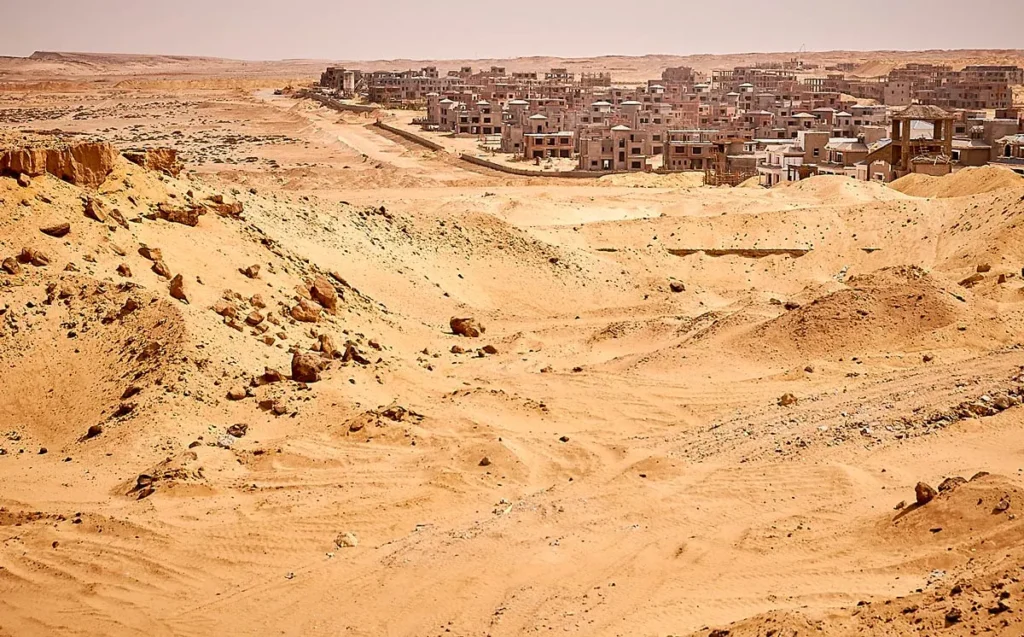
Modern desert cities face climate challenges yet can learn resilience from ancient adaptive planning.
Source: author
Conclusion
Ancient desert cities demonstrate that human creativity can transform even the harshest environments into thriving urban centers. From the Nile to the Indus and from Petra to Persia, desert societies pioneered resilient planning, water management, climate-responsive architecture, and spatial organization that balanced survival with cultural meaning. These cities were not simply reactive to scarcity but turned challenges into opportunities for innovation. Their legacies remind us that sustainability in arid environments depends on aligning urban form with ecological limits and social needs.
While many desert civilizations eventually declined, their planning principles remain relevant in an era of accelerating climate stress. By revisiting the principles of these ancient desert cities, contemporary planners and designers can find innovative models for resilience that blend technology, culture, and environment in harmonious ways. The desert, once seen as inhospitable, thus emerges as a stage for some of the most remarkable achievements in the history of urban planning (ResearchGate, 2019; UNESCO, 2024). What appears dystopian today may be transformed into resilience if we embrace the timeless lessons of ancient urban planning.
References
Ahmed, S. (2019). Water and Urban Life in Ancient Egypt. Cairo: American University in Cairo Press.
Angelakis, A.N. and Rose, J.B. (2014) ‘Ancient civilizations and sanitation systems: mesopotamia, Egypt, Crete, Greece, and Rome’, Water Science and Technology: Water Supply, 14(3), pp. 436–446.
Becker, H. (2018) Mesopotamian Cities: The Invention of Urban Life. Oxford: Oxford University Press.
Butzer, K.W. (2016) ‘Early hydraulic civilizations in Egypt: A study in cultural ecology’, University of Chicago Geography Research Papers, 170, pp. 1–134.
Crouch, D.P. (2021) Water Management in Ancient Civilizations. New York: Routledge.
El Faïz, M. (2005) Les Jardins de l’Islam: Agriculture et symbolique. Paris: Flammarion.
Lahiri, N. (2015) The Archaeology of the Indus Valley Civilization: Recent Perspectives. New Delhi: Permanent Black.
Mays, L.W. (2010) Ancient Water Technologies. Dordrecht: Springer.
Oleson, J.P. (2008) ‘Nabataean water supply: Public and private’, in Bienkowski, P. (ed.) Petra: The Great City. London: Thames and Hudson, pp. 135–155.
Rosen, A.M. (2017) Civilizing Climate: Social Responses to Climate Change in the Ancient Near East. Lanham: Rowman & Littlefield.
Wright, R.P. (2010) The Ancient Indus: Urbanism, Economy and Society. Cambridge: Cambridge University Press.
Yannopoulos, S.I., Lyberatos, G. and Theodossiou, N. (2015) ‘Evolution of water supply through the centuries: From antiquity to the present’, Water, 7(12), pp. 5026–5045
Aaditya Kuyyamudi
About the Author
Aaditya Kuyyamudi is an architecture student at Manipal School of Architecture and Planning, exploring how urban design can spark inclusive, walkable, and climate-resilient cities. His work reimagines streets as stories and cities as vibrant, equitable public realms shaped by community and sustainability.
“Let’s explore the new avenues of Urban environment together “
We use cookies on our website to give you the most relevant experience by remembering your preferences and repeat visits. By clicking “Accept”, you consent to the use of all the cookies. Read More
This website uses cookies to improve your experience while you navigate through the website. Out of these, the cookies that are categorized as necessary are stored on your browser as they are essential for the working of basic functionalities of the website. We also use third-party cookies that help us analyze and understand how you use this website. These cookies will be stored in your browser only with your consent. You also have the option to opt-out of these cookies. But opting out of some of these cookies may affect your browsing experience.
Necessary cookies are absolutely essential for the website to function properly. These cookies ensure basic functionalities and security features of the website, anonymously.
Cookie
Duration
Description
cookielawinfo-checkbox-analytics
11 months
This cookie is set by GDPR Cookie Consent plugin. The cookie is used to store the user consent for the cookies in the category "Analytics".
cookielawinfo-checkbox-functional
11 months
The cookie is set by GDPR cookie consent to record the user consent for the cookies in the category "Functional".
cookielawinfo-checkbox-necessary
11 months
This cookie is set by GDPR Cookie Consent plugin. The cookies is used to store the user consent for the cookies in the category "Necessary".
cookielawinfo-checkbox-others
11 months
This cookie is set by GDPR Cookie Consent plugin. The cookie is used to store the user consent for the cookies in the category "Other.
cookielawinfo-checkbox-performance
11 months
This cookie is set by GDPR Cookie Consent plugin. The cookie is used to store the user consent for the cookies in the category "Performance".
viewed_cookie_policy
11 months
The cookie is set by the GDPR Cookie Consent plugin and is used to store whether or not user has consented to the use of cookies. It does not store any personal data.
Functional cookies help to perform certain functionalities like sharing the content of the website on social media platforms, collect feedbacks, and other third-party features.
Performance cookies are used to understand and analyze the key performance indexes of the website which helps in delivering a better user experience for the visitors.
Analytical cookies are used to understand how visitors interact with the website. These cookies help provide information on metrics the number of visitors, bounce rate, traffic source, etc.
Advertisement cookies are used to provide visitors with relevant ads and marketing campaigns. These cookies track visitors across websites and collect information to provide customized ads.