Heat resilient cities in India: shaded street with trees and cool roofs reducing urban heat

An evidence-led assessment of the emerging shift from heat emergency response to heat-sensitive urban development.

India’s heat challenge is no longer only a disaster-management problem. It is increasingly an urban planning, housing, public-health, energy and social-equity problem. Heatwaves are acute meteorological events, but their human consequences are shaped by the city: roof materials, street shade, housing quality, water availability, access to electricity, working conditions, tree cover, transport waiting areas and the capacity of local institutions to act before, during and after an extreme-heat period.

This distinction matters because India’s urbanisation is creating long-lived physical conditions. Buildings, road corridors, layouts and land-use decisions made today will influence exposure for decades. A heat warning can reduce immediate harm, but it cannot by itself cool a metal-roofed dwelling, shade a market street, reduce the surface temperature of an expansive paved site or provide a safe thermal refuge for a delivery worker. Heat resilience therefore requires a policy shift from responding to dangerous days to systematically reducing routine urban heat exposure.

The policy landscape is beginning to move in this direction. India’s Cooling Action Plan was launched in 2019 as a cross-sector strategy for sustainable cooling, while the Ministry of Housing and Urban Affairs and the National Institute of Urban Affairs have more recently advanced a Building Heat Resilient Cities Programme across 12 cities. The programme’s potential lies in connecting heat-health preparedness with master plans, building approvals, public-realm design, infrastructure investment and municipal budgeting.

This article argues that India’s emerging urban cooling agenda will be effective only if it treats heat as a spatially unequal condition and makes cooling performance a normal requirement of city-making. Heat action plans remain essential, but they must be complemented by place-specific cooling policies, enforceable development controls, retrofit finance and accountability for outcomes in the neighbourhoods where exposure is highest.

Heat Is an Urban Design and Public Health Question

Extreme heat affects the body directly, but the urban environment determines who can avoid it, who must work through it and who remains exposed overnight. The World Health Organization identifies heat as a major health risk and emphasises heat-health action plans, early-warning systems, public advice and targeted protection for high-risk populations. Its guidance also identifies the need to protect people in facilities, schools and other settings without access to cooling.

The relevant urban condition is not simply high afternoon air temperature. It is the combination of air temperature, humidity, radiation, wind, surface temperature, duration of exposure and the ability to recover at night. Dense built form, dark and impervious surfaces, limited vegetation, waste heat from vehicles and air-conditioning systems, and reduced ventilation can intensify local heat stress. A city-wide temperature reading can therefore conceal radically different thermal realities across neighbourhoods.

A low-income household in a tightly packed settlement with a corrugated-metal roof, minimal cross-ventilation and unreliable electricity is not exposed to heat in the same way as a household in a shaded, insulated and air-conditioned apartment. Similarly, a street vendor, sanitation worker, construction worker, traffic police officer or delivery rider cannot simply follow the same advice as a person who can remain indoors. The Ministry of Housing and Urban Affairs has recommended shaded vending zones, hydration, cooling centres, flexible working hours and timely heat alerts for outdoor workers.

Urban heat islands do not explain every heatwave, and no single physical intervention can be assumed to reduce health risk everywhere. Regional climate, humidity, air pollution, indoor conditions, age, pre-existing illness, income, occupation and access to care all influence outcomes. This complexity strengthens the case for fine-grained diagnosis rather than generic design solutions.

WHO Heat and Health

Government of India parliamentary response on heat protection for outdoor workers

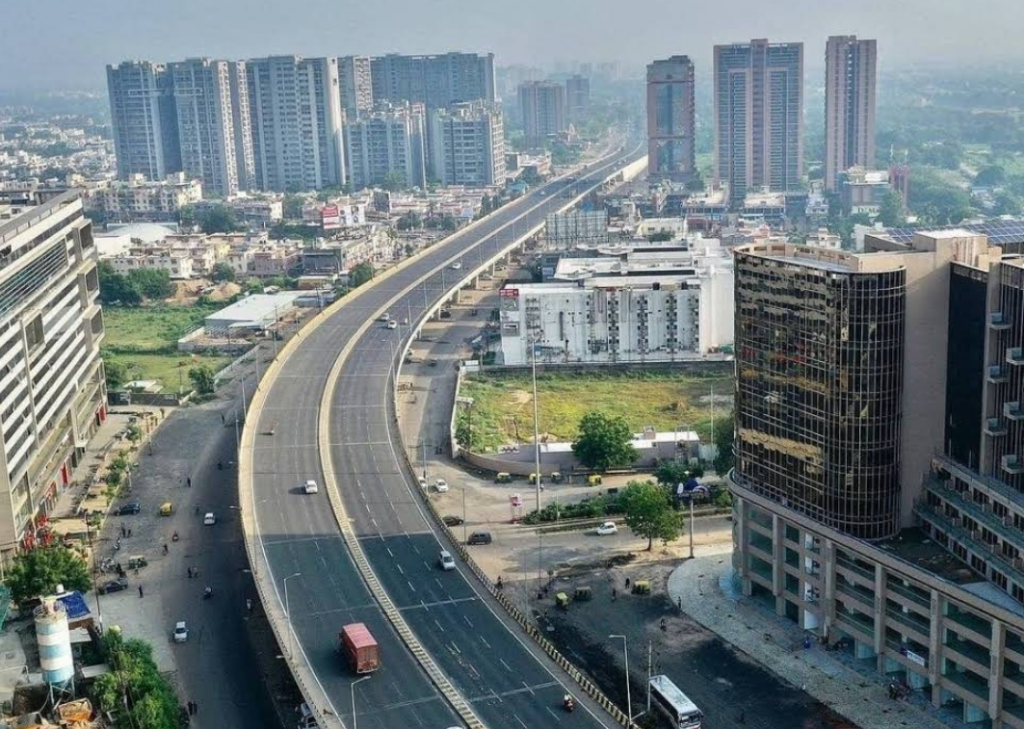
Suggested photograph: Ahmedabad urban skyline, showing the scale of built development in a heat-exposed Indian city.
Image link: https://upload.wikimedia.org/wikipedia/commons/0/09/Ahemdabad_Skyline.jpg
Suggested caption: Heat resilience must be embedded in the ordinary fabric of rapidly growing Indian cities.
Credit: Anmay204, Wikimedia Commons, CC BY-SA 4.0. Credit the photographer, link to the licence, state whether the image has been modified, and share adaptations under the same licence.

From Heat Action Plans to the Building Heat Resilient Cities Programme

India has substantial experience with heat preparedness. Heat action plans generally combine weather forecasting, alerts, public communication, health-system readiness and targeted protective measures. The National Programme on Climate Change and Human Health provides the public-health institutional setting for heat-related illness preparedness and reporting.

The new policy question is whether Indian cities can move from short-duration emergency response to durable heat-risk reduction. Public communications by the National Institute of Urban Affairs identify the Building Heat Resilient Cities Programme as implemented by its Climate Centre for Cities under Ministry of Housing and Urban Affairs guidance across 12 cities.

Contemporary reporting indicates that the programme was launched in March 2026 and that selected cities may receive support of up to Rs 5 crore for locally tailored heat-resilience planning and implementation. This reported funding figure should be treated cautiously until consolidated official programme documentation and city-level allocations are publicly available.

A programme should not be assessed merely by the number of participating cities, launch events or completed vulnerability maps. Its credibility will depend on whether it changes statutory plans, capital-investment priorities, building rules and maintenance practices. The essential question is whether a city’s next road, public housing project, industrial area, market redevelopment, school campus or transit interchange is measurably cooler and safer than its last.

The programme can institutionalise local heat-risk assessments, translate diagnosis into development controls, bridge departmental silos and establish monitoring that tests whether interventions improve lived conditions. A planted tree, reflective roof coating or shaded shelter is an output. Reduced exposure during the hottest hours is the outcome that matters.

National Programme on Climate Change and Human Health

NIUA Building Heat Resilient Cities Programme statement

Suggested photograph: Ahmedabad urban skyline, showing the scale of built development in a heat-exposed Indian city.
Image link: https://upload.wikimedia.org/wikipedia/commons/0/09/Ahemdabad_Skyline.jpg
Suggested caption: A heat-resilient city programme must connect public health with the institutions that shape urban form.
Credit: Anmay204, Wikimedia Commons, CC BY-SA 4.0. Credit the photographer, link to the licence, state whether the image has been modified, and share adaptations under the same licence.

India Cooling Action Plan A Necessary but Incomplete Urban Framework

The India Cooling Action Plan is central to the national policy context. Launched in 2019 by the Ministry of Environment, Forest and Climate Change, it set a 20-year horizon to 2037-38 and linked cooling demand, energy efficiency, refrigerant transition, thermal comfort, cold chains, transport and technology.

Its stated targets include reducing cooling demand across sectors by 20 to 25 percent, refrigerant demand by 25 to 30 percent and cooling-energy requirements by 25 to 40 percent by 2037-38, relative to its underlying scenarios. Its strongest conceptual contribution is that cooling is not reducible to air-conditioning. It includes passive design, building envelopes, appliances, refrigerants, district-scale systems, cold chains and human thermal comfort.

However, the ICAP is not itself an urban cooling code. Decisive action on urban form rests substantially with States, development authorities and urban local bodies. The operational gap is therefore one of translation: cities need building approval requirements, cool-roof standards, shaded streets and facilities, appropriate permeable-area and canopy targets, heat-sensitive project appraisal, ventilation-sensitive layouts and budget lines for maintenance.

The policy should not force a false choice between passive cooling and mechanical cooling. Passive measures reduce demand and improve conditions during power interruptions, but cannot guarantee safe temperatures in every climate or building type. Mechanical cooling can protect health, especially for vulnerable people, but inefficient and unplanned expansion increases peak electricity demand, waste heat and emissions. The policy hierarchy should reduce solar gain and heat storage first, improve natural ventilation where feasible, use efficient equipment where necessary and protect people without private cooling.

India Cooling Action Plan, Ozone Cell

Official ICAP launch release

Suggested photograph: Ahmedabad urban skyline, showing the scale of built development in a heat-exposed Indian city.
Image link: https://upload.wikimedia.org/wikipedia/commons/0/09/Ahemdabad_Skyline.jpg
Suggested caption: Sustainable cooling is a city-form question as much as an appliance-efficiency question.
Credit: Anmay204, Wikimedia Commons, CC BY-SA 4.0. Credit the photographer, link to the licence, state whether the image has been modified, and share adaptations under the same licence.

Ahmedabad The Strength and Limits of the Heat Action Plan Model

Ahmedabad remains the most influential Indian reference case because it showed that heat can be treated as a planned public-health risk. Following the severe 2010 heatwave, in which the recorded maximum temperature reached 46.8 degrees Celsius, Ahmedabad Municipal Corporation and partner institutions developed South Asia’s first heat-health action plan.

The programme brought together warning thresholds, inter-agency coordination, public messaging, health-worker training and targeted protection. A later evaluation comparing the pre-plan period of 2007-2010 with 2014-2015 concluded that the intervention was associated with reduced all-cause mortality, particularly at higher temperatures. The authors correctly use cautious language: the results suggest a beneficial effect rather than proving that the plan alone caused every observed change.

That restraint is important. Mortality patterns can change because of demographic shifts, health-care improvements, reporting systems, variation in heat intensity, adaptation behaviour and concurrent policies. Yet Ahmedabad established a replicable principle: local climate and health data can inform operational thresholds and response.

Preparedness does not automatically transform the thermal environment. A city can have excellent alerts while continuing to build unshaded bus stops, high-absorption paved corridors, poorly ventilated low-income housing and glass-intensive buildings with high cooling loads. The next generation of policy should link high-risk neighbourhoods to cool-roof retrofits, shaded walking routes, drinking-water access, health outreach and public cooling spaces.

Development and Implementation of South Asia’s First Heat Health Action Plan in Ahmedabad

Pilot Evaluation of India’s First Heat Action Plan on All Cause Mortality

Suggested photograph: Ahmedabad urban skyline, showing the scale of built development in a heat-exposed Indian city.
Image link: https://upload.wikimedia.org/wikipedia/commons/0/09/Ahemdabad_Skyline.jpg
Suggested caption: Ahmedabad demonstrated that locally tailored heat governance can be built from evidence and inter-agency coordination.
Credit: Anmay204, Wikimedia Commons, CC BY-SA 4.0. Credit the photographer, link to the licence, state whether the image has been modified, and share adaptations under the same licence.

Cooling the City Priorities for Buildings Streets and Public Space

An urban cooling policy must work across scales because heat is generated, stored and experienced differently across roofs, blocks, streets and districts. At building scale, cool roofs are a practical priority for exposed dwellings, public buildings and warehouses, but their effect depends on material performance, roof condition, insulation, ventilation, indoor use and maintenance. They are a useful component, not a universal substitute for sound building design.

Affordable and informal housing requires particular attention. C40 guidance for Indian cities recommends embedding heat-resilience checks and cooling measures in city planning and building approvals, while targeting retrofits in existing buildings. This is crucial because the buildings with the highest heat exposure are often least likely to be adequately served by conventional building regulation.

At street scale, shade is mobility infrastructure. Walking to transit, waiting for buses, street vending, school access and routine errands can become unsafe when routes lack shade, water and resting points. Trees are often indispensable, but policy must distinguish immediate shade provision from long-term canopy. Arcades, covered waiting areas and shaded vendor infrastructure may be needed while trees establish.

At district scale, blue-green infrastructure, permeable ground, protection of water bodies and reduced surface heat storage can support cooling and water management. These interventions require local calibration. The correct objective is not only a lower satellite-derived land-surface temperature, but safer pedestrian thermal comfort and improved indoor conditions in vulnerable housing.

C40 Guidance Towards Heat Resilient Buildings in Indian Cities

Suggested photograph: Ahmedabad urban skyline, showing the scale of built development in a heat-exposed Indian city.
Image link: https://upload.wikimedia.org/wikipedia/commons/0/09/Ahemdabad_Skyline.jpg
Suggested caption: Cooling interventions must operate across building, street and district scales.
Credit: Anmay204, Wikimedia Commons, CC BY-SA 4.0. Credit the photographer, link to the licence, state whether the image has been modified, and share adaptations under the same licence.

Equity Measurement and Municipal Delivery

Heat policy fails if it measures only a city average and finances only highly visible projects. The central equity question is who faces the highest exposure with the fewest means to avoid it. A municipal heat-vulnerability framework should combine hazard, exposure and adaptive capacity. Hazard includes temperature, humidity and hotspots. Exposure includes where people live, work, walk and wait. Adaptive capacity includes housing quality, tenure security, water access, electricity reliability, health conditions, income, age and access to services.

These maps should guide emergency operations and capital works. During heatwaves they can prioritise hydration, health outreach and worker protections. Across the year they can guide cool-roof programmes, street retrofits, housing improvements, shaded public space and service infrastructure. Equal distribution of intervention may preserve unequal risk, whereas targeted investment can address it.

Evaluation must measure lived outcomes. Useful indicators include pedestrian thermal comfort, indoor temperatures in representative housing types, access to shade and drinking water, accessibility of cooling refuges, heat-related illness, peak electricity demand, tree survival and canopy performance, and the distribution of benefits across income groups and occupations. A lower land-surface temperature alone does not demonstrate improved health, and a tree count does not demonstrate shade.

Municipal finance is the decisive test. Heat resilience should enter routine project appraisal. A road scheme should examine material and shade performance. A housing project should demonstrate indoor thermal conditions. A transit scheme should assess waiting conditions during peak heat. A redevelopment proposal should quantify canopy loss and replacement performance. This is how heat policy becomes ordinary urban governance.

Suggested photograph: Ahmedabad urban skyline, showing the scale of built development in a heat-exposed Indian city.
Image link: https://upload.wikimedia.org/wikipedia/commons/0/09/Ahemdabad_Skyline.jpg
Suggested caption: Heat resilience requires measurable benefits in the neighbourhoods where exposure and vulnerability overlap.
Credit: Anmay204, Wikimedia Commons, CC BY-SA 4.0. Credit the photographer, link to the licence, state whether the image has been modified, and share adaptations under the same licence.

Conclusion

India now has the foundations for a more mature urban heat policy: heat-health planning, the India Cooling Action Plan, a growing evidence base and the emerging Building Heat Resilient Cities Programme. The next task is implementation through the planning and investment decisions that shape thermal conditions every day.

The strongest approach is neither a purely emergency-led heat action plan nor a narrowly technological cooling strategy. It is a joined-up urban agenda that reduces exposure before heat emergencies occur, protects people who cannot avoid outdoor work, improves the thermal performance of existing housing, uses efficient cooling where it is necessary and evaluates outcomes at neighbourhood scale.

Ahmedabad showed that heat can be governed as a public-health risk. The national cooling agenda establishes that thermal comfort, energy and refrigerants must be considered together. The Building Heat Resilient Cities Programme can provide the bridge between these principles and city form, municipal systems and accountable investment. Its success should be judged by whether the hottest streets, homes and workplaces become demonstrably safer.

Suggested photograph: Ahmedabad urban skyline, showing the scale of built development in a heat-exposed Indian city.
Image link: https://upload.wikimedia.org/wikipedia/commons/0/09/Ahemdabad_Skyline.jpg
Suggested caption: The future of urban cooling will be decided through the everyday design and governance of Indian cities.
Credit: Anmay204, Wikimedia Commons, CC BY-SA 4.0. Credit the photographer, link to the licence, state whether the image has been modified, and share adaptations under the same licence.

References and Further Reading

Related reading on Urban Design Lab: Right to the City and the 3/30/300 Rule; Floodable Parks: How Urban Parks Manage Stormwater

Leave a Reply

Your email address will not be published. Required fields are marked *

This site uses Akismet to reduce spam. Learn how your comment data is processed.

Related articles

UDL Thesis Publication 2025

Call for Abstracts now open!

UDL GIS

MASTERCLASS

Urban Mapping, Analysis and Representation

Session Dates

12th-16th October, 2026

Curating the best graduate thesis projects globally!

Publish your work and get recognized globally!

Free E-Book

From thesis to Portfolio

A Guide to Convert Academic Work into a Professional Portfolio”

Urban Design Lab

Be the part of our Network

  • Stay updated on workshops, design tools, and calls for collaboration

  • Thesis Report Writing for Architecture and Urban Studies

    Join Our WhatsApp Group

    Recent Posts

    Sign up for our Newsletter

    “Let’s explore the new avenues of Urban environment together “

    E-Book- From Thesis To Portfolio

    A Guide to Convert Academic Work into a Professional Portfolio