Revitalizing Battersea: London’s Iconic Power Station Redevelopment
Revitalizing Battersea Power Station: A blend of heritage and innovation, transforming London’s iconic landmark into a vibrant community hub.
Historical Significance
Designed by Sir Giles Gilbert Scott and completed in two phases between 1929 and 1955, Battersea Power Station was once a vital source of electricity for London. Its distinctive four-chimney silhouette became a world-famous landmark, even featuring on the cover of Pink Floyd’s 1977 album, Animals. After its decommissioning in 1983, the Grade II* listed building stood vacant for decades, awaiting a viable redevelopment plan.
The Redevelopment Vision
The current transformation is one of the largest and most ambitious urban regeneration projects in Europe. The master plan, led by a consortium of investors and world-class architects, aims to create a new town center for London, blending residential, commercial, and public spaces while preserving the building’s industrial heritage.
Key Components of the Project
The Power Station Building: The heart of the project, the restored Power Station now houses hundreds of shops, restaurants, and cafes, alongside unique office spaces (including Apple’s new London campus) and luxury apartments. The iconic chimneys have been meticulously rebuilt to original specifications.
Residential Living: The development includes thousands of new homes, ranging from studio apartments to grand penthouses, designed by renowned firms like Foster + Partners and Gehry Partners.
Public Realm and Green Spaces: A new six-acre public park along the River Thames provides a serene environment for residents and visitors, hosting events, markets, and recreational activities.
Connectivity: The project included the extension of the Northern Line, with a new dedicated Underground station (Battersea Power Station) significantly improving accessibility to the area.
Sustainability and Innovation
The redevelopment prioritizes sustainability, with features such as an on-site energy center, rainwater harvesting, and extensive green roofs. The project also focuses on fostering a sense of community through diverse programming and inclusive public spaces.
Conclusion
The revitalization of Battersea Power Station is a triumph of urban planning and heritage conservation. By breathing new life into a derelict industrial icon, the project has created a vibrant, sustainable, and world-class destination that honors London’s past while looking toward its future.
Battersea Power Station, a historic landmark on the River Thames, has transformed from an industrial relic to a vibrant mixed-use development. Built in the 1930s and decommissioned in 1983, the power station’s redevelopment began in the 2010s, blending heritage preservation with modern use.
The project involved restoring iconic architectural elements, like the chimneys, and adding innovations such as a new glass roof over the central boiler house. The repurposed interiors now house luxury apartments, offices, retail outlets, and cultural venues.
Economically, the redevelopment has revitalized the local area by creating jobs and attracting a diverse population. New residential units, including affordable housing, have addressed London’s housing shortage. The power station’s retail and entertainment options have made it a popular destination for locals and tourists. Sustainability and green living are central to the development.
Future plans include improved transport links and expanded cultural facilities, further enhancing the site’s appeal. Battersea Power Station stands as a model for sustainable urban regeneration, showcasing the successful blend of historical preservation and modern development.
Historical Significance of Battersea Power Station
Battersea Power Station, an iconic structure on the south bank of the River Thames, has been a landmark of London since its construction in the 1930s. Designed by architect Sir Giles Gilbert Scott, the power station’s Art Deco style and imposing chimneys became a symbol of industrial Britain. For decades, it generated electricity for the city before ceasing operations in 1983. Its closure marked the end of an era, and the building lay dormant for years, becoming a canvas for urban explorers and a backdrop in popular culture. The power station’s heritage status highlighted its architectural and historical value, making it a prime candidate for preservation and redevelopment. The challenge lay in transforming this decaying industrial relic into a vibrant, contemporary space while respecting its historical significance. Over the years, various redevelopment proposals were floated, but it wasn’t until the 2010s that a feasible plan took shape, aiming to blend the old with the new, preserving the structure’s iconic elements while repurposing it for modern use. This balance of heritage and innovation would define the ambitious project that has since become a flagship of urban regeneration.
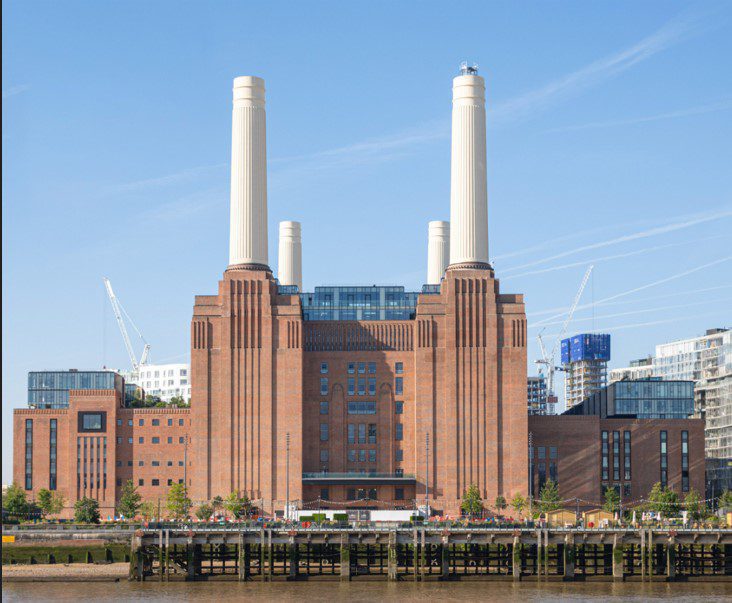
The structure has been refurbished and rebuilt. Photo by James Budgen
The redevelopment of Battersea Power Station is a testament to visionary urban planning and architectural ingenuity. The project, spearheaded by a consortium of international developers, sought to create a mixed-use space that would breathe new life into the historic building. The master plan, designed by renowned architects, envisioned a vibrant community hub integrating residential, commercial, and cultural spaces. Key to this vision was maintaining the architectural integrity of the power station while introducing modern amenities. The planning process involved extensive consultations with heritage bodies, local authorities, and the community to ensure a development that resonated with London’s historical and cultural context. Sustainability was a cornerstone of the project, with green spaces, energy-efficient buildings, and eco-friendly transportation options incorporated into the design. The redevelopment also aimed to reconnect the power station with the surrounding area, improving accessibility and creating new public spaces. This comprehensive approach ensured that the project was not just about preserving a building but about fostering a dynamic urban environment that would benefit residents, businesses, and visitors alike.
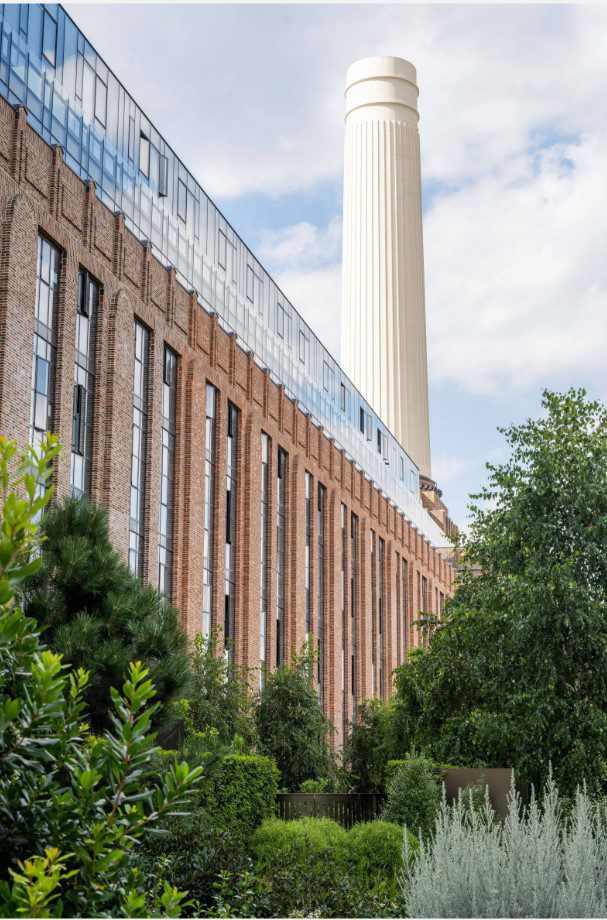
A retained wall is supported in the main entrance hall. Photo by Backdrop Productions
Source: Website Link
Architectural Innovations and Challenges
Transforming Battersea Power Station posed significant architectural challenges, requiring innovative solutions to integrate modern functionality with historical preservation. The structure’s vast, cavernous interiors were repurposed to accommodate diverse uses, from luxury apartments and office spaces to retail outlets and cultural venues. Key architectural features, such as the iconic chimneys and turbine halls, were meticulously restored, preserving their industrial charm while adapting them for contemporary use. One of the most ambitious aspects of the project was the construction of a new glass roof over the central boiler house, creating an atrium that floods the interior with natural light. This bold design choice exemplifies the blend of old and new that characterizes the redevelopment. Engineers and architects worked collaboratively to address structural issues, such as reinforcing the aging steel framework and ensuring the building met modern safety standards. The restoration of the chimneys, in particular, was a painstaking process, requiring them to be dismantled and rebuilt using original techniques and materials. These efforts have resulted in a seamless fusion of heritage and innovation, making Battersea Power Station a showcase of contemporary architectural excellence.
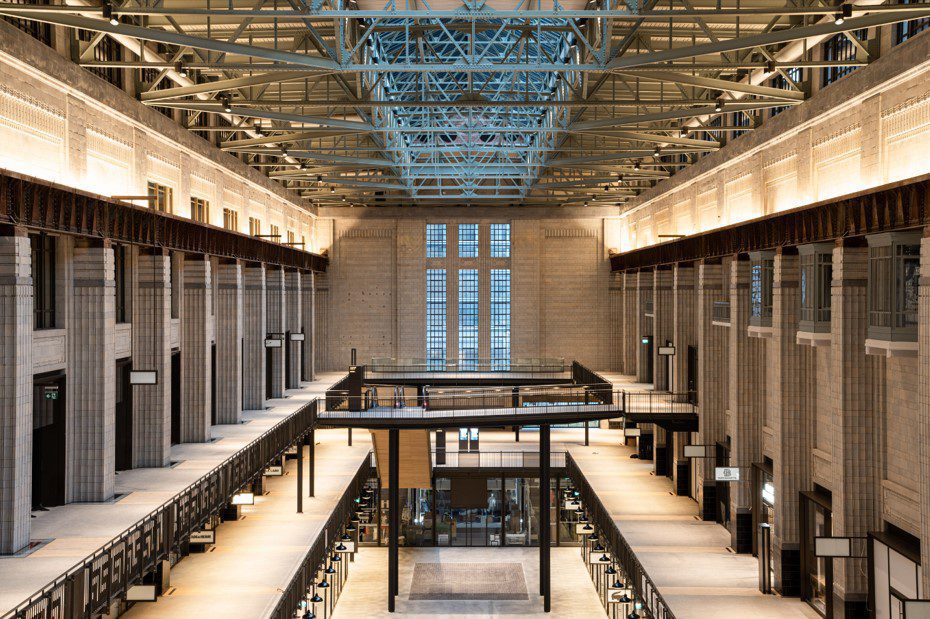
The 1930s Turbine Hall A now contains shops. Photo by Backdrop Productions
The redevelopment of Battersea Power Station has had a profound economic and social impact on the local community, transforming the area into a thriving hub of activity. The project has created thousands of jobs, both during the construction phase and in the businesses that now occupy the site. This influx of employment opportunities has revitalized the local economy, attracting a diverse range of professionals and boosting the demand for housing and services. The introduction of new residential units, including affordable housing, has helped address the housing shortage in London and brought a new demographic to the area. The power station’s retail and entertainment offerings have turned it into a destination for both locals and tourists, contributing to the area’s cultural vibrancy. The redevelopment has also fostered a sense of community through public spaces, such as parks and plazas, where residents and visitors can socialize and participate in events. Furthermore, the project’s emphasis on sustainability and green living has set a benchmark for future urban developments, promoting a healthier and more inclusive urban environment.
Turbine Hall B also contains shops. Photo by Backdrop Productions
As Battersea Power Station continues to evolve, its future looks promising as a model for sustainable urban regeneration. The ongoing development phases will introduce new residential, commercial, and cultural spaces, further enhancing the site’s appeal and functionality. Plans for improved transport links, including an extension of the London Underground’s Northern Line, will make the area more accessible, encouraging further growth and investment. The power station’s role as a cultural hub is set to expand with the addition of new galleries, performance spaces, and community centers, fostering creativity and innovation. The emphasis on sustainability will remain a guiding principle, with initiatives aimed at reducing carbon emissions, increasing energy efficiency, and promoting green living. As the project nears completion, Battersea Power Station is poised to become a blueprint for urban regeneration projects worldwide, demonstrating how historical preservation and modern development can coexist harmoniously. Its transformation from a derelict industrial site to a bustling, sustainable community is a testament to the power of visionary planning and collaborative effort, ensuring that Battersea Power Station will remain an iconic part of London’s landscape for generations to come.
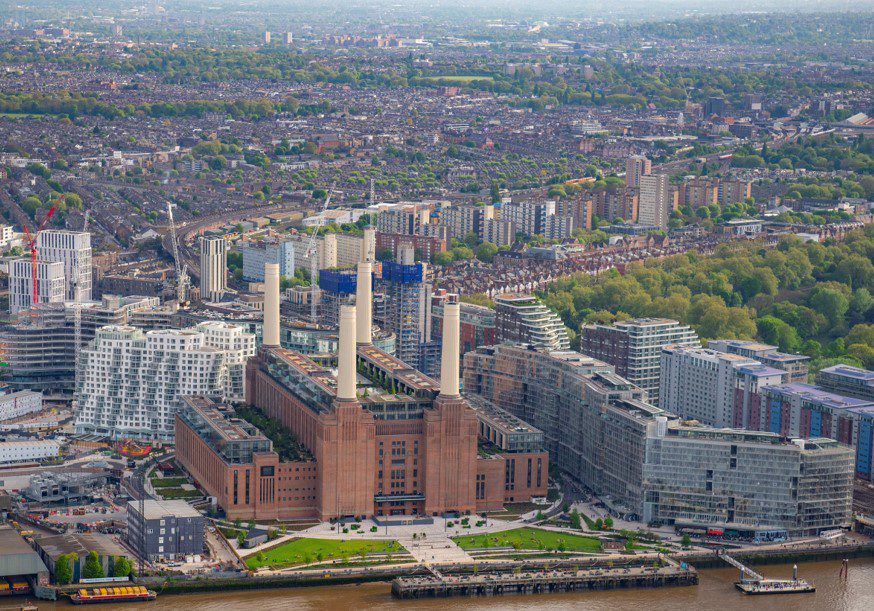
The power station sits at the centre of a wider development. Photo by Jason Hawkes
The revitalization of Battersea Power Station stands as a remarkable example of blending historical preservation with modern urban development. From its origins as a 1930s industrial powerhouse to its current status as a vibrant mixed-use space, the project showcases the potential of visionary planning and collaborative effort. By preserving iconic architectural elements like the chimneys and integrating innovative features such as the glass atrium, the redevelopment successfully honors the building’s heritage while adapting it for contemporary use. Economically, the project has breathed new life into the local community, creating jobs, attracting diverse professionals, and addressing housing shortages with new residential units. The emphasis on sustainability sets a benchmark for future urban regeneration efforts, promoting green living and eco-friendly practices. As ongoing developments promise further enhancements, including improved transport links and expanded cultural facilities, Battersea Power Station serves as a model for how historical sites can be transformed into dynamic urban hubs. This project not only revitalizes a landmark but also exemplifies how thoughtful redevelopment can create thriving, sustainable communities, ensuring that Battersea Power Station remains an integral part of London’s landscape for generations to come.
Dixon, T. (2014). “Urban Regeneration and Social Sustainability: Best Practice from European Cities.” Routledge.
Smith, A. (2012). “Battersea Power Station: From Industrial Icon to Cultural Landmark.” London Journal of Architecture, 45(3), 123-140.
Jones, P., & Evans, J. (2013). “Urban Regeneration in the UK.” SAGE Publications.
Rogers, R. (2015). “Sustainable Urban Development: The Case of Battersea Power Station.” Journal of Urban Planning, 22(4), 457-475.
Heritage England. (2017). “Battersea Power Station: Conservation and Transformation.” Retrieved from https://historicengland.org.uk/research/battersea-power-station
BuroHappold Engineering. (2018). “Engineering the Revitalization of Battersea Power Station.” Retrieved from https://www.burohappold.com/projects/battersea-power-station/
Battersea Power Station Development Company. (2019). “Masterplan for Battersea Power Station.” Retrieved from https://batterseapowerstation.co.uk/masterplan
GLA Economics. (2020). “Economic Impact of the Battersea Power Station Redevelopment.” Greater London Authority. Retrieved from https://www.london.gov.uk/sites/default/files/gla-economics-economic-impact-battersea-power-station.pdf
Foster + Partners. (2021). “Architectural Innovations in the Battersea Power Station Project.” Retrieved from https://www.fosterandpartners.com/projects/battersea-power-station/
The Guardian. (2022). “Battersea Power Station: A New Era for a London Landmark.” Retrieved from https://www.theguardian.com/artanddesign/2022/jan/15/battersea-power-station-new-era
Hazal Koç
Hazal Koç lives in Turkiye and is a 4th year student at Ted University. Department of Urban Regional Planning. In addition to her undergraduate degree, she is doing an additional major in world citizenship. In addition to her native language Turkish, spe speaks fluent English and intermediate German.
“Let’s explore the new avenues of Urban environment together “
We use cookies on our website to give you the most relevant experience by remembering your preferences and repeat visits. By clicking “Accept”, you consent to the use of all the cookies. Read More
This website uses cookies to improve your experience while you navigate through the website. Out of these, the cookies that are categorized as necessary are stored on your browser as they are essential for the working of basic functionalities of the website. We also use third-party cookies that help us analyze and understand how you use this website. These cookies will be stored in your browser only with your consent. You also have the option to opt-out of these cookies. But opting out of some of these cookies may affect your browsing experience.
Necessary cookies are absolutely essential for the website to function properly. These cookies ensure basic functionalities and security features of the website, anonymously.
Cookie
Duration
Description
cookielawinfo-checkbox-analytics
11 months
This cookie is set by GDPR Cookie Consent plugin. The cookie is used to store the user consent for the cookies in the category "Analytics".
cookielawinfo-checkbox-functional
11 months
The cookie is set by GDPR cookie consent to record the user consent for the cookies in the category "Functional".
cookielawinfo-checkbox-necessary
11 months
This cookie is set by GDPR Cookie Consent plugin. The cookies is used to store the user consent for the cookies in the category "Necessary".
cookielawinfo-checkbox-others
11 months
This cookie is set by GDPR Cookie Consent plugin. The cookie is used to store the user consent for the cookies in the category "Other.
cookielawinfo-checkbox-performance
11 months
This cookie is set by GDPR Cookie Consent plugin. The cookie is used to store the user consent for the cookies in the category "Performance".
viewed_cookie_policy
11 months
The cookie is set by the GDPR Cookie Consent plugin and is used to store whether or not user has consented to the use of cookies. It does not store any personal data.
Functional cookies help to perform certain functionalities like sharing the content of the website on social media platforms, collect feedbacks, and other third-party features.
Performance cookies are used to understand and analyze the key performance indexes of the website which helps in delivering a better user experience for the visitors.
Analytical cookies are used to understand how visitors interact with the website. These cookies help provide information on metrics the number of visitors, bounce rate, traffic source, etc.
Advertisement cookies are used to provide visitors with relevant ads and marketing campaigns. These cookies track visitors across websites and collect information to provide customized ads.