


The infrastructure of artificial intelligence is often described in abstract terms: cloud computing, digital transformation, data sovereignty and technological competitiveness. Yet the cloud has a physical address. It occupies land, requires electricity, depends on cooling systems and introduces substantial technical infrastructure into particular urban environments. As data centres expand, the question of where they should be located is becoming as consequential as the technologies they support.
In Thane, within the Mumbai Metropolitan Region (MMR), opposition to a proposed Amazon Web Services (AWS) hyperscale data centre has brought this contradiction into focus. Residents of Balkum, Majiwada and surrounding neighbourhoods have questioned the project’s location, environmental implications and approval process. Their concerns include electricity demand, water security, heat dissipation, noise, backup generators and the suitability of large-scale digital infrastructure within an increasingly residential urban landscape. The proposed development occupies approximately 53 acres, according to reporting by The Indian Express.
The controversy became more significant in October 2026, when Maharashtra established an expert committee chaired by former Atomic Energy Commission chairman Anil Kakodkar to examine data-centre impacts. On 22 October, opposition legislator Aaditya Thackeray asked the Chief Minister to pause the Thane project pending the committee’s findings.
The dispute raises a broader question about urban governance. Should the ability to attract strategic digital investment automatically establish the suitability of a particular site, or should location decisions remain subject to a demonstrable assessment of neighbourhood compatibility, infrastructure capacity and public interest?
This article argues that Thane represents a structural tension between investment-oriented industrial policy and place-sensitive urban planning. It examines the local controversy, Maharashtra’s permissive data-centre policy, the competing claims about resource consumption, the limits of conventional environmental clearance and the lessons offered by international regulatory approaches. The central proposition is that data centres should be evaluated not simply as buildings or economic assets, but as metropolitan infrastructure whose benefits and costs extend beyond their property boundaries.
Thane’s Dispute Is About Location, Not Simply Opposition to Technology
The proposed hyperscale facility in Balkum has become a focal point for local objections because of its relationship to existing residential neighbourhoods.
Residents associated with the Wake Up Thanekar campaign have questioned the implications of accommodating an unusually large, continuously operating technical facility near apartment complexes, older settlements and public institutions. Reporting by Hindustan Times documents demands for greater transparency concerning environmental permissions, water allocation, electricity requirements, emergency preparedness and the cumulative effects on neighbourhood life.
These concerns are not interchangeable with a categorical rejection of artificial intelligence. A community may recognise the importance of digital infrastructure while questioning whether a particular parcel of land is appropriate for its development.
This distinction is fundamental to planning.
Conventional site suitability involves more than establishing that a proposed activity is legally permissible. It requires examining neighbouring uses, infrastructure capacity, environmental sensitivity, transport access, potential externalities and compatibility with long-term spatial development objectives.
A data centre may create relatively limited routine passenger traffic compared with a large commercial office complex. Nevertheless, it can require extensive electrical infrastructure, cooling equipment, security arrangements, emergency power systems and specialised maintenance operations.
Its urban footprint must therefore be understood in several dimensions: the land occupied by its buildings, the supporting infrastructure required for operation, and the possible effects experienced by surrounding communities.
In Thane, this distinction matters because the proposed site forms part of an urban landscape where residential development and former industrial land increasingly coexist.
According to The Indian Express investigation published on 6 September 2026, the land previously accommodated industrial activity. Residents initially associated Amazon’s arrival with potential employment opportunities before learning more about the nature and scale of the planned facility.
That history complicates any simple distinction between industrial and residential land.
An industrial site’s previous use does not necessarily make every subsequent industrial or infrastructure activity appropriate. Equally, residential development around former industrial land does not automatically establish that all non-residential activities should be excluded.
The planning issue is whether the proposed land use remains compatible with its present surroundings and anticipated urban transformation.
A comparison of alternative sites would need to examine physical separation from sensitive receptors, high-voltage connections, availability of recycled water, drainage, transport access, cumulative infrastructure demand and development costs. Without such an assessment, arguments for either immediate approval or compulsory relocation remain incomplete.
This is why the Thane dispute should be interpreted as a question of spatial governance rather than merely a local environmental protest.
The residents are challenging not only the project but also the sequence of decision-making: when its location was selected, which alternatives were considered, what information was disclosed, and at what stage the affected public could meaningfully influence the outcome.
The distinction between consultation before site selection and consultation after substantial commitments have been made is critical. The latter may allow mitigation measures to be discussed while leaving the central location decision effectively unchanged.
The essential question is not whether Thane should participate in the digital economy, but whether the location of digital infrastructure should be determined principally by investment feasibility or by a transparent metropolitan planning process.
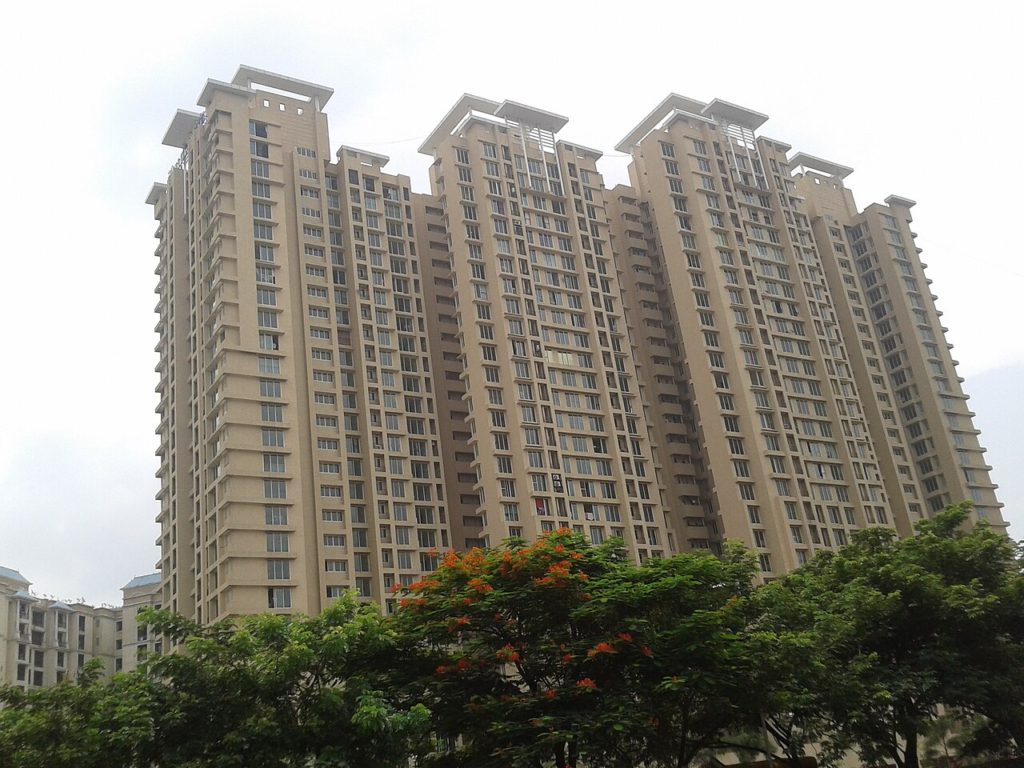
Maharashtra’s Data-Centre Policy Creates a Fundamental Spatial Planning Question
The controversy cannot be understood through the project alone. It must also be examined against the regulatory environment that enables data-centre development.
Maharashtra’s IT-ITeS Policy 2023 explicitly permits data centres in any zone, including residential zones, no-development zones and green zones. The policy also provides measures intended to facilitate investment, including infrastructure status, electricity-related incentives and operational support.
This provision is particularly consequential.
Zoning has historically served as an instrument for organising urban land uses and managing potentially incompatible activities. Contemporary planning has increasingly recognised the value of mixed-use development, particularly where it reduces travel demand and supports accessible neighbourhood services.
However, mixed-use development does not imply that every activity is equally appropriate in every location.
The appropriate degree of land-use flexibility depends on the characteristics of the proposed activity and its interactions with surrounding urban systems.
Data centres complicate conventional classifications. They may employ relatively few people on-site compared with large offices, but their infrastructure requirements can resemble those of industrial facilities. A campus can combine buildings resembling logistics warehouses with high-capacity electrical substations, backup generators, cooling installations and secure operating compounds.
Treating such infrastructure simply as an IT-related land use risks overlooking its operational characteristics.
Maharashtra’s policy reflects a legitimate economic-development objective: reducing location constraints and supporting investment in strategic digital infrastructure. Yet a broad permission to locate facilities across different zones does not establish that those zones are environmentally or functionally equivalent.
Legal permission is not the same as demonstrated site suitability.
A more discriminating regulatory approach would distinguish among small enterprise data centres, colocation facilities, hyperscale campuses and high-density AI computing installations. These facilities can differ substantially in power density, operational requirements, physical footprint and potential externalities.
The state’s policy could also be examined in relation to metropolitan development plans and local planning regulations. A state-level permission may widen the range of legally eligible sites, but local authorities still face the practical consequences of integrating new infrastructure into existing urban systems.
This creates a question of institutional responsibility.
If the state seeks to attract a strategic investment, but the municipal corporation must manage nearby roads, water distribution, sewerage, drainage, public health concerns and neighbourhood complaints, who is responsible for assessing the combined effects?
The difficulty is not necessarily that one institution has failed. It is that the relevant decisions may be distributed across institutions with different mandates.
Industrial promotion agencies may prioritise investment and operational facilitation. Electricity utilities assess connection feasibility. Environmental authorities evaluate compliance with applicable regulatory requirements. Municipal planning bodies consider development permissions and local infrastructure.
Each review can be technically valid within its jurisdiction while leaving a broader question insufficiently resolved: whether the project is the best use of that location when its cumulative metropolitan consequences are considered.
This fragmentation is especially significant in cities experiencing rapid land-use transformation.
A former industrial parcel may become surrounded by residential towers before the regulatory classification of the wider area fully reflects its changing urban character. Conversely, infrastructure expansion may require retaining some strategically located non-residential land.
Neither consideration should prevail automatically.
The appropriate response is a spatial suitability assessment that explicitly compares sites and identifies their trade-offs.
For Thane, this means that regulatory scrutiny should extend beyond whether the project satisfies the state’s permissive zoning provisions. It should examine whether its location is preferable to feasible alternatives in terms of infrastructure efficiency, neighbourhood impacts, environmental sensitivity and long-term metropolitan development.
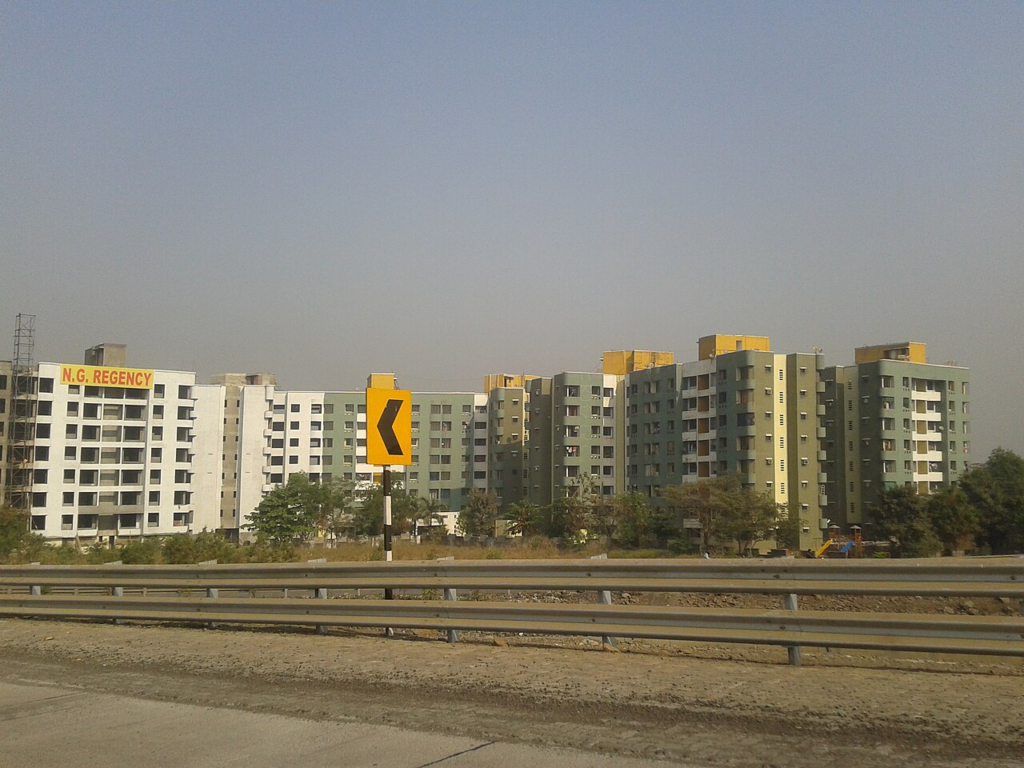
Water, Electricity and Heat: Separating Verified Design Claims from Urban Infrastructure Risks
Resource consumption has become central to the Thane controversy, but the available evidence requires careful interpretation.
The International Energy Agency’s Energy and AI report estimated global data-centre electricity use at approximately 415 terawatt-hours in 2024 and projected an increase to around 945 terawatt-hours by 2030 in its base scenario.
These figures demonstrate the growing energy significance of digital infrastructure. They do not, however, indicate how much electricity any individual facility will actually use.
In Thane, The Indian Express reported a projected electricity requirement of approximately 422 MW. This figure should not be confused with annual electricity consumption.
Megawatts express power capacity or demand at a point in time, while megawatt-hours measure energy consumed over a period. A proposed maximum demand cannot be converted into realistic annual consumption without assumptions about operating load, commissioning phases and utilisation.
Similarly, the project’s cooling system and electrical connection arrangements must be examined on their own terms rather than inferred from global averages.
A dedicated electrical connection does not eliminate wider system questions
Amazon states in its official explanation of the Thane project that the facility will obtain electricity through a dedicated high-voltage substation connected to the transmission network, rather than drawing from the local distribution network serving homes and businesses.
If implemented as described, this arrangement addresses an important concern: direct loading of the neighbourhood distribution network.
However, a dedicated connection does not make a facility independent of the wider electricity system.
Transmission capacity, upstream generation, grid stability, network augmentation and long-term electricity procurement remain relevant considerations. Whether additional infrastructure costs are borne by the developer, shared through regulated tariffs or recovered through other mechanisms is a separate question requiring utility documentation.
The existence of a dedicated substation therefore establishes an engineering arrangement, not proof that all broader economic or infrastructure consequences have been eliminated.
This distinction matters because public debate often treats grid separation as a binary condition. In practice, electrical networks are interconnected systems with multiple levels of capacity planning.
A credible assessment should identify the proposed maximum import demand, the approved connection arrangement, the source and financing of necessary network upgrades, and the expected electricity procurement strategy.
Cooling claims need to be tested against actual water balances
Water has generated an especially important discrepancy in reporting.
Amazon states that its Thane facility will use closed-loop cooling and will not consume water for cooling. According to the company’s published project statement, its anticipated total daily water requirement is 125 kilolitres, comprising 10 kilolitres for basic human needs and 115 kilolitres of treated sewage water for landscaping and irrigation.
In contrast, an earlier Hindustan Times report quoted a Thane Municipal Corporation official referring to an allocation of 12 million litres of treated sewage water per day.
These are materially different quantities.
The available reports do not establish whether the larger figure referred to an earlier allocation, an infrastructure provision, a different design stage or another planning basis.
It would therefore be methodologically unsound to treat the larger figure as the facility’s verified operating consumption. Equally, the company’s projected operating requirement should be tested against applicable permissions and subsequent measured consumption.
The appropriate planning response is to publish a reconciled water balance distinguishing approved allocation, design demand, source, storage, intended uses, discharge and actual metered consumption.
This would transform a dispute between competing numerical claims into a verifiable infrastructure assessment.
It is also important to distinguish treated wastewater from potable supply. Using reclaimed water may reduce competition for drinking water, but its wider implications depend on treatment capacity, existing reuse commitments, distribution infrastructure and reliability.
A wastewater source is not automatically surplus merely because it is non-potable. Its allocation must be evaluated alongside other municipal reuse possibilities.
Heat, noise and emergency generators require receptor-based assessment
Data centres convert most of their consumed electricity into heat that must ultimately be dissipated. However, the extent to which that heat affects neighbouring conditions depends on system design, discharge characteristics, ambient weather, building arrangement and local airflow.
Amazon states that its thermal-management systems will prevent harmful temperature effects in surrounding communities and that noise controls will comply with the Noise Pollution (Regulation and Control) Rules, 2000.
These are relevant design commitments, but the actual performance of the facility can only be established through appropriate modelling, commissioning tests and operational monitoring.
The same applies to backup diesel generators.
The Indian Express reported that 193 generators were planned as standby equipment. Amazon states that generators will operate principally during periodic testing and exceptional outages rather than continuously.
The reported number of generators does not by itself establish actual emissions or noise exposure. Those depend on installed ratings, fuel use, operating hours, exhaust treatment, acoustic enclosure performance and proximity to sensitive locations.
An adequate assessment should therefore consider both normal operation and reasonably foreseeable emergency or testing conditions.
The urban-planning implication is straightforward: compliance assessments must be spatially explicit. Noise and thermal modelling should evaluate conditions at nearby residential buildings, schools, healthcare facilities and other sensitive receptors, rather than relying solely on equipment specifications.
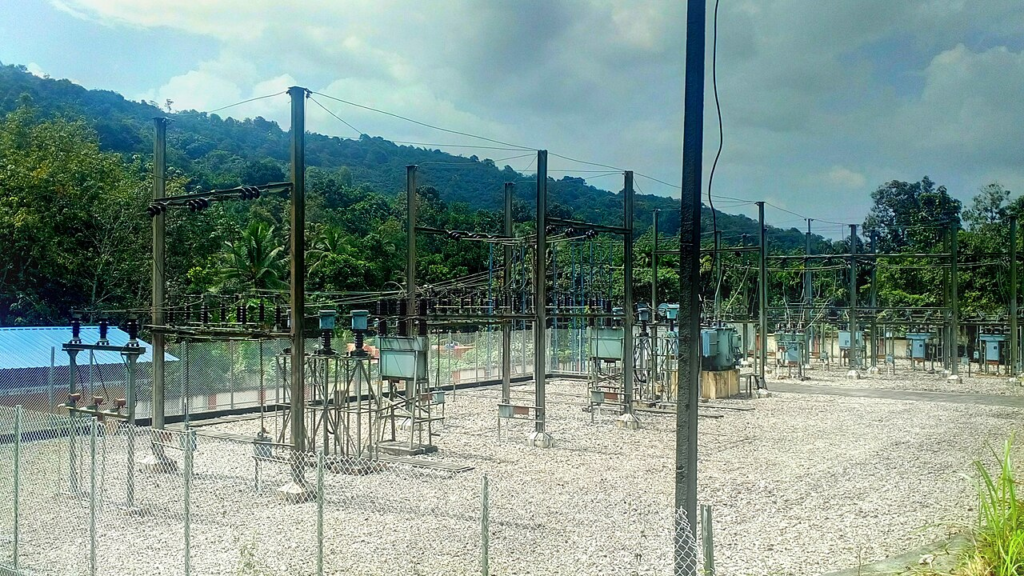
Environmental Clearance Is Necessary, but It Cannot Substitute for Metropolitan Planning
The Thane controversy also exposes the limits of treating environmental approval as the principal test of a large infrastructure project’s public acceptability.
In a Rajya Sabha response published by the Ministry of Environment, Forest and Climate Change on 6 August 2026, the government clarified that AI data centres do not automatically require environmental clearance merely because they are data centres.
However, projects falling within applicable building-and-construction or township-and-area-development categories under the Environmental Impact Assessment Notification, 2006, require prior environmental clearance.
The ministry also explained that relevant appraisals consider water availability, wastewater generation, recycling and safeguards, while water and air pollution compliance falls under the corresponding environmental legislation.
This regulatory structure provides important oversight.
Nevertheless, environmental clearance and comprehensive spatial planning answer different questions.
An environmental appraisal may establish whether a particular proposed project satisfies specified regulatory conditions. A metropolitan planning assessment should additionally determine whether the project is appropriate for its location compared with realistic alternatives.
These questions overlap, but they are not identical.
For example, a project might demonstrate that its emissions remain within applicable limits while still raising legitimate concerns about the concentration of technical infrastructure within a residential neighbourhood. Conversely, neighbourhood opposition alone does not demonstrate that the project violates environmental standards.
A rigorous assessment must separate environmental compliance from broader compatibility and public-interest evaluation.
The company’s published statement maintains that environmental-clearance documents are publicly available through the government’s PARIVESH system and that required publication procedures were followed.
That claim is relevant, but public availability and public comprehension are different matters.
Technical documents may be accessible without being presented in a form that allows residents to understand the practical implications for their immediate surroundings.
For the Thane project, meaningful transparency would involve a consolidated public disclosure package containing the approved site layout, major equipment locations, water balance, electrical connection arrangements, generator specifications, noise predictions, thermal assessment and relevant monitoring obligations.
The documents should also distinguish between approved designs and subsequently revised operating commitments.
This matters because technical designs can evolve. A change that reduces cooling water consumption, for example, may represent a genuine environmental improvement, but the revised figures should be traceable to updated engineering plans and permits wherever required.
The municipality should not have to rely exclusively on developer assurances to establish compliance, and residents should not have to reconstruct the project’s regulatory history from disconnected documents.
The recently announced state expert committee chaired by Anil Kakodkar presents an opportunity to examine the wider implications.
Its value will depend partly on whether the assessment is confined to engineering safeguards or also addresses the siting framework that made the location eligible in the first place.
The latter question is more consequential for future urban development.
Even a technically well-designed facility may expose a weakness in spatial planning if a city has no transparent mechanism for determining which locations are most suitable for infrastructure of comparable scale.
Environmental clearance can establish regulatory compliance; it cannot, by itself, establish that a particular land-use decision represents the best metropolitan planning outcome.

What Ireland, Singapore and the European Union Reveal About Governing Data Centres
The Thane dispute is not unique in exposing tensions between digital infrastructure growth and local resource constraints. International experience demonstrates that governments are increasingly treating data-centre expansion as a question of electricity planning, sustainability reporting and infrastructure governance.
The most useful comparisons are not necessarily cities that have rejected data centres. They are jurisdictions attempting to establish clearer conditions for their development.
Ireland: Electricity access has become a spatial planning instrument
Ireland offers a particularly relevant example because data-centre expansion has become a significant electricity-system planning issue.
According to the Commission for Regulation of Utilities, data centres accounted for 22% of Ireland’s national electricity demand in 2024.
In December 2025, the regulator published a new electricity connection policy for data centres.
The framework requires new connecting facilities to provide generation or storage capacity matching their requested maximum import demand, subject to specified requirements. It also establishes a requirement to meet at least 80% of annual electricity demand through additional renewable electricity projects in Ireland, with a transition period for delivery.
Most relevant to Thane, the policy explicitly requires system operators to consider the location of proposed connections in relation to network constraints.
This is a significant planning principle.
Electricity demand is not treated simply as a private requirement to be supplied wherever land can be acquired. Grid location becomes part of the development decision.
The Irish regulator has also emphasised the need for a state-led approach linking spatial planning, infrastructure development, environmental considerations and enterprise policy.
The comparison does not imply that India’s electricity system should adopt Ireland’s requirements without modification. Differences in market structure, energy supply, regulation and metropolitan geography are substantial.
It does demonstrate that digital infrastructure policy can make network capacity and location explicit approval considerations rather than treating them as secondary engineering matters.
Singapore: Digital expansion is being linked to resource efficiency
Singapore provides a different model.
Its Green Data Centre Roadmap, launched in May 2024, proposes additional data-centre capacity while linking future expansion to energy efficiency and greener electricity supply.
The roadmap identifies a near-term ambition to enable at least 300 MW of additional capacity through improved efficiency and green-energy deployment.
Singapore’s approach reflects its particular context as a compact, resource-constrained city-state. It illustrates the policy value of considering resource efficiency as part of sectoral capacity planning rather than only as an individual building-performance issue.
For Maharashtra, the lesson is not that efficiency standards can resolve every siting dispute.
Even an efficient facility may be poorly located relative to housing, sensitive ecological areas or constrained infrastructure.
Instead, Singapore demonstrates how governments can frame data-centre growth within explicit resource and sustainability objectives.
The European Union: Standardised reporting can improve accountability
The European Union has developed a related but distinct approach through Commission Delegated Regulation (EU) 2024/1364.
The regulation establishes reporting requirements and methodologies for data centres within its scope, covering indicators such as energy consumption, water input, cooling and energy reuse.
This matters because data-centre environmental performance is difficult to evaluate when different projects disclose incomparable metrics.
Standardised indicators create a basis for examining whether efficiency improvements are occurring and how resource use differs across facilities.
The regulatory approach also has limits. Certain information is protected for confidentiality reasons, and public information at the European database level is aggregated. It should not be mistaken for a requirement to publish every facility’s complete operational data.
Nevertheless, the principle is relevant: environmental performance should be measured through defined, reproducible indicators rather than relying entirely on qualitative sustainability claims.
Together, the three approaches suggest a broader governance framework.
Ireland demonstrates how network constraints can inform location decisions. Singapore illustrates the integration of resource efficiency into national capacity planning. The European Union demonstrates the value of standardised operational reporting.
No single model resolves the Thane controversy, and none should be transferred without considering India’s regulatory and infrastructural conditions.
However, they collectively challenge the assumption that economic investment approval and ordinary development permissions are sufficient instruments for governing hyperscale digital infrastructure.
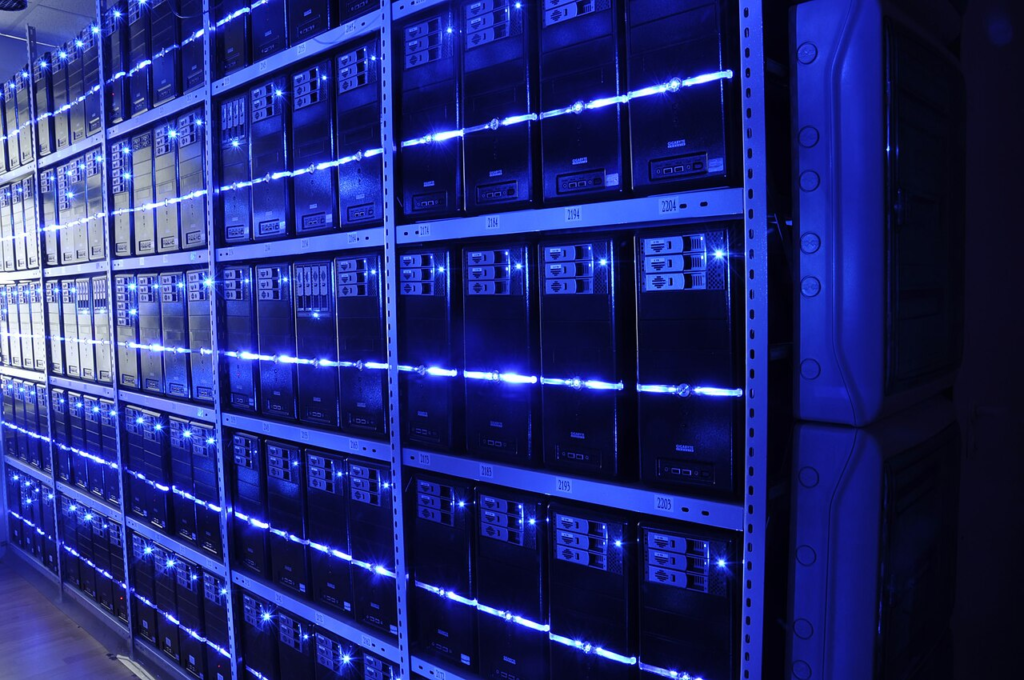
Who Should Decide? A Planning Framework for the AI Infrastructure Economy
Thane’s controversy ultimately concerns the distribution of decision-making authority.
Private developers and technology companies determine operational requirements and investment feasibility. State agencies establish industrial and technology policies. Municipal authorities manage land-use permissions and local infrastructure. Regulators assess environmental and utility compliance.
Residents experience the spatial consequences of these decisions.
The difficulty arises when the institutions responsible for approving a project do not collectively evaluate the same range of impacts, or when affected communities gain meaningful access to the decision-making process only after site selection has occurred.
The UN-Habitat International Guidelines on Urban and Territorial Planning provide a useful normative reference, promoting integrated planning and coordination across governance levels.
Applying these principles to data-centre infrastructure suggests a need for a more explicit approval framework.
First, metropolitan planning authorities should identify potentially suitable digital-infrastructure locations before relying predominantly on project-by-project proposals.
This does not require creating isolated technology enclaves in every circumstance. It requires classifying sites according to electricity connectivity, water availability, neighbourhood compatibility, ecological sensitivity and infrastructure costs.
A metropolitan suitability map could distinguish preferred zones, conditionally suitable zones and areas requiring heightened scrutiny.
Second, approval procedures should require comparison with realistic alternative locations when a proposed facility is exceptionally large or lies near sensitive land uses.
Such comparisons should be evidence-based. A distant industrial site may offer greater physical separation from residences but require substantial new transmission infrastructure, additional land conversion or longer network connections.
Moving infrastructure elsewhere is not automatically environmentally preferable.
The alternatives assessment must therefore compare complete system costs rather than only the immediate neighbourhood impacts.
Third, infrastructure commitments should be independently verifiable.
An operator’s assurances regarding dedicated grid connections, closed-loop cooling or noise mitigation may be technically credible. Nevertheless, regulatory confidence requires corresponding documentation, enforceable obligations and monitoring.
Independent review is particularly important where projected resource requirements change during design development.
Fourth, operational accountability should extend beyond the granting of approvals.
Monitoring should assess whether actual water use, electricity demand, generator operation and acoustic performance remain consistent with authorised conditions. Suitable results should be made available in an accessible format, with commercial and security-sensitive information protected where necessary.
Fifth, public participation should be capable of influencing substantive planning decisions.
This does not mean that every affected household must agree before development can proceed. Nor does it mean that local opposition should automatically override metropolitan infrastructure needs.
Meaningful participation requires an opportunity to examine evidence, challenge assumptions, propose alternatives and receive reasoned responses before critical decisions become irreversible.
Finally, economic benefits should be evaluated with the same precision as environmental costs.
Large capital investments are not equivalent to equally large local employment gains. Data centres can generate construction demand, specialised technical jobs and broader digital-economy benefits, but those effects differ in timing, geography and distribution.
Where governments provide incentives, the public-interest case should clearly explain what benefits are expected, who receives them and how they will be measured.
For Thane, the strongest planning response would therefore be neither an unqualified endorsement nor an automatic rejection. It would be an independently scrutinised decision grounded in publicly accessible evidence, metropolitan alternatives and enforceable performance conditions.
This approach is particularly important as data centres become increasingly connected to AI computing. The infrastructure may serve users and industries across regions, while its immediate spatial consequences remain concentrated in individual neighbourhoods.
That asymmetry creates a responsibility for public planning institutions to balance distributed economic benefits against geographically concentrated burdens.
Conclusion: The AI Economy Needs a Spatial Social Contract
Thane’s data-centre dispute reveals a gap between the scale at which digital infrastructure investment is encouraged and the scale at which its physical consequences are experienced.
Maharashtra’s policy provides broad opportunities for data-centre development, while the Thane controversy has exposed unresolved questions about neighbourhood compatibility, infrastructure allocation, environmental verification and public participation.
The available evidence does not establish that the proposed facility will necessarily cause water shortages, electricity outages or harmful thermal conditions. Amazon has published specific commitments concerning cooling, water consumption and electricity connections. These commitments deserve technical consideration, but they do not eliminate the need for independent scrutiny.
Equally, legal permission to construct a data centre in a particular zone does not automatically demonstrate that the location represents the most appropriate urban-planning outcome.
The international evidence suggests that a stronger approach is possible. Electricity constraints can inform siting decisions; efficiency targets can shape infrastructure growth; and standardised reporting can strengthen environmental accountability.
The central lesson is therefore institutional rather than technological.
The question is not whether cities should accommodate the AI economy, but whether the AI economy will be required to accommodate the environmental, infrastructural and democratic conditions of cities.
Thane offers an opportunity to establish that distinction before similar disputes become a recurring feature of India’s digital infrastructure expansion.
References / Further Reading
- Government of Maharashtra. (2023). Maharashtra IT-ITeS Policy 2023. Directorate of Industries, Government of Maharashtra.
- Ministry of Environment, Forest and Climate Change, Government of India. (2026). Parliament Question: Effective Use of Water in AI Data Centres. Press Information Bureau, 6 August 2026.
- Amazon India. (2026). Facts About Amazon’s Upcoming Data Centre in Thane, Maharashtra. Official project statement.
- Bose, N., & Thaver, M. (2026). In the Shadow of the Cloud: Thane Protests Proposed Hyperscale Data Centre. The Indian Express, 6 September 2026.
- Chatterjee, S. (2026). Protests in Visakhapatnam, Thane Against Mega Data Centres Over Water, Public Resources; Amazon, Google Respond. Hindustan Times, 10 August 2026.
- The Indian Express. (2026). Water, Power, Heat: Why Aaditya Thackeray Wants Amazon’s AI Data Centre Paused. 24 October 2026.
- International Energy Agency. (2025). Energy and AI. IEA, Paris.
- Commission for Regulation of Utilities, Ireland. (2025). The CRU Publishes Its Decision on New Electricity Connection Policy for Data Centres. 12 December 2025.
- Infocomm Media Development Authority, Singapore. (2024). Charting Green Growth for Data Centres in Singapore. 30 May 2024.
- European Commission. (2024). Commission Delegated Regulation (EU) 2024/1364 on a Common Union Rating Scheme for Data Centres. Official Journal of the European Union.
- United Nations Human Settlements Programme. (2015). International Guidelines on Urban and Territorial Planning. UN-Habitat, Nairobi.
Related reading on Urban Design Lab: Ports, Pipelines and Power: Is Geopolitics Redrawing the Map of Urban Investment?; India Heat Resilient Cities Programme and Urban Cooling Policy