Evidence-led article | September 2026
India’s urban transport debate has long been organised around roads, metro rail, buses and, increasingly, walking and cycling. Yet in cities shaped by rivers, estuaries, backwaters, lakes and coastal channels, water is often treated as scenery, a flood risk or a tourism asset rather than a public transport corridor. The Draft National Water Metro Policy, 2026 offers a potentially important correction. It proposes to place scheduled, publicly accessible passenger water transport within the formal urban mobility system, alongside rail- and road-based modes.
The qualification matters: the framework is a draft policy, circulated for consultation, rather than a final notified national policy. Its significance therefore lies not in a guaranteed national rollout but in the system it proposes: low- or zero-emission vessels, standardised technical specifications, terminals and charging infrastructure, multimodal integration, city-level demand assessment and potential Central support.
This article argues that the policy could be transformative only if it is understood as an urban network and land-use intervention, not as a programme to place attractive boats on every visible waterbody. The strongest opportunity lies where water creates a genuine geographic advantage: an island settlement, a congested river crossing, a linear waterfront corridor, or a circuitous road journey that a reliable ferry can shorten. Kochi demonstrates both the promise of this model and the discipline required to make it useful.
A Draft Policy That Recasts Waterways as Urban Transport Infrastructure
The Draft National Water Metro Policy defines a Water Metro as a mechanically propelled mass passenger transport system operating on inland, coastal or other water bodies. It can include passenger vessels and, where appropriate, Ro-Pax vessels. Crucially, the draft does not confine the idea to notified National Waterways. It allows systems on rivers, canals, lakes, backwaters, estuaries, creeks and coastal waters, subject to relevant permissions and clearances.
That broad definition has major planning implications. India’s potential is not limited to large navigable rivers such as the Ganga or Brahmaputra. The relevant question is whether a specific city has a water corridor that can function as part of a scheduled public transport network. In some places, water may offer a direct connection across a natural barrier. In others, it may connect riverine settlements to employment districts, bus hubs or rail stations. In still others, fluctuating water levels, dispersed demand, competing navigation, ecological sensitivity or unsafe boarding conditions defeat the basic requirements of frequent public service.
The draft proposes that cities should demonstrate navigable and sufficiently continuous waterways, manageable seasonal variation, concentrated populations and directional travel patterns. It suggests that systems are most suited to metropolitan regions generally above one million population, or to cities above one lakh population where there are clearly defined demand corridors. A proposed minimum peak ridership benchmark of 2,000 passengers per day is explicitly marked for discussion. Population size alone is not proof of demand. A large river city may have broad water but little cross-river commuting, inaccessible ghats, fragmented waterfront ownership or no practical interchange with buses and rail.
The policy’s strongest conceptual move is to position Water Metro as complementary to the urban transport system. It calls for alignment with Comprehensive Mobility Plans, integration with roads, metro rail and buses, and provision for walking, non-motorised transport and feeder services at terminals. A ferry is not the system. The system is the door-to-door journey: the footpath to the jetty, the safety of the waiting area, fare payment, frequency and reliability, interchange at the other end, and the final walk or feeder trip to work, education, markets or home.
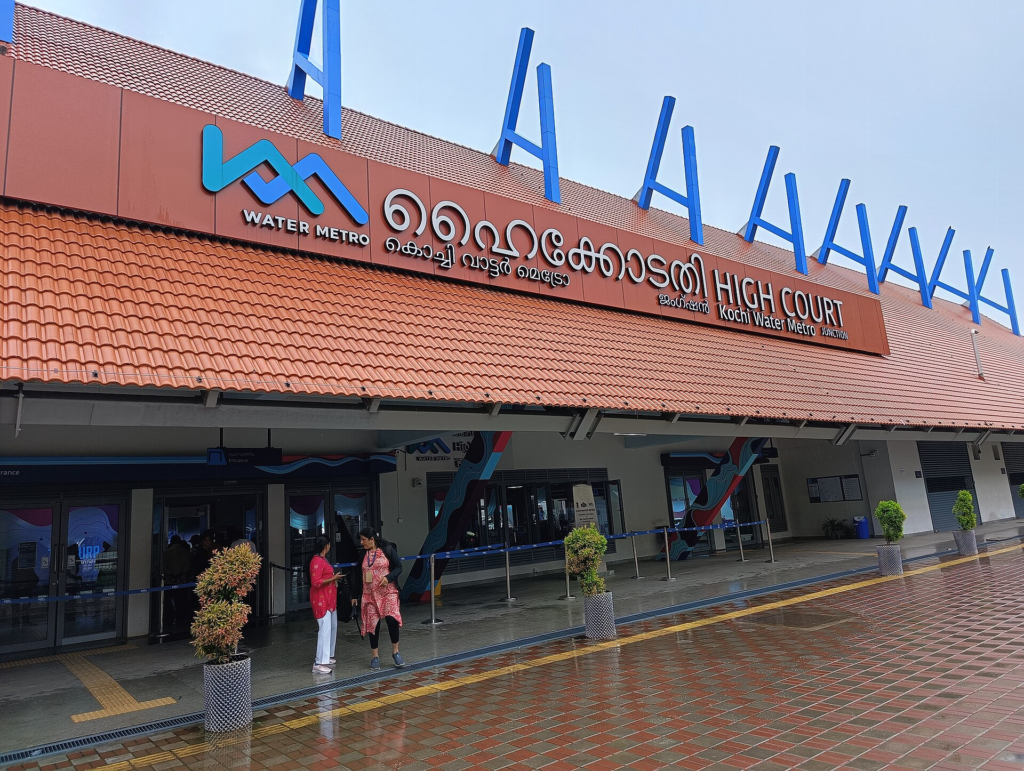
Suggested photograph: Kochi Water Metro vessel and terminal at High Court Junction
Image link: https://upload.wikimedia.org/wikipedia/commons/0/01/Kochi_water_metro_junction.jpg
Suggested caption: A water transit service becomes urban infrastructure only when vessels, terminals and surrounding access operate as one system.
Credit: Rohit Sav27, CC0 1.0 Universal Public Domain Dedication. Credit should be retained as Rohit Sav27 via Wikimedia Commons where editorial policy permits.
Kochi Is a Demonstration Project Not a Universal Template
Kochi is central to the national policy conversation because it provides India’s first operating Water Metro model at metropolitan scale. Kochi Water Metro Limited began passenger operations on the High Court-Vypin and Vyttila-Kakkanad routes in April 2023. By April 2024, the system had expanded to five routes, connecting ten terminals over 24.8 route kilometres.
Its early operating record is meaningful, but it should be interpreted carefully. The company’s annual report records more than two million passengers in the first year of operations, averaging about 5,500 passengers a day. These figures show that a modernised water service can attract both everyday users and visitors. They do not, by themselves, prove system-wide road decongestion, carbon reduction or financial self-sufficiency. Those outcomes require counterfactual travel data, emissions accounting across electricity supply and vessel operation, and transparent operating-cost evidence over a longer period.
What Kochi establishes is the importance of integration. Its fare collection system is connected with Kochi Metro Rail’s automated fare collection arrangement, enabling use of a common card or ticket across modes. Vyttila combines a metro station, major bus terminal and Water Metro terminal. The annual report also identifies terminals within walking distance of metro stations and links with regular bus stops at several locations.
Kochi also demonstrates the unresolved problem of the last mile. Planned feeder services at all terminals had not yet been fully introduced because of financing constraints, although electric autorickshaws and a feeder bus were operating at selected terminals. If passengers face an unsafe walk, an unreliable feeder or a difficult interchange, time saved on water can disappear before the journey is complete. The report recorded gross income of Rs 11.34 crore and operating expenses of Rs 11.63 crore for 2023-24, while gross income included Rs 7.09 crore of viability-gap funding. That does not make the system a failure. It does show why future appraisals must be candid about operating support.
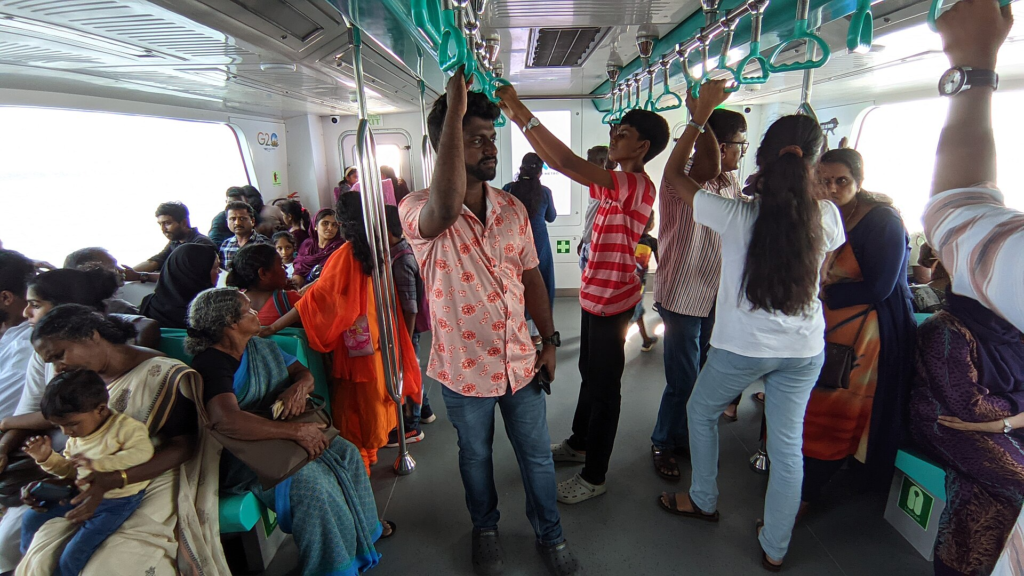
Suggested photograph: Passengers inside a Kochi Water Metro vessel
Image link: https://upload.wikimedia.org/wikipedia/commons/b/b5/Kochi_Water_Metro-Inside.jpg
Suggested caption: Passenger comfort, accessible boarding and predictable service are as important to daily ridership as the vessel itself.
Credit: Thilsebatti, CC BY-SA 4.0. Attribute Thilsebatti via Wikimedia Commons, link to the licence, indicate modifications if made, and apply the same or a compatible licence to adaptations.
Which River Cities Have a Credible Public Transport Case
In February 2025, the Inland Waterways Authority of India announced feasibility studies for urban water transport or Water Metro systems in 17 locations across 12 states, with Kochi Metro Rail Limited appointed to undertake the studies. The locations included Ayodhya, Dhubri, Goa, Guwahati, Kollam, Kolkata, Prayagraj, Patna, Srinagar, Varanasi, Mumbai, Vasai, Mangaluru, Gandhinagar-Ahmedabad, Alappuzha, Lakshadweep and the Andaman and Nicobar Islands.
By May 2026, the Ministry stated that site visits had been completed for 18 locations, draft feasibility reports submitted for 17, and reports for Srinagar, Patna, Guwahati, Varanasi and Ayodhya accepted. A subsequent parliamentary reply reported the deployment of hybrid electric vessels at Varanasi, Ayodhya, Patna and Kolkata, plus a hydrogen fuel-cell vessel at Varanasi under separate Ministry initiatives. These announcements signal intent, not evidence that each location should receive a full Water Metro.
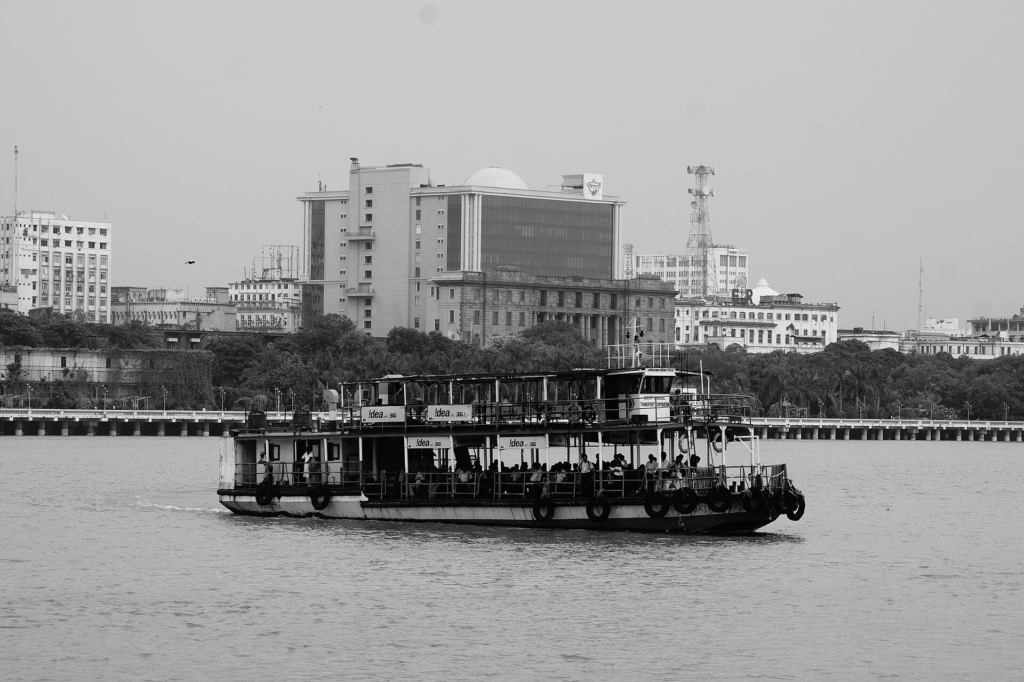
Kolkata already has a public ferry context across the Hooghly. Its challenge is not merely to launch boats but to strengthen interchange, improve terminal access and integrate river services with metropolitan travel patterns. In Varanasi, Prayagraj and Ayodhya, religious tourism creates seasonal demand, but daily public transport must be designed around ordinary commuters, worker access, crowd management, navigation safety and river ecology rather than assuming tourist use equals mass-transit demand. Guwahati presents a different proposition because the Brahmaputra is a major geographic divider, but river width, seasonal conditions, terminal location and employment catchments must still determine route design.
The common planning test should be a corridor test, not a city-branding test. Before capital commitment, a scheme should demonstrate a materially better door-to-door journey for a defined user group, sufficient all-day demand, safe and accessible access at both ends, and a transparent service plan that identifies who bears operating risk.
Suggested photograph: Existing public ferry service on the Hooghly River in Kolkata
Image link: https://upload.wikimedia.org/wikipedia/commons/e/e2/Ferry_service.jpg
Suggested caption: Kolkata illustrates that a national policy must improve and integrate existing river mobility, not only create new branded services.
Credit: Mity05, CC BY-SA 4.0. Attribute Mity05 via Wikimedia Commons, link to the licence, indicate modifications if made, and apply the same or a compatible licence to adaptations.
The Real Transformation Is at the Terminal and in the Street Network
Water Metro is often described as a low-land-use alternative to rail-based mass transit. That is partly true: a vessel route does not require a continuous land corridor in the way a road or railway does. But water transport still depends on valuable and carefully designed land at its most difficult points: terminals, access streets, emergency routes, interchange spaces, charging facilities, maintenance areas, flood-resilient pontoons and passenger waiting areas.
The draft policy recognises that terminals must prioritise intermodal integration, universal accessibility, safety and efficient passenger circulation. It also calls for floating pontoons and jetties to respond to local hydrological conditions and peak boarding and alighting dynamics. A terminal should not be treated as an isolated waterfront object. It must form part of a legible public realm, with safe walking routes, shade, step-free access, tactile guidance, lighting, wayfinding and space for queues without blocking public movement.
The policy’s preference for battery-operated or solar-assisted vessels in the near term is sensible, but electric is not automatically synonymous with low impact. The draft does not require electricity to be sourced exclusively from renewable energy in the initial phase. A credible assessment should include vessel energy use, charging demand, electricity mix, dredging requirements, wake effects, shoreline disturbance, biodiversity risks, construction materials and the trips genuinely shifted from more carbon-intensive modes.
The same caution applies to congestion. A ferry can relieve road pressure if it attracts travellers who would otherwise use congested land routes. Yet a new service can also generate tourism trips, serve passengers who previously walked or cycled, or struggle to attract riders if it is inconvenient. The proper measure is network-wide accessibility and service reliability, not vessel occupancy in isolation.
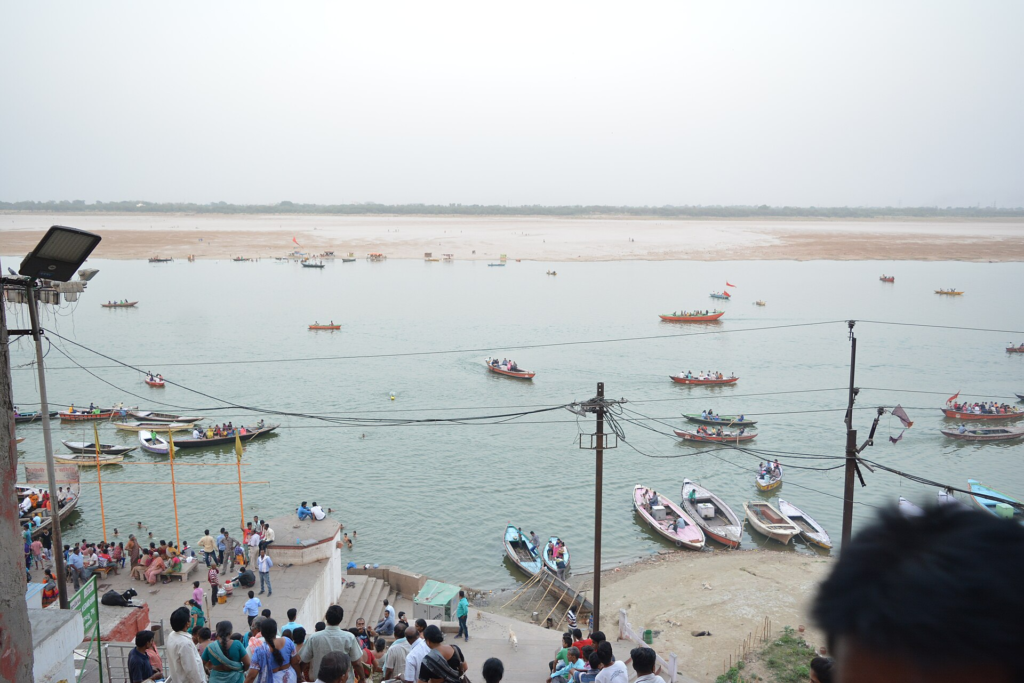
Suggested photograph: Boats and public activity at the ghats of Varanasi
Image link: https://upload.wikimedia.org/wikipedia/commons/9/96/Boats_at_Ghat_of_Banaras.jpg
Suggested caption: In historic river cities, passenger transport must coexist with ritual, tourism, livelihoods, ecology and public access to the waterfront.
Credit: Anil Kumar Mahakur, CC BY-SA 4.0. Attribute Anil Kumar Mahakur via Wikimedia Commons, link to the licence, indicate modifications if made, and apply the same or a compatible licence to adaptations.
Finance Institutions and Public Value Will Decide Whether It Scales
The draft policy acknowledges that lower civil construction costs than rail-based MRTS do not eliminate the substantial capital costs of green vessels, charging or bunkering systems, automated fare collection, terminals, resilience works and safety infrastructure. It also notes that ridership growth may be more modest than metro rail and that many services will need affordable fares for lower-income users.
The policy proposes joint Centre-State funding, fully State-funded systems, public-private partnerships and potential viability-gap financing. A proposed Central Sector Scheme would share eligible capital expenditure equally between Centre and State through an equal-ownership special purpose vehicle, while operation and maintenance would normally remain a State responsibility. This can work only if responsibility is clear.
Water transport crosses institutional boundaries: municipal government, development authorities, State transport departments, waterways agencies, environmental regulators, disaster-management agencies, police, landowners and electricity utilities. The policy calls for State-level mechanisms to coordinate agencies and approvals. Every project should nevertheless have a named public authority accountable for service planning, fares, passenger safety, data disclosure, accessibility and integration.
Non-fare revenue can assist but should not distort the purpose of the system. Advertising, retail, event spaces, waterfront commercial development, value capture and ancillary services can support operations. They should not be a pretext for privatising public waterfronts, excluding informal workers, displacing traditional river users or converting terminals into commercial enclaves disconnected from daily mobility. The strongest appraisal framework will evaluate travel-time and reliability gains, equitable access, safety and resilience, measured environmental performance, and fiscal sustainability with explicit subsidy assumptions.
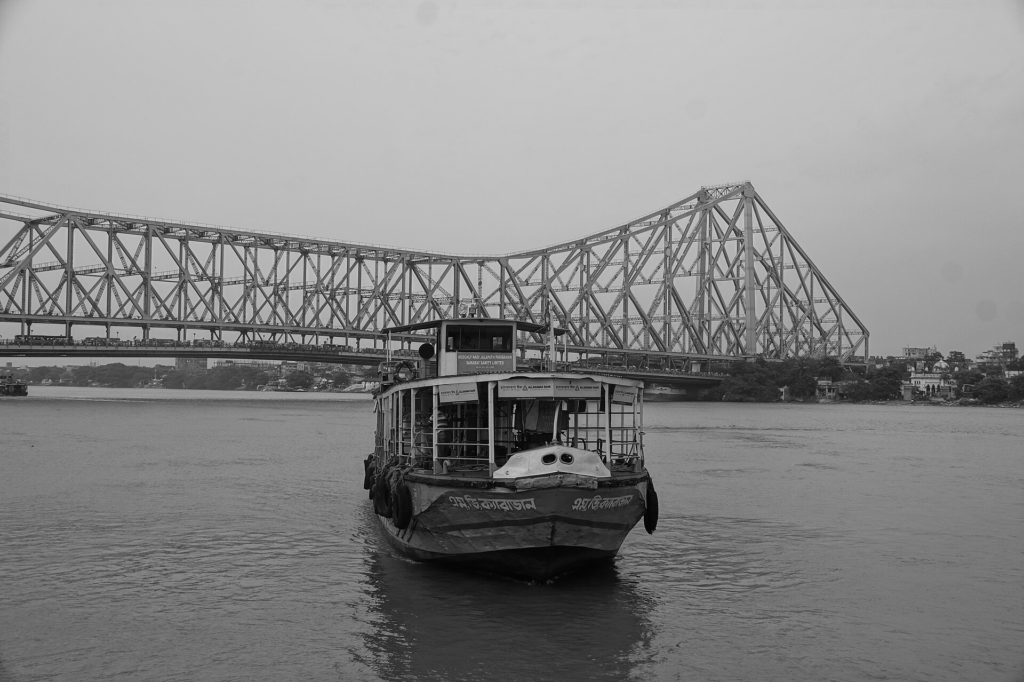
Suggested photograph: Ferry passing beneath Howrah Bridge in Kolkata
Image link: https://upload.wikimedia.org/wikipedia/commons/6/66/Howrah_bridg.jpg
Suggested caption: Water transit operates within dense, shared urban corridors and requires coordinated governance beyond the vessel operator.
Credit: Mity05, CC BY-SA 4.0. Attribute Mity05 via Wikimedia Commons, link to the licence, indicate modifications if made, and apply the same or a compatible licence to adaptations.
Conclusion
India’s Draft National Water Metro Policy, 2026 is important because it moves water-based passenger transport from the margins of urban policy toward a formal multimodal framework. Its emphasis on standardisation, low-emission propulsion, safety, feasibility assessment, integrated ticketing, last-mile access and Centre-State coordination is broadly sound.

But the policy will transform transport in river cities only if implementation resists a simple replication model. Not every waterbody is a viable transit corridor; not every tourist waterfront produces commuter demand; and no vessel can compensate for inaccessible terminals, weak frequencies, missing feeders or unfunded operations. Kochi’s experience supports a more disciplined conclusion: water transit can become a serious public service when it is designed as part of a single network of streets, terminals, fares, schedules, public space and institutions.
India should prioritise corridors where water genuinely shortens trips, reconnects separated communities or adds resilience to a congested network. It should publish the evidence used to make those choices, protect public waterfront access and assess environmental outcomes rather than assume them. If the final policy builds these requirements into funding and appraisal, Water Metro could give river cities a valuable new transport layer. If it does not, the result may be an uneven collection of attractive ferries rather than a durable urban mobility system.
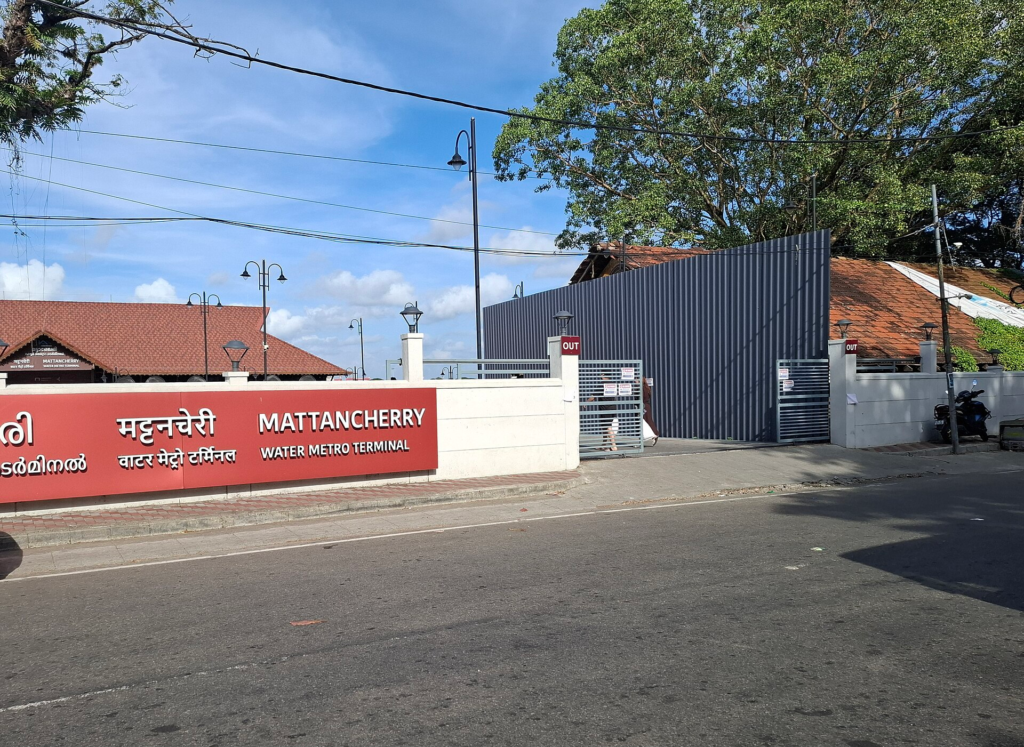
Suggested photograph: Mattancherry Water Metro station in Kochi
Suggested caption: The future of water transit depends on dependable public terminals as much as on vessels.
Credit: Pinakpani, CC BY 4.0. Attribute Pinakpani via Wikimedia Commons, link to the licence, and indicate modifications if made.
References and Further Reading
Ministry of Ports, Shipping and Waterways, Draft National Water Metro Policy, 2026
Press Information Bureau, Centre Circulates Draft National Water Metro Policy, 18 May 2026
Press Information Bureau, Expansion of Water Metro Systems, Lok Sabha reply, 31 July 2026
Kochi Water Metro Limited, Annual Report 2023-24
Kochi Metro Rail Limited, Kochi Water Metro Project presentation
Related reading on Urban Design Lab: From New Urbanism to Transit-Oriented Development; History of Urban Planning in India