Berlin, Germany Debates Airbnb Restrictions Amid Housing Affordability Crisis

Berlin, Germany Debates Airbnb Restrictions Amid Housing Affordability Crisis

Berlin has been grappling with a housing affordability crisis, with soaring rents and a shortage of available apartments. A significant factor contributing to this issue is the proliferation of short-term rentals through platforms like Airbnb, which have been accused of removing substantial amounts of housing from the long-term rental market.

Policy Measures and Restrictions

In response to the housing crisis, Berlin implemented the “Zweckentfremdungsverbot” (misuse prohibition) law in 2014, which restricts the conversion of residential properties into short-term rentals. This law requires property owners to obtain permission from local authorities before renting out their homes for short periods. Violations can result in fines of up to €500,000.

Despite these regulations, enforcement has been challenging. A 2025 report indicated that, since 2014, nearly 30,000 cases of housing misuse were identified, but many violations remained unaddressed due to insufficient monitoring resources.

Impact on Urban Life and Housing Affordability

The surge in short-term rentals has had a tangible impact on Berlin’s housing market. A study by the German Institute for Economic Research (DIW) found that each additional Airbnb listing in a neighborhood led to an average rent increase of 13 cents per square meter. This effect was particularly pronounced for listings rented out for more than 180 days, effectively removing these units from the long-term rental market.

The concentration of short-term rentals in popular districts has also altered the character of neighborhoods, with some areas becoming more transient and less community-oriented. This shift has raised concerns about the loss of local identity and the displacement of long-term residents.

Recent Developments and Future Outlook

In September 2026, the European Commission proposed new regulations to limit short-term rentals in areas facing housing shortages, aiming to improve access to affordable housing across the EU. While housing policy remains under national jurisdiction, this initiative provides a framework for local authorities to implement proportional and temporary restrictions based on specific criteria.

In Berlin, the debate continues over the most effective strategies to balance the benefits of short-term rentals for tourism with the need to preserve affordable housing for residents. Ongoing discussions focus on enhancing enforcement of existing laws, exploring new regulatory measures, and considering broader housing policies to address the underlying affordability issues.

Berlin is grappling with a severe housing crisis, and at the heart of the debate are regulations on short-term rentals like Airbnb. The city’s celebrated, affordable housing stock has been transformed into tourist accommodations, dramatically increasing rents and displacing long-term residents. This has forced the city to choose between a vibrant tourism industry and the fundamental need for affordable housing. In response, Berlin implemented a strict law, the Zweckentfremdungsverbot, which bans the conversion of residential units without a permit. This policy, one of the toughest globally, has sparked controversy, with critics arguing it hinders economic growth and impacts property owners. The article delves into how this issue extends beyond housing, affecting the social and cultural fabric of Berlin’s neighborhoods. The constant flow of tourists can lead to gentrification and strain local services, threatening the very character that attracts visitors in the first place. The city’s ongoing efforts serve as a crucial case study for urban planners worldwide, highlighting the delicate balance required to ensure a city is not only economically prosperous but also a livable home for its citizens.

The High Cost of Cool: Berlin's Housing Dilemma

Berlin, a city celebrated for its bohemian spirit and famously affordable living, finds itself at a pivotal crossroads. A major point of contention in its severe housing crisis is the rapid expansion of short-term rentals, driven primarily by platforms like Airbnb. This has ignited a fierce debate that pits economic opportunity against social equity, forcing city leaders, residents, and tourists to confront fundamental questions about the future of urban life. The city’s unique architectural character, which includes a wealth of older, low-rent apartments, has historically been a significant draw for both locals and visitors alike. However, the skyrocketing demand for temporary stays has spurred a widespread conversion of these cherished long-term homes into far more lucrative tourist accommodations. This dramatic shift has placed immense pressure on Berlin’s housing market, resulting in a steep escalation of rental costs and causing many long-term residents to be priced out of the very neighborhoods they helped define. The struggle is not just for housing, but for the soul of the city itself.


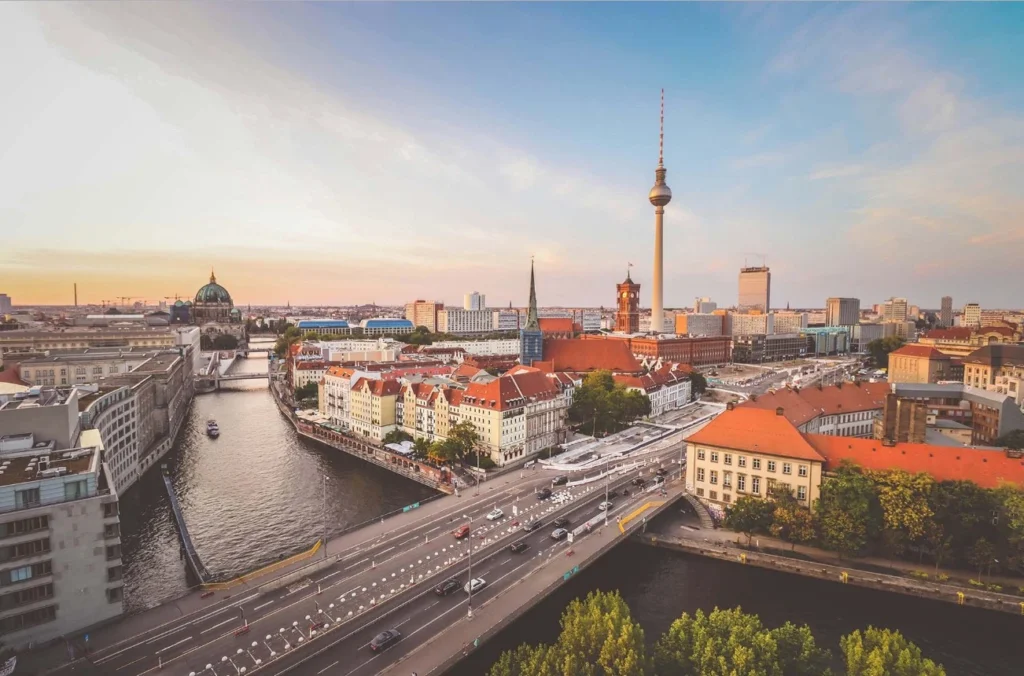
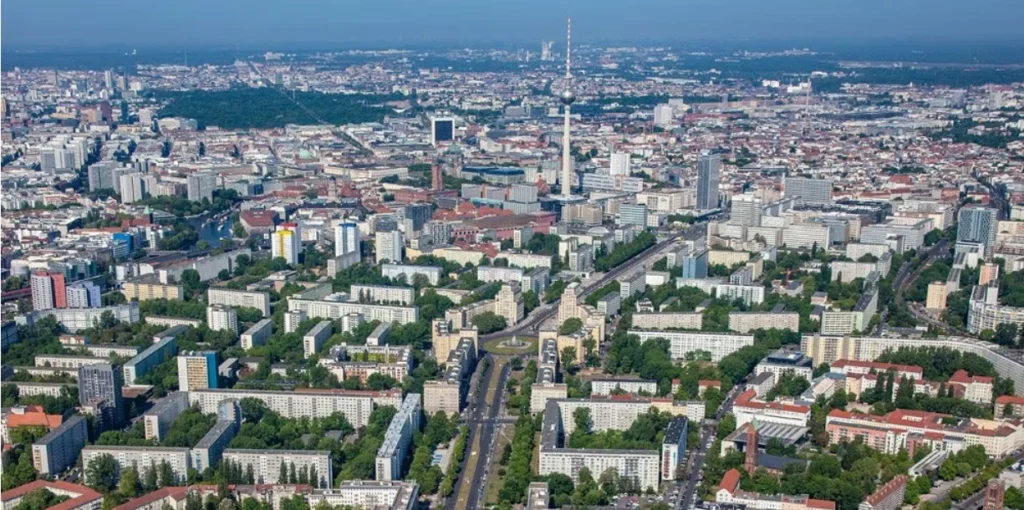
Berlin’s Urban Fabric: A View of the City’s Appeal

The Policy Debate: Regulation vs. Free Market

In response to the crisis, Berlin has implemented a series of strict regulations, including the Zweckentfremdungsverbot, a law that prohibits using residential property for non-living purposes without a special permit. This initial ban on short-term rentals was one of the toughest in the world, specifically designed to bring housing back to the long-term rental market. However, this has not been without controversy. Critics argue that such strict bans stifle economic growth and hurt property owners who rely on income from short-term rentals. They often propose a more balanced system, such as a mandatory registration system or a limit on the number of days a property can be rented out per year, as a more effective alternative. The ongoing debate forces policymakers to carefully weigh the potential economic benefits of a flourishing tourism sector against the social costs, such as the displacement of long-term residents and the erosion of community identity. The city faces the complex challenge of finding a solution that successfully protects both its residents and its economically vital tourism industry. Ultimately, this balancing act will determine the future character of Berlin’s urban landscape.

 

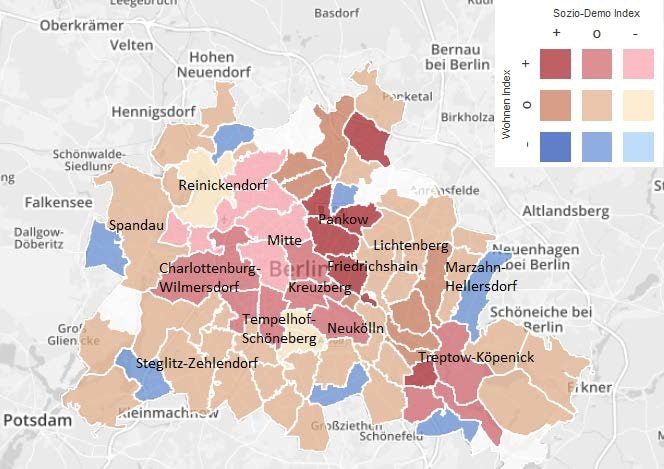
Visualizing Berlin’s Housing Regulation: The Zweckentfremdungsverbot

Source: Website Link

Impact on Neighborhoods and Urban Fabric

The rise of short-term rentals has fundamentally altered the character of Berlin’s neighborhoods. Areas once celebrated for their close-knit communities now experience a constant influx of tourists, leading to issues like increased noise and congestion. This shift also places a strain on local services and often results in local businesses being replaced by shops and restaurants that cater primarily to tourists. For many residents, this transformation is a clear sign of gentrification, as the very charm that first drew visitors to the city is being eroded by the forces of tourism itself. The ongoing debate goes far beyond a simple discussion of housing availability; it is about preserving the social and cultural fabric that makes Berlin unique. The regulations and policies that are ultimately decided upon for short-term rentals will play a crucial role in determining the city’s future. The choice is stark: will Berlin remain a livable home for its long-term citizens, or will it evolve into a temporary playground for transient visitors? The outcome of this struggle will shape the city’s identity for years to come.
 

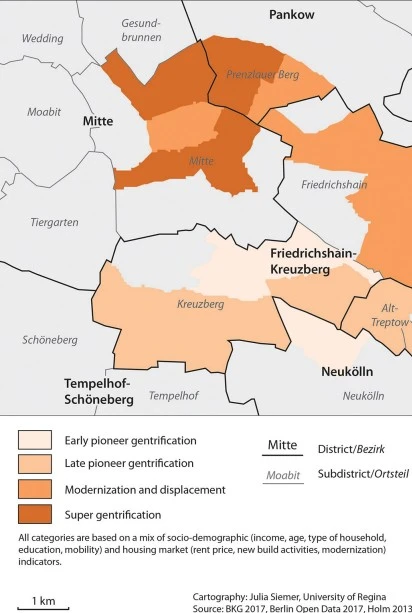
Phases of gentrification

The Economic Fallout: A Two-Sided Coin

While the social cost of short-term rentals is clear, the economic perspective is a two-sided coin. On one hand, the thriving tourism market generates significant revenue for the city, supporting a wide range of jobs from hospitality to food services. For many individual property owners, renting out a spare room or an entire apartment on Airbnb provides a crucial source of supplementary income, which can help them afford their own rising housing costs. On the other hand, the hotel industry argues that short-term rentals create an unfair competitive environment, as they are not subject to the same regulations, taxes, or safety standards as traditional hotels. This dynamic has led to a pushback from established businesses, who argue that the unregulated market erodes their profitability and threatens the stability of the entire tourism ecosystem. Finding a way to tax and regulate these rentals without harming individual homeowners is a key challenge for policymakers.


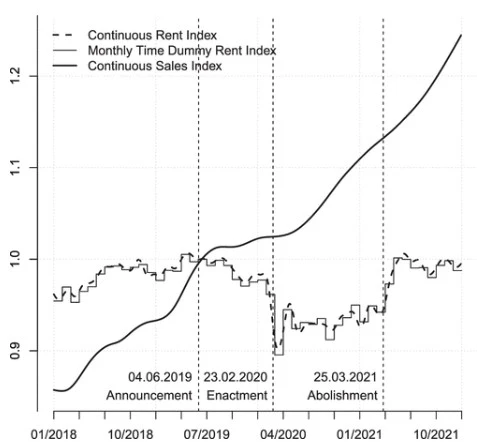
Nominal Sales and Rent Price Indices: Berlin

The Human Element: Loss of Community and Belonging

Beyond the economic statistics, the most profound impact of the short-term rental boom is felt at the community level. In neighborhoods like Neukölln and Kreuzberg, residents report a sense of unease as their neighbors are replaced by a constant rotation of strangers. This continuous turnover makes it difficult to form and maintain the social connections that are the bedrock of a healthy community. The local coffee shops, bakeries, and small businesses that thrive on the patronage of long-term residents are slowly being replaced by establishments that cater to a transient tourist population. This change not only erodes local identity but also creates an environment of instability and alienation. For many Berliners, the fight over short-term rentals is a fight to preserve their sense of belonging and to ensure their city remains a place where they can put down roots, not just a place to visit.


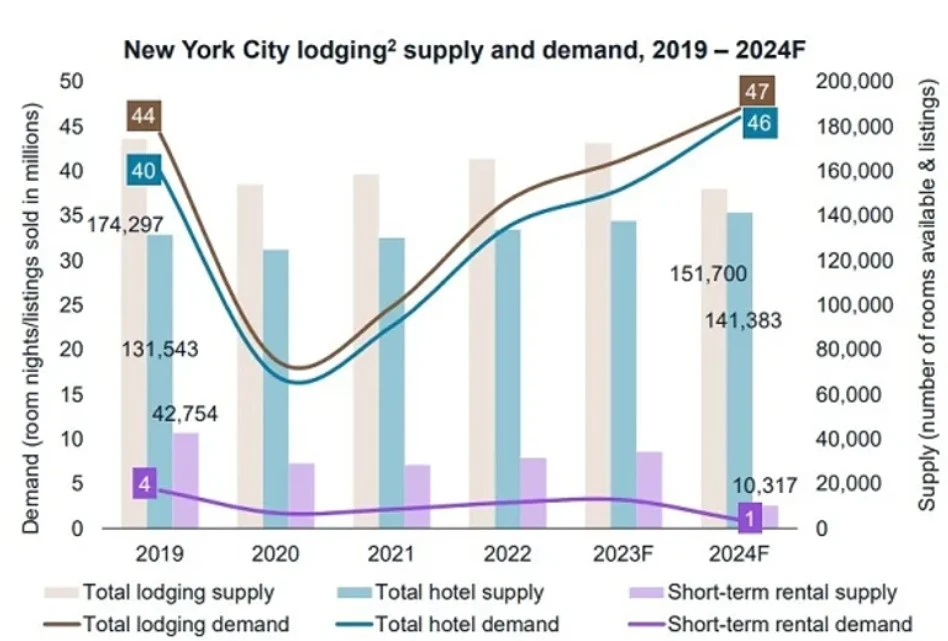
New York City lodging supply and demand, 2019–2024

A Global Challenge: Lessons from Other Cities

Berlin is not alone in its struggle; it is part of a global conversation on how to manage the effects of the sharing economy on urban life. Cities like Paris, Barcelona, and New York have all implemented various regulations to rein in the short-term rental market, with mixed success. Paris, for example, has a strict 120-day annual cap on rentals and requires mandatory registration, while New York has battled with platforms over data sharing and a ban on rentals under 30 days in certain buildings. These case studies offer valuable lessons for Berlin’s policymakers, demonstrating that a one-size-fits-all approach is not effective. Each city’s unique housing market and social fabric require a tailored solution. The key lesson is that balancing tourism and housing affordability requires a continuous, adaptive policy framework that can respond to changing market dynamics and technological advances.


The debate over Airbnb in Berlin is a microcosm of a global challenge facing major cities today. The city’s efforts to regulate the short-term rental market reflect a broader commitment to prioritizing the needs of its residents over unchecked market forces. While the policies have faced pushback from a variety of stakeholders, they highlight the critical role of urban planners and policymakers in shaping a city that is not only economically vibrant but also socially equitable and livable for its people. The ongoing discussions serve as a crucial case study for other cities worldwide grappling with similar issues, offering valuable lessons on how to balance the demands of modern tourism with the fundamental need for affordable and secure housing. The future of Berlin’s neighborhoods will depend on a careful and balanced approach that protects both its unique character and its citizens.


Shatakshi Prabhakar Patil

Shatakshi Patil is a passionate urban designer with a strong foundation in architecture and a commitment to creating inclusive, sustainable spaces. She brings a global perspective to her work, combining strategic thinking with technical proficiency in urban planning and design. Known for her initiative and research-driven approach, she excels at transforming complex urban challenges into people-focused solutions. Her work reflects a balance of creativity, precision, and a deep sensitivity to context.

Leave a Reply

Your email address will not be published. Required fields are marked *

This site uses Akismet to reduce spam. Learn how your comment data is processed.

Related articles

UDL Thesis Publication 2025

Call for Abstracts now open!

UDL GIS

MASTERCLASS

Urban Mapping, Analysis and Representation

Session Dates

12th-16th October, 2026

Curating the best graduate thesis projects globally!

Publish your work and get recognized globally!

Free E-Book

From thesis to Portfolio

A Guide to Convert Academic Work into a Professional Portfolio”

Urban Design Lab

Be the part of our Network

  • Stay updated on workshops, design tools, and calls for collaboration

  • Thesis Report Writing for Architecture and Urban Studies

    Join Our WhatsApp Group

    Recent Posts

    Sign up for our Newsletter

    “Let’s explore the new avenues of Urban environment together “

    E-Book- From Thesis To Portfolio

    A Guide to Convert Academic Work into a Professional Portfolio