An evidence-led assessment of access charging as historic-city governance
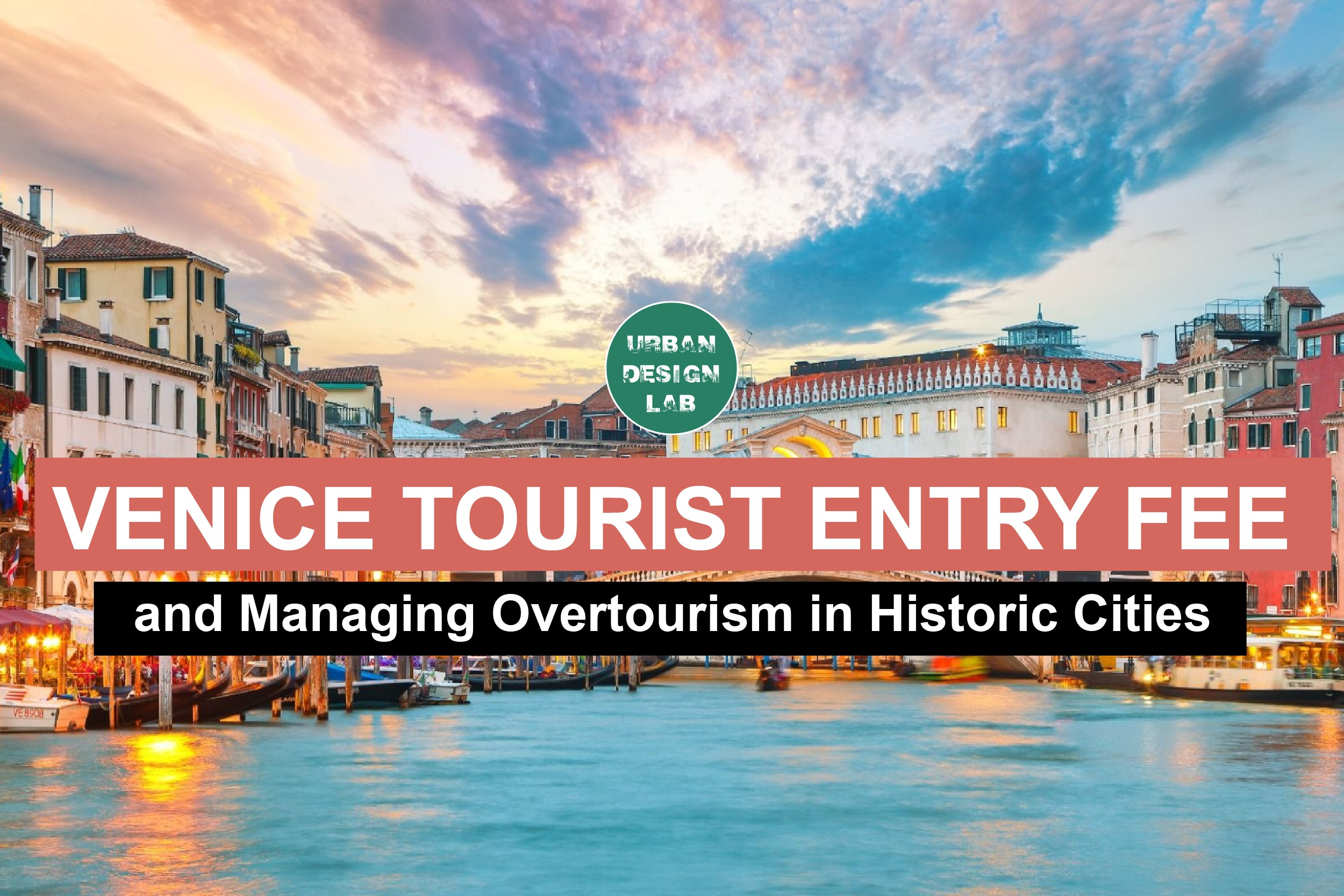
Venice’s tourist entry fee is often presented as a simple answer to overtourism: charge day visitors and crowds will fall. The evidence supports a more cautious conclusion. The fee is an important institutional experiment because it makes day visitation visible, registrable and potentially steerable. It is not yet evidence that a modest charge can restore a historic city’s residential life, reduce pressure on heritage or resolve the political economy of short-term accommodation and cruise tourism.
Historic cities are lived urban systems in which housing, public space, transport, local commerce, infrastructure, heritage conservation and everyday mobility overlap. A policy that changes only the cost of entry may influence timing or generate revenue, but it cannot by itself address the cumulative processes that make a city difficult to inhabit.
Venice is best understood as a test of whether access management can become a component of urban governance rather than a symbolic ticket. The central argument of this article is that visitor charging is most defensible when it is embedded in a transparent, data-led system that manages peaks, protects residential capacity and redistributes tourism’s costs. Used alone, it risks converting overtourism from a planning problem into a transaction.
Venice’s Problem Is Not Simply Too Many Visitors
Overtourism is not best defined by an absolute visitor total. It occurs when the intensity, concentration or conduct of visitation undermines residents’ everyday life, damages environmental or heritage conditions, or weakens the visitor experience itself. This is particularly acute in Venice because pedestrian movement is channelled through a dense, water-bound urban structure of narrow calli, bridges, quays and small public spaces. The issue is therefore spatial and temporal: where visitors go, at what time, by which route and with what effect on urban functions.
The wider World Heritage property is also exposed to pressures beyond tourism. UNESCO’s 2024 joint World Heritage Centre, ICOMOS and ICCROM Advisory Mission identified the need for integrated management, stronger connections between heritage protection and strategic planning, and more effective monitoring of the attributes that express Venice’s Outstanding Universal Value. The mission report rejects the idea that tourism can be separated from housing, infrastructure, governance, climate risk and development control.
The policy challenge is consequently not to eliminate visitors. The relevant question is whether visitor activity can remain compatible with a functioning resident city and the conservation of a fragile lagoon heritage landscape. UNESCO’s current position is explicit: sustainable tourism measures have advanced, but the effectiveness of the access fee in reducing visitor numbers has not yet been fully demonstrated.
What the Entry Fee Actually Is
Venice’s Contributo di Accesso, or Access Fee, applies to certain day visitors entering the ancient city during designated high-demand dates and hours. It is not a conventional museum ticket, nor is it a universal tourist tax. Overnight visitors pay accommodation-related charges instead and are generally exempt from the access payment, although the system may still require registration. Residents, workers, students and several other categories are also exempt or excluded under the municipal rules.
The first experimental phase covered 29 days in 2024. The 2025 phase extended the experiment to 54 designated days. Visitors who booked sufficiently early paid €5, while those booking closer to their travel date paid €10. The policy therefore creates an administrative record of intended day access while also testing whether advance booking can discourage spontaneous peak-day trips.
Yet a €5 or €10 payment is low relative to the total cost of long-distance travel, food, local transport and sightseeing. It should not be assumed that this charge will materially deter visitors whose aim is to see Venice on a particular date. A payment-based system can change incentives, but it does not automatically prevent an excessive number of people from arriving on the same day.
What the First Results Demonstrate and What They Do Not
The available municipal data establish that the system can operate at scale and collect revenue. In 2024, the city recorded 485,062 payments and approximately €2.4 million in proceeds during the 29 application days. In 2025, it recorded 723,497 payment vouchers, including 704,467 issued through the electronic platform, and €5,421,425 in revenue.
These figures do not prove a reduction in overtourism. Higher payment revenue in 2025 partly reflects more application days, more paid vouchers and the higher last-minute rate. It cannot be read as evidence of reduced pressure without comparable data on total entries, exempt entries, overnight visitors, transport arrivals, time-of-day patterns and conditions in the most congested locations.
A rigorous evaluation would require a counterfactual: what would visitor volumes, route congestion and resident experience have been on comparable dates without the charge? Weather, school holidays, cruise schedules, rail disruption and international tourism demand all influence visitation. A simple before-and-after comparison risks confusing a policy effect with normal seasonal variation. UNESCO’s 2026 decision accordingly requested a carrying-capacity study and a Sustainable Tourism Management Plan.
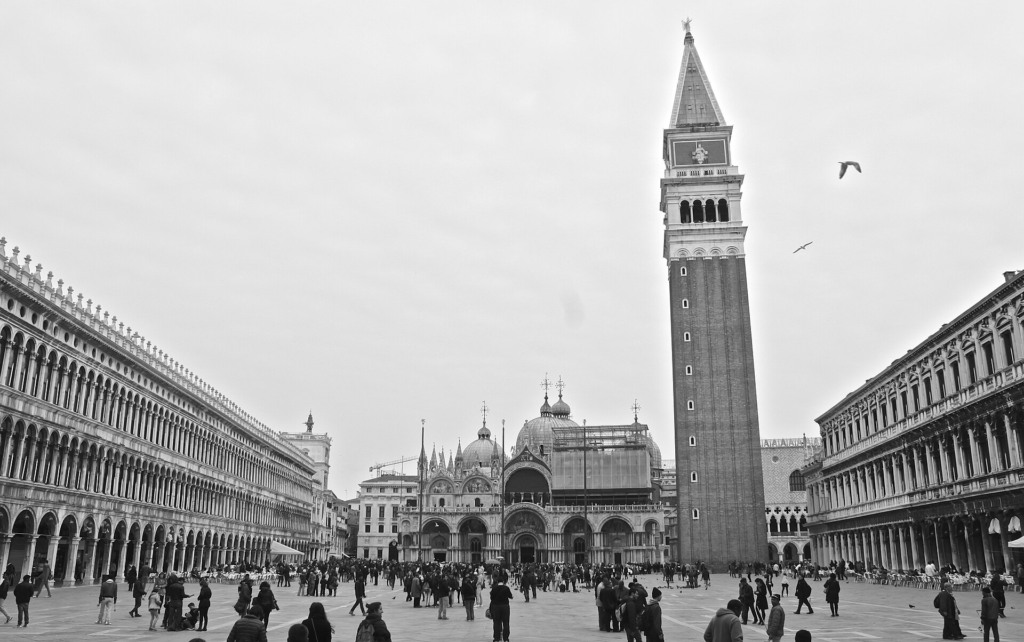
The critical planning question is not only how many visitors arrive, but where and when they concentrate. Photo: Fidel Amos, CC BY-SA 4.0, via Wikimedia Commons.
Why Pricing Alone Cannot Repair a Historic City
A visitor charge has a narrow policy reach. It affects the marginal cost of a specific type of visit, usually a day trip during selected periods. It does not directly regulate the number, location or tenure of tourist accommodation, create affordable housing, guarantee that tourism revenue supports resident-serving services, or redistribute visitors away from fragile corridors.
The distinction between day visitors and overnight visitors requires careful handling. Day visitors can create high public-space pressure while contributing relatively little to accommodation-tax revenue. Overnight visitors may spend more locally, but their accommodation demand can intensify conversion of long-term housing to short stays. Neither category is intrinsically good or bad. Their impacts depend on volume, location, seasonality, local supply chains, mode of arrival and the institutional rules governing accommodation.
The appropriate response is a policy portfolio across land use, housing, mobility, heritage management, economic development and public-service finance. The UNESCO Advisory Mission stressed the importance of a coherent management framework centred on heritage values, supported by monitoring and integrated planning.
International Lessons Managing Pressure Rather Than Marketing Dispersion
Dubrovnik offers a relevant lesson in cruise-related management. Its Respect the City programme has included coordination with cruise operators, monitoring and efforts to spread vessel arrivals. The underlying governance lesson is that a port city cannot manage street-level congestion if ship schedules are treated as external to urban planning. UNESCO’s guidance similarly emphasises coordinated governance, impact assessment and management planning rather than isolated promotional measures.
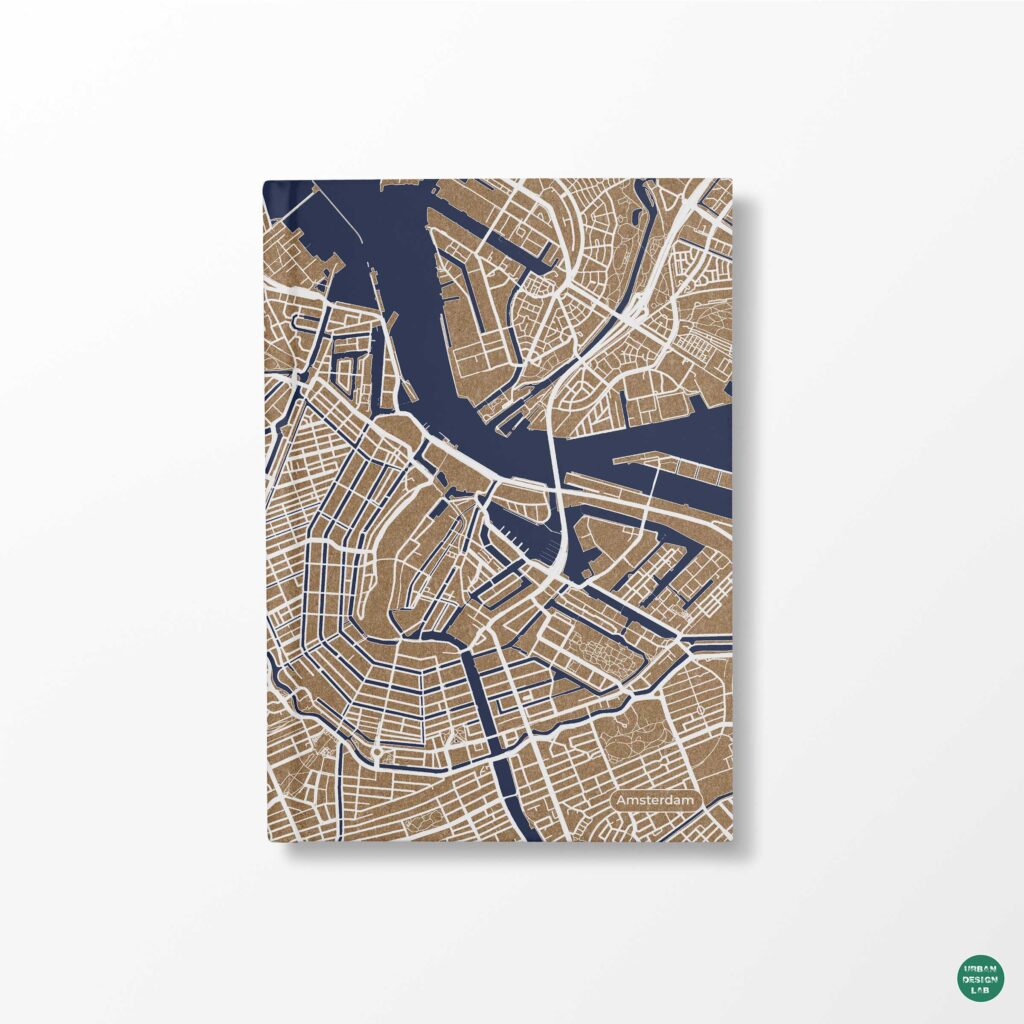
Amsterdam’s visitor-economy policies increasingly focus on resident wellbeing, reducing nuisance, regulating particular forms of visitor activity and controlling growth of accommodation supply. Barcelona’s Special Tourist Accommodation Plan, known as PEUAT, uses planning controls to regulate the location and growth of tourist accommodation. These cases show why access charging is not a substitute for housing and land-use tools.
These cases do not offer a transferable formula. The transferable lesson is methodological: cities should match the instrument to the mechanism causing harm. Where the primary problem is a concentrated cruise arrival, port scheduling matters. Where it is loss of housing, accommodation regulation matters. Where it is unsafe crowding at a monument, timed access and circulation management matter.
A More Defensible Framework for Historic City Visitor Management
Historic cities considering an entry fee should first define the policy problem precisely. “Too many tourists” is not an operational diagnosis. Cities should map public-space intensity, residential viability, heritage and environmental condition, mobility and arrival systems, and the distribution of tourism-related costs and benefits.
The second task is to publish thresholds and actions. A threshold should not be treated as a universal carrying-capacity number. Historic-city capacity varies by location, season, weather, emergency conditions, maintenance activity and the nature of visitor activity. More useful are operational thresholds, such as a bridge approach becoming impassable, a queue obstructing daily movement, or arrivals exceeding local sanitation and transit capacity.
The third task is governance. Registration data should be integrated with physical observation, transport data, accommodation records and resident knowledge. Cities should establish independent reporting, specify which authority acts when thresholds are exceeded, and disclose how fee revenue is allocated. The aim is not necessarily fewer people at all times. It is to reduce damaging peaks, protect residents’ everyday urban life, improve safety and conserve heritage.
Conclusion
Venice’s entry fee is a serious and internationally consequential experiment, but it should not be mistaken for a proven cure for overtourism. Its verified achievements are administrative: it has created a registration and payment system for selected day visitors, tested advance-booking incentives and generated revenue. In 2025, the city recorded more than 723,000 payment vouchers and more than €5.4 million in receipts.
What remains unproven is the decisive outcome: whether the fee materially reduces visitor pressure or improves the lived conditions of the historic city. UNESCO’s request for a carrying-capacity study and a stronger Sustainable Tourism Management Plan is therefore the correct next step.
For other historic cities, the lesson is not “copy Venice’s fee”. It is to make visitor pressure measurable, align access management with housing, transport and heritage policy, publish clear thresholds, and return tourism revenue visibly to the urban systems that bear its costs. A fee can support that programme. It cannot replace it.
An interesting look at how cities like Venice are trying to balance tourism with the protection of their historic character. Managing visitor numbers thoughtfully could help preserve these places while still keeping them accessible to travellers.
“Let’s explore the new avenues of Urban environment together “
We use cookies on our website to give you the most relevant experience by remembering your preferences and repeat visits. By clicking “Accept”, you consent to the use of all the cookies. Read More
This website uses cookies to improve your experience while you navigate through the website. Out of these, the cookies that are categorized as necessary are stored on your browser as they are essential for the working of basic functionalities of the website. We also use third-party cookies that help us analyze and understand how you use this website. These cookies will be stored in your browser only with your consent. You also have the option to opt-out of these cookies. But opting out of some of these cookies may affect your browsing experience.
Necessary cookies are absolutely essential for the website to function properly. These cookies ensure basic functionalities and security features of the website, anonymously.
Cookie
Duration
Description
cookielawinfo-checkbox-analytics
11 months
This cookie is set by GDPR Cookie Consent plugin. The cookie is used to store the user consent for the cookies in the category "Analytics".
cookielawinfo-checkbox-functional
11 months
The cookie is set by GDPR cookie consent to record the user consent for the cookies in the category "Functional".
cookielawinfo-checkbox-necessary
11 months
This cookie is set by GDPR Cookie Consent plugin. The cookies is used to store the user consent for the cookies in the category "Necessary".
cookielawinfo-checkbox-others
11 months
This cookie is set by GDPR Cookie Consent plugin. The cookie is used to store the user consent for the cookies in the category "Other.
cookielawinfo-checkbox-performance
11 months
This cookie is set by GDPR Cookie Consent plugin. The cookie is used to store the user consent for the cookies in the category "Performance".
viewed_cookie_policy
11 months
The cookie is set by the GDPR Cookie Consent plugin and is used to store whether or not user has consented to the use of cookies. It does not store any personal data.
Functional cookies help to perform certain functionalities like sharing the content of the website on social media platforms, collect feedbacks, and other third-party features.
Performance cookies are used to understand and analyze the key performance indexes of the website which helps in delivering a better user experience for the visitors.
Analytical cookies are used to understand how visitors interact with the website. These cookies help provide information on metrics the number of visitors, bounce rate, traffic source, etc.
Advertisement cookies are used to provide visitors with relevant ads and marketing campaigns. These cookies track visitors across websites and collect information to provide customized ads.
































One Comment
An interesting look at how cities like Venice are trying to balance tourism with the protection of their historic character. Managing visitor numbers thoughtfully could help preserve these places while still keeping them accessible to travellers.