40 lakh affordable homes in Delhi, mid-rise housing near transit under Master Plan 2047

An evidence-led assessment of MPD-2047, urban restructuring and housing affordability

Delhi’s Master Plan 2047 identifies a requirement for about 40 lakh additional homes by 2047. This is an extraordinary scale: four million dwellings in a city where developable land is constrained by the Yamuna floodplain, protected and agricultural areas, existing villages, fragmented ownership, infrastructure deficits and the political reality of a metropolitan region extending beyond the National Capital Territory. The question is therefore not simply whether Delhi can build more housing. It is whether it can add homes that are genuinely affordable, well located and serviced without exporting low-income households to distant edges while jobs, education, healthcare and public transport remain concentrated elsewhere.

The distinction matters. A large numerical supply target can be met through peripheral expansion, but that outcome may reproduce the familiar costs of sprawl: long and expensive commutes, pressure on roads and utilities, loss of ecological land, fragmented urban form and uneven access to employment. Conversely, density alone is not a sufficient answer. High-density development can also become exclusionary if land-value gains are captured privately, rental housing is neglected, resettlement is poorly located, or the public realm and social infrastructure do not grow with population.

Delhi’s task is therefore a problem of urban restructuring, not only construction. The evidence suggests that the city can move towards its housing target without repeating a low-density, automobile-dependent model, but only if it treats redevelopment, transit-oriented development, rental housing, land pooling, settlement upgrading and infrastructure finance as one coordinated programme rather than as separate policy instruments.

The 40 Lakh Figure Is a Requirement Estimate Not Yet a Delivery Plan

The first discipline is to read the headline correctly. The notified Master Plan for Delhi 2047 estimates a requirement of approximately 40 lakh additional houses up to 2047. It is a planning estimate of future housing need, not evidence that four million affordable units are funded, serviced, approved or contractually committed.

That distinction is more than semantic. Housing requirements are shaped by projected population, household size, replacement of obsolete stock, tenure preferences and the accumulated deficit of safe and adequate homes. Delivery, by contrast, depends on buildable land, finance, approvals, developer incentives, utility capacity, social infrastructure, property rights and household purchasing power. Conflating the two can produce misleading public expectations: a plan may enable supply in principle while leaving affordability, implementation sequencing and accountability unresolved.

MPD-2047 places housing within a broader framework of redevelopment, land pooling, transit-oriented development, affordable rental housing and regularisation or improvement of existing settlements. Its value is that it does not rely solely on a new peripheral sub-city. Yet its success will depend on how those instruments are prioritised. If the largest share of new homes is located on outer land before high-capacity public transport, schools, water, drainage, healthcare and livelihoods are in place, Delhi could meet a construction count while deepening spatial inequality.

The target also needs a more precise public accounting framework. Affordable homes cannot be assessed solely through unit price or carpet area. A household’s effective housing cost includes rent or mortgage payments, transport expenditure, energy, water, maintenance, childcare burdens and the income lost to excessive travel time. A low-priced dwelling far from employment can be unaffordable in everyday life. This is particularly important in Delhi, where employment is spatially dispersed across formal offices, markets, industrial areas, construction sites, domestic work locations and informal service networks.

A credible implementation programme should therefore publish an annual, tenure-specific housing balance sheet. It should distinguish between new ownership housing, public or assisted rental housing, in-situ upgrading, resettlement, redevelopment replacement units, vacant-unit activation and incremental housing support. It should also report location, affordability band, occupancy, distance or travel time to employment centres, transit access, school capacity, water supply and drainage readiness. Counting sanctioned units alone would conceal whether homes have become lived, viable neighbourhoods.

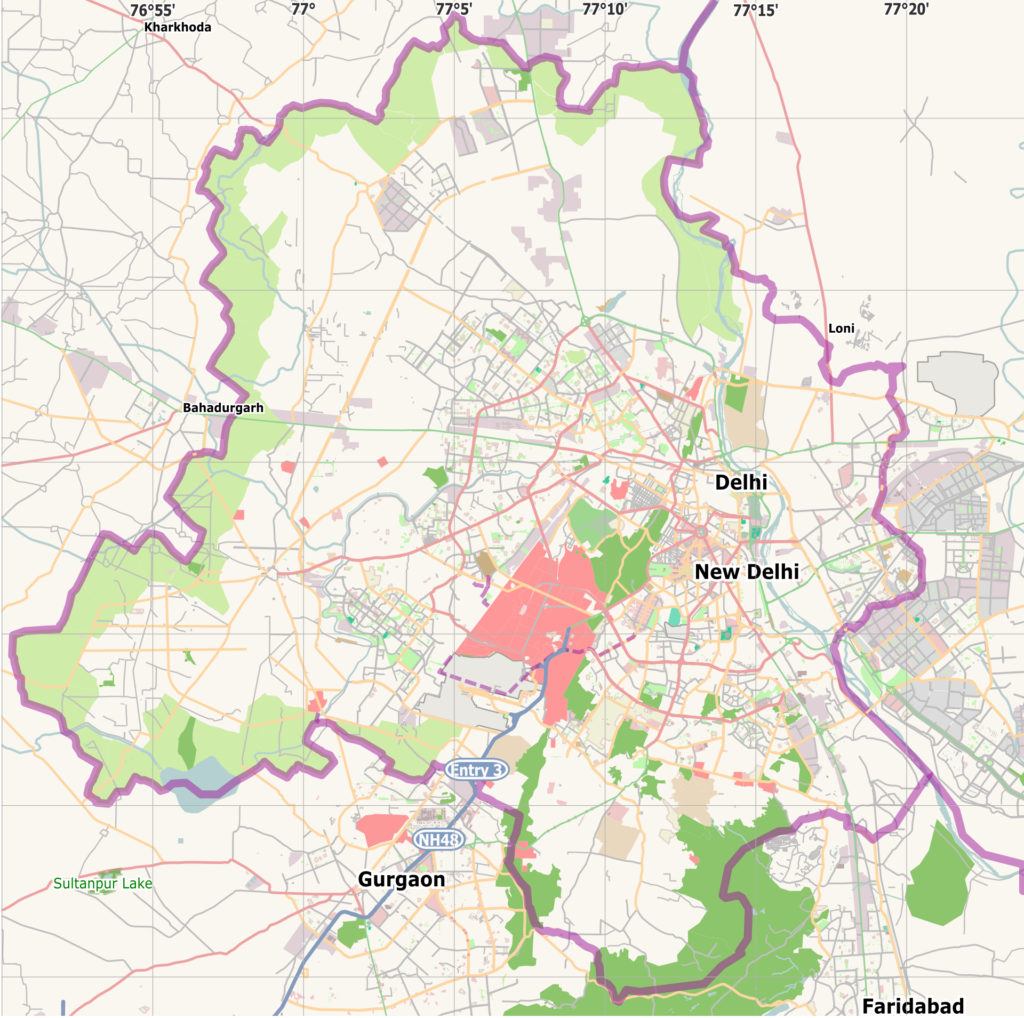
Suggested photograph: Map of the National Capital Territory of Delhi for locating the scale and territorial constraints of the housing programme

Image link: https://upload.wikimedia.org/wikipedia/commons/5/57/Location_map_India_Delhi_EN.svg

Suggested caption: Delhi’s housing strategy must work within a territorially constrained city, not assume unlimited outward expansion.

Credit: Philg88, CC BY 4.0. Attribute the creator and link to the licence.

Sprawl Is Not Inevitable but Peripheral Supply Carries Real Risks

Sprawl is often described as an inevitable result of population growth. It is better understood as a policy outcome produced when housing, transport, land assembly, infrastructure and employment planning are not coordinated. Peripheral development becomes especially likely where centrally located land is underused, redevelopment is administratively difficult, rental housing is weak and the cost of infrastructure is shifted into the future.

Delhi’s land pooling approach is designed to facilitate planned development through voluntary aggregation of land rather than conventional acquisition. The policy is significant because it can create serviced land for housing, roads, utilities, public facilities and open space at a scale that individual plots cannot provide. However, land pooling does not automatically prevent sprawl. It can still create distant, mono-functional development if it is implemented ahead of mass transit and employment, or if its affordable-housing obligations are weakly monitored.

The implementation record is a reminder that land assembly is not a neutral technical matter. In 2026, a sector in north-west Delhi became the first under the policy to meet the required threshold for implementation, illustrating both the potential of the mechanism and the time required to bring fragmented land into a viable development structure. DDA’s planning framework identifies land pooling as one of several growth instruments rather than a complete housing solution. That is the correct conceptual position.

The stronger anti-sprawl strategy is to sequence growth. Peripheral land should not be treated as an immediate substitute for well-located housing. It should be developed only when trunk infrastructure, frequent public transport, walkable local streets, schools, healthcare, markets, public open space and employment access are secured through enforceable phasing conditions. The city should avoid approving vast residential superblocks based on future promises of mobility. Residents cannot wait years for a bus route, a functioning sewer or a school.

This approach does not mean refusing all expansion. Delhi’s housing need is too large for redevelopment alone. It means making new urban extensions compact, mixed-use and transit-ready from the first phase. It also means retaining ecological and agricultural functions where they are vital to flood management, groundwater recharge, food systems and climate resilience. Replacing environmentally sensitive land with dispersed construction would create risks that cannot be offset simply by increasing floor space elsewhere.

The planning test should be straightforward: each proposed expansion area must demonstrate that a resident can reach daily needs and a range of jobs without compulsory car or two-wheeler ownership. If the answer depends on future infrastructure without committed funding and delivery dates, the project should not yet count as effective affordable-housing supply.

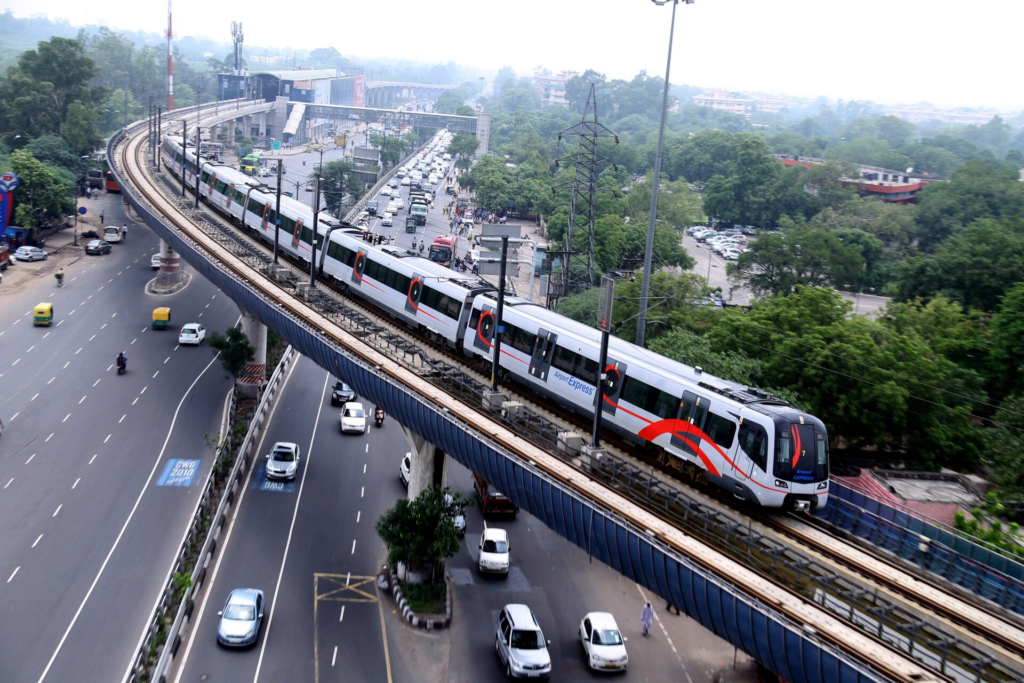
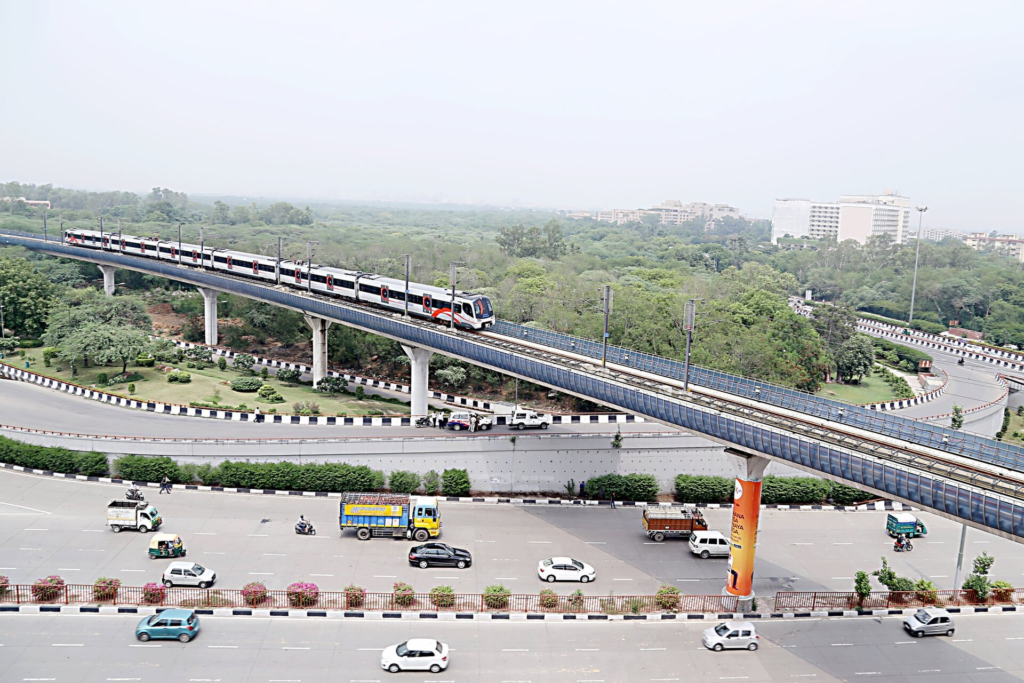
Suggested photograph: Elevated Delhi Metro Airport Express line above an urban road

Image link: https://upload.wikimedia.org/wikipedia/commons/6/6c/Delhi_metro_Airport_express_line.jpg

Suggested caption: Housing growth must be sequenced with reliable high-capacity transport, rather than built ahead of it.

Credit: Delhi Metro Rail Corporation, CC BY-SA 4.0. Attribute DMRC, link to the licence and state if adapted.

The Largest Opportunity Is Existing Delhi Not Only Its Edge

A four-million-home requirement cannot be met entirely through infill and redevelopment, but Delhi has substantial scope to add housing within its existing urbanised area. This is where the plan’s emphasis on redevelopment matters most. Underused public land, ageing government housing, low-intensity plots near transit, obsolete industrial premises where land-use change is appropriate, and large sites with poor built-form efficiency can accommodate additional homes without consuming new peripheral land.

Redevelopment must, however, be distinguished from simple replacement. A project that demolishes low-rise housing and returns only a fraction of the original residents, while producing higher-priced units for others, may increase built area without advancing housing justice. The relevant measure is net affordable, occupied and well-located housing after accounting for displaced residents, temporary accommodation, tenure security and the cost of returning.

This is especially important for informal settlements and unauthorised colonies. Their residents are often deeply embedded in local labour markets and social networks. Relocation to distant sites can sever access to work, schools and care networks, even where a formal dwelling is provided. In-situ upgrading, negotiated redevelopment and serviced incremental housing should therefore be considered before relocation. This is not a claim that every settlement can or should remain in place. Flood-risk areas, hazardous sites and critical infrastructure corridors may require relocation. But where relocation is necessary, it must be planned as a livelihood and mobility intervention, not merely a housing transfer.

Delhi’s existing vacant public housing stock also demonstrates why new construction is not the only lever. The central government’s Affordable Rental Housing Complexes programme lists 29,112 government-funded vacant houses available in Delhi for possible conversion to affordable rental housing. This figure is small beside the 40 lakh estimate, but it is policy-relevant: activating vacant stock can provide accommodation sooner than new construction, while also testing management, rent-setting, maintenance and tenant-selection systems.

Rental housing is indispensable because many households cannot, and should not be expected to, purchase a formal dwelling. Migrant workers, students, young households, single workers, separated families and people with uncertain incomes need secure rental options near employment. The national ARHC framework explicitly addresses affordable rental housing for urban migrants and poor households, and its design allows local rent-setting based on market surveys. MoHUA’s ARHC guidance is useful, but Delhi will need stronger city-level safeguards on location, habitability, tenure security, rent escalation and access for workers outside formal employment.

The policy implication is clear: redevelopment should be judged by a social return test. Each project should disclose the number of existing households, permanent replacement units, temporary relocation arrangements, return rights, rental units, cross-subsidised market units, public facilities, trees and open space, and expected travel times to work. Without this information, redevelopment can obscure displacement.


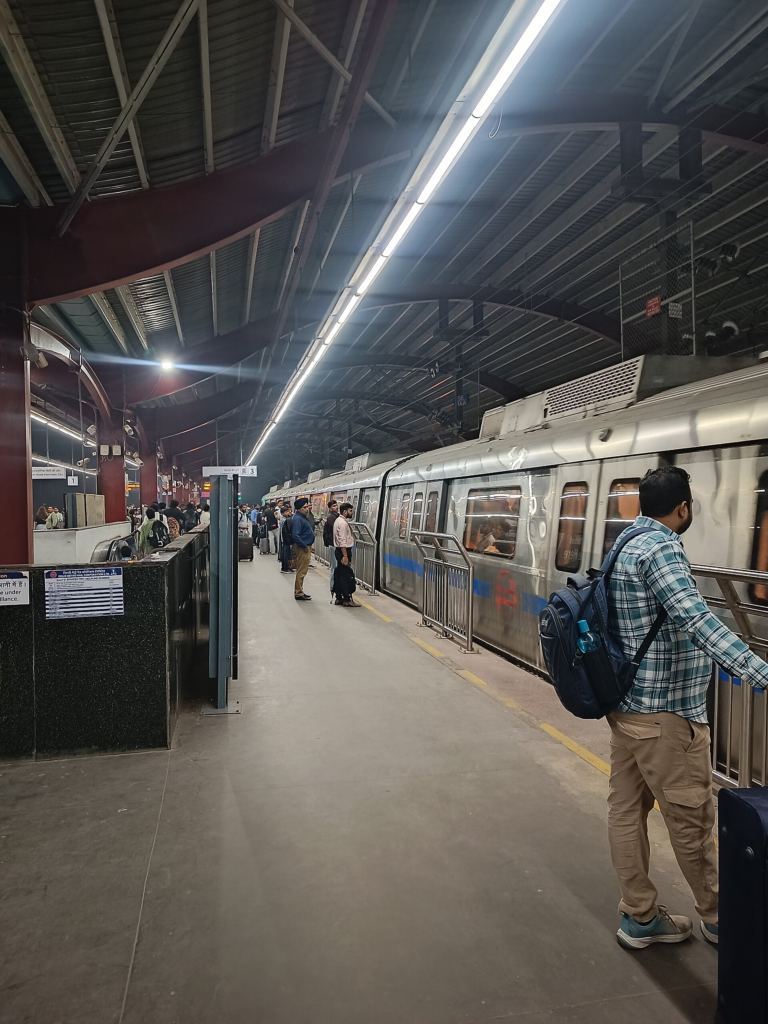
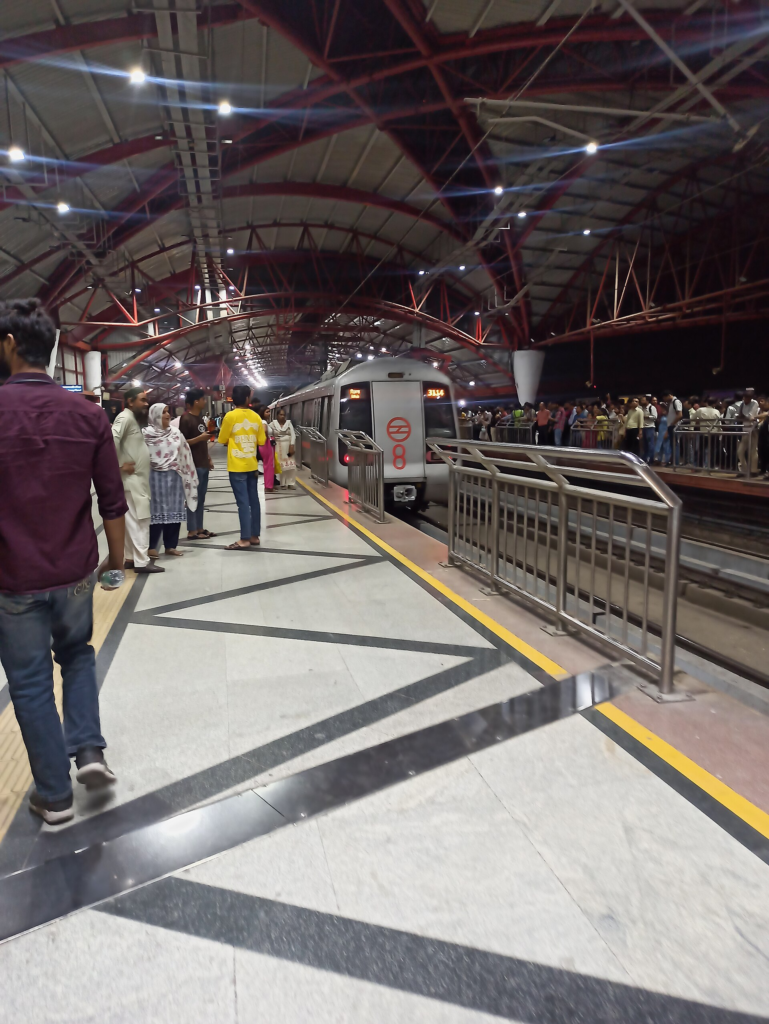
Suggested photograph: Delhi Metro station, showing the everyday public-transport setting that determines whether housing is functionally well located

Image link: https://upload.wikimedia.org/wikipedia/commons/7/7e/Delhi_Metro_Station.jpg

Suggested caption: Housing affordability is inseparable from everyday access to transit, jobs and public services.

Credit: Shadabgdg, CC BY-SA 4.0. Attribute the creator, link to the licence and state if adapted.

Transit Oriented Development Must Become Housing Policy Not a Premium Real Estate Format

Transit-oriented development is central to Delhi’s anti-sprawl potential because it links new housing capacity to the city’s most valuable collective infrastructure: the public-transport network. Delhi Metro currently reports an operational network of 416 km. DMRC’s current network information confirms the metropolitan scale on which land-use and transport decisions must now be made.

However, proximity to a Metro station does not by itself create inclusive TOD. If higher floor-area ratios are used primarily for premium offices, malls or high-end housing, the result may increase land values and displace lower-income residents from transit-rich locations. This is a risk observed internationally wherever transport investment is not paired with tenure protection, affordable-housing requirements and land-value capture.

Delhi’s TOD policy framework provides a regulatory basis for greater intensity near high-capacity transit. The crucial next step is to attach clear public obligations to that intensity. A share of additional floor space should produce affordable rental and ownership units that remain affordable over time, not only at first sale. Development charges and value capture should contribute to station-area streets, universal accessibility, drainage, public toilets, parks, schools and feeder mobility. Small businesses, hawkers and informal workers should be planned into station precincts rather than removed in the name of orderly design.

The street is also decisive. A residential tower within nominal walking distance of transit may still be inaccessible if the route is hostile, discontinuous, unsafe, unshaded or blocked by high-speed traffic. TOD must therefore be assessed through an actual pedestrian catchment: continuous footpaths, safe crossings, cycling access, shaded waiting areas, last-mile options and active ground floors. Delhi’s extreme heat makes shade, drinking water, resting places and tree cover not merely amenities but components of mobility equity.

International experience provides two useful cautions. Singapore’s public planning system demonstrates the importance of coordinating housing, transport, land release and long-term infrastructure through an integrated planning framework, though its land ownership and governance conditions differ substantially from Delhi’s. Singapore’s Urban Redevelopment Authority presents the Master Plan as a statutory framework that coordinates land use and public facilities. Hong Kong’s rail-property model illustrates how rail-linked development can generate land value, but it also shows that high land values do not automatically translate into broad affordability. Neither case can be copied directly. Their relevant lesson is institutional: transport, land and housing must be governed together.

For Delhi, TOD should be a citywide affordability mechanism, not a limited set of showcase towers. The test is whether station areas add homes for workers with varied incomes, reduce household transport costs, retain local livelihoods and improve the surrounding neighbourhood rather than isolating an enclave behind podiums and parking.

Suggested photograph: Delhi Metro station and urban access environment

Image link: https://upload.wikimedia.org/wikipedia/commons/8/86/Delhi_metro_station.jpg

Suggested caption: A transit station becomes housing infrastructure only when the surrounding streets and homes are accessible to ordinary workers.

Credit: Manishontop02, CC BY-SA 4.0. Attribute the creator, link to the licence and state if adapted.

Affordability Requires a Delivery System That Is Publicly Measurable

Delhi should not approach the 40 lakh requirement as a single aggregate target. It should establish a spatially explicit delivery system with targets by tenure, income group, location and delivery instrument. This would make it possible to distinguish a real housing advance from a statistical accumulation of approvals.

First, the city should prioritise a reuse before expansion hierarchy: activate vacant stock, upgrade viable settlements, redevelop ageing housing and public land, enable incremental and rental housing, intensify appropriate transit catchments, and then open new land in infrastructure-ready phases. This does not eliminate expansion, but it places the least land-intensive and most socially connected options first.

Second, each major scheme should be subject to an affordability audit. The audit should consider not only unit price but also rent or loan repayment, household income, expected utility and maintenance costs, travel time and cost to work, school access and the security of tenure. There is no single universal affordability threshold that can simply be imported. Delhi should publish its methodology and regularly update it with household expenditure evidence.

Third, affordable housing must be treated as long-term stock, not as a one-time allocation. Resale controls where appropriate, transparent waitlists, rental management, maintenance budgets and grievance systems are necessary to prevent subsidised units from becoming inaccessible or unliveable. ARHCs are relevant here because they foreground rental tenure, but their operation requires careful local governance.

Fourth, implementation should be linked to metropolitan coordination. Housing on Delhi’s edge affects Ghaziabad, Noida, Gurugram, Faridabad, Bahadurgarh and other NCR settlements. A Delhi-only construction target can unintentionally shift congestion, water demand and commuting burdens across administrative borders. Planning at the NCT scale is necessary, but it is not sufficient for a regionally integrated labour and housing market.

Finally, public reporting should track outcomes, not only inputs. Annual dashboards should show completed and occupied homes, tenure type, affordability band, travel-time accessibility, infrastructure readiness, displacement and return rates, tree-cover change, water and drainage capacity, and the amount of land-value gain reinvested in public goods. This would not solve delivery problems automatically, but it would make failure visible early enough to correct it.

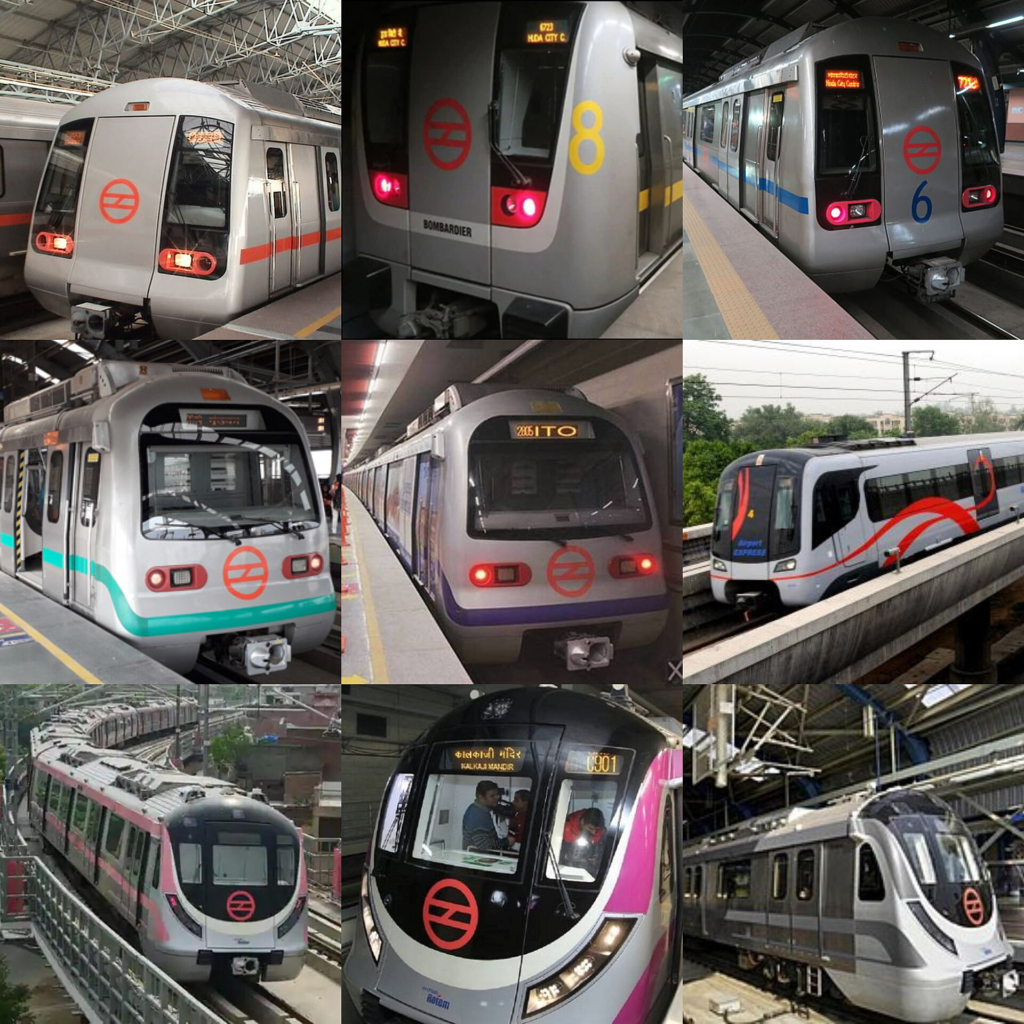
Suggested photograph: Delhi Metro trains in operation, representing the scale of public transport that housing policy must use strategically

Image link: https://upload.wikimedia.org/wikipedia/commons/8/85/Delhi_Metro_trains.jpg

Suggested caption: The scale of housing delivery must be matched by equally deliberate investment in accessible public transport and local services.

Credit: Santosh4118, CC BY-SA 4.0. Attribute the creator, link to the licence and state if adapted.

Conclusion

Delhi can pursue the estimated requirement of 40 lakh additional homes without repeating urban sprawl, but only if it refuses to equate housing delivery with peripheral construction. The evidence-based direction is a mixed strategy: first use and upgrade existing urban land and housing stock; make redevelopment accountable to resident return, affordability and public facilities; use TOD to secure inclusive homes near mass transit; develop peripheral land only with committed infrastructure and jobs access; and expand secure rental housing alongside ownership options.

MPD-2047 provides a framework for these instruments, but the target will be judged by lived outcomes, not its scale on paper. The decisive question is whether a new dwelling gives a household a safe home, a manageable total cost of living, access to work and services, and a durable place in the city. If Delhi makes those outcomes measurable and enforceable, growth can be compact and inclusive. If it counts units without governing location, tenure and infrastructure, the city risks producing a larger but more unequal urban footprint.

Suggested photograph: Elevated Delhi Metro infrastructure integrated with the city’s built environment

Image link: https://upload.wikimedia.org/wikipedia/commons/a/a0/Delhi_metro_elevated.jpg

Suggested caption: Delhi’s housing future depends on integrating compact growth with reliable public transport and complete neighbourhood infrastructure.

Credit: Delhi Metro Rail Corporation, CC BY-SA 4.0. Attribute DMRC, link to the licence and state if adapted.

References and Further Reading

Related reading on Urban Design Lab: From New Urbanism to Transit-Oriented Development; Public Land, Public Good: Leasing for Housing, Not Speculation

Leave a Reply

Your email address will not be published. Required fields are marked *

This site uses Akismet to reduce spam. Learn how your comment data is processed.

Related articles

UDL Thesis Publication 2025

Call for Abstracts now open!

UDL GIS

MASTERCLASS

Urban Mapping, Analysis and Representation

Session Dates

12th-16th October, 2026

Curating the best graduate thesis projects globally!

Publish your work and get recognized globally!

Free E-Book

From thesis to Portfolio

A Guide to Convert Academic Work into a Professional Portfolio”

Urban Design Lab

Be the part of our Network

  • Stay updated on workshops, design tools, and calls for collaboration

  • Thesis Report Writing for Architecture and Urban Studies

    Join Our WhatsApp Group

    Recent Posts

    Sign up for our Newsletter

    “Let’s explore the new avenues of Urban environment together “

    E-Book- From Thesis To Portfolio

    A Guide to Convert Academic Work into a Professional Portfolio