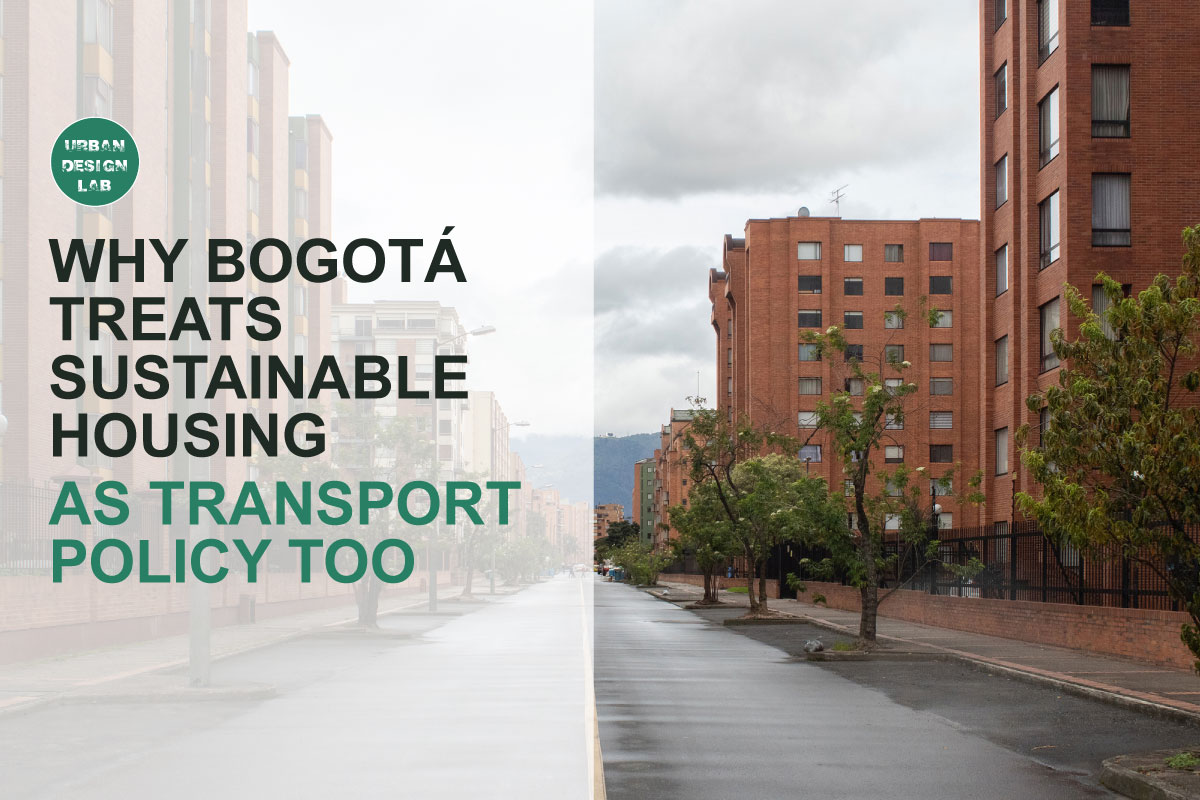


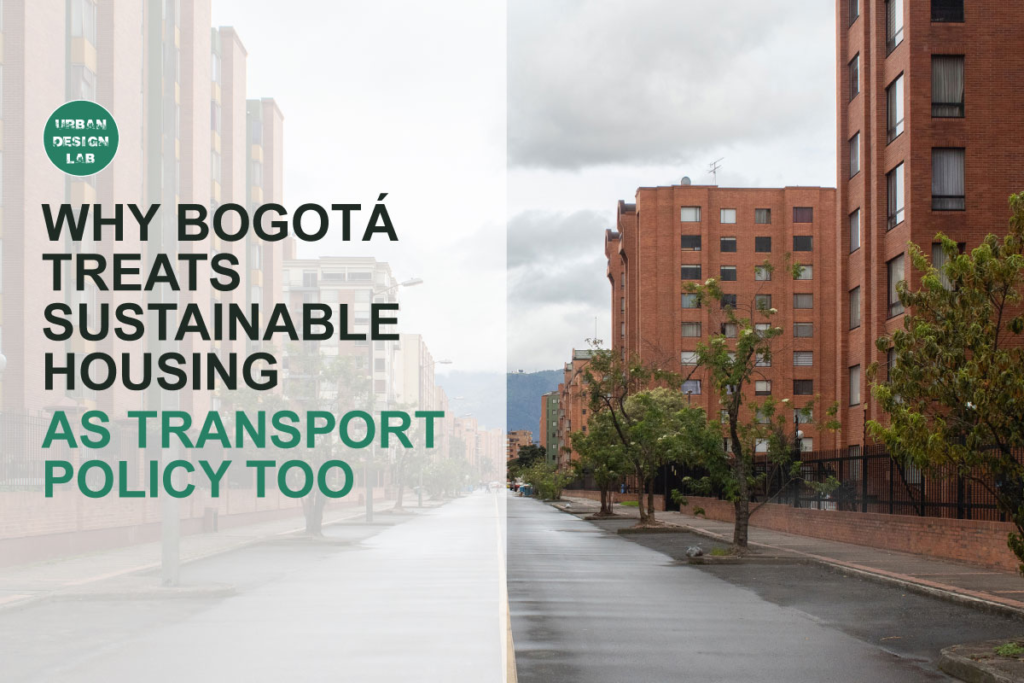
A home can be affordable to purchase and expensive to inhabit. Its monthly cost extends beyond mortgage payments, rent and utilities to the journeys required to reach work, education, healthcare and everyday services. When housing policy overlooks those journeys, an apparently economical dwelling can impose costs that remain invisible in the project’s sales price.
Bogotá is making this relationship explicit through its Proyectos de Renovación Urbana para la Movilidad Sostenible, or PRUMS, an urban renewal mechanism linking development with sustainable mobility. The city’s announcement connects housing, commerce and public space with mass transit, while an agreement between its housing secretariat and TransMilenio links eligible housing developments to district subsidy priorities. These are documented policy commitments, rather than proof of completed social or environmental benefits, as described by the Secretaría Distrital del Hábitat. habitatbogota.gov.co
The distinction matters. Bogotá’s experience should not be presented as a finished model in which transit investment automatically produces inclusive neighbourhoods. Its significance lies in recognising that housing location, transport affordability and access to opportunity belong within the same policy problem.
The central argument is therefore conditional: sustainable housing becomes transport policy when it changes the cost, time and practical difficulty of everyday life. Whether Bogotá’s approach succeeds will depend on who can occupy the resulting homes, who can remain nearby and what residents can actually reach.
The Real Price of Housing Includes the Journey Beyond It
Conventional housing affordability measures can miss an important spatial trade-off. A household might pay less for accommodation while spending more on transport, or spend little on transport only because necessary journeys are unaffordable. Neither situation can be understood from housing expenditure alone.
This problem is examined directly in the International Transport Forum paper Housing Plus Transportation Affordability Indices: Uses, Opportunities, and Challenges. It reviews the United States’ housing-plus-transport approach and applies a modified index to metropolitan Mexico City, illustrating how including transport costs changes the assessment of residential affordability. The comparison offers a useful analytical method for Bogotá, rather than evidence that the cities have identical housing markets. OECD
For policy, the implication is straightforward: the cheapest dwelling is not necessarily the dwelling that leaves a household with the greatest usable income or access to essential activities. However, simply adding two expenditure categories is insufficient. A family making very few trips may appear to have low transport costs while experiencing severe exclusion.
Bogotá-specific research reinforces the importance of location. The study Access as a Determinant Variable in the Residential Location Choice of Low-Income Households in Bogotá examines trade-offs involving travel time, travel cost, housing quality and housing cost. Its reported models favour some locations with shorter journeys and better access to employment over peripheral alternatives. These are findings about the studied households and modelled choices, not a universal statement that every family prefers central-city living. ScienceDirect
The stronger interpretation is that accessibility belongs among the benefits a housing programme delivers. Floor area, structural safety and service connections remain essential, but they do not exhaust the meaning of adequate housing.
Consider two hypothetical developments with similar dwellings and purchase subsidies. One requires several paid transfers to reach employment; the other connects residents to relevant destinations through a reliable service and a safe walk. Counting the homes as equivalent housing outputs would conceal a potentially substantial difference in their usefulness.
That comparison must also recognise household diversity. A location suitable for a worker travelling to one employment district may be unsuitable for someone working elsewhere, caring for relatives or travelling at night. The relevant question is not simply whether transport infrastructure exists nearby. It is whether that infrastructure connects the household to the activities on which its livelihood and wellbeing depend.
Bogotá’s housing-transport connection is therefore best understood as a change in the unit of assessment: from the dwelling considered alone to the dwelling within a functioning urban setting.
PRUMS Turns the Housing-Transport Relationship into an Institutional Mechanism
The most consequential element of Bogotá’s approach is institutional. It gives the housing-transport relationship a development mechanism rather than leaving it as a general aspiration.
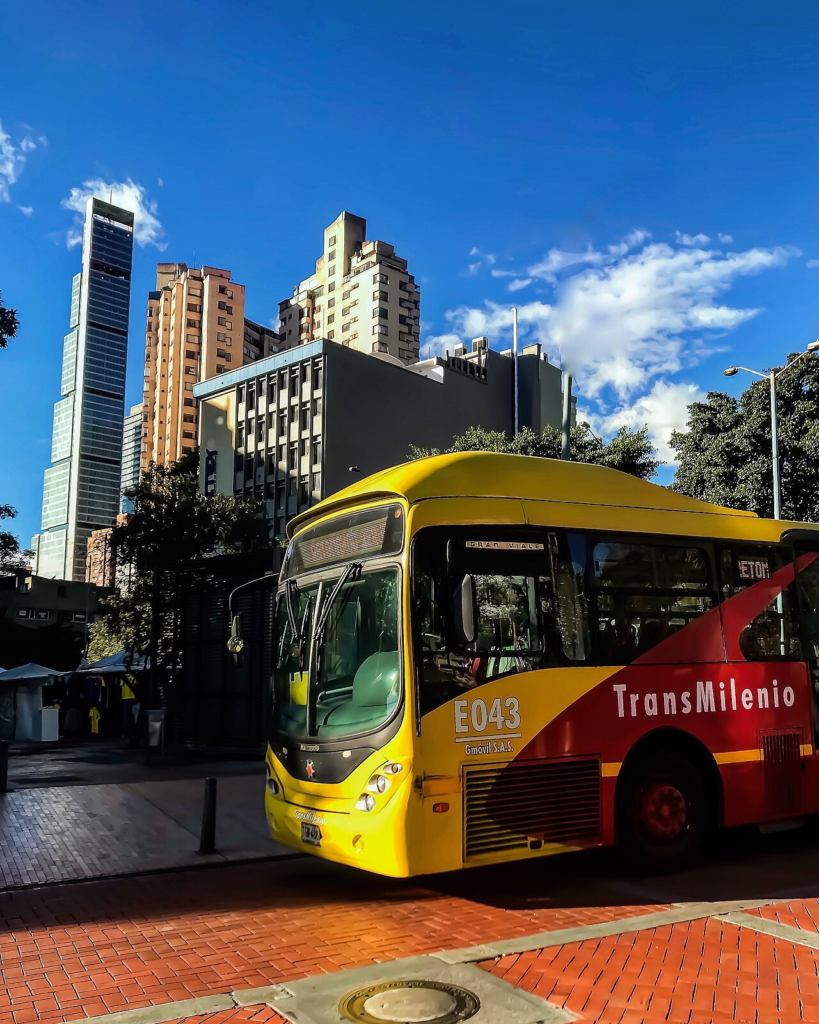
TransMilenio’s development portal identifies PRUMS opportunities on land remaining from public works, its own properties or land designated for transport, and qualifying third-party properties. Its page, updated on 6 July 2026, places this activity within the framework of Article 163 of District Decree 555 of 2021 and subsequent implementing provisions. This establishes a documented basis for TransMilenio’s role as an urban development actor, as explained in its official development notice. negocios.transmilenio.gov.co
The housing component is equally important. The agreement described by the housing secretariat prioritises eligible new housing within this model and links projects to areas prioritised for subsidies supporting Vivienda de Interés Social, or VIS, and Vivienda de Interés Prioritario, or VIP. These are Colombia’s social and priority housing categories. The same announcement promotes mixed development combining homes, commerce, services and public space, rather than residential construction considered separately from its surroundings. Source: Secretaría Distrital del Hábitat. habitatbogota.gov.co
The first announced project is beside the Avenida Primero de Mayo intermediate station, on the Carrera 10 corridor in San Cristóbal. The city described more than 25,000 square metres of planned housing, commerce and services and announced a public call for development proposals beginning 21 November 2025. Its announcement also identified private renewal initiatives along Avenida 68, including Metrópolis. These descriptions establish intended projects and procurement activity; they do not establish that the housing has been completed or occupied. Source: Bogotá’s official PRUMS announcement. Bogota.gov.co
Analytically, the arrangement brings together decisions that should be evaluated jointly: where development occurs, what public assets contribute, which households receive support and how buildings connect to transport.
It also creates a difficult negotiation. A transport organisation may seek development income, a developer may seek commercial viability, and a housing authority may seek deeper affordability. Those objectives can align, but the announcement of a partnership does not demonstrate that they have been reconciled.
A defensible assessment would therefore examine project agreements, eligibility rules, the actual mix of housing, subsidy availability and delivery responsibilities. It would ask whether affordability requirements survive changes in construction costs and market conditions.
The institutional advance is real: transport land and housing assistance are being considered together. The unresolved issue is whether that coordination produces benefits accessible to households who would otherwise struggle to obtain well-located housing.
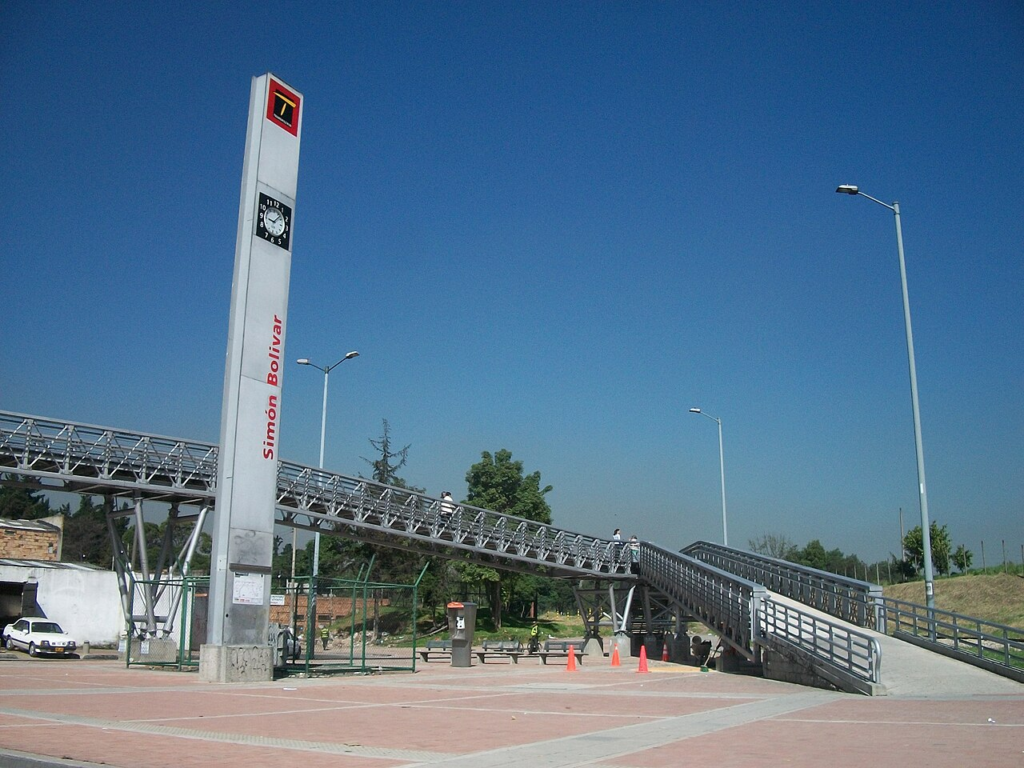
Accessibility Means More Than Living Beside a Station
A station-distance measure is attractive because it is easy to map. Yet it cannot, by itself, establish whether a housing project supports sustainable daily life.
The World Bank’s transit-oriented development guidance combines proximity to mass transit with a diverse mix of land uses, quality urban space and convenient walking and cycling access. Its significance is that transport-oriented development concerns the organisation of neighbourhoods, not merely the presence of residential density beside infrastructure. Public Private Partnership
For Bogotá, an additional dimension comes from its proximity-based planning agenda. The city’s planning secretariat describes a 30-minute access objective encompassing care services, education, healthcare, recreation, employment and transport, with journeys made on foot, by bicycle or by public transport. This is a planning objective, not a verified condition already experienced by every resident. Source: Secretaría Distrital de Planeación. Secretaría Distrital de Planeación
This wider definition changes how housing should be evaluated. A development might offer a convenient work commute while making school accompaniment, healthcare visits or shopping difficult. Conversely, nearby services can reduce the need for some journeys even when access to distant employment still requires mass transit.
An appropriate assessment should therefore examine daily sequences of activities. For example, can a caregiver accompany a child, reach work and return within the operating hours of available services? Can an older resident reach healthcare without negotiating an inaccessible crossing? These are proposed evaluation questions, not claims that PRUMS has already resolved such difficulties.
Affordability further complicates accessibility. Research on Bogotá’s bus reform found that improvements in travel accessibility did not translate uniformly into affordable access when household budget constraints were considered. It also identified benefits from integrated fares through reduced transfer costs, particularly in peripheral and southern areas. The findings in Accessibility, Affordability, and Addressing Informal Services in Bus Reform demonstrate why service integration and financial access must be assessed together. journals.sagepub.com
A separate study of Bogotá’s targeted transport subsidy found progressive accessibility and equity effects for people receiving the subsidy. Its qualification is essential: benefits for recipients do not establish adequate coverage for everyone in need. Source: Accessibility, Affordability and Equity: Assessing “Pro-Poor” Public Transport Subsidies in Bogotá. UCL Discovery
These findings support a practical proposition. Housing subsidies, fares, transfer arrangements, service frequency and pedestrian access should be tested as a combined package. None can substitute completely for the others.
A nearby station that residents cannot afford to use provides a different benefit from one that supports their actual daily schedules. Sustainable housing policy needs to make that distinction visible.
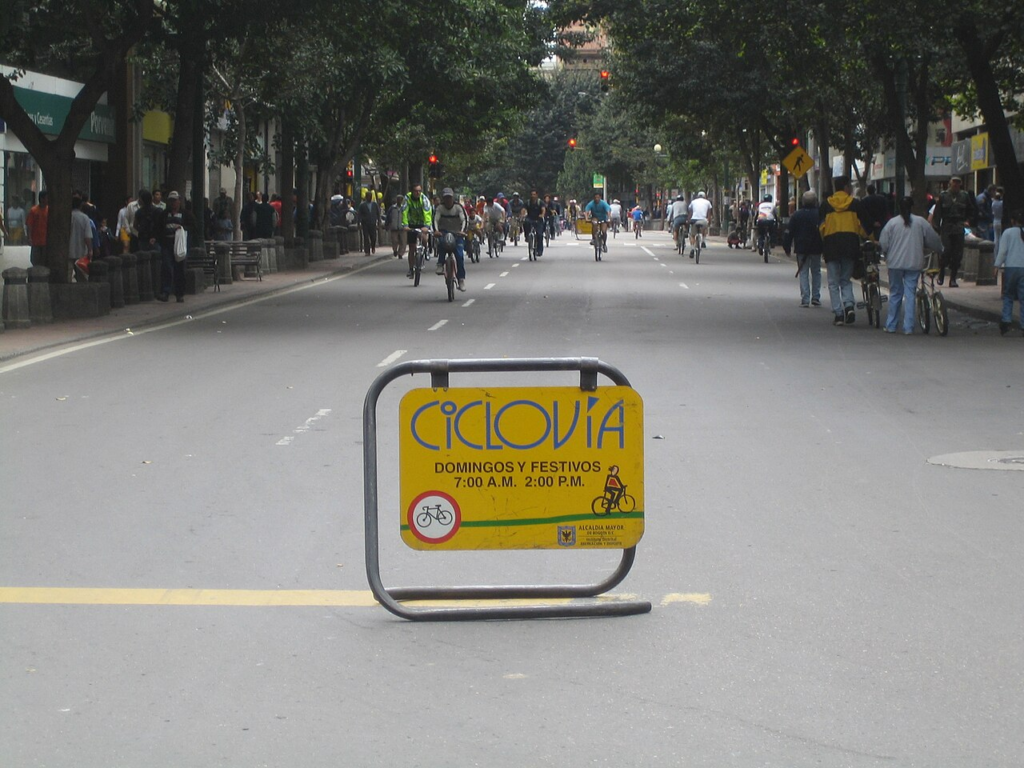
Better Connections Must Not Put Well-Located Housing Beyond Reach
The relationship between transport and housing contains a central tension. Improving access can make a location more desirable, but desirability does not guarantee that existing residents can continue to afford it.
Bogotá’s transport-land relationship predates PRUMS. Research including Impact of Transmilenio on Density, Land Use, and Land Value in Bogotá has examined changes in development and property markets associated with the system. Related research on walking accessibility and property values investigated variation across walking distances, transport components and socioeconomic groups. These studies support examining differentiated land-market responses; they do not justify assuming an identical price effect around every station. ScienceDirect
Nor should an observed price increase automatically be labelled displacement. Property values can change alongside broader market cycles, redevelopment, service improvements and changing neighbourhood demand. Establishing displacement requires evidence about households leaving, their reasons for leaving, their destinations and whether the move was voluntary.
Nevertheless, the risk deserves explicit attention because an accessibility policy can fail distributionally even when the area becomes better connected. If intended beneficiaries cannot remain, the improvement may primarily benefit incoming households.
Bogotá’s housing secretariat maintains a resident and productive-activity protection policy portal that explicitly includes PRUMS among relevant project categories. The existence of this policy framework is evidence that resident protection is recognised institutionally. It is not evidence that every affected household has received adequate protection in practice.
For evaluation, protection should be examined separately for owners, tenants and people whose livelihoods depend on local premises or customer networks. Compensation for an asset does not necessarily reproduce its locational advantages. A replacement dwelling may meet a physical standard while worsening access to employment or care.
This suggests several practical tests. Renewal proposals should establish who occupies the area before intervention, how different tenure groups are treated, what options exist during construction and whether returning households face manageable recurring costs. These are recommended safeguards, rather than verified descriptions of every current project.
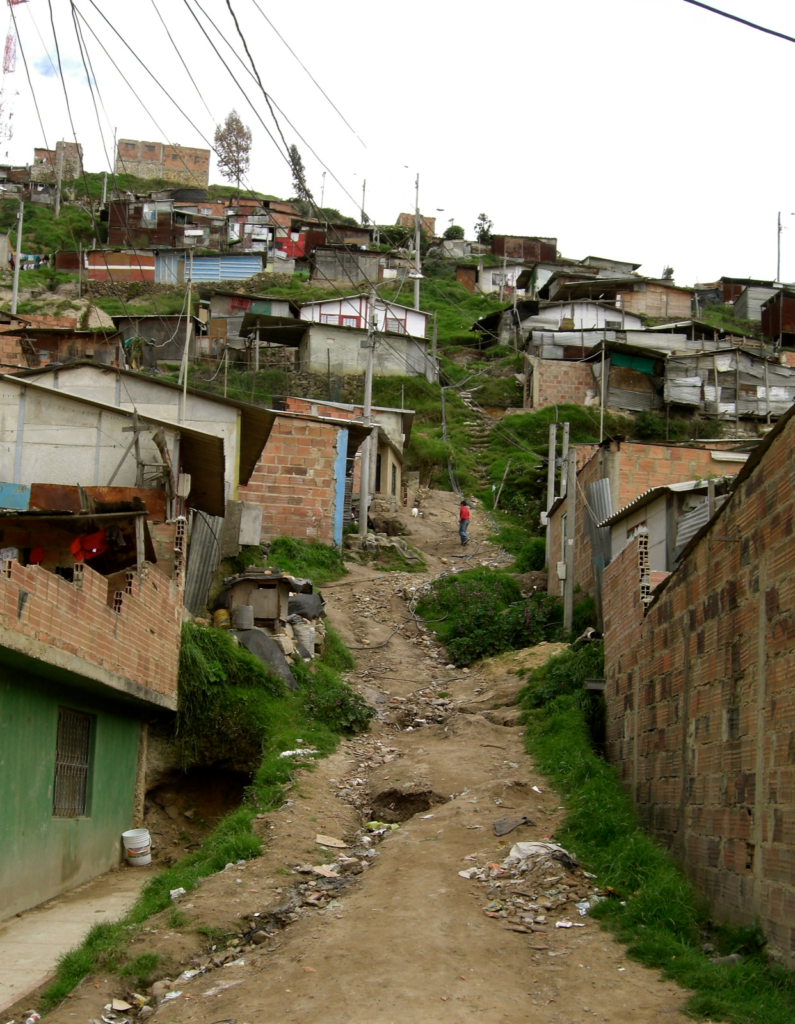
Housing improvement also deserves a place alongside redevelopment. The World Bank has documented Bogotá’s use of mapping technology to identify homes and neighbourhoods that could benefit from upgrading and engineering inspection. That initiative addresses a different aspect of sustainable housing: improving the safety and quality of existing residential environments.
The policy implication is not that upgrading always outperforms rebuilding. It is that the alternatives should be compared. Where safe and feasible, improving existing homes and connections may preserve valuable social and economic relationships that a relocation-based approach would need to reconstruct.
Sustainability Must Be Demonstrated Through Household and Environmental Outcomes
The environmental case for connecting housing and transport is substantial, but it must be stated at the correct scale.
The IPCC identifies compact, walkable urban form, mixed land uses and the co-location of housing and employment as important components of urban emissions mitigation. Its assessment also emphasises interactions between buildings, transport, infrastructure and behaviour. This supports integrated planning; it does not provide a project-specific emissions saving for Bogotá’s PRUMS developments.
A credible environmental appraisal should consequently distinguish potential from measured change. Housing beside transit might support lower car use, but the outcome depends on who moves in, their previous travel patterns, the destinations they need and the services available. Construction materials, demolition and building operation must also be considered before describing a development as environmentally superior overall.
For instance, moving a household that already travelled mainly by bus into a station-adjacent apartment cannot automatically be counted as a shift away from car use. Its strongest benefit might instead be reduced walking time, fewer transfers or improved reliability. Those are meaningful outcomes, even if the carbon effect is modest.
The following assessment framework is a proposal for evaluating the policy, not a claim that Bogotá already publishes all these measures.
First, projects should report usable accessibility. Analysis should include door-to-door travel, waiting, transfers, fares and access to relevant destinations. Results should distinguish income groups and household circumstances instead of relying exclusively on a neighbourhood average.
Second, affordability should be measured after occupation. Purchase eligibility alone cannot reveal the continuing burden of mortgage payments or rent, utilities, maintenance and transport. Where costs change, evaluation should identify which component changed and for whom.
Third, monitoring should follow original residents as well as incoming occupants. A successful-looking neighbourhood average could conceal the departure of households facing the greatest difficulty. Tracking both groups would help distinguish improvements to a place from improvements experienced by its intended beneficiaries.
Fourth, environmental assessment should compare plausible alternatives. These might include redevelopment, selective infill, upgrading existing housing or locating new housing elsewhere. The relevant comparison is between realistic options that meet housing needs, not between a new project and an undefined assumption of no change.
Finally, claims of causation require more than a before-and-after photograph or survey. Where feasible, evaluations should compare outcomes with similar areas, account for wider economic changes and disclose uncertainty. Construction disruption, changing employment patterns and unrelated transport improvements could otherwise be mistaken for project effects.
This emphasis on evaluation is consistent with the wider lesson of transit-oriented development: implementation combines urban design with land economics, finance and institutional coordination, rather than depending on a single physical intervention.
For architects and planners, the challenge is to design buildings and neighbourhood connections that can pass these tests. For policymakers, it is to make household outcomes as visible as construction outputs.

Conclusion
Bogotá treats sustainable housing as transport policy because the value of a home depends partly on the city its residents can reach. Its PRUMS approach creates an explicit institutional connection between urban development, transport assets and housing support. The verified evidence establishes that policy direction, while leaving project-level social and environmental outcomes to be demonstrated. Source: TransMilenio’s PRUMS development framework. negocios.transmilenio.gov.co
The transferable lesson is a method of asking better questions. Can intended households afford the complete cost of living there? Can existing residents retain their access to opportunity? Do transport services support daily needs? Are environmental gains measured against credible alternatives?
Housing near transit is an important starting point. Sustainable housing requires the additional work of making that location usable, affordable and durable for the people it is meant to serve.
References / Further Reading
- Secretaría Distrital del Hábitat. Bogotá presenta nuevo modelo de desarrollo urbano orientado al transporte y a la vivienda.
- Alcaldía Mayor de Bogotá. Proyecto de Renovación Urbana para la Movilidad Sostenible en Bogotá.
- TransMilenio S.A. Bogotá se compromete con el desarrollo inmobiliario orientado al transporte.
- Secretaría Distrital de Planeación. ¡La ciudad de los 30 minutos se consolida en Bogotá!.
- Guerra, E., and Kirschen, M. Housing Plus Transportation Affordability Indices: Uses, Opportunities, and Challenges.
- Access as a Determinant Variable in the Residential Location Choice of Low-Income Households in Bogotá. Transportation Research Procedia.
- Rodriguez, C., Peralta-Quirós, T., Guzman, L. A., and Cárdenas Reyes, S. A. Accessibility, Affordability, and Addressing Informal Services in Bus Reform: Lessons from Bogotá, Colombia.
- Guzman, L. A., and Oviedo, D. Accessibility, Affordability and Equity: Assessing “Pro-Poor” Public Transport Subsidies in Bogotá.
- Bocarejo, J. P., Portilla, I., and Pérez, M. A. Impact of Transmilenio on Density, Land Use, and Land Value in Bogotá.
- Walking Accessibility to Bus Rapid Transit: Does It Affect Property Values? The Case of Bogotá, Colombia. Transport Policy.
- Secretaría Distrital del Hábitat. Política Pública de Protección a Moradores y Actividades Productivas.
- World Bank. A Protective Eye on Bogotá.
- World Bank. TOD Implementation Resources and Tools.
- IPCC. Climate Change 2022: Mitigation of Climate Change, Chapter 8: Urban Systems and Other Settlements.
Related reading on Urban Design Lab: Can Delhi Build 40 Lakh Affordable Homes Without Repeating Urban Sprawl; London’s Buses Are Getting Slower: Why “Sustainable Mobility” Is Not Working Automatically