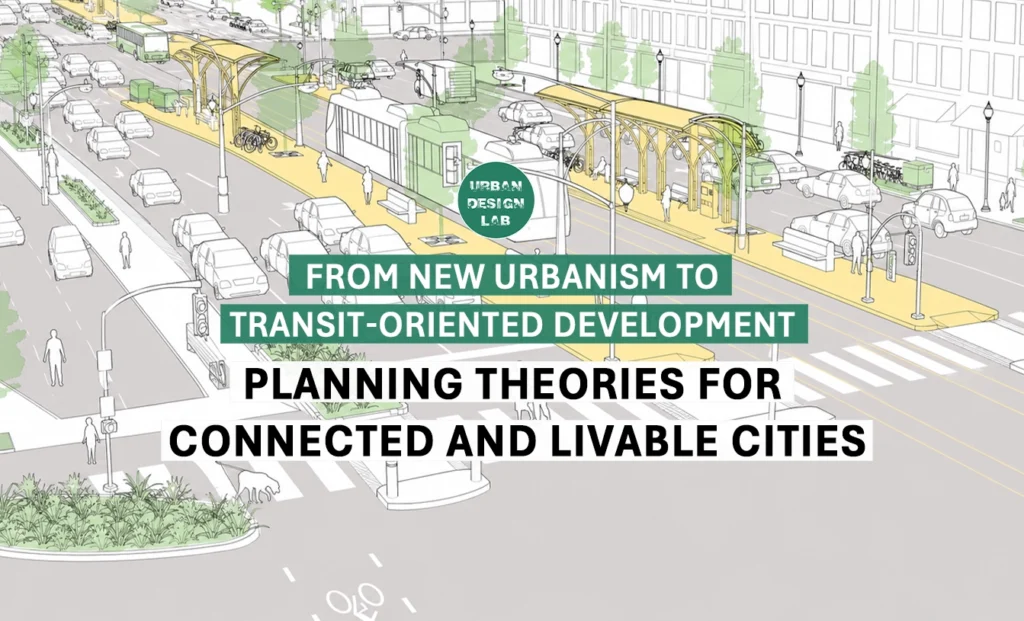
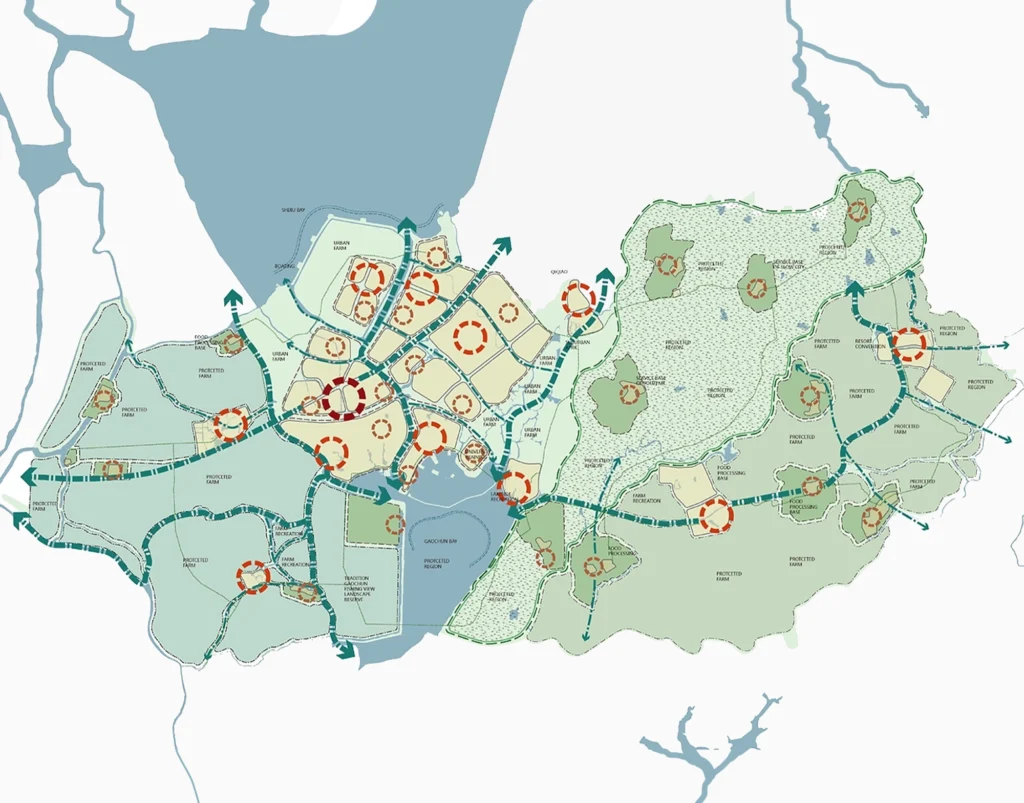
Urban planning has in recent decades transformed radically, leaving suburban sprawl, which relies on cars, behind and embracing more sustainable, humanistic developmental trends. Two of the most significant ideologies that are behind this change are Transit-Oriented Development and New Urbanism. New Urbanism developed as result of the harmful impacts of suburban development on the economy, society, and the environment. To encourage sense of community and reduce the necessity of cars, it puts a high value on walkable streets, mixed land use, and small neighbourhoods. TOD, in its turn, is supposed to integrate efficient public transport networks with urbanization. It promotes small, mixed-use neighborhoods that can be reached on foot by transportation centers, which can reduce emissions, alleviate traffic congestion, and allow equitable access to services-jobs.The ideas of TOD and New Urbanism can be used together effectively, and many communities have already proved that the two concepts can be used together despite the differences. Avoiding unexpected consequences such as relocation or aesthetic tokenism, both demand participatory planning, strong policy support and attention to local context. Combined, these models demonstrate that urban planning is shifting towards more resilient, connected and habitable communities that address the needs of the 21 st century.
Over the past few decades, urban development paradigms have undergone a significant transition in response to urgent issues such social fragmentation, urban sprawl, and climate change. Sustainable, livable communities have not been successfully fostered by traditional zoning schemes that prioritised automotive use and divided land uses. Aiming to restore human-scaled urban settings that place a premium on connectedness, accessibility, and community cohesiveness, New Urbanism and Transit-Oriented Development (TOD) have become prominent planning theories in this regard. By encouraging dense, walkable neighbourhoods with mixed-use development and effective public transportation, these strategies challenge the traditional suburban expansion model. These models are being used more and more by urban planners to develop strategies that promote sustainability, resilience, and inclusivity while also lowering reliance on automobiles. The development, tenets, uses, and relative efficacy of TOD and New Urbanism in building thriving, interconnected communities are examined in this article. We hope to demonstrate how these planning theories help create urban landscapes that are more equipped to handle the challenges of the twenty-first century by looking at both the theoretical underpinnings and real-world applications.
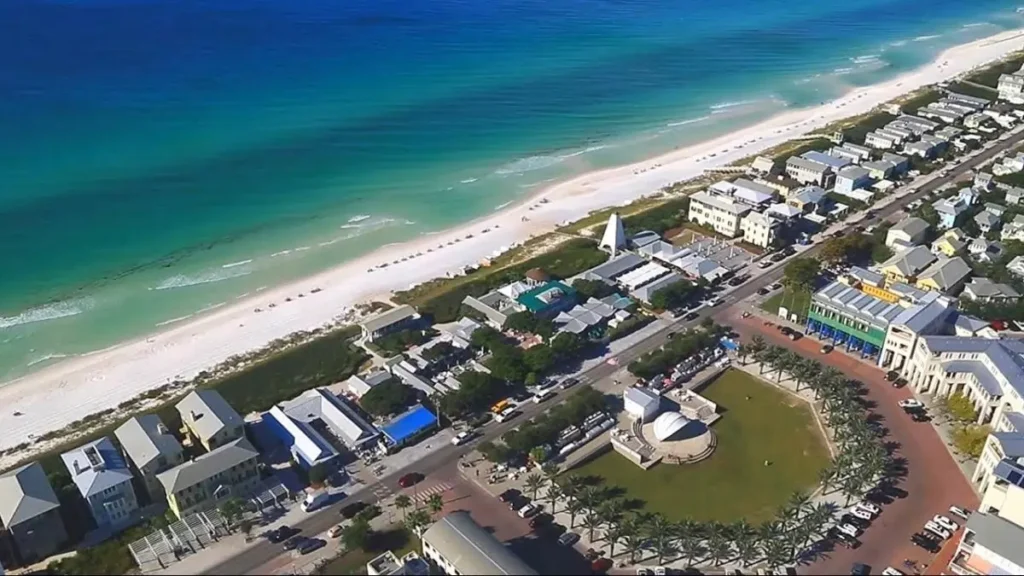
New Urbanism emerged in the second half of the 20 th century in reaction to large, automobile-based city forms that alienated individuals to their environment. It advocates small, walkable neighborhoods where there are a mix of types of housing, local businesses, and readily available communal spaces, but follows the principles of conventional town planning. One of the original books, Suburban Nation, explains the adverse effects of sprawl, both ecological and social, and offers a solution in New Urbanism as a whole. New Urbanists hold the view that form determines the function: walkable communities and mixed-use neighborhoods promote healthier lifestyles, healthier communities, and reduced car dependency. The Congress of the New Urbanism (CNU) has also contributed to this trend and has developed concepts such as human-scaled buildings, integrated grids, and housing and income diversity. The large-scale developments of Seaside, Florida, and Celebration have served as test projects showing the potential of the movement and its negative aspects. Despite the issues such as glorified aesthetics and gentrification, which critics attribute to New Urbanism, this is nevertheless a formidable way of re-imagining urban life.
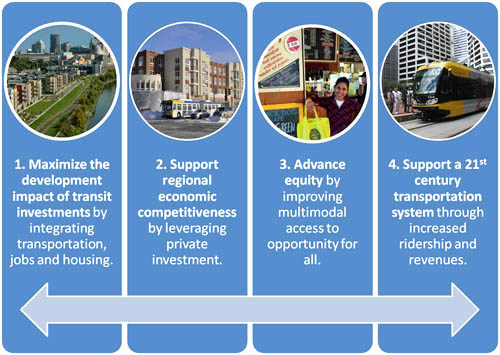
To create small, pedestrianized communities with high-quality public transportation systems at their core, transit-oriented development, or TOD, gives high priority to the land use and transportation planning integration.
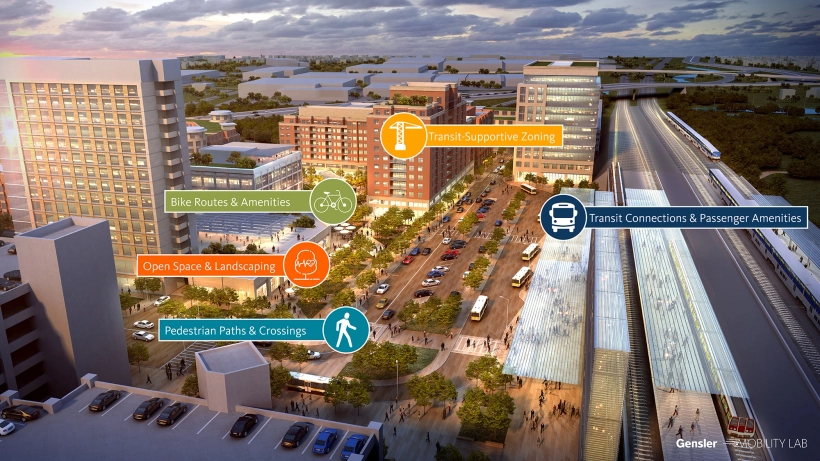
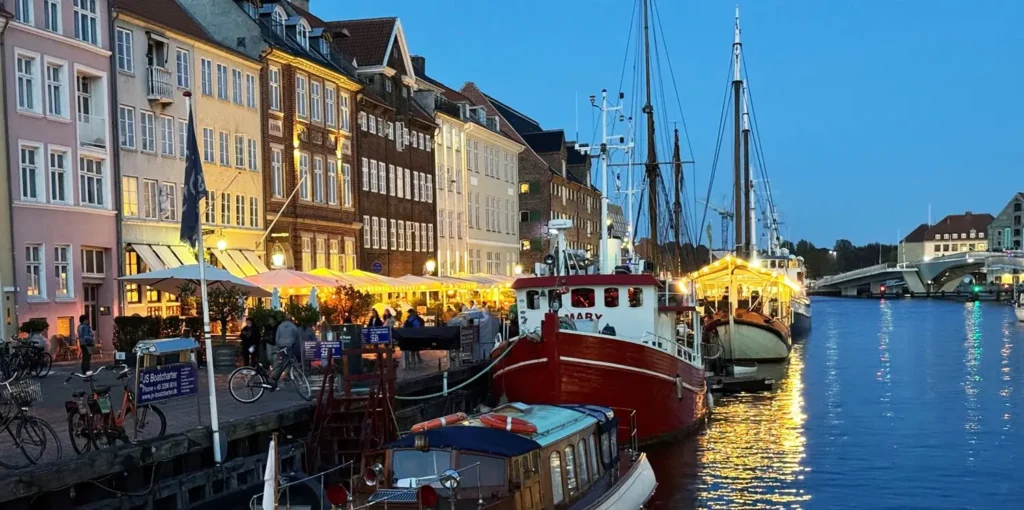
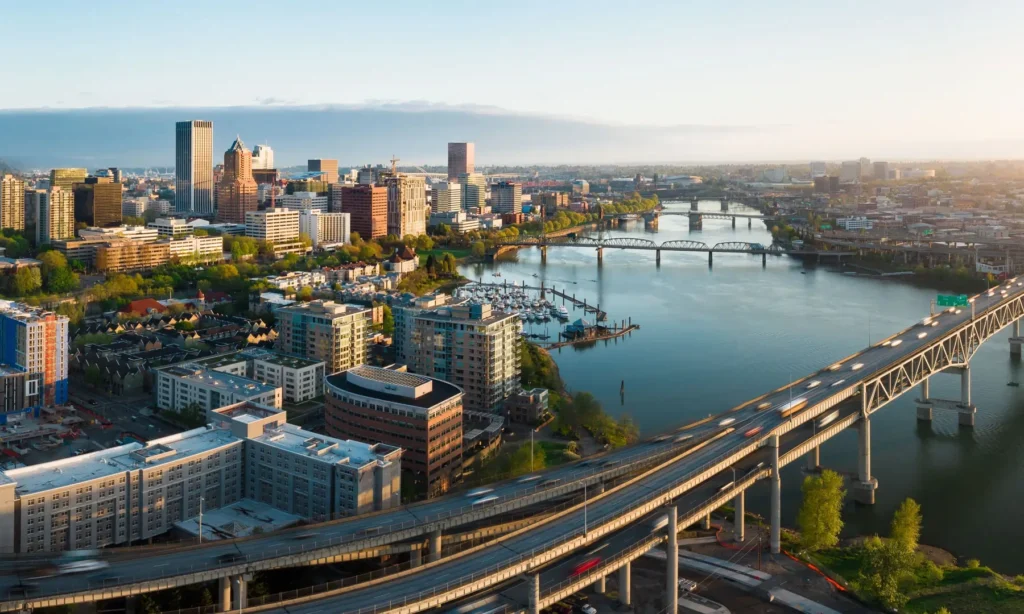
Invented by Peter Calthorpe, TOD is a strategic use of transit hubs to reduce the use of cars and encourage sustainable mobility as an expansion of the spatial concepts of New Urbanism. Less parking regulation, built environment (pedestrian-oriented) and dense and mixed-use city fabric within a half-mile radius of transit stations are all significant elements of transit-oriented development (TOD). To decrease greenhouse gas emissions and improve the health of the population, this strategy is meant to link the locals to work, services, and recreational activities without necessarily using personal vehicles. Transit investment in global cities such as Copenhagen, Portland, and Curitiba have successfully balanced land use and transit investment to enhance inclusive growth, which shows the usefulness of TOD. TOD offers a model by which cities can manage this growth and also enhance livability and resilience as cities grow. Also, since compact urban structures require less infrastructure and energy per capita, they are aligned with climate adaption objectives.
Despite the similarity in the goals of TOD and New Urbanism like walkability, sustainability, and reduced dependence on cars, the two systems differ in their main approaches and planning focuses. The primary areas of interest to New Urbanism are neighborhood form and design, such as the connectivity of streets, architectural beauty, and the community-oriented public spaces. TOD, on the contrary, is transportation motivated and relies on the integration of land use and transit systems. Whereas TOD is inherently situational and often developed along with rail or BRT development, New Urbanism can be used universally, particularly in automobile-dependent locations. These models are not exclusive to each other, however. Many successful projects are using a combination of the two approaches to create hybrid neighborhoods that are community-oriented and full of transit.An example of how TOD and New Urbanist can be merged to create vibrant and mixed-use urban settings can be seen in the Pearl District, Portland. By understanding the nuances of models, planners are able to choose or amalgamate them depending on the local environment, demography, and accessibility of transit.
TOD as well as New Urbanism faces implementation issues despite their popularization. It is argued by those opposed to New Urbanist development that such projects could become the sanctuaries of affluent individuals with no real socioeconomic diversity or affordable housing. Still others are attracted by the shaky use of aesthetic principles at the expense of actual structural change.Conversely, TOD often struggles to co-ordinate with land developers and transit agencies which leads to un-developed or disconnected spaces. Transit-induced gentrification is an event, whereby the displacement of low-income residents in areas surrounding transportation centers through land speculation increases the value of houses. The local resistance to densification and government resistance to zoning amendments are also major challenges. The solution to these problems requires robust policy frameworks, inclusive planning methods, and community engagement to attain equality and long-term success. Also, since Western assumptions may not always be applicable to the fast urbanizing regions in the Global South, the planners will have to make adjustments to these models to suit different global situations.
New Urbanism and Transit-Oriented Development (TOD) planning paradigms offer very important guidelines on how we build and fill urban space as cities across the world continue to grapple with challenges such as socioeconomic inequality, urban sprawl and climate change. Although both theories focus on walkability, diversified land use, and community-centered design, they have their benefits. The distinctive feature of New Urbanism is the human-scaled, visually compatible neighborhoods with high civic and social interaction. But TOD encourages mobility, sustainability and economic opportunity, by focusing directly on the spatial relationship between the form of urban areas and transportation accessibility. These strategies are capable of reinforcing each other when implemented sensitively and in an inclusive manner resulting in cities that are prosperous, reachable, and green.Planners should however remain conscious of the potential adverse impacts such as over- commercialization, gentrification and displacement. Finally, the future of urban planning lies in the syntheses and adaptation of the best practices of competing models to the local circumstances instead of selecting one of them in preference of the others. Through this, cities will be able to become places that are equal, resilient, efficient, and tightly connected to the people living in them.
1. Calthorpe, P. (1993). The Next American Metropolis: Ecology, Community, and the American Dream.
2. Duany, A., Plater-Zyberk, E., & Speck, J. (2000). Suburban Nation: The Rise of Sprawl and the Decline of the American Dream.
3. Congress for the New Urbanism (CNU). (2001). Charter of the New Urbanism.
4. Grant, J. (2006). Planning the Good Community: New Urbanism in Theory and Practice.
5. Calthorpe, P. (2011). Urbanism in the Age of Climate Change.
6. Dittmar, H., & Ohland, G. (2004). The New Transit Town: Best Practices in Transit-Oriented Development.
7. Suzuki, H., Cervero, R., & Iuchi, K. (2013). Transforming Cities with Transit.
8. Lund, H., Cervero, R., & Willson, R. (2004). Travel Characteristics of Transit-Oriented Development in California.
9. Renne, J. L., & Fields, B. (2013). Transit-Oriented Development: Making It Happen.
10. Vale, D. S. (2015). Transit-oriented development, integration of land use and transport, and pedestrian accessibility: Combining node-place model with pedestrian shed ratio to evaluate and classify station areas in Lisbon.
Şeyma is an urban planner with an interest in research and community development. She is passionate about creating inclusive, well-organized, and sustainable communities through education, participation, and thoughtful planning. Her work often focuses on understanding local needs and designing approaches that strengthen public well-being and social connection. Şeyma is dedicated to supporting community-led initiatives and believes in the power of collaboration to build healthier, more resilient environments.


Urban Mapping, Analysis and Representation
Session Dates
Stay updated on workshops, design tools, and calls for collaboration
“Let’s explore the new avenues of Urban environment together “
| Cookie | Duration | Description |
|---|---|---|
| cookielawinfo-checkbox-analytics | 11 months | This cookie is set by GDPR Cookie Consent plugin. The cookie is used to store the user consent for the cookies in the category "Analytics". |

| cookielawinfo-checkbox-functional | 11 months | The cookie is set by GDPR cookie consent to record the user consent for the cookies in the category "Functional". |
| cookielawinfo-checkbox-necessary | 11 months | This cookie is set by GDPR Cookie Consent plugin. The cookies is used to store the user consent for the cookies in the category "Necessary". |
| cookielawinfo-checkbox-others | 11 months | This cookie is set by GDPR Cookie Consent plugin. The cookie is used to store the user consent for the cookies in the category "Other. |
| cookielawinfo-checkbox-performance | 11 months | This cookie is set by GDPR Cookie Consent plugin. The cookie is used to store the user consent for the cookies in the category "Performance". |
| viewed_cookie_policy | 11 months | The cookie is set by the GDPR Cookie Consent plugin and is used to store whether or not user has consented to the use of cookies. It does not store any personal data. |