New York City skyline of large buildings covered by Local Law 97 carbon emissions limits

Evidence based urban policy article

Introduction

New York City’s Local Law 97 is often described as a building-energy regulation. That description is correct but incomplete. Its more consequential innovation is regulatory: it converts a citywide climate objective into enforceable, building-specific annual carbon limits. Rather than merely requiring energy disclosure, encouraging upgrades, or setting voluntary performance targets, the law places a quantified greenhouse-gas ceiling on much of the city’s large-building stock and attaches financial penalties to non-compliance. Source: https://www.nyc.gov/assets/buildings/local_laws/ll97of2019.pdf

The significance of this approach lies in the urban form of New York itself. A dense city of apartment buildings, offices, hospitals, universities and mixed-use properties cannot achieve deep operational decarbonisation solely through new construction standards. Most of the floor area that will be occupied in the 2030s already exists. Local Law 97 therefore makes the existing city, including its heating systems, facades, controls, ownership structures and utility connections, the central terrain of climate policy.

The law’s first compliance period covers calendar years 2024 to 2029, with substantially tighter limits from 2030. Its initial reporting cycle is now complete, and city-reported early results indicate that most reporting private properties met their first-period limits. That is not evidence that the difficult part has been solved. The 2024 limits were designed as an opening threshold, while the 2030 period is intended to induce a much larger wave of operational improvement, electrification and capital planning. Sources: https://www.nyc.gov/site/buildings/codes/ll97-buildings-emissions-limits.page and https://www.nyc.gov/mayors-office/news/2026/09/95–of-large-buildings-meet-climate-emissions-limits-as-mamdani-

This article argues that Local Law 97 matters less as a single green-building law than as a test of whether a city can govern carbon through the ordinary institutions of property, building regulation and infrastructure. Its promise is substantial, but its effectiveness will depend on the integrity of measurement, the pace of grid decarbonisation, the treatment of affordable housing and co-operatives, and the ability of owners, utilities and public agencies to coordinate investments before the stricter 2030 limits arrive.

From Energy Disclosure to a Carbon Budget for Buildings

New York did not begin with Local Law 97. The city had already established benchmarking through Local Law 84, requiring large buildings to disclose annual energy and water use. Benchmarking made energy performance visible, created a public data infrastructure and enabled regulators to identify broad patterns in the building stock. But disclosure alone does not require a building owner to reduce emissions. Local Law 97 adds an enforceable performance obligation. Source: https://www.nyc.gov/site/buildings/codes/REMOVE-greenhouse-gas-emission-reporting.page

The law was enacted in 2019 as part of the Climate Mobilization Act. It applies principally to buildings larger than 25,000 square feet, certain groups of buildings on a tax lot exceeding that threshold, and certain condominium buildings. Source: https://www.nyc.gov/assets/buildings/local_laws/ll97of2019.pdf This scope is strategically important. Large buildings constitute a manageable regulatory universe, are already subject to professional management and reporting requirements, and account for a substantial share of floor area and energy consumption.

The operational mechanism is direct. Each covered building receives an annual emissions limit based on its gross floor area and occupancy or property type. The owner calculates the building’s operational greenhouse-gas emissions from fuel and electricity consumption using city-specified emissions factors, then compares reported emissions with the applicable limit. The limits are expressed as annual tonnes of carbon-dioxide equivalent per square foot and differ across building uses because hospitals, offices, multifamily housing, hotels and schools have different operating profiles. Source: https://www.nyc.gov/site/buildings/codes/ll97-buildings-emissions-limits.page

This structure has a major conceptual advantage over a universal energy-use target. A kilowatt-hour is not inherently low or high carbon. Its climate consequence depends on the fuel burned on site and, for electricity, on the generation mix supplying the grid. Local Law 97 therefore frames compliance around emissions, not energy consumption alone. A building may improve its energy efficiency yet remain carbon intensive if it relies heavily on fossil fuels. Conversely, an electrified building’s reported emissions can fall as the electricity system becomes cleaner, even without equivalent changes in energy demand.

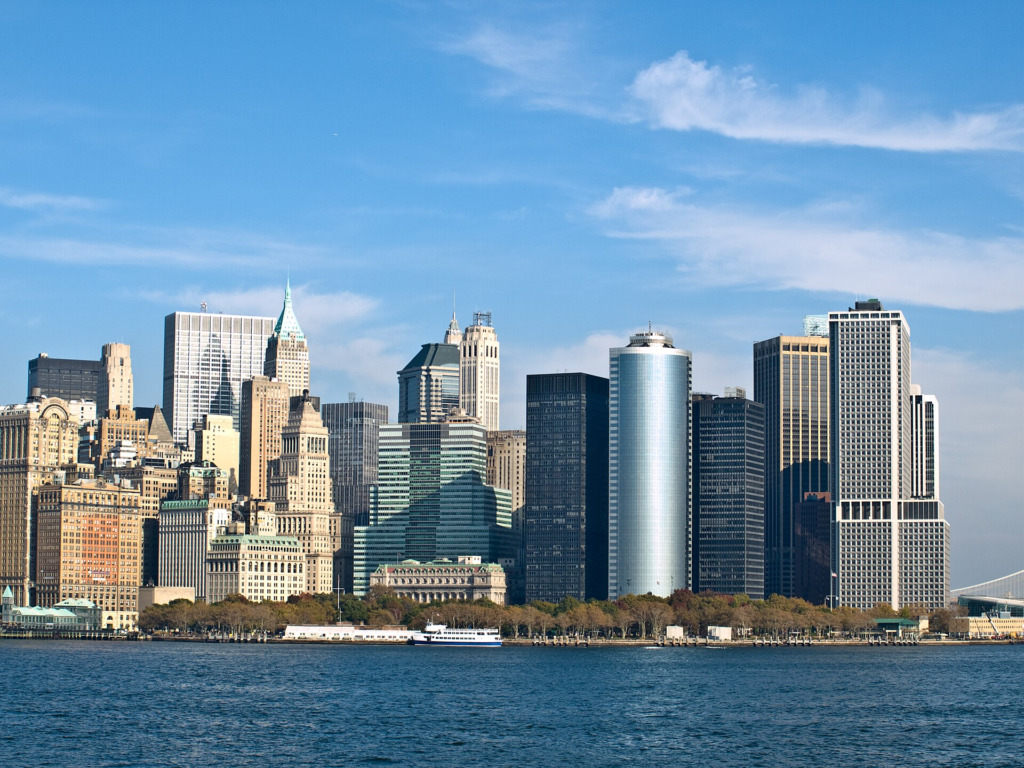
Suggested photograph: Manhattan skyline showing the concentration of large commercial and residential buildings subject to city climate regulation.
Image link: https://upload.wikimedia.org/wikipedia/commons/4/49/New_York_Skyline-02.jpg
Suggested caption: New York’s dense existing building stock makes operational decarbonisation a central urban-policy challenge.
Credit: William Warby, CC BY 2.0. Credit the photographer and link to the CC BY 2.0 licence.

How the Limits Reporting and Penalties Work

Local Law 97 establishes multiple compliance periods. The first runs from 2024 to 2029, followed by a more stringent period from 2030 to 2034. The legislation also establishes later periods extending through 2050 and beyond. Source: https://www.nyc.gov/assets/buildings/local_laws/ll97of2019.pdf This phased design recognises that major building upgrades are not instantaneous. Replacing central heating equipment, upgrading electrical service, installing heat pumps, improving envelopes or redesigning controls requires planning, financing, procurement and, often, coordination with tenants and utilities.

Owners of covered buildings are required to file annual emissions reports certified by a registered design professional. The reports for the first compliance year, calendar year 2024, were required through the Department of Buildings reporting system during 2025, with the agency ultimately setting December 31, 2025 as the filing deadline for that first cycle. Source: https://www.nyc.gov/site/buildings/dob/pr-ll97-improve-sustainability.page

The statutory penalty is calculated from the amount by which a building exceeds its annual limit. For most covered buildings, the law provides for a penalty of $268 for each metric tonne of carbon-dioxide equivalent above the applicable annual cap. Source: https://www.nyc.gov/assets/buildings/local_laws/ll97of2019.pdf This formula is significant because it turns emissions into an annual financial liability. A building owner is no longer deciding only whether an upgrade is environmentally desirable. The decision becomes a comparison among capital expenditure, operating savings, future utility costs and an escalating risk of repeated non-compliance payments.

However, the law should not be read as a simple fine-and-comply model. Its rules include pathways for certain buildings facing physical constraints, legal constraints or particular uses. They also recognise special treatment for some rent-regulated and affordable housing categories, where prescribed energy-conservation measures or a 2030-limit pathway may apply. Sources: https://accelerator.nyc/building-laws/ll97 and https://www.nyc.gov/site/hpd/services-and-information/ll97-guidance-for-affordable-housing.page

The city also created a good-faith-efforts framework for the first compliance period. This can mitigate penalties for eligible owners who demonstrate a credible decarbonisation plan and specified progress, but it is not a permanent exemption from the underlying emissions limits. Source: https://rules.cityofnewyork.us/rule/annual-greenhouse-gas-ghg-emissions-limits-for-buildings/ The policy logic is practical: a regulatory system that demands immediate completion of technically complex work may produce evasion, litigation or poorly designed retrofits. Yet flexibility has a risk. If it becomes a substitute for measurable emissions reductions rather than a bridge to them, the programme’s credibility weakens.

Suggested photograph: A large New York residential building, illustrating the scale and diversity of the existing stock covered by performance limits.
Image link: https://upload.wikimedia.org/wikipedia/commons/a/a6/Graham_Court.jpg
Suggested caption: Local Law 97 regulates operating emissions in existing buildings, not only the performance of new construction.
Credit: Andrew Gradman, public domain. Identify the photographer and note public-domain status.

Why the First Compliance Year Should Not Be Misread

The city announced in September 2026 that approximately 95% of about 20,000 private properties covered by the law filed a compliance report and that approximately 95% of buildings demonstrating compliance through improved efficiency met their first-year emissions targets. Source: https://www.nyc.gov/mayors-office/news/2026/09/95–of-large-buildings-meet-climate-emissions-limits-as-mamdani- These figures are important evidence of administrative participation and initial compliance. They show that the law has moved from legislative ambition into routine reporting and enforcement.

But they should not be interpreted as proof that Local Law 97 has already produced citywide decarbonisation at the scale required for 2030. First-period limits are less stringent than the 2030 limits. Some buildings were already below their initial caps due to their fuel mix, use pattern, occupancy, prior efficiency improvements or low energy intensity. A building can comply with its 2024 to 2029 limit without being on a credible pathway to meet the next period.

Independent analysis from the New York City Comptroller’s Office estimated that only 30% of analysed buildings would meet their individual 2030 limits without further action. Source: https://comptroller.nyc.gov/reports/cap-the-credits/ That estimate should not be treated as a prediction of unavoidable failure. It is a scenario-based warning about the gap between current building performance and future thresholds. Owners can act, and the electricity grid can become less carbon intensive. Nevertheless, the finding explains why high initial compliance is not equivalent to long-term success.

The distinction is especially important for public communication. A programme judged only by first-year non-compliance rates may appear to be either too lenient or already complete. Both interpretations miss the staged logic of the law. The immediate purpose of the first period is partly to establish a verified emissions baseline, familiarise owners with reporting, mobilise technical assistance and identify high-risk assets. The central test is whether this period leads to timely investments before 2030 rather than postponed investment decisions in 2029.

The policy’s impact must also be separated from wider changes in energy use. Weather, post-pandemic office occupancy, fuel prices, electricity emissions factors and changes in building use can affect reported emissions. A year-on-year reduction in a single property’s emissions does not, by itself, prove that Local Law 97 caused the reduction. Credible evaluation requires multi-year data, comparison of retrofit activity and changes in fuel use, and careful attention to the changing carbon intensity of the electricity supply.

Suggested photograph: Evening Manhattan skyline, visually linking building operation, electricity demand and the carbon consequences of dense urban development.
Image link: https://upload.wikimedia.org/wikipedia/commons/1/14/New_York_City_at_Sunset_in_HDR.jpg
Suggested caption: A building carbon cap measures operational emissions, which depend on both building systems and the electricity supply.
Credit: Randy Pertiet, CC BY 2.0. Credit the photographer and link to the CC BY 2.0 licence.

The Technical Transition Efficiency First Electrification with Care

For many buildings, the most reliable route to compliance begins with reducing avoidable demand. Controls, heating-system optimisation, steam balancing, insulation, air sealing, high-performance windows where feasible, lighting upgrades and operational commissioning can lower energy use before more capital-intensive equipment is replaced. These measures are not merely preliminary actions. They can reduce peak electrical demand and make later electrification more feasible.

Yet Local Law 97’s long-term implications go beyond efficiency. New York’s building stock has historically depended heavily on fossil-fuel heating and domestic hot-water systems. Because the law is carbon based, not energy based, fossil-fuel combustion creates a structural compliance challenge as limits tighten. This is why the policy is closely associated with beneficial electrification, particularly heat-pump systems and electric domestic hot-water technologies. The city’s rules include provisions related to qualifying beneficial electrification in calculating emissions. Source: https://rules.cityofnewyork.us/rule/calculation-of-emission-limits-for-buildings/

Electrification is not automatically synonymous with decarbonisation. Its climate value depends on the carbon intensity of the electricity grid, the seasonal performance of equipment, building electrical capacity and the timing of demand. An inefficient all-electric retrofit can create high operating costs or peak-load problems, while a carefully sequenced retrofit can lower both fuel use and emissions. The relevant planning question is therefore not simply whether to replace gas equipment with electric equipment. It is whether the building, utility network and future grid can support the transition without creating new affordability or resilience risks.

This is where the law reveals the limits of treating the building as an isolated object. A property owner may identify an effective heat-pump strategy but face inadequate electrical service, costly upgrades, utility interconnection delays, limited roof space or the physical constraints of a landmarked envelope. The city’s adjustment process recognises that some legal and physical conditions can complicate compliance. Source: https://rules.cityofnewyork.us/rule/filing-requirements-for-application-to-adjust-emission-limits/ Recognition of constraints is necessary, but it must be coupled with transparent evidence and time-bound plans. Otherwise, exceptions can reproduce the inertia the law is designed to overcome.

For designers and planners, the practical lesson is that decarbonisation must be treated as a systems-design problem. Energy modelling, facade strategy, mechanical replacement cycles, tenant fit-outs, electrical-service planning, rooftop infrastructure and urban-grid capacity must be coordinated. The most successful projects will not necessarily be the most technologically dramatic. They will be the ones that sequence interventions around real building conditions and avoid locking in high-carbon equipment during ordinary replacement cycles.

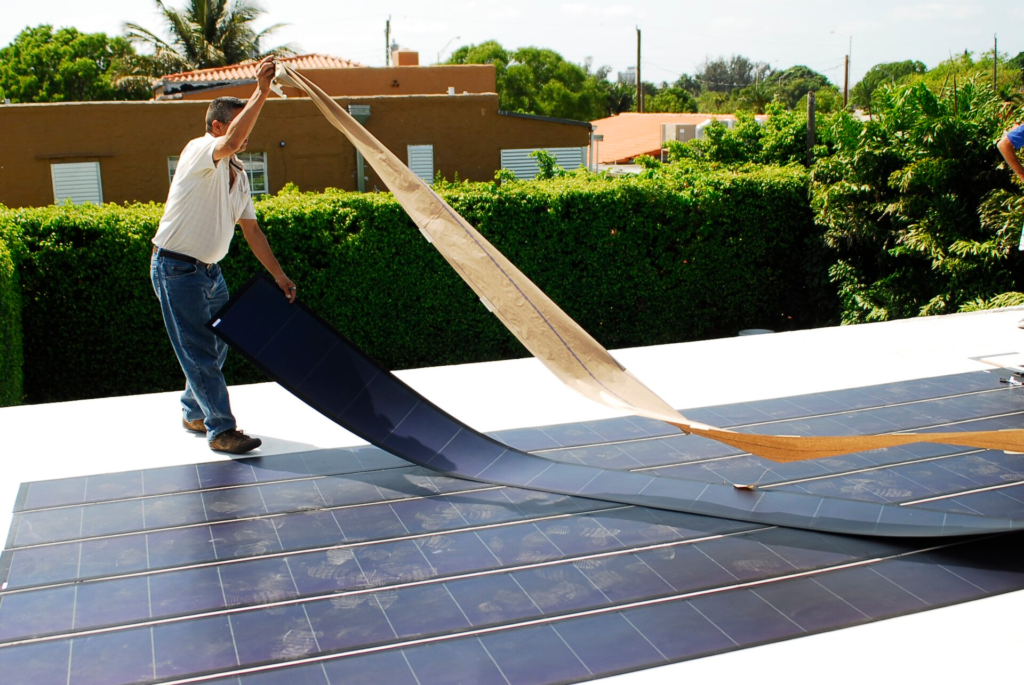
Suggested photograph: Rooftop photovoltaic installation, representing on-site generation as one component of a broader building-decarbonisation strategy.
Image link: https://upload.wikimedia.org/wikipedia/commons/a/af/Thin_Film_Flexible_Solar_PV_Installation_2.JPG
Suggested caption: On-site renewable generation can support emissions reduction, but it does not replace demand reduction and building-system upgrades.
Credit: Ken Fields, CC BY-SA 3.0. Credit the photographer, link to the licence and indicate whether modifications were made.

Affordability Housing Justice and the Politics of Compliance

The technical case for carbon limits does not settle their distributional consequences. Building decarbonisation involves capital costs, professional expertise and access to financing. These burdens are not evenly distributed across owners, neighbourhoods or tenure types. A Class A office tower with dedicated facilities staff and access to capital markets is differently positioned from a small co-operative, a limited-equity housing development or a mission-driven affordable-housing provider.

New York’s policy architecture acknowledges this problem. The Department of Housing Preservation and Development provides Local Law 97 guidance for affordable housing, including pathways that distinguish some rent-regulated housing from other covered buildings. Source: https://www.nyc.gov/site/hpd/services-and-information/ll97-guidance-for-affordable-housing.page The city’s NYC Accelerator programme also provides free technical assistance to help building stakeholders understand compliance and pursue reduction strategies. Source: https://accelerator.nyc/building-laws/ll97

These mechanisms are necessary but not sufficient. Technical assistance can identify a route to compliance; it cannot by itself finance electrical upgrades, heat-pump installations or facade work. If compliance costs are simply transferred through rents, fees or deferred maintenance, a climate policy intended to improve urban conditions may intensify housing insecurity. Conversely, blanket exemptions could leave residents in inefficient, unhealthy buildings with high fuel burdens and outdated systems.

A defensible equity strategy therefore requires targeted public finance, tenant protections, transparent reporting and differentiated implementation. Subsidies should prioritise measures that reduce both emissions and resident energy burdens. Public agencies should monitor whether retrofits improve indoor comfort, air quality and reliability, rather than merely producing a compliant annual emissions calculation. Workforce policy also matters. The city’s Green Economy Action Plan identifies building decarbonisation as a major source of future green-economy employment, but the distribution of training and access to skilled trades will shape who benefits from the transition. Source: https://www.nyc.gov/assets/sbs/downloads/pdf/about/green-economy-action-plan.pdf

There is an additional urban-design implication. A low-carbon building transition should not become a narrow replacement programme focused only on plant rooms. Building upgrades affect facades, roofs, streetscape equipment, loading, ventilation, service access and tenant disruption. In dense districts, these cumulative changes need design governance. The challenge is to improve thermal and energy performance without eroding heritage values, street life, housing accessibility or the usability of public space.

Suggested photograph: Manhattan’s dense residential and commercial skyline, showing why the distribution of retrofit costs and benefits is an urban equity issue.
Image link: https://upload.wikimedia.org/wikipedia/commons/0/08/New_York_City_skyline.jpg
Suggested caption: Carbon regulation reaches into the everyday economics of dense residential and commercial property.
Credit: William Warby, CC BY 2.0. Credit the photographer and link to the CC BY 2.0 licence.

What Other Cities Can Learn and What They Cannot Copy

Local Law 97 has attracted international attention because it operationalises a principle that many cities endorse but few enforce: existing large buildings must reduce emissions within a defined timetable. It is part of a broader movement toward building performance standards in North America. The comparative lesson is not that every city should copy New York’s numbers. It is that credible urban decarbonisation requires measurable baselines, progressively tightening targets, reporting capacity and consequences for non-compliance.

New York’s policy is enabled by several institutional conditions that are not universal. The city already had a large-building benchmarking regime, a building department with technical regulatory authority, established professional certification systems and a relatively rich property-data environment. Cities without these foundations may need to begin with energy disclosure, building-stock surveys, assessor databases, simplified reporting tools and targeted pilot programmes.

The relationship between local building caps and national energy systems is also critical. City governments can regulate building performance, but they do not independently control the emissions factor of an interconnected electricity grid. This means local regulations should be coordinated with utility investment, state clean-energy policy and electricity-demand planning. A city can create a powerful demand signal for electrification, but it cannot assume that every building can electrify immediately or that additional electricity will automatically be low carbon.

The clearest transferable principle is staged escalation. Immediate strict limits can be politically fragile where building data are incomplete and finance is unavailable. Weak voluntary targets, however, often fail to shift routine investment decisions. Local Law 97 occupies the middle ground: a mandatory cap with phased thresholds, specified reporting and mechanisms for technical assistance, adjustments and first-period flexibility. Whether that balance proves durable will depend on the 2030 transition.

For cities in rapidly urbanising regions, including India, the policy has a further implication. Building emissions standards should not be imported as administrative templates detached from local realities. Informal property arrangements, uneven records, mixed energy systems, climate conditions and municipal capacity may make direct replication inappropriate. Yet the core idea remains relevant: existing buildings need a measurable pathway from energy information to accountable emissions reduction, paired with finance and safeguards against inequitable cost transfer.

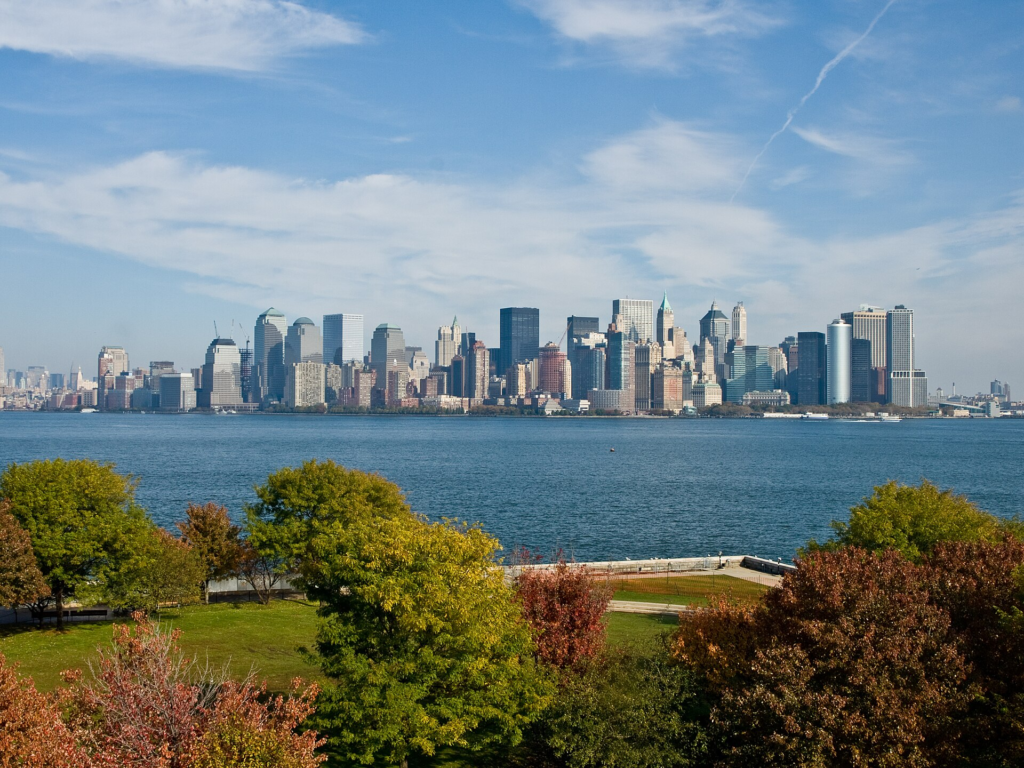
Suggested photograph: New York skyline viewed from the water, representing the city-scale governance challenge of decarbonising a large existing building stock.
Image link: https://upload.wikimedia.org/wikipedia/commons/4/49/New_York_Skyline-02.jpg
Suggested caption: Local Law 97 offers a model of city-scale carbon governance, but its institutional foundations cannot be assumed elsewhere.
Credit: William Warby, CC BY 2.0. Credit the photographer and link to the CC BY 2.0 licence.

Conclusion

The decisive period for Local Law 97 is approaching. The issue is no longer whether building owners can submit annual reports. It is whether reporting produces investment decisions early enough to meet tighter 2030 limits. This depends on a combination of enforcement certainty, credible technical guidance, affordable finance, utility coordination and transparent public data.

The city should publish auditable, property-level compliance information while protecting legitimate privacy and security concerns. It should distinguish between buildings that comply through durable reductions in fossil-fuel use, those that comply because of temporarily favourable conditions and those using authorised adjustments or credits. Such distinctions are essential for evaluating whether the programme is changing the city’s energy system or merely managing compliance paperwork.

The treatment of offsets and credits also requires care. The City Comptroller has argued that the use of renewable-energy credits could weaken the local emissions-reduction purpose of the law if not tightly limited. Source: https://comptroller.nyc.gov/reports/cap-the-credits/ The issue is not whether all credits are inherently invalid. It is whether their use preserves the policy’s environmental integrity and does not displace the physical upgrades needed in New York’s buildings.

Finally, the programme must be assessed against multiple outcomes. Carbon reductions are fundamental, but they are not the only relevant measure. A robust evaluation should examine fuel switching, energy burden, indoor thermal comfort, resident displacement risk, peak electrical demand, retrofit quality, workforce access and neighbourhood distribution. A building carbon cap can support better urban conditions, but only if the transition is designed and governed as a social as well as technical project.

Local Law 97 is one of the clearest attempts by any major city to make operational building emissions an enforceable planning and regulatory concern. Its core achievement is institutional rather than symbolic: it assigns carbon limits to real properties, requires annual reporting and makes non-compliance financially consequential. Source: https://www.nyc.gov/assets/buildings/local_laws/ll97of2019.pdf

Early compliance results indicate substantial participation, but they do not resolve the central challenge. The harder work is the 2030 transition, when owners will need to move beyond low-cost operational measures toward deeper efficiency upgrades, fossil-fuel reduction, electrification and coordinated infrastructure investment. The law’s ultimate value will be judged not by the number of forms submitted or penalties issued, but by whether it produces durable, equitable and verifiable reductions in the emissions of New York’s existing buildings.


Suggested photograph: A dense New York skyline, showing the scale of the existing urban fabric that must be transformed rather than replaced.

Image link: https://upload.wikimedia.org/wikipedia/commons/0/08/New_York_City_skyline.jpg
Suggested caption: The climate transition of existing buildings is inseparable from the future of the contemporary city.
Credit: William Warby, CC BY 2.0. Credit the photographer and link to the CC BY 2.0 licence.

References Further Reading

Related reading on Urban Design Lab: Quayside Toronto: Can an All-Electric Waterfront Community Really Work?; Zohran Mamdani’s Urban Planning Vision for NYC Housing

Leave a Reply

Your email address will not be published. Required fields are marked *

This site uses Akismet to reduce spam. Learn how your comment data is processed.

Related articles

UDL Thesis Publication 2025

Call for Abstracts now open!

UDL GIS

MASTERCLASS

Urban Mapping, Analysis and Representation

Session Dates

12th-16th October, 2026

Curating the best graduate thesis projects globally!

Publish your work and get recognized globally!

Free E-Book

From thesis to Portfolio

A Guide to Convert Academic Work into a Professional Portfolio”

Urban Design Lab

Be the part of our Network

  • Stay updated on workshops, design tools, and calls for collaboration

  • Thesis Report Writing for Architecture and Urban Studies

    Join Our WhatsApp Group

    Recent Posts

    Sign up for our Newsletter

    “Let’s explore the new avenues of Urban environment together “

    E-Book- From Thesis To Portfolio

    A Guide to Convert Academic Work into a Professional Portfolio