

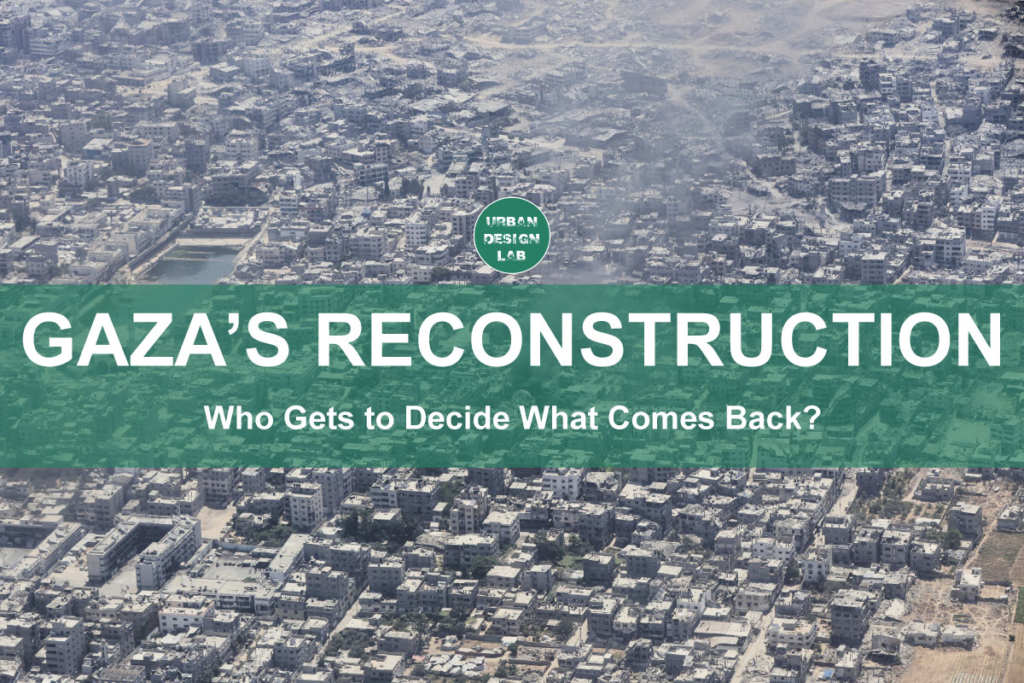
Rebuilding Gaza is not simply a question of how much money is available, how quickly damaged buildings can be replaced, or which international institutions will oversee construction. It is a question of political authority, urban rights and collective memory. Who decides which neighbourhoods are reconstructed first? Who determines whether residents can return to their original homes? Who controls the land on which new housing, roads and public facilities will be built? And whose understanding of Gaza’s future will ultimately shape the reconstructed city?
These questions have become increasingly urgent as the scale of destruction is documented in greater detail. According to the April 2026 Gaza Rapid Damage and Needs Assessment, which supersedes the earlier interim assessment, recovery and reconstruction needs are estimated at approximately US$71.4 billion. The final assessment was jointly prepared by the World Bank, European Union and United Nations and covers damage incurred between October 2023 and October 2025. Its findings point to an urban crisis extending beyond buildings to housing, economic activity, infrastructure, healthcare, education and the institutions required to make recovery possible. The final assessment is available through the World Bank.
Yet the reconstruction debate cannot be reduced to an engineering problem. Cities are more than collections of physical assets. Their neighbourhoods embody social relationships, property rights, economic opportunities, cultural practices and historical attachments. Reconstructing the physical environment without addressing these relationships risks producing buildings that do not restore the communities they are intended to serve.
Gaza presents an especially difficult challenge because physical destruction intersects with mass displacement, contested governance, restrictions on movement and materials, continued insecurity and unresolved political questions. International financial institutions can estimate reconstruction costs, but they cannot determine legitimate urban priorities through technical calculations alone.
The central argument of this article is that the legitimacy of Gaza’s reconstruction will depend not only on what is rebuilt, but on who has the authority to decide, whose rights are protected and whether displaced residents can meaningfully shape the places to which they hope to return.
Examining recent United Nations assessments, reconstruction governance arrangements, housing and property rights, infrastructure priorities and lessons from Mosul and Aceh, the article argues for an approach that treats urban reconstruction as a process of restoring civic life and decision-making capacity, rather than simply replacing destroyed structures.
The Scale of Destruction: Why Rebuilding Gaza Is Not a Conventional Urban Project
The first challenge facing any reconstruction programme is the extraordinary scale and interconnected character of Gaza’s physical destruction.
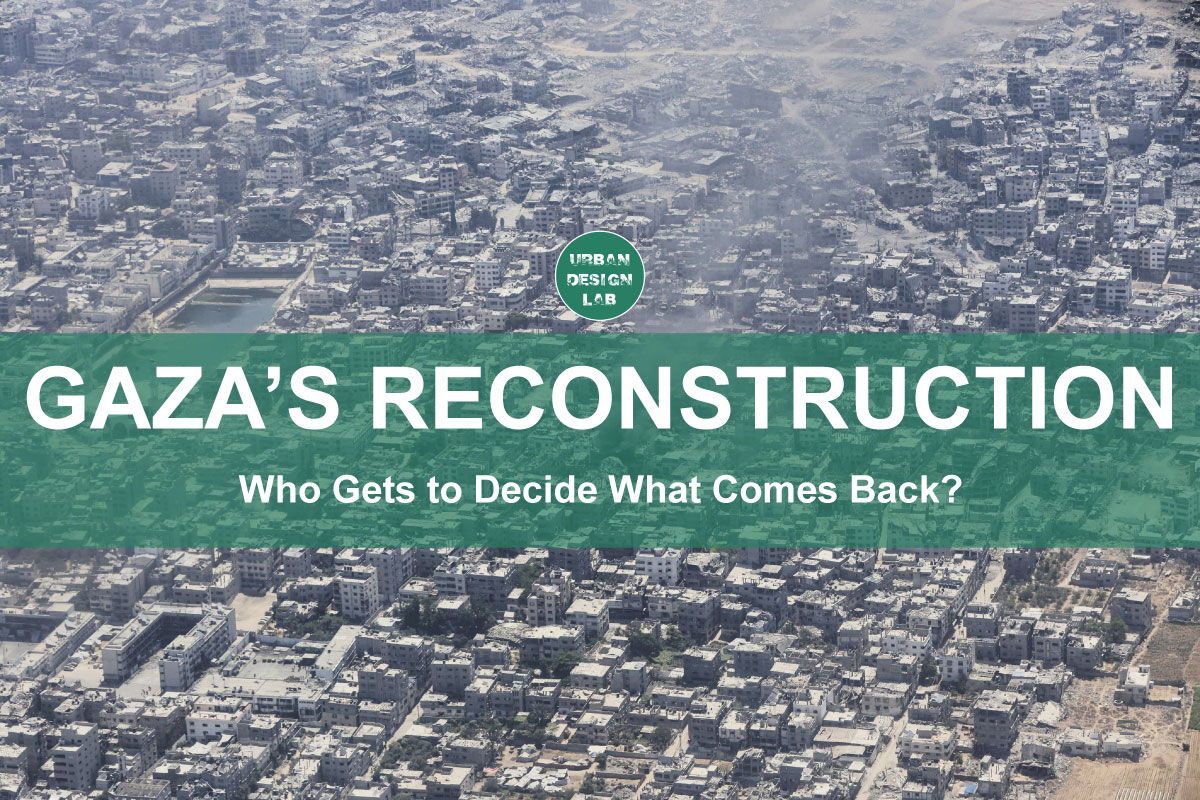
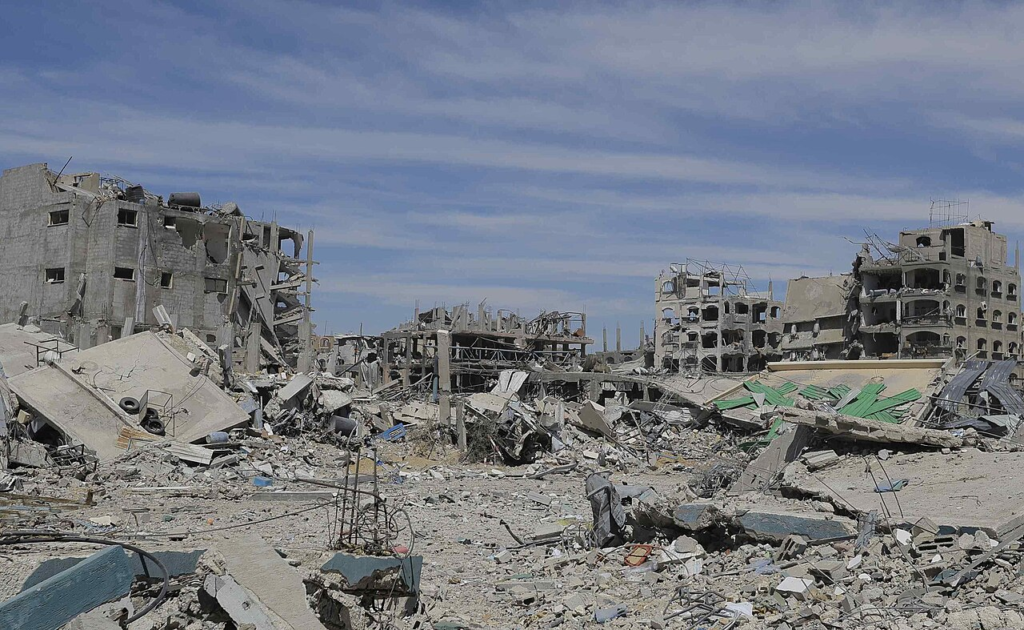
According to the United Nations Satellite Centre assessment reported by OCHA in August 2026, satellite analysis dated 16 June 2026 identified approximately 201,290 damaged structures, representing an estimated 82% of structures across the Gaza Strip. Of these, 134,422 were classified as destroyed, while others were categorized as severely damaged, moderately damaged or possibly damaged.
These figures provide an important spatial picture of the crisis. They also require careful interpretation. Satellite-based assessments identify visible physical damage, but they cannot independently establish structural safety, the legal status of individual properties, residents’ preferences or whether a damaged building can be economically rehabilitated. Different institutional assessments also use different units of measurement and methodologies. A damaged structure is not necessarily equivalent to a damaged dwelling, since a single building may contain multiple residential units.
The April 2026 joint damage assessment estimated US$35.2 billion in direct physical damages and US$22.7 billion in economic and social losses. Housing represented the largest component of physical damage, followed by commerce and industry, transport infrastructure, and water and sanitation.
For urban planners, the significance of these findings lies in the interdependence of the affected systems.
A residential building cannot become a functional home merely because its walls and roof have been reconstructed. It requires potable water, sanitation, electricity, accessible streets, waste collection, healthcare and some reasonable connection to livelihoods. Likewise, reopening a school depends on safe access routes, teachers, learning materials, shelter conditions and the ability of surrounding households to resume everyday routines.
The Gaza Urban Profile 2026 published by UN-Habitat reinforces this interpretation. Its neighbourhood-level analysis, including a Neighbourhood Functionality Index, indicates that more than 95% of Gaza’s neighbourhoods exhibit low, very low or extremely low levels of functionality.
This is not simply a measure of ruined buildings. It illustrates the wider loss of the relationships among housing, mobility, services and economic activity that allow an urban settlement to function.
Consequently, reconstruction cannot be approached as a portfolio of isolated architectural projects. A housing programme that proceeds independently of infrastructure restoration may deliver incomplete neighbourhoods. A transport project that ignores displaced communities may reconnect roads without reconnecting residents to their homes. A redevelopment project that prioritizes commercially valuable locations could generate economic activity while leaving urgent social needs unresolved.
The appropriate planning unit is therefore not always the individual structure. In many cases, it is the neighbourhood and its supporting urban systems.
There is also a danger in treating visible destruction as a complete inventory of what has been lost. A building damage map cannot represent the disappearance of community networks, informal employment, familiar public spaces, customary patterns of access or the social meaning of particular streets.
Such losses are harder to quantify, but they remain central to recovery.
The key planning problem is not merely determining where damage is greatest. It is identifying which interventions can restore safe, functional and socially meaningful urban environments without undermining residents’ rights to return.
Who Controls the Reconstruction Plan? The Politics of Urban Decision-Making
The second challenge is institutional: who possesses the authority to prepare, approve and implement Gaza’s reconstruction plans?
This question acquired a formal international dimension when the United Nations Security Council adopted Resolution 2803 on 17 November 2025. The resolution endorsed a comprehensive plan for ending the Gaza conflict and welcomed the establishment of a Board of Peace as a transitional administration responsible for establishing the framework and coordinating financing for redevelopment.
It also envisaged a Palestinian technocratic committee responsible for day-to-day civil administration, operating under the transitional authority and oversight of the Board of Peace.
The stated objectives included restoring public services, supporting economic recovery, coordinating humanitarian assistance and establishing security arrangements intended to prevent renewed armed conflict.
However, creating an institutional framework and establishing an operational system of legitimate urban governance are different achievements.
The September 2026 report of the United Nations Special Coordinator for the Middle East Peace Process stated that the Board of Peace and the National Committee for the Administration of Gaza had been constituted in January 2026, but the Palestinian committee had not yet been able to enter Gaza to assume governance functions. The report also noted that the proposed International Stabilization Force had not been deployed.
The distinction matters. Institutions may possess formal mandates while lacking the territorial access, administrative capacity or public accountability necessary to implement them.
The central question for urban reconstruction is therefore not simply which international body coordinates funding. It is how decisions move from international agreements to Palestinian institutions, municipalities, neighbourhoods and households.
A reconstruction programme involves several overlapping forms of authority.
International donors and financial institutions influence funding conditions, investment priorities and technical standards. Security authorities can influence the movement of materials, construction equipment and personnel. Palestinian public institutions and municipalities possess administrative knowledge, service responsibilities and historical relationships with communities. Residents possess direct knowledge of neighbourhood conditions, property histories, livelihoods and everyday spatial needs.
These forms of authority are not interchangeable.
A financial institution may assess the economic feasibility of rebuilding a commercial district, but that does not establish whether redevelopment would respect existing occupancy and ownership claims. A security authority may identify access restrictions, but such restrictions should not automatically become permanent urban boundaries. Local residents may understand historical neighbourhood patterns, but reconstruction still requires professional engineering, equitable allocation mechanisms and public-interest regulation.
Independent United Nations human rights experts have explicitly questioned the legitimacy of reconstruction arrangements that subordinate Palestinian self-determination to externally controlled redevelopment. Their March 2026 statement called for reconstruction decisions to remain in Palestinian hands and for displaced residents to be able to return voluntarily and safely to their properties.
This position represents an articulated human rights interpretation, rather than evidence that all proposed governance arrangements are necessarily unlawful. Nevertheless, it identifies a fundamental institutional test: whether reconstruction governance gives affected Palestinians substantive decision-making authority or restricts them to consultation after major spatial and financial decisions have already been made.
Security concerns, including civilian protection and the prevention of renewed hostilities, remain relevant. Yet the existence of legitimate security concerns does not resolve questions about permanent land-use decisions, housing entitlements or democratic accountability.
For planners, the implication is clear. A reconstruction master plan should not acquire legitimacy merely because it is internationally financed or technically sophisticated.
Its legitimacy must also be evaluated through public representation, transparency, protection of rights and the ability of affected communities to challenge decisions.
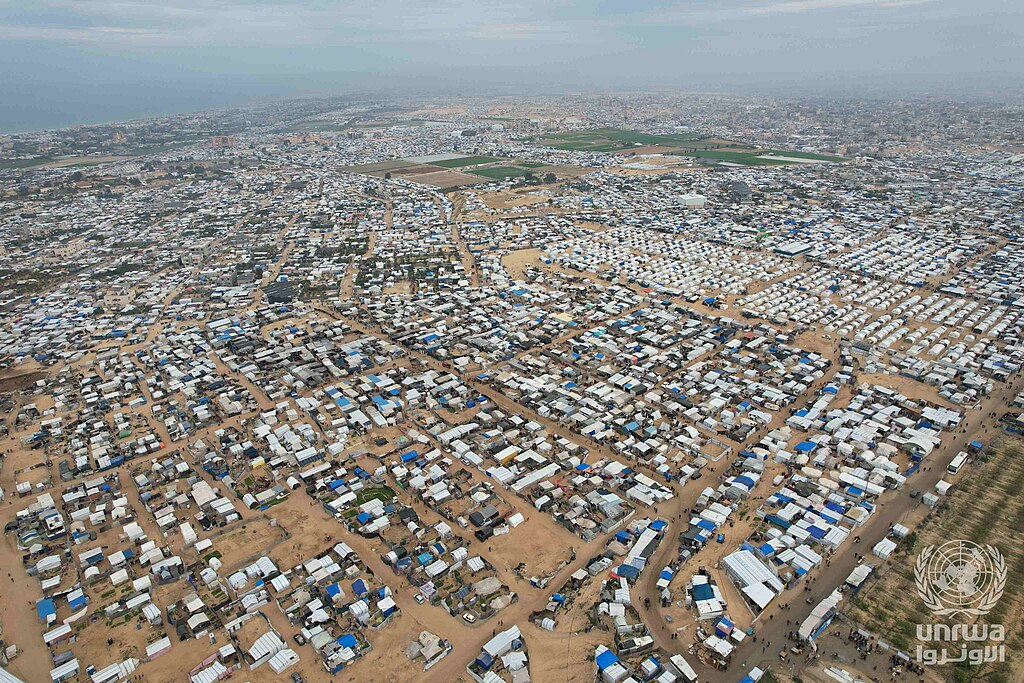
Rebuilding Homes or Redesigning Ownership? The Question of Land and Return
Perhaps the most consequential reconstruction decisions will concern housing, land and property rights.
A destroyed building does not automatically become vacant land available for redevelopment. The absence of its physical structure does not establish that ownership, tenancy or occupancy claims have disappeared.
This distinction becomes especially important after mass displacement.
The April 2026 joint damage and needs assessment identifies housing, land and property protection as a priority for recovery. It highlights the destruction of records, fragmented legal frameworks, limited documentation, inheritance disputes and the additional difficulties faced by vulnerable groups, particularly women.
These are not secondary legal problems that can be addressed after construction.
They influence the foundations of the reconstruction programme itself.
Consider a residential parcel whose original building has been destroyed. Several people may have legitimate interests in that property: a registered owner, heirs, long-term tenants, occupants with informal tenure or families whose documentation has been lost.
A planner preparing a new land-use map cannot responsibly assume that the registered owner represents every affected household. Equally, recognizing the needs of displaced occupants does not justify disregarding other lawful claims.
The difficulty is particularly significant where property records are incomplete, legal systems overlap or displacement prevents residents from participating in administrative procedures.
International guidance offers a relevant starting point.
The United Nations Principles on Housing and Property Restitution for Refugees and Displaced Persons, commonly called the Pinheiro Principles, establish a framework supporting voluntary return in safety and dignity, restitution of housing and property, access to remedies and protection against discrimination.
These principles provide important international guidance, although they do not independently adjudicate individual ownership disputes or replace applicable legal procedures.
For Gaza, applying a rights-based approach would require reconstruction institutions to preserve available cadastral records, collect alternative documentary evidence, establish accessible claims procedures and prevent irreversible redevelopment while legitimate disputes remain unresolved.
Such procedures should accommodate people who cannot produce conventional documentation.
Utility records, historical maps, inheritance documents, municipal records and credible community testimony may provide relevant supporting evidence. Their legal weight would need to be assessed through a transparent and properly constituted process rather than assumed to be equivalent.
The question of return also extends beyond property registration.
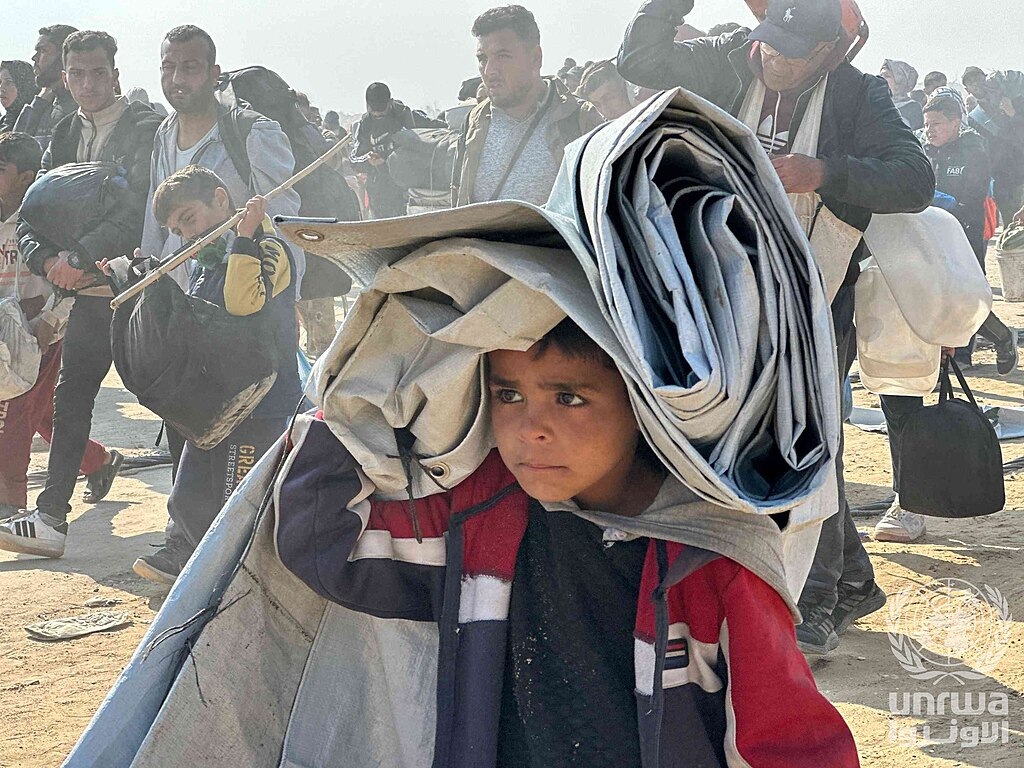
Residents may wish to return to familiar neighbourhoods because their livelihoods, social relationships, schools, religious institutions and family support systems are located there. Relocating a household to a new housing development elsewhere may provide shelter while disrupting these connections.
Conversely, returning to an original site may be temporarily unsafe because of structural instability, unexploded ordnance, contamination or the absence of essential services.
A legitimate reconstruction programme must therefore distinguish the right to seek return and restitution from the engineering question of when a particular site can be safely occupied.
The need for this distinction is illustrated by the October 2026 OCHA humanitarian report, which documented families relocating from structurally unsafe buildings while emphasizing their desire to remain near relatives, services and established communities.
Temporary relocation should not automatically extinguish an underlying property claim. Nor should accepting transitional shelter be treated as consent to permanent displacement.
A defensible housing policy would give residents access to rehabilitation, rebuilding, restitution, appropriate compensation and genuinely voluntary relocation options, subject to lawful procedures and site-specific feasibility.
Without these protections, reconstruction could unintentionally transform displacement into a permanent change in Gaza’s settlement geography.
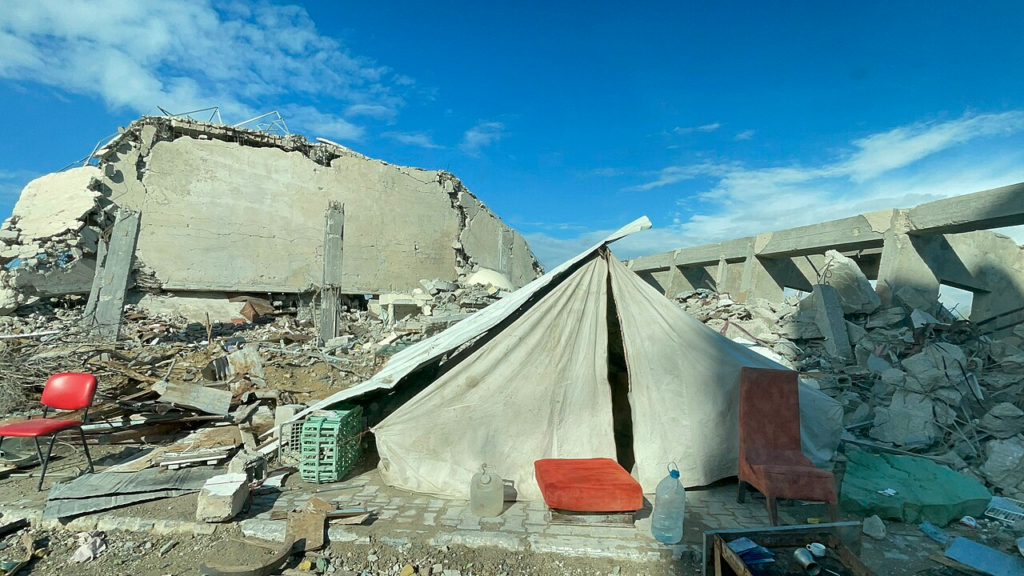
What Should Be Rebuilt First? Infrastructure, Environmental Safety and Everyday Life
Reconstruction is often presented through visually compelling proposals for housing districts, waterfronts, public spaces and major institutional buildings.
Yet the earliest and most consequential interventions may be less visually striking: clearing access routes, stabilizing dangerous structures, restoring drainage, repairing water pipelines, safely handling debris and re-establishing neighbourhood services.
The order of these interventions matters because infrastructure systems depend on one another.
The United Nations Environment Programme’s September 2025 assessment estimated that the conflict had generated approximately 61 million tonnes of debris. UNEP warned that around 15% could present relatively elevated contamination risks from materials such as asbestos, industrial waste or heavy metals if waste streams were not properly separated.
This was a risk assessment, not laboratory confirmation that a specified share of debris was contaminated.
The distinction is important because it affects debris management strategies.
Material from a collapsed residential building cannot automatically be treated as suitable aggregate for new construction. It may contain hazardous substances, unstable components, unexploded ordnance or personal effects requiring appropriate handling.
Some sites may also contain human remains, making clearance inseparable from dignified recovery and forensic procedures.
The UNDP and European Union debris-management initiative announced in 2026 recognizes the need to connect debris clearance with forensic capacity and early recovery.
From an urban design perspective, rubble clearance should be understood as a spatial intervention with social and legal consequences.
Removing debris may make a road passable, restore access to a hospital or create a temporary site for humanitarian assistance. But indiscriminate clearance can also destroy surviving archaeological material, property boundary evidence or recoverable building components.
A site-specific approach is therefore preferable to treating the entire urban landscape as undifferentiated waste.
Environmental recovery is equally significant.
UNEP identified severe degradation of soils, freshwater resources, vegetation and wastewater infrastructure. Its assessment emphasized that environmental recovery would require science-based planning, restoration of water systems, appropriate debris management and contamination monitoring.
These conditions directly affect housing reconstruction. Rebuilding homes before wastewater systems are restored may create new public-health problems. Constructing on potentially contaminated land without assessment can transfer environmental risks to future residents.
The October 2026 humanitarian situation demonstrates how immediate these relationships remain.
According to OCHA’s report covering 29 September to 12 October 2026, approximately 950,000 displaced people were living at sites assessed as facing medium to high flood risk. More than 400,000 were in locations categorized as high risk. OCHA also identified major gaps in winter shelter assistance and continuing constraints on heavy equipment, suitable land and essential supplies.
These are not issues that can await the completion of a comprehensive master plan.
They require immediate, practical intervention guided by transparent safety assessments.
The same logic applies to education and healthcare.
A damaged school may need structural rehabilitation, but children also require safe access routes and functioning learning environments. UNESCO’s October 2026 account of its Gaza recovery work documents the use of temporary learning spaces while longer-term educational infrastructure remains severely disrupted.
Reconstruction priorities should consequently distinguish between urgent life-safety measures, transitional service restoration and permanent urban development.
These stages are connected but should not be confused.
A temporary clinic may be essential without determining the final location of the future hospital. A provisional access road may restore humanitarian movement without creating a permanent right-of-way through disputed property.
The strongest planning approach would combine immediate service restoration with a longer-term spatial framework that remains open to revision as residents return, land claims are examined and more reliable technical information becomes available.
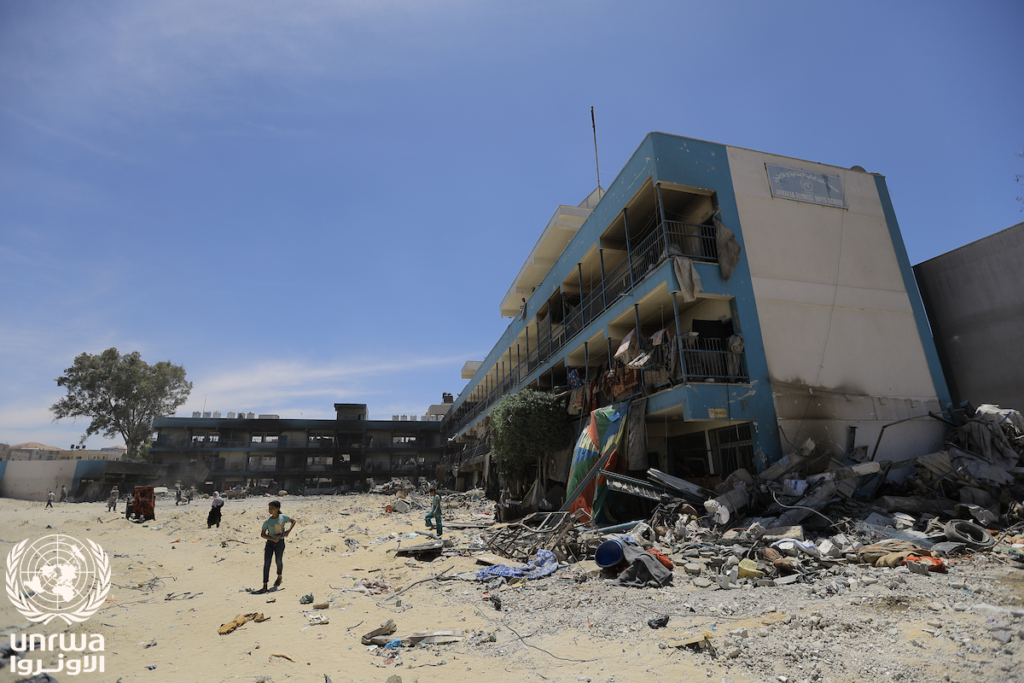
The Future of Gaza’s Heritage: Preserving Buildings, Places and Collective Memory
The reconstruction of historic buildings raises a further question: what aspects of the pre-conflict city deserve to survive in its future form?
Gaza’s urban heritage extends beyond individual monuments. It includes historic street alignments, neighbourhoods, markets, religious institutions, traditional building materials, public spaces and the accumulated relationships between these elements.
The destruction of such environments can weaken the material continuity through which communities understand their history and identity.
According to UNESCO’s October 2026 recovery update, the organization had verified damage to 164 cultural heritage sites in Gaza.
UNESCO also reported stabilization and debris-management activities at 13 historic buildings in Gaza’s Old City, including the recovery of more than 23,000 historic stones for potential future rehabilitation.
These interventions illustrate an important conservation principle: reconstruction does not always require beginning with entirely new materials or architectural forms.
Where original materials, structural components and archaeological evidence survive, their documentation and appropriate conservation can support continuity with the historic environment.
However, heritage reconstruction involves difficult choices.
Should a destroyed monument be reconstructed to closely resemble its previous appearance? Should surviving damage remain visible as evidence of conflict? Should contemporary additions be clearly distinguishable from historical fabric? How should religious, archaeological and everyday cultural places be prioritized when resources are limited?
There is no universally correct architectural answer to these questions.
International conservation principles can inform technical decisions, but community preferences, cultural significance, documentary evidence, structural feasibility and the intended future use of a site must also be considered.
The challenge becomes even more pronounced for ordinary historic neighbourhoods.
A celebrated monument may attract funding because its significance is widely recognized. Yet the surrounding streets, houses, workshops and markets may be equally important to local residents.
Preserving a historic building without restoring its everyday social and economic context risks producing an isolated landmark.
This is especially relevant to Gaza’s Old City, where heritage recovery must be considered alongside housing reconstruction, accessibility, commercial activity and the return of established communities.
Heritage planning should also distinguish between an authentic reconstruction supported by adequate evidence and a speculative reproduction of an earlier appearance.
Historical photographs, measured drawings, surviving building fragments, archival records and local knowledge can all help establish what existed. Where evidence is insufficient, uncertainty should be documented rather than concealed behind visually convincing designs.
The central issue is not whether Gaza should appear old or new.
It is whether reconstruction can preserve meaningful continuity while allowing residents to adapt their urban environment to contemporary needs.
Cultural heritage becomes part of recovery when it helps sustain living communities, not merely when damaged landmarks are rebuilt as architectural objects.
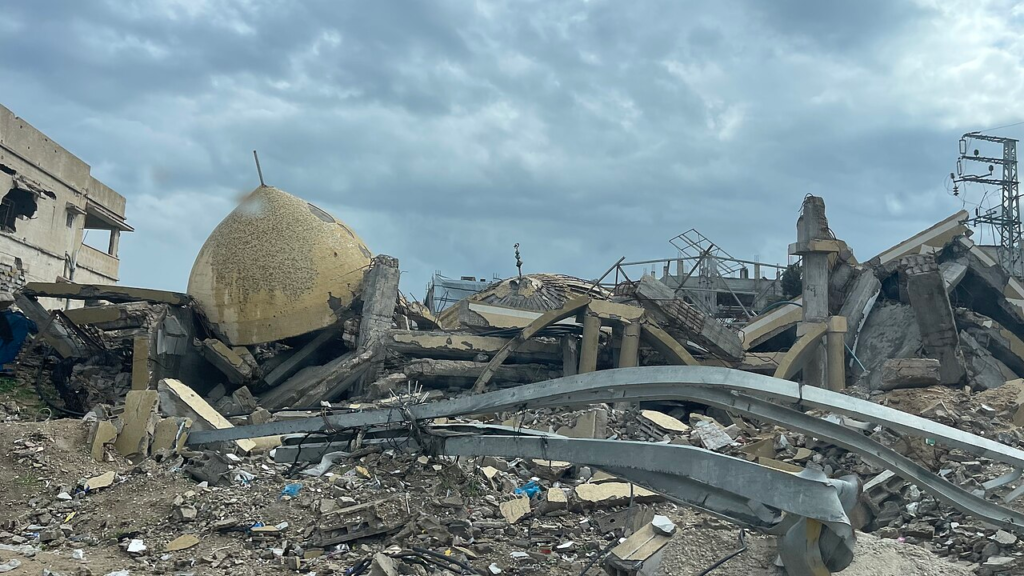
Lessons from Mosul and Aceh: What Other Reconstruction Efforts Can Teach Gaza
International reconstruction experiences offer useful insights, provided their political and institutional differences are acknowledged.
Two particularly relevant examples are Mosul in Iraq and Aceh in Indonesia. Both demonstrate how rebuilding can involve local communities and the recovery of established settlement patterns, but neither provides a directly transferable solution to Gaza’s political circumstances.
Mosul: Recovering Heritage and Urban Life
Following the destruction associated with the occupation of Mosul by the Islamic State group and the subsequent conflict, UNESCO launched its Revive the Spirit of Mosul initiative in 2018.
The programme combined cultural heritage restoration with education, employment and efforts to revive the city’s cultural life.
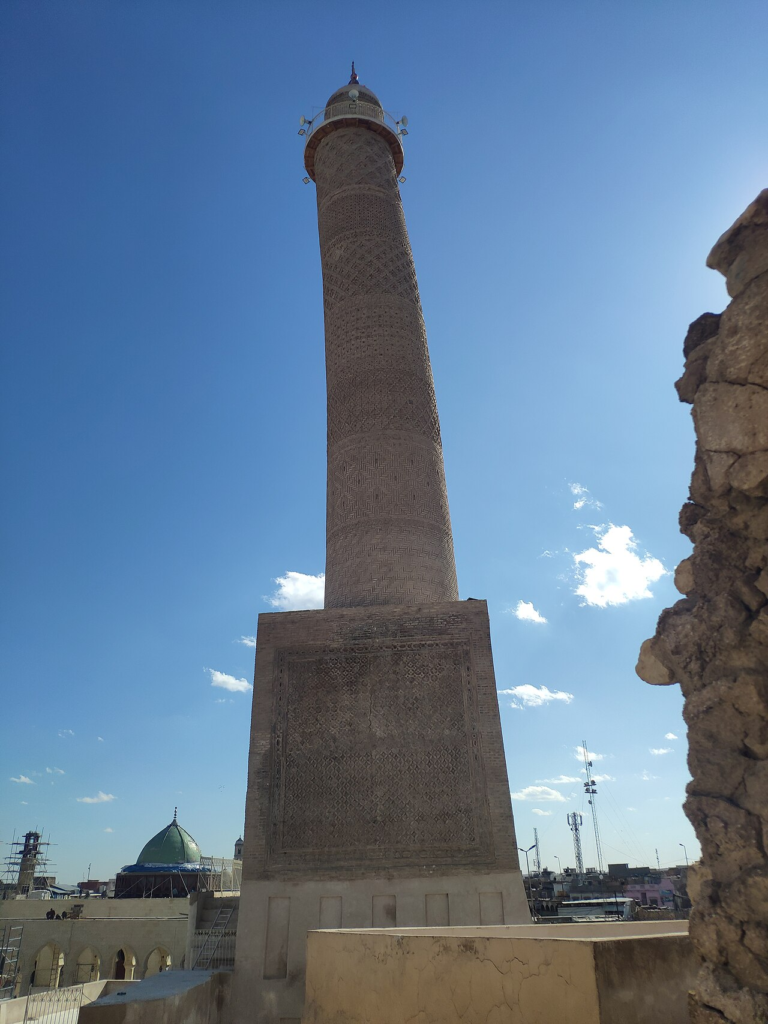
According to UNESCO’s documentation, the initiative rehabilitated 124 historic houses and 31 schools, representing 404 classrooms. It also supported the reconstruction of prominent religious buildings, including the Al-Nouri Mosque complex and its Al-Hadba Minaret.
The reconstruction of houses involved more than repairing facades.
UNESCO’s heritage housing programme also addressed streets, drainage, electrical infrastructure, public lighting and other elements of the surrounding urban environment.
This area-based approach offers a relevant lesson for Gaza: historic urban recovery becomes more meaningful when housing, infrastructure and public space are reconstructed together.
Community involvement also shaped design choices. UNESCO’s account of Mosul’s reconstruction describes consultation with residents over the rebuilding of Al-Hadba Minaret, including the preference for recovering its recognizable historic form.
However, Mosul also illustrates the limitations of landmark-focused success stories.
Reconstructing monuments and selected historic houses cannot by itself demonstrate that all displaced residents have returned, that property disputes have been resolved or that the wider urban economy has fully recovered.
These outcomes require separate evidence.
The lesson is therefore not that Gaza should imitate Mosul’s architectural reconstruction programme. It is that heritage preservation, local employment and neighbourhood infrastructure can be integrated when reconstruction is organized around functioning urban places.
Aceh: Community-Driven Housing Reconstruction
A different lesson emerges from Indonesia’s post-tsunami reconstruction.
Following the 2004 Indian Ocean tsunami, the Community-Based Settlement Rehabilitation and Reconstruction Project, commonly known as Rekompak, supported housing and neighbourhood recovery in affected settlements.
According to the World Bank’s project assessment, the programme helped rebuild or rehabilitate approximately 15,000 housing units and supported basic infrastructure reconstruction in 176 villages.
A distinctive feature was the involvement of residents in housing reconstruction and settlement planning.
Groups of households participated in rebuilding, while village teams identified local infrastructure priorities. The programme also used facilitators and community development plans to connect financial assistance with collective decision-making.
The example demonstrates that affected communities need not be treated solely as recipients of reconstruction assistance. They can participate in defining priorities, managing resources and supervising implementation.
Yet the World Bank evaluation also identified limitations, including houses that did not initially meet satisfactory seismic standards and subsequently required strengthening.
Participation therefore cannot substitute for engineering standards, independent oversight or appropriate technical expertise.
There is also a fundamental difference between Aceh and Gaza.
Aceh’s reconstruction followed a natural disaster, although it occurred in a region affected by political conflict. Gaza’s reconstruction is directly entangled with continued military insecurity, territorial access restrictions, contested governance and unresolved questions of Palestinian political authority.
The comparison is consequently useful at the level of reconstruction methods, not as evidence that the same institutional model would produce equivalent outcomes.
Taken together, Mosul and Aceh suggest a defensible principle: reconstruction works most meaningfully when residents help shape their environments, while capable public institutions provide technical standards, legal protection and implementation support.
Neither case proves that participation alone guarantees equitable recovery. Both show why the quality of institutions and the distribution of decision-making authority matter.
Towards a Rights-Based Reconstruction Framework: From Master Plans to Public Accountability
The evidence from Gaza and comparative reconstruction programmes points towards a practical planning proposition: reconstruction should be organized around publicly accountable decisions, protection of existing rights and phased restoration of urban functionality.
This requires a different approach from preparing a single comprehensive spatial vision and treating implementation as a primarily technical exercise.
A conventional master plan establishes desired land uses, development intensities, infrastructure networks and project priorities. These tools remain useful, but in Gaza their application must be conditioned by uncertainty about safety, land claims, institutional authority, resource availability and residents’ ability to return.
An effective reconstruction framework would therefore need several interconnected components.
Establish a transparent baseline before irreversible land-use changes
The first requirement is a publicly documented spatial evidence base.
This should bring together building damage assessments, infrastructure networks, pre-conflict land-use information, available property records, environmental hazards, public facilities and neighbourhood access conditions.
The UN-Habitat Gaza Urban Profile 2026 provides an important foundation for analysing neighbourhood functionality and prioritizing interventions.
However, such mapping should inform decisions rather than predetermine them.
A neighbourhood classified as highly damaged should not automatically be designated for comprehensive clearance or a fundamentally different pattern of development.
Detailed structural assessments, legal review and community input would still be necessary.
Where data are incomplete, maps should clearly identify uncertainty. A planning map that conceals uncertainty may create an unjustified impression of administrative certainty over contested sites.
Make temporary housing decisions reversible wherever possible
Emergency shelter provision must continue while permanent reconstruction arrangements develop.
But temporary solutions can acquire permanent spatial consequences.
A transitional housing settlement may require roads, water supply, electricity and sanitation. Over time, investment in these services may encourage authorities to treat the settlement as a permanent residential district.
That outcome may sometimes be appropriate, but it should not occur by default or because displaced residents have no realistic alternative.
Temporary housing arrangements should therefore protect underlying land and return claims, avoid coercive relocation and provide residents with clear information about the status of their accommodation.
Create accessible property claims and appeal mechanisms
Any institution making decisions about rebuilding, consolidating or relocating housing should operate alongside an accessible system for resolving claims.
This system would need to include affected residents, qualified legal professionals, relevant Palestinian institutions and independent safeguards.
It should provide procedures for people who have lost documents, households headed by women, tenants, inheritance claimants and those unable to participate in person.
Decisions that permanently alter land ownership, access or occupancy rights should be documented and subject to review.
The objective is not to assume every claim can be resolved immediately. It is to prevent the urgency of reconstruction from becoming a reason to bypass due process.
Give residents meaningful influence over project priorities
Participation is often treated as an additional stage in urban planning, undertaken after consultants have prepared a draft master plan.
For Gaza, that would be insufficient.
Residents should have opportunities to influence which services are restored first, which public spaces are protected, where temporary facilities are located and how neighbourhood redevelopment options are assessed.
This does not require every engineering decision to be made through a public vote.
Technical standards, environmental safety, accessibility and public-health requirements remain essential.
Meaningful participation instead requires clarity about which decisions are open to public influence, which are constrained by law or safety, and how community input changes project outcomes.
Participation processes should also recognize that displaced populations are geographically dispersed and may lack reliable digital connectivity.
A consultation system dependent entirely on online surveys or centralized public meetings would risk excluding many affected households.
Rebuild livelihoods and public space alongside housing
The reconstruction of Gaza’s economy requires attention to the ordinary spatial systems through which livelihoods operate.
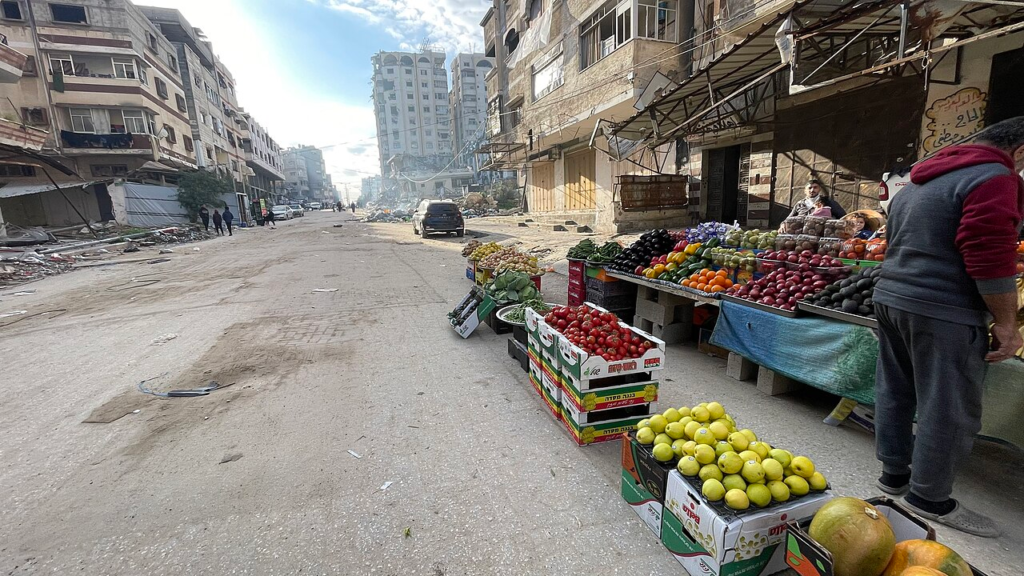
Markets, workshops, small commercial streets, agricultural access routes and local service centres may be less prominent in international redevelopment proposals than major infrastructure or waterfront projects.
Yet they form part of the everyday economic geography of the territory.
The 2026 UNCTAD report on the Palestinian economy emphasizes that recovery requires rebuilding productive capacity in agriculture, industry, construction, energy and other sectors, rather than focusing exclusively on replacing damaged physical assets.
This suggests that commercial recovery should not be postponed until major housing and infrastructure projects have been completed.
Restoring safe market access, supporting local repair industries, reconnecting neighbourhood streets and enabling small businesses to operate can contribute to early recovery.
However, the scale of any economic improvement will remain dependent on security conditions, access to goods and markets, functioning financial institutions and the broader political environment.
Urban design can support economic recovery but cannot independently overcome these constraints.
Separate reconstruction financing from control over urban rights
International funding will remain indispensable given the documented scale of need.
The institutional challenge is to ensure that financing arrangements do not automatically confer unchecked authority over land use, property rights or permanent settlement patterns.
Funding agreements should require transparency over project selection, procurement, environmental safeguards, displacement risks and public benefits.
Where redevelopment involves substantial changes in land use, decisions should be supported by demonstrable public-interest justifications and lawful procedures.
Independent monitoring should evaluate more than expenditure and the number of completed housing units.
Useful indicators would include the restoration of water and sanitation services, safe accessibility, the resolution of property claims, the return of displaced households, housing affordability, school access and the ability of local businesses to resume operations.
These measures would provide a more meaningful picture of urban recovery than construction output alone.
Treat reconstruction as an evolving process rather than a finished image
Finally, the framework should remain adaptable.
Gaza’s political and security conditions, environmental information, population distribution and reconstruction capacity may change substantially during implementation.
A rigid master plan prepared under present constraints could become inappropriate before construction is complete.
Planning should therefore proceed through successive, publicly reviewed decisions, with opportunities to revise priorities as evidence improves.
The goal should not be to reproduce every pre-conflict condition without question. Residents may wish to improve accessibility, strengthen buildings, address longstanding infrastructure deficiencies or create new public amenities.
But modernization should not be used to justify the erasure of existing communities.
The central planning test is whether proposed changes expand residents’ safety, choices and rights, or whether they use the destruction of the existing city as an opportunity to impose decisions residents could not meaningfully contest.
Conclusion: The Right to Shape What Returns
Gaza’s reconstruction will be one of the most demanding urban recovery challenges of the present century. The physical scale of damage is enormous, but the more difficult challenge lies in restoring the conditions under which communities can safely rebuild their lives.
The evidence demonstrates that housing reconstruction cannot be separated from property rights, infrastructure, environmental safety, cultural heritage, livelihoods and political governance.
It also demonstrates the limits of conventional reconstruction metrics.
The number of buildings completed will not reveal whether displaced residents have regained access to their neighbourhoods. The value of infrastructure investment will not establish whether services are distributed equitably. And the architectural ambition of a redevelopment proposal will not determine whether the people it is intended to serve have had meaningful influence over its design.
Experience from Mosul and Aceh suggests that community participation, local institutional capacity and integrated neighbourhood recovery can improve reconstruction processes. Yet their applicability to Gaza remains constrained by the territory’s particular political, legal and security conditions.
The resulting conclusion is both practical and institutional.
Reconstruction requires technical expertise, international financing, secure access, accountable administration and credible legal safeguards. None can adequately substitute for the others.
Most importantly, Palestinians affected by destruction and displacement must have meaningful opportunities to determine the future of their homes, neighbourhoods and public spaces.
The defining question should therefore not be whether Gaza can be rebuilt into an entirely new urban landscape.
It should be whether reconstruction can restore a functioning city while protecting the ability of its residents to return, remain and shape its future.
A city is not meaningfully reconstructed simply when its buildings return. Reconstruction becomes recovery when its people regain secure access to place, services, livelihoods and the power to influence what comes next.
References / Further Reading
- World Bank, European Union and United Nations (2026). Rapid Damage and Needs Assessment: Gaza Strip, April 2026.
- United Nations Office for the Coordination of Humanitarian Affairs (2026). Humanitarian Situation Report, 15 October 2026.
- United Nations Office for the Coordination of Humanitarian Affairs (2026). Humanitarian Situation Report, 7 August 2026.
- United Nations Human Settlements Programme (2026). The Gaza Urban Profile 2026.
- United Nations Security Council (2025). Resolution 2803 (2025): Comprehensive Plan to End the Gaza Conflict.
- Office of the United Nations Special Coordinator for the Middle East Peace Process (2026). Report to the Ad Hoc Liaison Committee, September 2026.
- United Nations Human Rights Experts (2026). UN Experts Condemn Board of Peace, Call for a Reparative, Rights-Based Approach to Reconstruction in Gaza.
- United Nations (2005). Principles on Housing and Property Restitution for Refugees and Displaced Persons (Pinheiro Principles).
- United Nations Environment Programme (2025). Environmental Damage in Gaza Strip Harming Human Health, Threatening Long-Term Food and Water Security.
- United Nations Development Programme and European Union (2026). UNDP and the European Union Launch a New Project to Support Debris Management and Nationally-Led Forensics Capacities in the Gaza Strip.
- UNESCO (2026). UNESCO and Partners Place Education, Culture and Information at the Heart of Gaza’s Recovery.
- UNESCO (2026). Impact on Cultural Heritage in the Gaza Strip.
- UNESCO. Revive the Spirit of Mosul: Heritage.
- UNESCO. Revive the Spirit of Mosul: Heritage Houses.
- UNESCO (2025). A New Lease of Life for Mosul.
- World Bank (2012). Indonesia: Community-Based Settlement Rehabilitation and Reconstruction Project. Rebuilding After the Tsunami: Assisting Communities Rebuild in Aceh.
- United Nations Trade and Development (2026). Report on UNCTAD Assistance to the Palestinian People: Developments in the Economy of the Occupied Palestinian Territory.
Related reading on Urban Design Lab: Planning Post-War Ukraine: Transforming Crisis into Urban Development Opportunities; Save It or Demolish It? Who Decides Which Buildings Deserve a Future?