


A building can survive a century of weather, political upheaval and changing patterns of urban life, yet disappear within months of receiving demolition approval. Another structure, equally old but perhaps less architecturally distinguished, may be carefully restored, legally protected and celebrated as part of a city’s cultural identity. Between these outcomes lies a fundamental question in architecture and urban planning: who has the authority to decide which buildings deserve to survive, and whose understanding of heritage informs that decision?
The answer is rarely determined by architectural merit alone. Decisions about demolition, preservation and redevelopment emerge from negotiations between property rights, planning regulations, financial interests, conservation expertise, infrastructure requirements and public expectations. A building may be structurally repairable but commercially unattractive. It may have limited architectural distinction but considerable importance to a neighbourhood’s collective memory. Conversely, a historically significant structure may require extensive intervention to remain safe, accessible and useful.
The consequences extend beyond individual buildings. Removing one structure can interrupt a historic streetscape, alter pedestrian movement, displace established activities or weaken the spatial relationships through which a neighbourhood is recognised. Preserving a building without considering its users can produce a different kind of loss: architectural fabric may survive while the social practices that gave it meaning disappear.
International conservation thinking increasingly recognises this complexity. UNESCO’s Recommendation on the Historic Urban Landscape, adopted in 2011, defines urban heritage through the accumulated relationship between buildings, landscapes, infrastructure, land use, social practices and cultural values. This approach challenges the assumption that heritage conservation can be reduced to protecting exceptional monuments.
Yet recognising the complexity of heritage does not automatically resolve competing interests. A city still needs housing, transportation, public infrastructure, accessible facilities and opportunities for economic development. Conservation may impose real costs on owners and governments. Demolition can sometimes be justified by demonstrable structural dangers or needs that cannot reasonably be accommodated through alternatives.
The problem is therefore not simply whether old buildings should be saved. It is whether decisions about their future are supported by sufficiently rigorous evidence, transparent procedures and an equitable consideration of the people affected.
Historical experiences in New York, Dresden, Liverpool, Ahmedabad, Warsaw, London and Jaipur reveal different dimensions of this dilemma. Some demonstrate the irreversible consequences of decisions made without effective protection. Others show how redevelopment can transform historic urban landscapes without necessarily demolishing their most recognisable buildings. Still others demonstrate that reconstruction and adaptive reuse can create meaningful continuity without preserving every original material.
Together, these cases support a central argument: the legitimacy of a decision to preserve or demolish a building depends not only on the value assigned to the structure, but also on how that value is established, whose interests are represented, which alternatives are examined and whether the long-term public consequences are understood before intervention becomes irreversible.
1. Who Has the Power to Decide? The Politics of Architectural Significance
Architecture is frequently described as a public art, but most decisions about individual buildings operate within legal and administrative systems that distribute power unevenly.
Property owners ordinarily control the use and development of their buildings within applicable laws. Planning authorities regulate development through land-use controls, building regulations and permissions. Heritage agencies identify and protect places considered historically or architecturally important. Courts may review contested decisions, while elected governments can change the legislation governing conservation.
These institutions perform different functions. Ownership does not necessarily confer an unrestricted right to demolish, and heritage recognition does not necessarily prohibit change. The outcome depends on the relevant legal framework, the building’s designation status and the evidence presented.
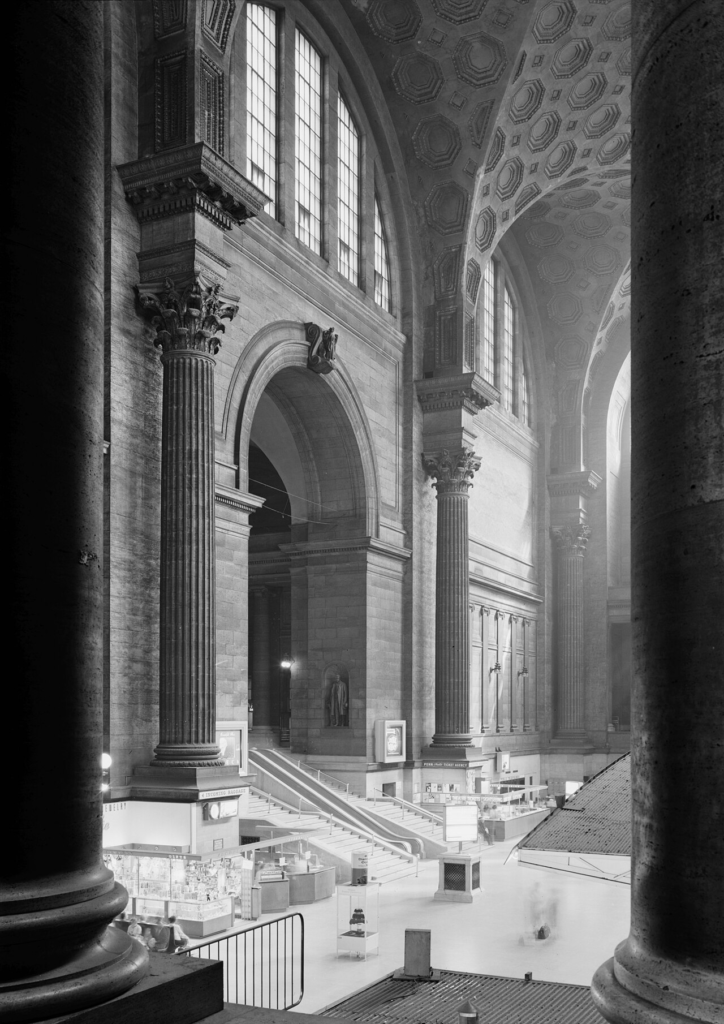
An instructive example is the demolition of New York’s original Pennsylvania Station.
Designed by McKim, Mead & White, the Beaux-Arts railway terminal occupied two city blocks in Manhattan. Its monumental spaces represented an important period in the development of American railway architecture. According to the New York City Landmarks Preservation Commission, demolition began in 1963, and the loss of the station became a major catalyst for the establishment of the city’s Landmarks Preservation Commission in 1965.
The significance of this episode extends beyond the destruction of an exceptional railway building.
Pennsylvania Station demonstrated that widespread appreciation of an architectural work does not guarantee its protection. Cultural importance and legally enforceable conservation status are different conditions. When recognition is not translated into effective regulatory procedures, demolition may proceed even where substantial public opposition exists.
The Museum of the City of New York documents how architects, civic activists and preservation advocates protested the proposed destruction. Their campaign failed to save the station, but contributed to the broader political mobilisation that supported landmark legislation.
The institutional response was consequential. New York’s preservation framework subsequently created formal processes for designating landmarks and historic districts, reviewing proposed changes and incorporating public testimony. The city’s present designation procedure allows members of the public to recommend buildings for evaluation and requires research, hearings and formal decisions before designation.
However, public participation does not mean that every stakeholder possesses equal decision-making authority. Specialists assess significance, commissioners exercise statutory powers, property owners may challenge restrictions, and elected bodies retain defined oversight functions.
This distinction matters because heritage value is not an entirely objective property that can be established through age or visual appearance alone.
The Getty Conservation Institute’s Assessing the Values of Cultural Heritage examines the methodological complexity of identifying the values attached to heritage places. Architectural, historical, social, symbolic and economic assessments can produce different interpretations of the same structure.
Consider an ordinary market building. A conservation architect may evaluate its construction technique, typology and contribution to a streetscape. A municipal authority may emphasise compliance and maintenance requirements. A property owner may focus on development potential. Traders may regard the building as an essential component of their livelihoods. Long-term residents may value its role in the neighbourhood’s everyday social life.
None of these interests can simply be assumed to outweigh all others in every situation.
Nevertheless, their evidentiary basis differs. Structural condition can be investigated through engineering assessment. Development feasibility can be tested through financial analysis. Historical importance can be documented through archival research. Social significance requires methods capable of recording lived experience and community associations.
A defensible decision must therefore explain how different forms of evidence were evaluated rather than disguising value judgments as purely technical conclusions.
The broader lesson from Pennsylvania Station is that conservation requires institutions capable of making informed decisions before irreversible loss occurs. Recognition that arrives after demolition may influence future legislation, but it cannot recover the original building.
2. Dresden: When a Bridge Alters the Heritage Value of an Entire City
The Dresden Elbe Valley illustrates a different problem: a city can lose recognised heritage significance without demolishing its principal historic monuments.
The valley was inscribed on the UNESCO World Heritage List in 2004 as a cultural landscape encompassing the Elbe River, historic buildings, meadows, gardens and associated visual relationships. Its significance derived from the composition of the landscape rather than from a single monument.
The construction of the Waldschlösschen Bridge became the central conflict.
In 2009, the World Heritage Committee removed Dresden Elbe Valley from the World Heritage List. UNESCO concluded that the construction of a four-lane bridge in the cultural landscape compromised the Outstanding Universal Value for which the site had been inscribed.
This outcome is particularly important for urban design because the bridge represented an infrastructural intervention rather than the demolition of an individual protected building.
The conflict cannot be understood adequately by contrasting heritage conservation with a supposedly universal need to resist new infrastructure. River crossings may contribute to accessibility, network connectivity and urban mobility. Whether a particular bridge is justified depends on its transport performance, environmental consequences, alternatives and distributional effects.
However, those potential benefits do not eliminate the need to evaluate impacts on cultural landscapes.
An infrastructure proposal might provide measurable transport improvements while simultaneously damaging historically significant spatial relationships. The two findings are not mutually exclusive. A rigorous appraisal must examine them independently before considering their relative importance.
In Dresden, the scale of heritage assessment was decisive. The protected landscape included the relationship between the river corridor, topography, monuments and open spaces. The intervention therefore had implications extending beyond its construction footprint.
The World Heritage Committee’s formal decision recorded that the development was incompatible with retaining the property’s Outstanding Universal Value under its existing inscription.
An important distinction follows. The decision did not establish that Dresden had lost all cultural or architectural significance. It established that the designated property no longer satisfied the basis on which it had been recognised as World Heritage.
This is a substantially narrower and more defensible interpretation.
For urban planners, the case demonstrates why assessing individual buildings or engineering structures in isolation can be inadequate. Historic landscapes depend on spatial relationships, including skyline continuity, visual corridors, landform, open space and the arrangement of built elements.
These qualities are difficult to reconstruct after a major intervention.
Dresden also raises a question of governance: at what stage should heritage implications influence infrastructure selection?
If conservation assessment occurs only after a preferred design and alignment have been politically or financially established, the realistic opportunity to consider alternatives may already be limited.
The more effective approach is to integrate heritage assessment into the earliest stages of transport planning, when alignments, modes, bridge locations and demand-management alternatives remain open for examination.
The lesson is not that heritage landscapes must remain unchanged. It is that decisions affecting their defining spatial attributes should be based on a transparent comparison of alternatives and consequences.

3. Liverpool: Can Redevelopment Preserve Buildings but Undermine Heritage?
Liverpool presents one of the most significant recent examples of conflict between urban regeneration and international heritage protection.
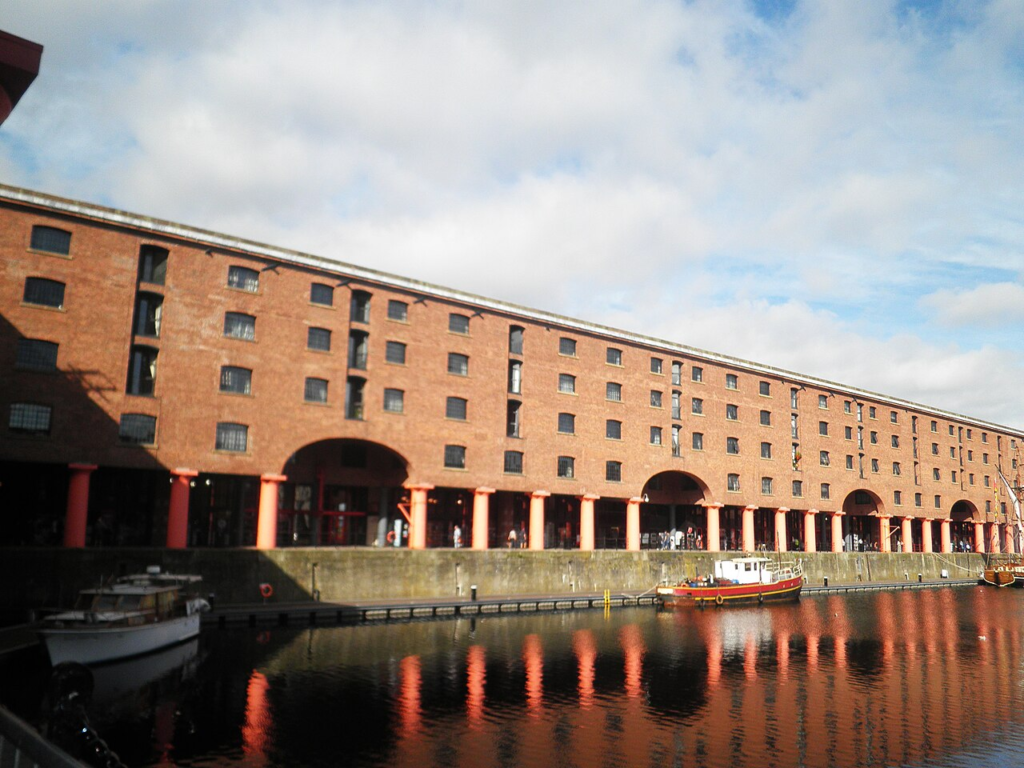
Its historic docklands and commercial centre were recognised by UNESCO for their importance in the development of maritime trade, port infrastructure and commercial urbanism.
The property was inscribed on the World Heritage List in 2004. UNESCO placed it on the List of World Heritage in Danger in 2012, following concerns surrounding Liverpool Waters and associated development proposals. On 21 July 2021, the World Heritage Committee deleted Liverpool Maritime Mercantile City from the World Heritage List.
The decision cited the irreversible loss of attributes conveying the property’s Outstanding Universal Value.
The Liverpool case differs from straightforward demolition controversies because much of the physical heritage remained present.
Historic warehouses, commercial buildings and docks continued to exist. The issue concerned the wider transformation of the urban landscape, including development within the property and its buffer zone, and whether the cumulative changes remained compatible with the values recognised at inscription.
The Committee’s decision, 44 COM 7A.34, specifically identified large-scale development in the waterfront and northern dock area, along with the anticipated impacts of additional projects.
It would therefore be inaccurate to describe Liverpool’s deletion simply as the destruction of its historic waterfront. The formal judgment concerned the integrity and authenticity of the internationally designated property.
The controversy also demonstrates why conservation decisions cannot be examined exclusively from the perspective of international heritage institutions.
Liverpool’s municipal leadership disagreed with UNESCO’s assessment. In an official statement issued after the deletion, the city’s mayor emphasised investment in historic buildings, improvements to the public realm and the potential contribution of redevelopment to the city’s future.
These positions reflect different evaluative priorities.
UNESCO assessed whether the ensemble retained the attributes justifying World Heritage recognition. Municipal authorities emphasised regeneration, investment and the future use of former industrial areas.
Neither priority automatically establishes the net public benefit of a particular development.
A regeneration proposal cannot be considered successful merely because it attracts investment or converts underused land into new economic activity. Its wider effects on heritage, urban form, public access and existing communities also require examination.
Equally, demonstrating a loss of heritage integrity does not by itself establish that every proposed redevelopment alternative would have delivered better housing, employment or infrastructure outcomes.
Such conclusions require comparative evidence that the World Heritage deletion decision was not designed to provide.
There is another important institutional distinction. Removal from UNESCO’s World Heritage List does not automatically remove the domestic statutory protections that apply to individual listed buildings. Liverpool continues to contain buildings included in the National Heritage List for England.
International designation and national planning legislation therefore operate through different mechanisms.
The implications extend to other historic port cities, industrial districts and waterfronts.
A development may preserve selected landmark buildings while altering the scale, continuity and spatial organisation of their surroundings. Retaining a warehouse façade, for example, does not necessarily preserve the historic relationship between docks, storage buildings, streets and maritime infrastructure.
Conversely, compatible adaptive reuse may retain these relationships while accommodating contemporary activities.
The central question becomes whether regeneration understands heritage as a collection of objects to be selectively retained or as an urban system whose significance depends on relationships between buildings, infrastructure, public spaces and uses.
Liverpool demonstrates that preserving individual structures and conserving an urban ensemble are related but not equivalent achievements.
4. Ahmedabad: What Happens When Everyday Buildings Become Heritage?
If Dresden and Liverpool demonstrate the importance of urban landscapes, Ahmedabad challenges an equally consequential assumption: that heritage is primarily represented by monumental architecture.
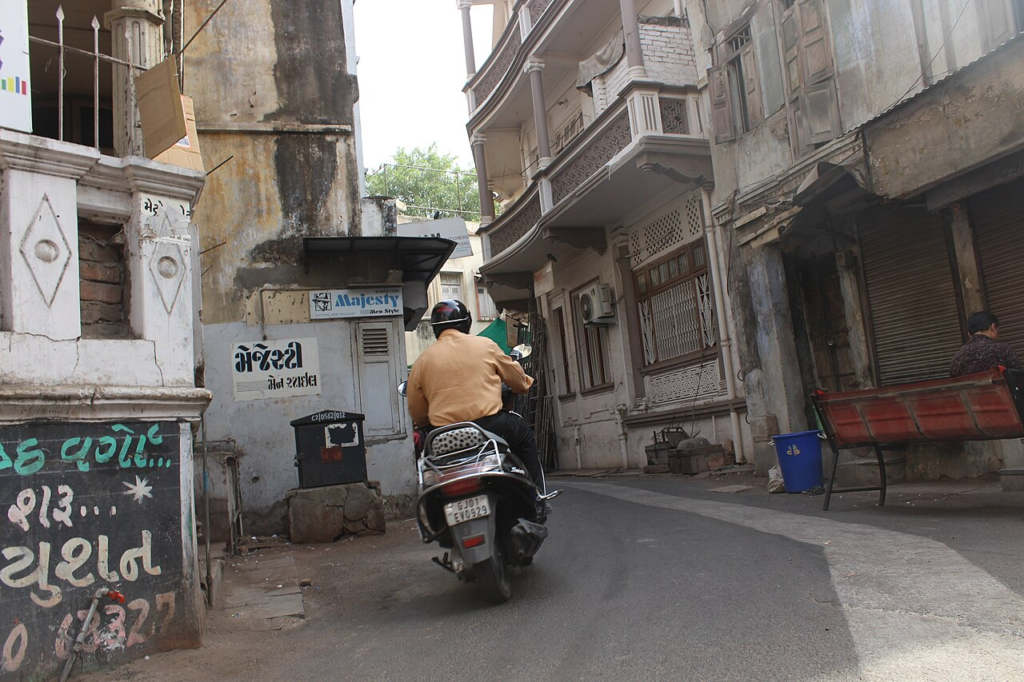
The historic walled city of Ahmedabad contains significant religious buildings, fortifications and civic monuments. However, one of its most distinctive heritage characteristics lies in its ordinary residential fabric.
Traditional pols, consisting of closely organised houses, neighbourhood streets, internal courtyards and shared spaces, represent relationships between domestic architecture, climate adaptation and community organisation.
The UNESCO World Heritage inscription of the Historic City of Ahmadabad in 2017 recognises these settlement characteristics as central to the city’s Outstanding Universal Value.
This recognition matters because the value of a traditional house cannot always be evaluated independently of its neighbours.
A building may have relatively modest architectural ornamentation while contributing to a coherent sequence of courtyard houses, narrow streets and shared thresholds. Its demolition can affect the continuity of a neighbourhood even if the individual structure would not qualify as a nationally significant monument.
In conservation terms, the problem involves both individual significance and contributory significance: the value of a building arising from its relationship with the larger historic ensemble.
The importance of this relationship is particularly visible in Ahmedabad’s pols.
The UNESCO Urban Heritage Atlas for Ahmedabad documents settlement characteristics such as street hierarchies, compact building arrangements, branching lanes, shared spaces and traditional forms of neighbourhood organisation.
These features cannot be preserved adequately through the restoration of isolated landmark buildings.
Yet protecting residential heritage introduces practical difficulties that monument-focused conservation often overlooks.
Historic houses remain places of everyday occupation. Residents may need modern sanitation, improved electrical systems, better ventilation, structural repairs, accessibility improvements and additional space. A conservation policy that restricts alteration without providing technically feasible and affordable solutions may place disproportionate obligations on owners and occupants.
This creates a potential conflict between conserving historic material and maintaining viable residential use.
Neither the automatic approval of redevelopment nor the indefinite prohibition of change provides a satisfactory response.
Instead, the appropriate conservation strategy depends on identifying which elements are essential to the building’s significance, which interventions can be accommodated and what level of alteration is compatible with maintaining the surrounding urban morphology.
Ahmedabad’s recent international conservation reviews illustrate the continuing difficulty of implementing this principle.
In its 2026 decision, 48 COM 7B.10, the World Heritage Committee welcomed continued documentation of historic pol houses, development of a digital database and GIS mapping of the property. At the same time, it raised concerns about development and heritage-impact assessment procedures.
The Committee recorded that the Danapith Fire Station and a multi-level car park had been constructed before adequate heritage-impact assessments were completed and submitted for review. It also requested revisions to planning regulations, conservation documents and procedures for assessing development affecting the World Heritage property.
These findings are important because they identify a governance problem extending beyond the physical condition of individual buildings.
If a municipality does not maintain a sufficiently detailed inventory, it may struggle to determine which structures contribute to heritage significance, where cumulative losses are occurring and how individual development applications affect the historic ensemble.
Likewise, completing an assessment after construction has proceeded limits its ability to influence the decision.
The Committee’s emphasis on documentation, urban design guidance and assessment indicates that heritage management requires an operational information system rather than a static list of monuments.
For planners and conservation professionals, such a system should integrate building condition, historic typology, ownership patterns, street morphology, permitted alterations and the significance of shared spaces.
Nevertheless, spatial databases cannot capture every dimension of living heritage.
A map can document the location and physical characteristics of a pol house, but it cannot independently establish the significance of social relationships, household practices or community memories. These require complementary qualitative research and meaningful engagement with residents.
Ahmedabad consequently presents a more difficult conservation question than whether a famous monument should remain standing.
How can a city preserve the spatial and cultural characteristics of historic neighbourhoods while allowing their residents to adapt to changing needs?
The answer requires conservation to become part of housing policy, infrastructure planning, building regulation and local governance rather than an isolated architectural activity.
5. Warsaw: Can a Reconstructed Building Be Historically Authentic?
The debate over preservation becomes more complicated when original buildings no longer exist.
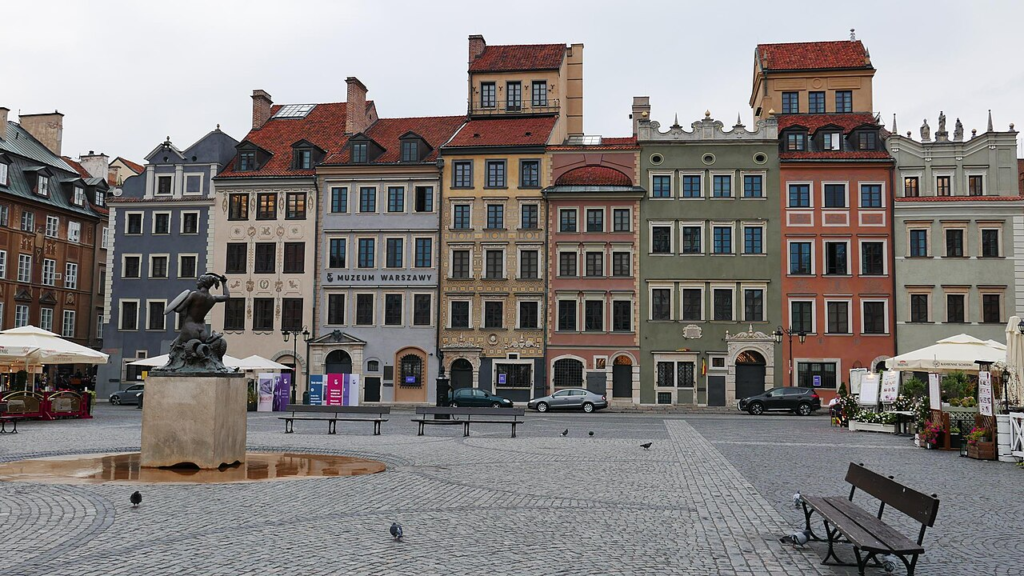
Warsaw’s historic centre provides an internationally recognised example of reconstruction following large-scale destruction.
According to UNESCO’s documentation of the Historic Centre of Warsaw, more than 85% of the city’s historic centre was destroyed during the Second World War. The subsequent reconstruction recreated its historic urban form, including streets, squares, townhouses and major monuments.
The rebuilt Old Town was inscribed on the World Heritage List in 1980.
This recognition appears, at first, to challenge conventional assumptions about architectural authenticity.
If substantial portions of a historic district are reconstructed, much of the visible built fabric is necessarily more recent than the urban history it represents. The material age of the buildings and the historical identity of the place are not identical.
Warsaw demonstrates why heritage authenticity cannot be reduced to a simple percentage of original construction material.
UNESCO recognises the reconstruction itself as a significant historical and conservation achievement. Its assessment distinguishes surviving historic elements from reconstructed components and identifies the rebuilding process as central to the property’s significance.
The reconstruction also retained the historic street network and urban layout, contributing to continuity in the spatial organisation of the city.
However, this does not imply that reconstruction is universally equivalent to conservation.
When original structures survive, replacing them with replicas may destroy archaeological, architectural and material evidence that cannot be recovered through visual reproduction.
A reconstructed façade might reproduce dimensions, decorative elements and colour while lacking the construction techniques, material history and accumulated alterations of the original building.
Consequently, a replica can preserve aspects of appearance without preserving all forms of authenticity.
The Nara Document on Authenticity, developed in 1994, provides an important intellectual basis for recognising that authenticity must be interpreted in relation to cultural context and the forms through which different societies express heritage significance.
This broader interpretation is particularly relevant in situations involving destruction, reconstruction and the continuation of cultural identity.
Yet Warsaw should not be used as a general justification for demolishing historic buildings and constructing historically styled replacements.
Its reconstruction occurred in the exceptional context of wartime destruction and a collective national effort to recover the historic urban environment. It cannot be treated as methodologically equivalent to the voluntary demolition of an extant building for commercial redevelopment.
The distinction has practical implications.
When assessing a proposed reconstruction, authorities should ask whether original fabric survives, whether documentation is sufficiently reliable, which historical period is being represented and whether reconstruction would obscure evidence of successive urban transformations.
They must also consider whether the proposal maintains the original spatial structure and supports meaningful public use.
Reconstruction may sometimes restore a damaged urban ensemble or re-establish an important communal place. However, where substantial original fabric remains, preservation and careful adaptation ordinarily offer stronger material continuity.
Warsaw therefore expands the conservation debate beyond a binary choice between saving an original building and losing its history.
It shows that urban continuity can sometimes be reconstructed, while also demonstrating why the circumstances, evidence and purpose of reconstruction must be examined critically.
6. London: Why Demolition Is Also an Environmental Decision
Heritage debates traditionally emphasise architectural value, historical significance and cultural identity. Climate change introduces another consideration: the environmental consequences of replacing existing buildings.
Demolition is not simply the removal of an obsolete structure. It may generate substantial waste and create demand for new construction materials, manufacturing processes, transportation and building activity.
These processes contribute to embodied carbon emissions, which must be considered alongside the operational emissions associated with heating, cooling, lighting and maintaining buildings.
This distinction complicates arguments that a new building is necessarily more sustainable because it achieves higher operational energy efficiency.
A replacement building may use less energy during occupation while requiring substantial upfront emissions from demolition and reconstruction. Whether it delivers a lower whole-life carbon footprint depends on the characteristics of the existing building, the proposed replacement, material choices, energy systems, service life and assessment period.
The environmental case for conservation therefore requires comparative analysis rather than a universal assumption that old buildings are better or worse.
Recent research commissioned by Historic England supports the importance of this distinction.
In its 2026 study on the embodied carbon payback of retrofitting traditional buildings, Historic England examined retrofit packages across five traditional residential building archetypes.
The research found that the embodied emissions associated with the assessed retrofit interventions were offset by operational carbon savings within reasonable periods under the study’s modelling assumptions.
This is evidence in favour of carefully designed retrofit. However, it does not establish that every historic building can be upgraded economically, or that retention will always have lower whole-life emissions than replacement.
Those conclusions require project-specific assessment.
London’s Tate Modern provides an important architectural example of adaptation.
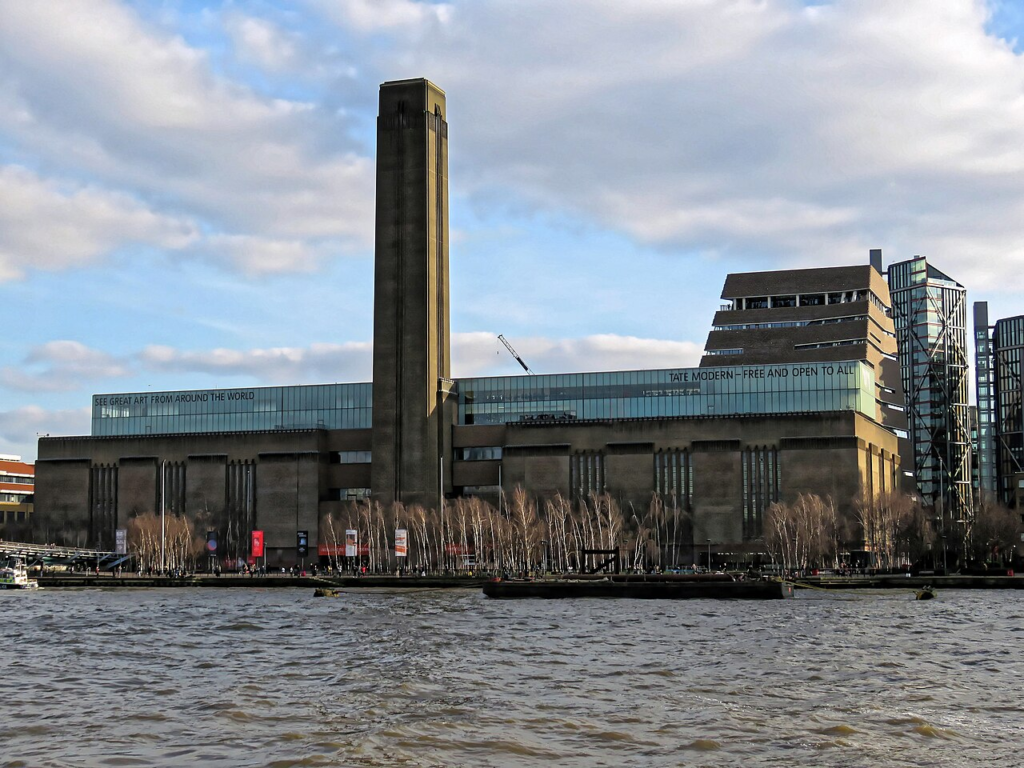
The former Bankside Power Station was converted into an art museum through a project designed by Herzog & de Meuron. The building opened as Tate Modern in 2000, following the decision to adapt the existing industrial structure rather than replace it entirely.
The Tate Archive’s institutional history documents the development of the project and the transformation of the former power station into a public cultural institution.
The architectural significance of the adaptation lies partly in its retention of the industrial building’s characteristic massing and spatial qualities while introducing a substantially different use.
The former industrial structure was not conserved solely as an inactive historical object. It acquired a new institutional function.
This distinction is central to adaptive reuse.
Preservation aims to retain significant fabric and features, while adaptation accommodates changes required for continued use. The two approaches can be complementary when interventions respect the characteristics that establish cultural significance.
The Australia ICOMOS Burra Charter provides a useful conservation principle: changes should respond to the significance of the place, and the degree of intervention should be limited accordingly.
Such an approach does not prohibit contemporary architecture within historic structures. Instead, it requires new interventions to be justified by their compatibility with the building’s significance.
At Tate Modern, the retained industrial envelope contributes to the architectural identity of the adapted building.
However, Tate Modern should not be presented as proof that adaptive reuse is always financially successful or environmentally superior. Its cultural prominence does not substitute for a documented comparison of its construction emissions with those of a hypothetical replacement building.
The project is more defensibly understood as evidence that substantial functional transformation can occur without complete demolition.
That possibility should influence how redevelopment alternatives are examined.
Before demolition is approved, a realistic options appraisal might compare continued use with repairs, partial refurbishment, substantial retrofit, adaptive reuse, selective reconstruction and complete replacement.
For each alternative, the assessment should examine structural feasibility, cultural significance, whole-life carbon, capital and maintenance costs, accessibility, energy performance and consequences for surrounding urban activities.
Where a building has substantial heritage value, the threshold for accepting irreversible loss should be correspondingly demanding.
The environmental argument also broadens the significance of ordinary structures. A building need not be architecturally exceptional for its continued use to conserve material resources.
Nevertheless, carbon benefits alone do not establish heritage significance. Environmental appraisal and cultural assessment address related but distinct values.
The practical conclusion is that demolition should be evaluated as a resource-intensive development option, not automatically treated as the starting point for urban renewal.
7. Jaipur: How Can Heritage Decisions Become More Transparent and Accountable?
Historic cities require development controls that recognise both architectural significance and the requirements of contemporary urban life.
Jaipur offers a particularly relevant example because its heritage is closely connected to planned urban morphology.
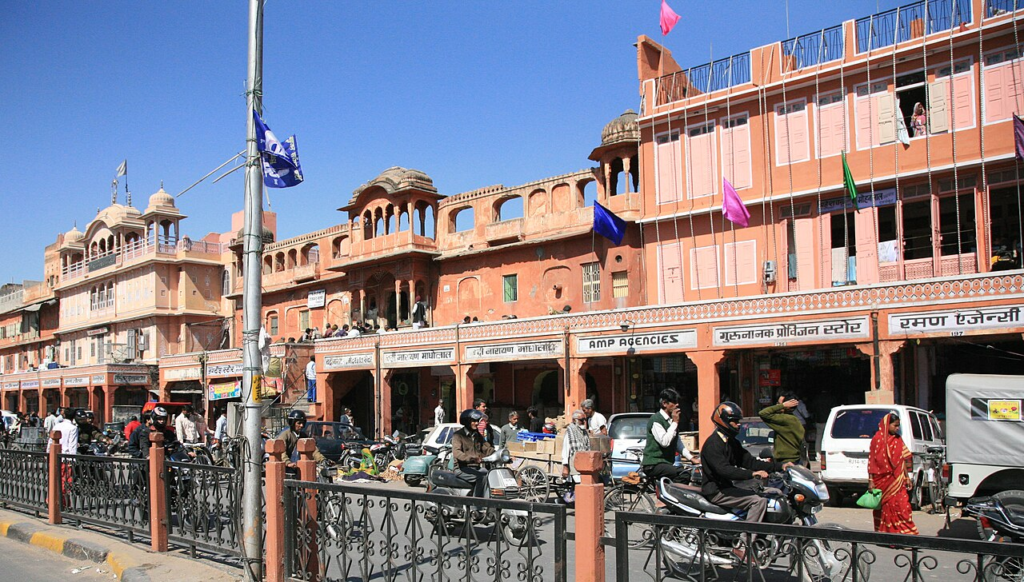
The walled city, founded in 1727, was inscribed on the UNESCO World Heritage List in 2019. Its recognised attributes include the historic street grid, chaupars, chowkris, bazaar façades, gates, religious buildings and other elements of the planned urban environment.
According to UNESCO’s Statement of Outstanding Universal Value for Jaipur, the relationship between commercial activity, street organisation and architectural form is central to its heritage significance.
This means that conservation cannot be limited to restoring prominent monuments.
The continuity of bazaar frontages, the proportions of streets, the characteristics of shop typologies and the relationship between public spaces and built form all contribute to the recognised urban ensemble.
Changes to individual buildings can therefore have cumulative consequences.
An additional storey, inappropriate façade replacement or unregulated redevelopment might appear limited when assessed as an individual application. Repeated across a historic street, similar interventions can alter its architectural coherence and spatial character.
UNESCO’s description of Jaipur identifies development pressures affecting historic urban fabric, including unauthorised additions and changes to bazaar façades.
More recently, the World Heritage Committee’s 2025 decision on Jaipur, 47 COM 7B.71, expressed concern about reports of demolished historic houses within the World Heritage property.
The Committee requested further information on the extent of these demolitions, the applicable legal framework and measures intended to prevent additional losses.
This distinction is important: the decision records the Committee’s concern about reported demolitions and requests further documentation. It should not be interpreted as an independently verified inventory of every demolition or as proof of a particular cause.
The same decision requested progress on the Special Area Heritage Plan, completion of the heritage inventory and improvements to impact-assessment procedures.
These requirements illustrate a wider institutional issue.
A heritage designation may establish the importance of an urban area, but effective protection depends on the administrative capacity to identify significant buildings, monitor alterations, enforce applicable regulations and evaluate development proposals before approval.
The challenge is not only to determine what should be protected. It is to establish a legitimate process for deciding how protected environments can change.
From Expert Opinion to Evidence-Based Public Decisions
The international Guidance and Toolkit for Impact Assessments in a World Heritage Context, developed by UNESCO and its partner advisory organisations, provides a methodological foundation for evaluating proposed interventions.
Its principles are relevant beyond formally designated World Heritage properties.
For historic cities such as Jaipur, Ahmedabad and other actively inhabited heritage environments, a defensible decision-making process should include several connected requirements.
First, establish significance before evaluating redevelopment.
Authorities should document the architectural, historical, social, spatial and environmental values associated with the affected building and its surroundings.
This assessment should distinguish individually significant structures from buildings that make an important contribution to a wider ensemble.
Not every old building possesses exceptional heritage significance, but age alone should not be the criterion for exclusion.
Second, examine alternatives before selecting demolition.
The alternatives should be technically credible rather than merely symbolic.
If continued occupation requires structural strengthening, sanitation improvements or accessibility interventions, the appraisal must determine whether those changes can be delivered and at what cost.
Similarly, arguments supporting demolition should identify the problem that demolition is expected to solve and demonstrate why reasonable alternatives are inadequate.
Third, incorporate the people who use the place.
Local participation should not be reduced to a single public meeting conducted after a preferred proposal has already been selected.
Residents, tenants, shopkeepers, craftspeople and other affected groups may hold knowledge about buildings that is absent from architectural surveys or municipal records.
However, community engagement should not be romanticised. Local interests can conflict, and a particular association or vocal group cannot automatically be assumed to represent everyone affected.
A defensible process should therefore document who participated, whose perspectives were missing and how competing views influenced the final decision.
Fourth, distinguish technical safety from economic preference.
Structural instability is a technical issue requiring competent investigation. A claim that a building is economically inconvenient is different.
A deteriorated structure may be repairable, while another may present hazards that cannot reasonably be mitigated.
Independent structural assessment is particularly important where demolition is justified on safety grounds, because the conclusion may be difficult to challenge after the building has disappeared.
Fifth, make the final reasoning accessible.
Decision records should identify the evidence considered, alternatives rejected, expected benefits, anticipated heritage losses and applicable regulatory provisions.
Transparency does not guarantee agreement. It does, however, allow affected parties to understand the basis of a decision and challenge demonstrable errors.
These requirements are consistent with the direction of international conservation governance, including the 2011 Historic Urban Landscape Recommendation and the 2005 Council of Europe Framework Convention on the Value of Cultural Heritage for Society, commonly called the Faro Convention.
The Faro Convention emphasises the relationship between cultural heritage, social participation and the responsibilities associated with heritage governance. It is a regional legal instrument, not a law universally applicable to all historic cities, but its principles offer a relevant reference for participatory decision-making.
The Need for Proportionate Conservation
A rigorous approach must also recognise that preservation involves costs.
Historic structures may require specialist materials, skilled labour, extensive repair or continued maintenance. Restricting redevelopment can impose financial obligations on private owners, particularly where buildings generate limited income.
Policies that disregard these burdens risk becoming difficult to enforce and may fail to support long-term maintenance.
Possible responses include conservation grants, technical assistance, appropriately regulated adaptive reuse, repair incentives and planning mechanisms that accommodate viable development without unnecessarily destroying significant fabric.
The suitability of these instruments depends on local law, financing capacity and the specific urban context. They should be evaluated rather than assumed to work in every city.
There is also a danger in treating architectural preservation as successful merely because façades remain visually intact.
If historic buildings become inaccessible to established residents and businesses, the physical environment may survive while important aspects of living heritage diminish.
Conservation assessment should therefore consider both material continuity and the social consequences of change.
The implication for Jaipur and other historic cities is substantial.
Heritage protection cannot depend entirely on identifying exceptional buildings or prohibiting visible alterations. It requires integrated regulation of urban form, support for continued occupation and a transparent mechanism for evaluating unavoidable change.
The central objective is not to prevent the city from evolving.
It is to ensure that evolution does not destroy significant urban characteristics without adequate justification, assessment and public accountability.
Conclusion: The Future of a Building Is a Public Decision
The experiences of New York, Dresden, Liverpool, Ahmedabad, Warsaw, London and Jaipur demonstrate that architectural preservation cannot be reduced to a contest between nostalgia and development.
A building’s significance may arise from its design, historical associations, construction, environmental value, social use or contribution to a larger urban landscape. These dimensions are not interchangeable, and no single indicator can resolve every conflict.
The evidence also shows that conservation outcomes depend heavily on institutions. New York illustrates the importance of enforceable protection. Dresden and Liverpool reveal the limitations of evaluating development without sufficient attention to wider urban landscapes. Ahmedabad and Jaipur demonstrate the challenges of protecting ordinary urban fabric, while Warsaw and Tate Modern illustrate different forms of continuity through reconstruction and adaptation.
Preservation is not automatically justified simply because a building is old. Demolition is not automatically justified because redevelopment promises economic benefits or contemporary architectural expression.
Both choices require evidence.
An accountable decision should establish significance, investigate feasible alternatives, evaluate environmental and social consequences, disclose the reasoning behind approval and permit meaningful participation before irreversible intervention occurs.
The ultimate question is therefore not whether every historic building deserves permanent protection.
It is whether a city can demonstrate, through a fair and evidence-based process, why a particular building should survive, change or disappear.
References / Further Reading
International Conservation Principles and Research
- UNESCO. (2011). Recommendation on the Historic Urban Landscape, Including a Glossary of Definitions.
- Australia ICOMOS. (2013). The Burra Charter: The Australia ICOMOS Charter for Places of Cultural Significance.
- UNESCO, ICOMOS, ICCROM and IUCN. (2022). Guidance and Toolkit for Impact Assessments in a World Heritage Context.
- ICOMOS. (1994). The Nara Document on Authenticity.
- Council of Europe. (2005). Framework Convention on the Value of Cultural Heritage for Society (Faro Convention).
- de la Torre, M. (Ed.). (2002). Assessing the Values of Cultural Heritage. Getty Conservation Institute.
Historic Cities and Conservation Decisions
- New York City Landmarks Preservation Commission. About the Landmarks Preservation Commission.
- New York City Landmarks Preservation Commission. The Designation Process.
- Museum of the City of New York. Historic Preservation: Preserving City Landmarks.
- UNESCO World Heritage Centre. (2009). Dresden Is Deleted from UNESCO’s World Heritage List.
- UNESCO World Heritage Committee. (2009). Decision 33 COM 7A.26: Dresden Elbe Valley.
- UNESCO World Heritage Committee. (2021). Decision 44 COM 7A.34: Liverpool Maritime Mercantile City.
- Liverpool City Council. (2021). Statement: UNESCO World Heritage Site Deletion.
- UNESCO World Heritage Centre. Historic City of Ahmadabad: Statement of Outstanding Universal Value.
- UNESCO World Heritage Committee. (2026). Decision 48 COM 7B.10: Historic City of Ahmadabad.
- UNESCO World Heritage Centre. Urban Heritage Atlas: Historic City of Ahmedabad.
- UNESCO World Heritage Centre. Historic Centre of Warsaw: Statement of Outstanding Universal Value.
- Tate Archive. Records Relating to the Development of Tate Modern.
- UNESCO World Heritage Centre. Jaipur City, Rajasthan: Statement of Outstanding Universal Value.
- UNESCO World Heritage Committee. (2025). Decision 47 COM 7B.71: Jaipur City, Rajasthan.
Environmental Assessment and Adaptive Reuse
- Historic England. (2026). Retrofitting Traditional Buildings: Embodied Carbon Payback Times.
- Historic England. Investing in Heritage to Avoid Embodied Carbon Emissions.
- New York City Department of City Planning. Grand Central Subdistrict: Preservation and Transfer of Development Rights.
Related reading on Urban Design Lab: Revitalizing Battersea: London’s Iconic Power Station Redevelopment; World Heritage Day 2025: Celebrating the Digital Revolution in Heritage Preservation