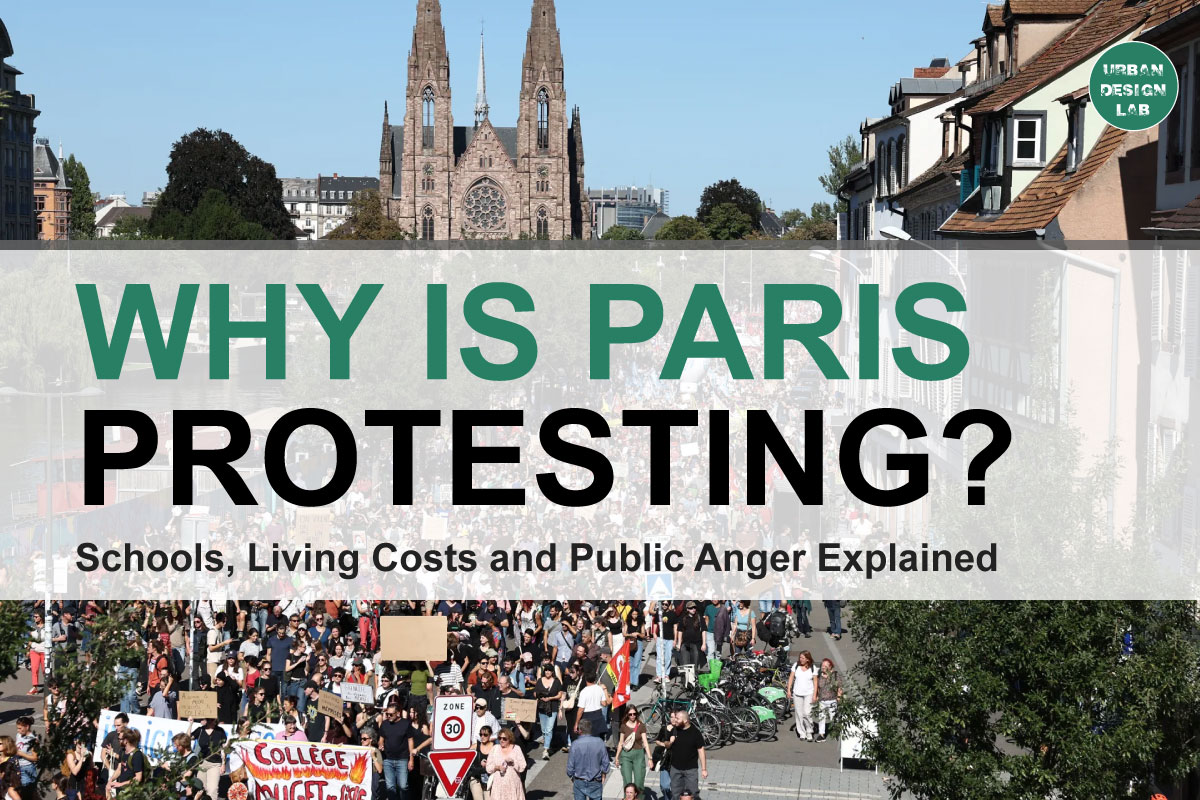



The streets of Paris have become an arena for a debate that extends well beyond France: what happens when citizens begin to question whether public institutions can deliver the education, economic security and opportunities they have been promised?
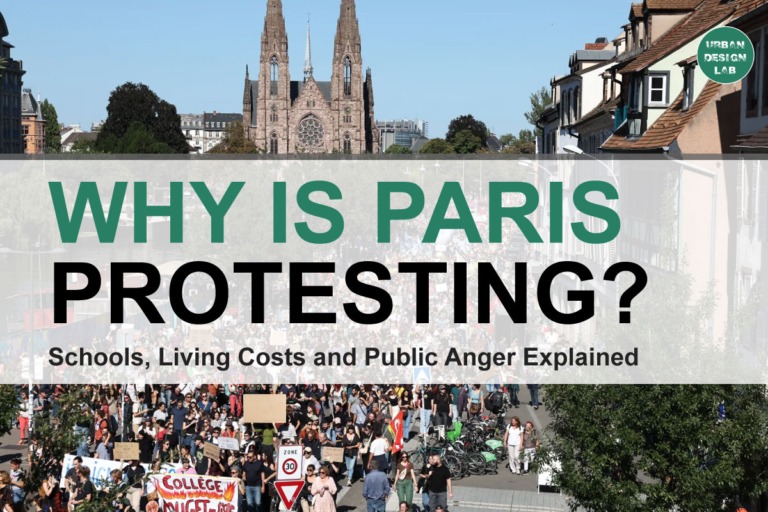
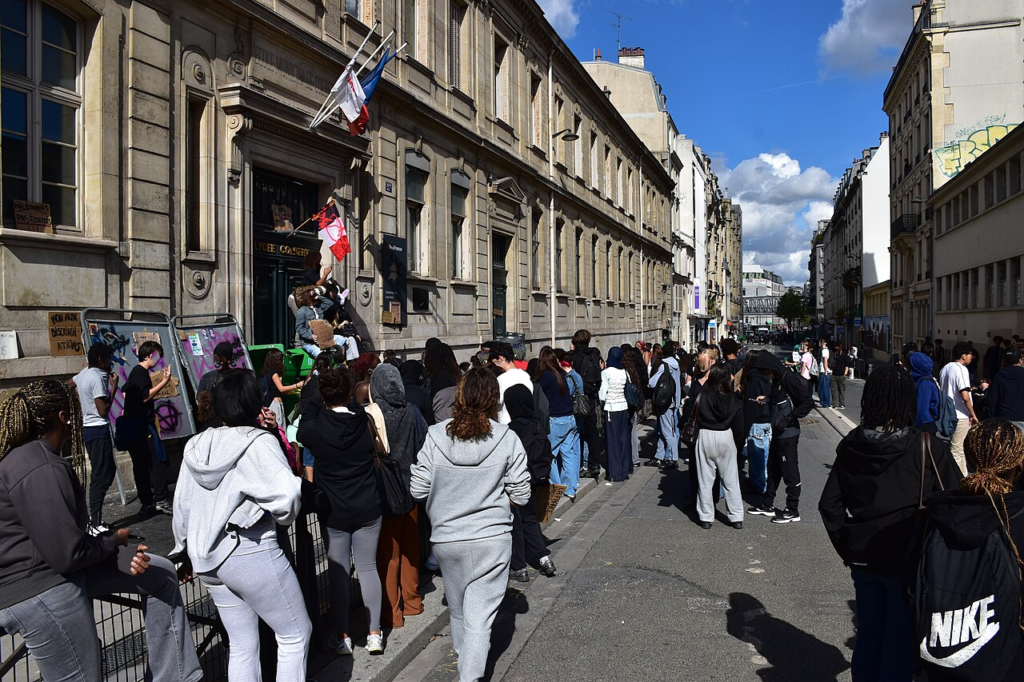
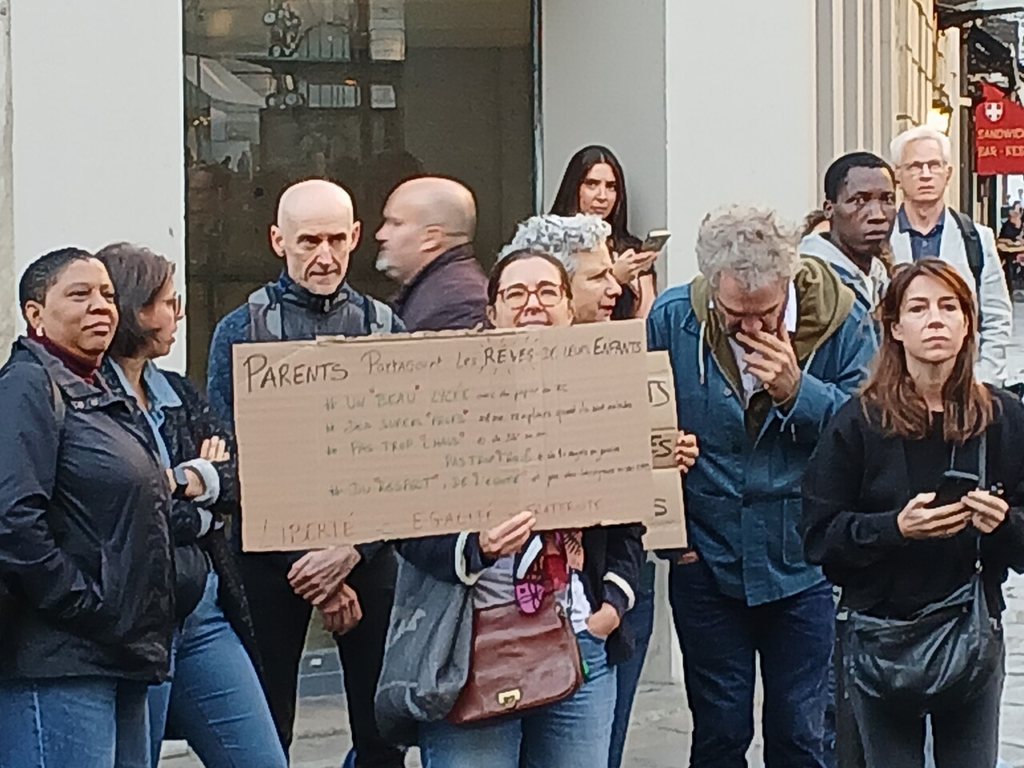
The protest movement that began around schools in the Paris region in September 2026 has developed into a broader confrontation over public spending, wages, living costs and political accountability. What initially appeared to be a dispute about teacher shortages, overcrowded classrooms and deteriorating educational facilities has attracted wider participation from students, trade unions and public-sector employees. By October, demonstrations were taking place across France, accompanied in some locations by confrontations with police and disruptions to everyday urban life. The sequence has been documented by Education International and contemporary reporting from Paris.
The significance of these demonstrations does not lie simply in their scale. Their importance lies in the relationship between three problems that governments often address separately: the quality of public education, the affordability of everyday life and citizens’ confidence in political institutions.
These concerns are connected, although not always through direct causal relationships. Educational opportunity influences future employment prospects, while housing and transport costs affect the practical value of wages. Political trust, meanwhile, depends partly on whether institutions appear capable of responding fairly and effectively to such pressures.
France provides a particularly revealing case because it combines an extensive public-service system with substantial inequalities in educational outcomes, household circumstances and territorial opportunities. The OECD’s Economic Survey of France 2026 also identifies serious fiscal constraints, making demands for additional public investment more difficult to resolve through spending increases alone.
This article examines the Paris protests as an urban and institutional phenomenon rather than merely a sequence of demonstrations. Drawing on official French statistics, OECD research, European comparative data and documented developments in France, it argues that the central issue is not simply whether governments spend enough, but whether public institutions distribute opportunities fairly, maintain essential services and respond credibly when public expectations are not met.
The larger question is relevant to cities across Europe and beyond: can governments maintain democratic legitimacy when economic pressures and uneven access to essential services begin to undermine confidence in the social contract?
1. From School Protests to a National Debate About Public Priorities
The origins of the current protest movement are important because they challenge the assumption that large demonstrations necessarily begin with a single national political dispute.
According to reporting on the initial mobilisation, the movement began on 17 September 2026, when students in the Paris region protested alongside teachers over inadequate resources and staffing. Their grievances included teacher absences, overcrowded classrooms, poor facilities and dissatisfaction with the educational environment.
The movement subsequently expanded through student mobilisation, school blockades and demonstrations across France. By 29 September, it overlapped with organised public-sector protests over wages, working conditions and proposed budget restrictions, as documented by Education International.
This expansion matters analytically. Educational grievances and broader economic dissatisfaction are not identical, but they can reinforce one another when citizens interpret them as consequences of the same institutional priorities.
For a student, the immediate concern may be the absence of a teacher or the condition of a classroom. For a teacher, it may be remuneration, workload or the ability to support pupils effectively. For a parent, it may be whether the public education system can provide opportunities comparable to those available to more affluent households.
Once these concerns enter the same political debate, the discussion changes from administrative efficiency to distributive justice.
The mobilisation continued into October. Reporting on the demonstrations of 13 October documented participation by broader groups and substantial differences between official and union estimates of turnout. These differences are important because crowd estimates are not neutral measurements of public support. They depend on counting methods, geographic coverage and the organisations producing them.
Similarly, the presence of street violence should not be treated as evidence that all protesters share the same objectives or methods. Peaceful mobilisation, school disruption, political campaigning and criminal activity require separate assessment.
The underlying debate concerns which public needs should receive priority under fiscal constraints.
The OECD Economic Survey of France 2026 reports that France’s public debt reached 115.5% of GDP in 2025, alongside a fiscal deficit exceeding 5% of GDP. The report identifies restoring public finances as an important policy objective.
Consequently, the French government faces a genuine allocation problem. Additional resources for education and public services must be considered alongside debt sustainability, taxation, economic growth and other spending commitments.
However, acknowledging fiscal constraints does not settle how these burdens should be distributed. Budget decisions involve political judgments about which expenditures are essential, which inequalities require intervention and which groups should bear the costs of adjustment.
The protests therefore represent more than opposition to particular measures. They reveal a disagreement over what citizens should reasonably expect from public institutions.
The central tension is between fiscal discipline as a national policy objective and the lived experience of citizens who believe that essential services are already insufficient.

2. Education Is More Than a Public Service: It Is Infrastructure for Equal Opportunity
Education is commonly evaluated through examination results, student attainment, graduation rates and employment outcomes. These indicators are important, but they do not fully capture the spatial and institutional conditions through which educational opportunities are delivered.
A school is also a physical environment. Its classrooms, accessibility, maintenance, equipment, staffing and relationship with the surrounding neighbourhood influence the experience of learning.
For urban planners and designers, this makes education a form of social infrastructure, comparable in certain respects to public transport, healthcare and other services that enable participation in urban life.
The French protests have drawn attention to the condition of this infrastructure. However, an evidence-based assessment must distinguish between protesters’ experiences and what national datasets actually demonstrate.
The OECD’s Education at a Glance 2026: France reports that 7.1% of teachers in French public primary and secondary institutions were classified as not fully qualified in 2023/24, below the OECD average of 9.1% for the corresponding international comparison. It also estimates a shortage equivalent to 0.4% of secondary teaching positions at or before the beginning of that school year, although the report notes differences in how countries measure vacancies.
These figures do not support a simplistic assertion that France has one of the world’s most severe nationwide teacher shortages.
Nevertheless, they do not disprove the existence of serious problems within particular schools.
National staffing statistics measure the aggregate system. Students experience education at the level of individual institutions, classes and timetables. A relatively low national vacancy rate can coexist with concentrated shortages in specific subjects, neighbourhoods or institutions.
Furthermore, a position being formally filled does not necessarily mean that teaching remains uninterrupted throughout the academic year. Teacher absence, replacement arrangements, specialist staffing and local infrastructure require separate measurements.
This distinction between aggregate adequacy and local experience is central to evaluating the protests fairly.
Educational inequality provides another important dimension.
The OECD’s PISA 2025 results for France found that socio-economically advantaged students outperformed disadvantaged students by 100 score points in science, compared with an OECD average gap of 85 points. The report also found that the French gap had narrowed compared with 2015.
Both findings matter. France continues to display substantial socio-economic disparities in educational performance, but the evidence also indicates some improvement in the measured gap. A defensible interpretation must acknowledge both.
Neither statistic establishes that school funding alone explains the difference.
Educational outcomes reflect several interacting conditions, including household resources, parental education, language environments, school composition, learning support and institutional practices. The available data identify associations but cannot independently isolate the effect of school buildings or staffing on achievement.
For urban researchers, this raises a methodological concern. Educational inequality should not be mapped solely by comparing the locations of schools.
An adequate spatial assessment would examine school catchment areas, accessibility, household disadvantage, building conditions, actual staffing continuity and the availability of supplementary educational resources.
It would also distinguish proximity from effective access. A school may be geographically close yet unable to provide particular courses, adequate support or stable teaching arrangements.
These are precisely the kinds of differences that can disappear in national performance averages.
The protests can therefore be read as a demand to examine educational provision at the scale at which citizens encounter it.
The broader lesson is not that every education problem requires additional construction or capital expenditure. Some deficiencies are organisational, others concern recruitment and retention, and still others arise from unequal household circumstances.
Rather, education policy needs to connect pedagogical performance with the territorial and material conditions through which learning takes place.
3. Why Affordability Is an Urban Question, Not Simply an Inflation Problem
The expansion of the protests into broader economic grievances reflects another dimension of contemporary urban life: the relationship between household income and the cost of accessing essential opportunities.
Inflation is one component of affordability, but the two concepts should not be treated as interchangeable.
Inflation measures changes in prices over time. Affordability concerns whether households have sufficient resources to obtain goods and services at prevailing prices.
Even when inflation slows, households may continue to experience financial pressure if prices remain elevated relative to wages or if essential expenses consume a large proportion of disposable income.
France’s latest official inflation figures provide relevant context.
According to INSEE’s final September 2026 Consumer Price Index release, consumer prices increased by 3.1% over the preceding twelve months, compared with 2.4% in August. Energy prices increased by 21.3% year-on-year, while food and service prices also rose.
This represents a significant increase in short-term price pressure, particularly for households exposed to energy costs.
However, a national inflation rate cannot establish that every household experienced the same decline in affordability. The impact depends on consumption patterns, income changes, housing tenure and financial circumstances.
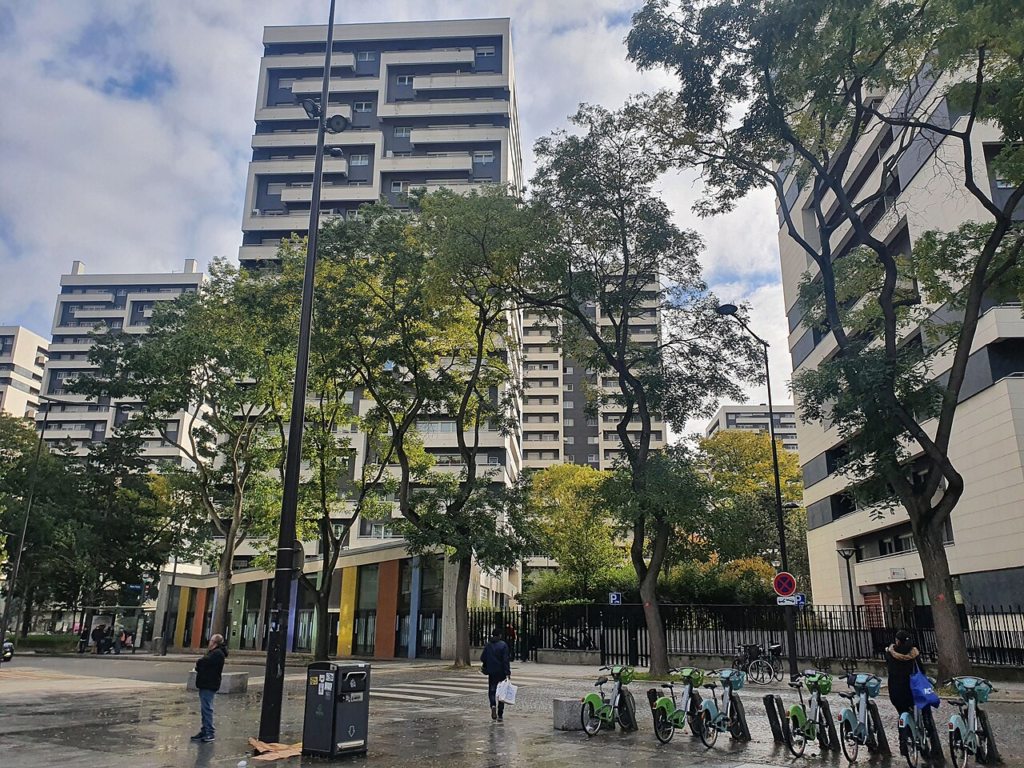
A household reliant on a private vehicle may be more exposed to fuel prices. A renter may face different pressures from a homeowner with an established mortgage. A student living independently may have very different expenditure patterns from a household with children.
These differences become especially important in metropolitan areas.
Paris and the geography of economic inequality
Paris illustrates how aggregate prosperity can coexist with substantial material disadvantage.
INSEE’s regional statistics for Île-de-France show that annual median living standards in 2023 were €33,650 in Paris and €21,250 in Seine-Saint-Denis, a department immediately adjoining the capital.
These figures reveal a pronounced territorial difference in economic resources, although they do not independently establish differences in purchasing power because local household costs and circumstances also vary.
The wider metropolitan region therefore cannot be understood as a socially uniform labour or housing market.
Housing provides a particularly important example.
The Atelier parisien d’urbanisme (Apur) report on social housing in Paris, published in June 2026 records 276,032 social housing units as of 1 January 2025, representing 23.2% of principal residences under the relevant statutory definition. The report also identifies approximately 327,000 households registered as applicants for social housing, including applicants already living outside Paris.
These figures indicate considerable demand for regulated housing, even though the city has expanded its social housing stock.
They require careful interpretation. The number of applicants cannot simply be divided by the annual number of allocations to produce an accurate waiting time. Applicants have different eligibility, household needs, location preferences and circumstances, while housing allocations depend on turnover and prioritisation.
Nevertheless, the figures demonstrate that the availability of affordable accommodation remains a significant planning concern.
They also show why increasing the overall number of residential units is not necessarily equivalent to improving affordability for lower-income households. The price, tenure, size, accessibility and location of new dwellings determine which groups can benefit.
For many metropolitan residents, affordability is also affected by travel.
Housing located farther from employment and education may involve longer journeys and additional transport expenditure. Conversely, housing near major employment centres can expose households to higher accommodation costs.
The relevant question is therefore not simply whether a dwelling is inexpensive. It is whether the combined cost of housing, mobility and essential services permits a viable everyday life.
A suitable urban affordability assessment should consider:
- Housing expenditure relative to disposable income.
- Transport expenditure and access to employment.
- The location and cost of education and childcare.
- Energy expenditure and the performance of residential buildings.
- Access to essential facilities without excessive travel or financial burdens.
These dimensions are related, but they should not automatically be combined into a single measure without explicit weighting and an appropriate empirical justification.
There is also a crucial limitation in interpreting the current protests.
The evidence does not establish that Paris’s housing market directly caused the education demonstrations. The protests began around school conditions, and their subsequent expansion involved several economic and political concerns.
The housing evidence instead demonstrates why affordability can become a wider urban grievance: improvements in wages or public services may be insufficient if households continue to struggle with the cost of participating in metropolitan life.
This is the deeper planning issue. Affordability depends not only on how much people earn, but also on the spatial organisation of the opportunities they need to access.
4. Political Trust: When Everyday Dissatisfaction Becomes a Question of Legitimacy
Public dissatisfaction does not necessarily produce protests. Economic hardship, poor services and political demonstrations are connected through more complicated processes involving public expectations, collective organisation, political opportunity and perceptions of institutional responsiveness.
This distinction is essential when assessing the relationship between the Paris protests and democratic trust.
A reduction in government popularity is not equivalent to a collapse of democratic legitimacy. Citizens can distrust particular leaders while continuing to support democratic institutions. They may also protest precisely because they believe political decisions can still be influenced.
Nevertheless, public trust helps explain why disagreements over individual policies can evolve into broader disputes about government priorities.
The OECD Survey on Drivers of Trust in Public Institutions, published in 2024, found that 34% of respondents in France reported high or moderately high trust in the national government in 2023, compared with an OECD average of 39%.
The same survey found a substantial difference between national and local institutions. In France, 56% of respondents expressed high or moderately high trust in local government.
This contrast complicates the argument that French citizens uniformly distrust the state.
Trust varies according to the institution being evaluated, the nature of its responsibilities and citizens’ experiences of its performance.
The OECD also identified a particularly strong association between perceived political voice and institutional trust. Respondents in France who believed the political system did not allow people like them to have a say reported much lower trust in national government than those who felt they had political influence.
This finding is relevant to the interpretation of protests, but it is not direct evidence about the motivations of the demonstrators in October 2026. The survey predates the current movement and was not designed to evaluate its participants.
The more defensible conclusion is that responsiveness and political voice form part of the institutional context in which such disputes develop.
Public order and the legitimacy of protest
The role of policing introduces an additional dimension.
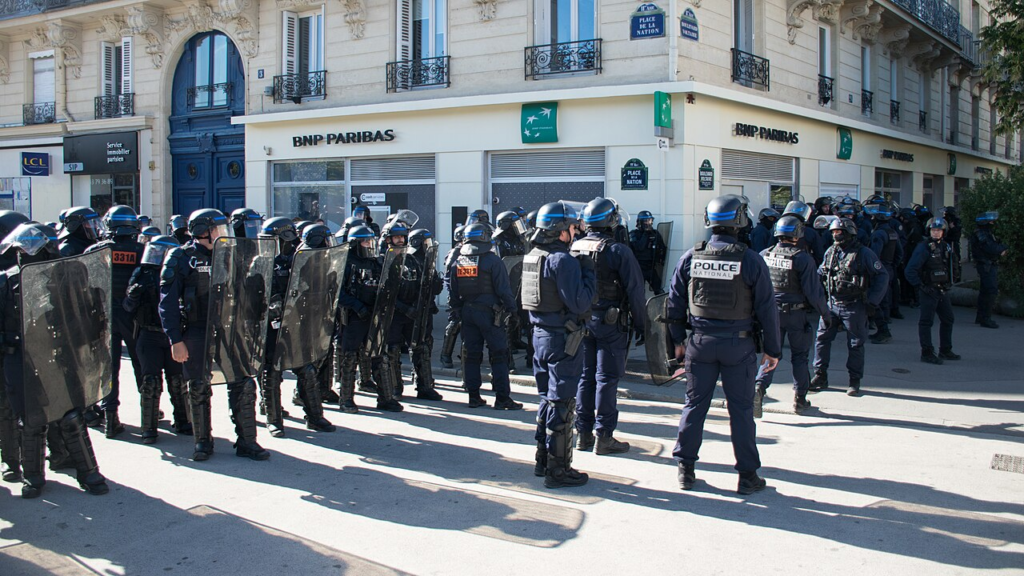
The October demonstrations have included both peaceful mobilisation and episodes of confrontation, vandalism and disruption, as documented in reporting on the protests of 17 October 2026.
These events create legitimate public-order concerns. Governments have responsibilities to protect people, maintain emergency access and prevent damage to property.
At the same time, the right to peaceful assembly remains a fundamental democratic principle, recognised in Article 11 of the European Convention on Human Rights.
A balanced assessment must therefore distinguish between protecting peaceful assembly, responding to specific unlawful conduct and imposing restrictions that may be excessive or insufficiently justified.
Neither the mere presence of police nor the occurrence of arrests proves misconduct. Equally, the occurrence of disorder does not justify treating an entire movement as violent.
Assessing policing requires incident-specific evidence, including the circumstances of interventions, relevant legal standards and independent investigation where allegations of misconduct arise.
For the built environment, this dispute has a spatial expression.
Streets, squares, school entrances and transport corridors are not merely circulation spaces. They are also locations where citizens make collective demands and where government authority becomes physically visible.
The ability to assemble safely, communicate grievances and maintain reasonable public access is therefore part of the governance of public space.
The central urban-design challenge is not to eliminate conflict from public space. Democratic cities must accommodate disagreement.
Rather, the challenge is to ensure that the management of public space is compatible with public safety, accessibility and legitimate civic participation.
In this sense, the Paris protests expose the relationship between institutional trust and the everyday governance of the city.
5. Beyond France: Similar Pressures, Different European Contexts
The Paris protests matter internationally because several of the underlying concerns are also visible in other European countries.
However, similarities in protest language should not be mistaken for identical causes.
Different countries have distinct housing systems, educational institutions, labour markets, fiscal circumstances and political structures. A protest against school staffing in France cannot automatically be equated with a housing demonstration in Spain or a dispute over rents in Portugal.
The comparative value lies in identifying recurring institutional and urban pressures while preserving these differences.
Madrid: Housing affordability and the limits of educational achievement
Madrid offers a particularly revealing comparison.
In October 2026, housing activists maintained a protest encampment at Puerta del Sol, documenting frustration over access to housing and the role of household or inherited wealth in determining residential opportunities. Contemporary photographs from the encampment are preserved in the Wikimedia Commons photographic archive.
One documented protest sign connects educational attainment, employment and housing access. Its argument is that acquiring qualifications and obtaining work do not necessarily enable a person to secure independent accommodation.
This is a protester’s political claim, not a finding established by the photograph.
Nevertheless, it raises an important research question: how much economic independence does education provide when access to housing is increasingly shaped by household wealth, inherited resources and local property costs?
Education can improve employment prospects, but its economic value depends partly on labour-market conditions and the expenditure required to maintain an independent household.
A housing market in which stable employment does not reliably translate into affordable accommodation can therefore weaken the perceived relationship between educational effort and economic security.
Determining the actual strength of this relationship requires evidence on earnings, employment, rents, property prices, mortgage access and household wealth.
The Madrid example is consequently relevant to Paris not because the two movements share identical origins, but because both raise questions about whether established routes to social and economic opportunity remain accessible.
Portugal: When national housing markets experience prolonged price pressure
Portugal presents a different but related case.
The Eurostat House Price Index release of 1 October 2026 reported that Portuguese house prices increased by 16.5% between the second quarter of 2025 and the second quarter of 2026. Over the same period, France recorded a decrease of 0.8% in its national house price index.
These contrasting trends are important.
They demonstrate why broad claims about a uniform European housing crisis require qualification. Housing markets can experience sharply different national price movements, even while affordability remains politically important across countries.
An increase in house prices is not equivalent to an increase in rents, nor does a national index describe every city equally. The figures also do not establish the accessibility of housing for particular income groups without further analysis.
Portugal’s housing concerns predate the latest figures. A documented demonstration for the right to housing took place in Lisbon on 30 September 2023, with participants expressing opposition to housing scarcity and property speculation. Photographic documentation is available through the original Wikimedia Commons archive.
Taken together, the evidence establishes that housing affordability has been an important subject of public mobilisation in Portugal, although it does not prove that the same factors explain every demonstration.
The broader European condition
European statistical evidence supports the relevance of housing affordability beyond individual protest movements.
According to Eurostat’s Key Figures on European Living Conditions, 2026 edition, 9.6% of the EU population living in cities experienced housing-cost overburden in 2025, compared with 5.6% in rural areas.
The indicator identifies households whose total housing costs, net of housing allowances, represent at least 40% of disposable income.
This is a standardised affordability measure, but it has limitations. It does not fully describe housing quality, overcrowding, residential insecurity, commuting burdens or the aspirations of people who cannot form independent households.
For comparative urban research, these dimensions need to be examined alongside housing-cost ratios.
The international importance of the Paris demonstrations is therefore not that Europe is experiencing one uniform protest movement. The stronger interpretation is that several countries are confronting questions about how education, labour-market participation and housing access combine to shape economic opportunity.
The similarities justify comparative analysis. They do not establish a shared causal mechanism.
6. From Protest to Policy: What Would a Credible Institutional Response Require?
The policy implications of the Paris protests extend beyond responding to immediate demands.
If educational provision, living costs and institutional trust are evaluated independently, governments risk overlooking how these conditions interact in everyday life.
A credible response therefore requires both sector-specific intervention and coordinated urban governance.
That does not mean creating a single policy programme intended to solve every problem simultaneously. Education, housing, transport and democratic participation involve different institutions, budgets and regulatory powers.
It means establishing clearer relationships between public objectives, measurable outcomes and citizens’ experiences.
Measure service quality at the level where people experience it
National education statistics should be supplemented with institution-level information about staffing continuity, replacement teaching, accessibility, building condition and service availability.
This would allow policymakers to distinguish structural deficiencies from temporary disruptions and identify where interventions are most necessary.
For example, improving staffing continuity at an individual school may require replacement capacity rather than constructing new facilities. In another neighbourhood, deteriorating buildings or unsuitable learning environments may justify capital investment.
These are distinct problems requiring different evidence.
Similarly, an education investment programme should be evaluated against outcomes that can plausibly be influenced by that investment. A renovated school building should not automatically be credited with improvements in attainment without accounting for changes in staffing, student composition and teaching practices.
Evaluate affordability through household and spatial conditions
Affordability policies need an equally careful approach.
Expanding social housing can increase access for eligible households, but housing policy must also consider location, household size, eligibility, allocation systems and proximity to employment and essential services.
The Apur analysis of access to social housing in Paris provides a model of how demand, applicant characteristics and actual allocations can be evaluated separately.
For urban planners, transport accessibility should be considered alongside housing provision.
The relevant objective is not simply to increase the number of housing units or reduce average travel times. It is to improve effective access to employment, education and essential services for households facing different financial and mobility constraints.
This requires attention to distributional outcomes. A policy that improves average accessibility may still leave disadvantaged groups with limited access if its benefits are concentrated in already well-served locations.
Make participation consequential rather than symbolic
The OECD’s research on institutional trust indicates that perceived political voice is strongly associated with trust in government. This supports the importance of meaningful public participation, although it does not establish that consultation alone causes trust to improve.
Public engagement should therefore be tied to decisions that institutions are actually able to influence.
For example, if a municipality consults residents about improvements to school access or public space, it should explain the available budget, applicable constraints, proposed alternatives and reasons for the eventual decision.
Where responsibilities lie with national or regional authorities, consultation should identify those institutional boundaries rather than implying that every demand can be resolved locally.
Transparency also requires showing which proposals were adopted, modified or rejected.
This is particularly important when public budgets are constrained. Citizens may disagree with difficult decisions, but accountability requires that the trade-offs are visible and open to scrutiny.
Evaluate policies through distribution, delivery and legitimacy
A practical analytical framework can distinguish three dimensions.
Distribution concerns who receives resources, opportunities and public benefits. Its assessment requires disaggregated evidence about households, territories and social groups.
Delivery concerns whether institutions provide the services they have committed to providing. This involves staffing, implementation, maintenance, operational reliability and measurable service standards.
Legitimacy concerns the procedures through which decisions are made, explained and contested. Its evaluation requires evidence about transparency, participation, institutional responsiveness and procedural fairness.
These dimensions are related but should not be treated as interchangeable.
A policy may distribute resources fairly but perform poorly in implementation. Another may deliver services efficiently while excluding affected groups from decision-making. A widely supported policy may nevertheless have unequal consequences.
For academic research, combining these dimensions into one composite index would require substantial methodological justification, including decisions about indicators, weighting, validity and whether improvements in one dimension can compensate for deficiencies in another.
A disaggregated assessment is often more informative because it preserves the distinction between resource allocation, institutional performance and public legitimacy.
The resulting policy approach is not a universal solution to protest.
It is a more rigorous way of identifying what governments can change, how improvements can be measured and which claims require further evidence.
Ultimately, the response to public dissatisfaction should be evaluated through demonstrable improvements, not only announcements or expenditure commitments.
Conclusion: The Paris Protests Reveal a Broader Test of the Social Contract
The Paris protests are significant not because they demonstrate a single, clearly established cause of public dissatisfaction, but because they bring together questions that are frequently separated in public policy.
Education concerns the distribution of future opportunities. Affordability determines whether households can participate meaningfully in economic and urban life. Institutional trust influences how citizens evaluate decisions and whether they believe their concerns can affect public priorities.
The evidence from France demonstrates that these issues require careful differentiation. National education indicators do not capture every local deficiency. Inflation figures do not measure affordability equally across households. Surveyed levels of institutional trust cannot be used to infer the motivations of every protester.
International comparisons reinforce these methodological cautions. The housing experiences of Madrid and Portugal reveal related concerns about opportunity and economic security, but they emerge within different political and market conditions.
For architecture, urban planning and public policy, the central lesson is that social infrastructure cannot be assessed through physical provision alone. Its value also depends on accessibility, institutional delivery, affordability and the distribution of benefits.
The long-term significance of the protests will depend partly on whether public authorities can convert expressed grievances into transparent decisions and verifiable improvements.
The question extending beyond France is not merely whether governments can contain public dissatisfaction. It is whether they can maintain credible institutions that distribute opportunity fairly, deliver essential services reliably and remain accountable to the people they serve.

References / Further Reading
- Contemporary events and public-sector mobilisation
- Education International. France: Public Sector Unions Mobilise for Pay, Public Services, and Education. September 2026.
- Le Monde. High School Protests Spread Across France, Pitting Radical Left Against Government. September 2026.
- Le Monde. French High School Protesters Call on University Students and Yellow Vests to Take Up the Torch. October 2026.
- Education, economic conditions and public institutions
- OECD. Education at a Glance 2026: France.
- OECD. PISA 2025 Results (Volume I): France.
- OECD. OECD Economic Surveys: France 2026.
- OECD. Survey on Drivers of Trust in Public Institutions: 2024 Results, France Country Note.
- INSEE. In September 2026, Consumer Prices Rose by 3.1% Year on Year.
- INSEE. Standards of Living and Poverty in 2024: Standards of Living Rose Without Curbing Inequalities. July 2026.
- Housing and comparative urban conditions
- Atelier parisien d’urbanisme (Apur). Access to Social Housing in Paris in 2024. Published July 2026.
- Apur. Les Derniers Chiffres du Logement Social à Paris. June 2026.
- INSEE. L’essentiel sur l’Île-de-France: Regional Living Standards, Income and Poverty.
- Eurostat. House Prices Up by 4.0% in the Euro Area and 4.7% in the EU, Second Quarter 2026.
- Eurostat. Key Figures on European Living Conditions, 2026 Edition.
- OECD. Society at a Glance 2024: Social and Economic Risk Perceptions and Concerns.
- European Court of Human Rights. European Convention on Human Rights.
Related reading on Urban Design Lab: Why Is Paris Protesting? Schools, Living Costs and Public Anger Explained; UN Habitat 2026 Global Housing Crisis and the Future of Housing Policy