Zakho Corniche Redevelopment: Navigating Infrastructure Growth and Socio-Environmental Challenges in Kurdistan, Iraq

The Zakho Corniche Redevelopment stands as a transformative initiative in Zakho, Kurdistan, Iraq, aiming to rejuvenate the city’s urban landscape, bolster tourism, and address socio-environmental challenges. This comprehensive project encompasses the extension of the Khabur River promenade, the integration of green spaces, and the preservation of historical landmarks, collectively reshaping Zakho’s identity.

Urban Transformation and Tourism Impact

Initiated by the Zakho Independent Administration, the Corniche project has been executed in multiple phases, each contributing to the city’s modernization. The first phase introduced a 1.5-kilometer stretch along the Khabur River, featuring a 73-meter-long water barrier and dedicating 70% of the area to parks and green spaces. The subsequent phase expanded the promenade by an additional three kilometers, allocating half of the area to green spaces and enhancing pedestrian facilities. These developments have significantly increased Zakho’s appeal as a tourist destination, with reports indicating a 30–40% rise in visitor numbers and projections suggesting a potential doubling upon project completion.

Environmental Sustainability

A cornerstone of the Corniche redevelopment is its commitment to environmental sustainability. Over 50% of the project’s area is dedicated to lush green spaces, creating a verdant and tranquil oasis in the heart of the city. The inclusion of expansive eight-meter-wide pedestrian walkways on both sides of the river promotes eco-friendly transportation and leisure activities. Additionally, structural enhancements, such as a 50-meter-wide retaining wall and modern water drainage systems, have been implemented to protect the riverbanks and manage water flow effectively.

Heritage Preservation

The redevelopment project has been sensitive to Zakho’s rich cultural heritage. Notably, the Haji Ibrahim Mosque, which was demolished due to construction, has been completely rebuilt. Restoration work has also been undertaken at Zakho’s historic Qishla, a site of great cultural importance that is now seamlessly integrated into the city’s modern identity. These efforts ensure that the city’s historical landmarks are preserved and continue to contribute to its cultural landscape amidst urban development.

Socio-Economic Implications

The Corniche redevelopment aligns with Zakho’s broader development strategy following its designation as an independent administration in September 2021. The Kurdistan Regional Government has invested heavily in infrastructure, tourism, and public services, with the Corniche project serving as a flagship initiative. This comprehensive approach aims to elevate the city’s administrative, economic, and public service sectors, fostering a more prosperous and sustainable future for its residents.

Conclusion

In conclusion, the Zakho Corniche Redevelopment exemplifies a balanced approach to urban growth, environmental stewardship, and cultural preservation. By integrating modern infrastructure with green spaces and historical landmarks, the project not only enhances the city’s aesthetic appeal but also contributes to its socio-economic vitality and environmental sustainability.

Along the Khabur River, the Zakho Corniche reconstruction is a revolutionary urban intervention with the goals of updating infrastructure, reviving cultural heritage, and enhancing public accessibility. In the past, Zakho flourished as a commercial centre, and the river—represented by the famous Delal Bridge—acted as a venue for civic and cultural gatherings. However, its ecological and social worth was diminished by decades of unchecked urbanisation, pollution, and impromptu development. By incorporating contemporary mobility, utilities, and climate-responsive design while honouring tradition, the reconstruction aims to restore this legacy.
Wider riverbank roadways, bike and pedestrian lanes, improved stormwater and sewage systems, and strengthened embankments are important infrastructure upgrades that reduce the risk of flooding, especially in the wake of the 2023 disaster. The Corniche promotes environmental resilience through its architectural features, which include bioswales, permeable pavements, shaded promenades, and pedestrian-first design.  But there are still difficulties. Hard engineering solutions risk hurting river ecosystems, and rising land values may displace informal sellers and low-income people. Inclusive planning is crucial to reduce social isolation.  If managed sustainably, the Corniche could become a regional benchmark for resilient, inclusive, and culturally rooted riverfront redevelopment.

1. Introduction: Framing Zakho’s Corniche Redevelopment

One revolutionary step in reshaping urban life along the Khabur River is the redevelopment of the Zakho Corniche. Historically a center of trade and culture, Zakho is situated at the tri-border of Iraq, Turkey, and Syria. However, decades of unchecked urban growth have left its riverside unused and under stress from the environment. The new Corniche project seeks to revitalize cultural heritage, modernize infrastructure, and increase public accessibility; yet, its success depends on striking a balance between these advancements and urgent socio-environmental issues. Roads, bridges, utilities, and other rapidly expanding infrastructure must be carefully integrated to prevent community displacement and to increase the dangers of flooding and pollution. 
More than just an aesthetic improvement, the Corniche is a test case for sustainable urbanism in Iraqi Kurdistan, requiring planners to balance ecological restoration, heritage preservation, and growth. This article explores the project’s historical background, design approaches, community effects, and governance frameworks while critically analyzing it through the prisms of infrastructure development and socio-environmental sustainability. It makes the case that, if issues are resolved early on, the Corniche has the ability to function as a resilient and inclusive urban corridor by contrasting international examples and highlighting inclusive planning.

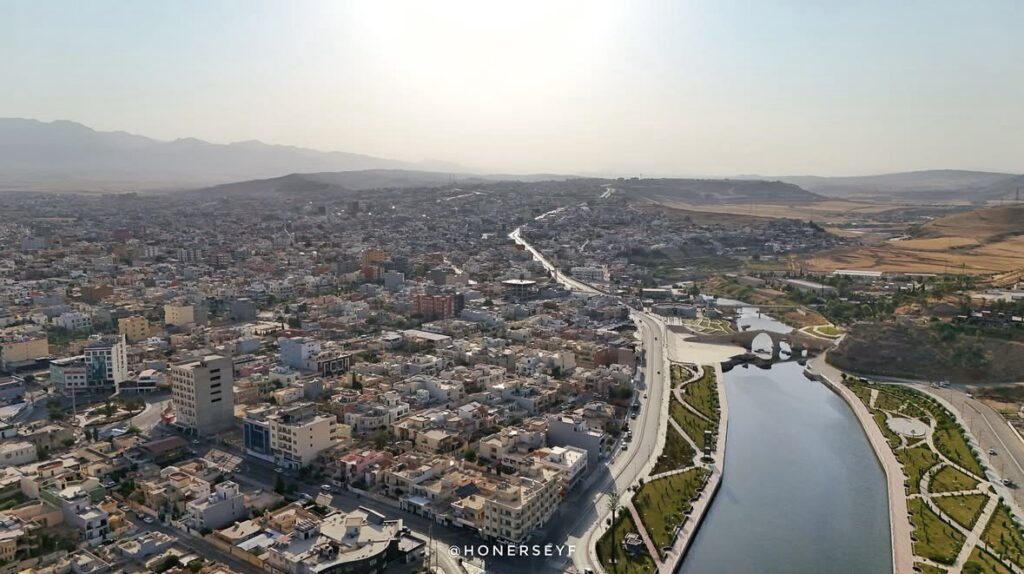
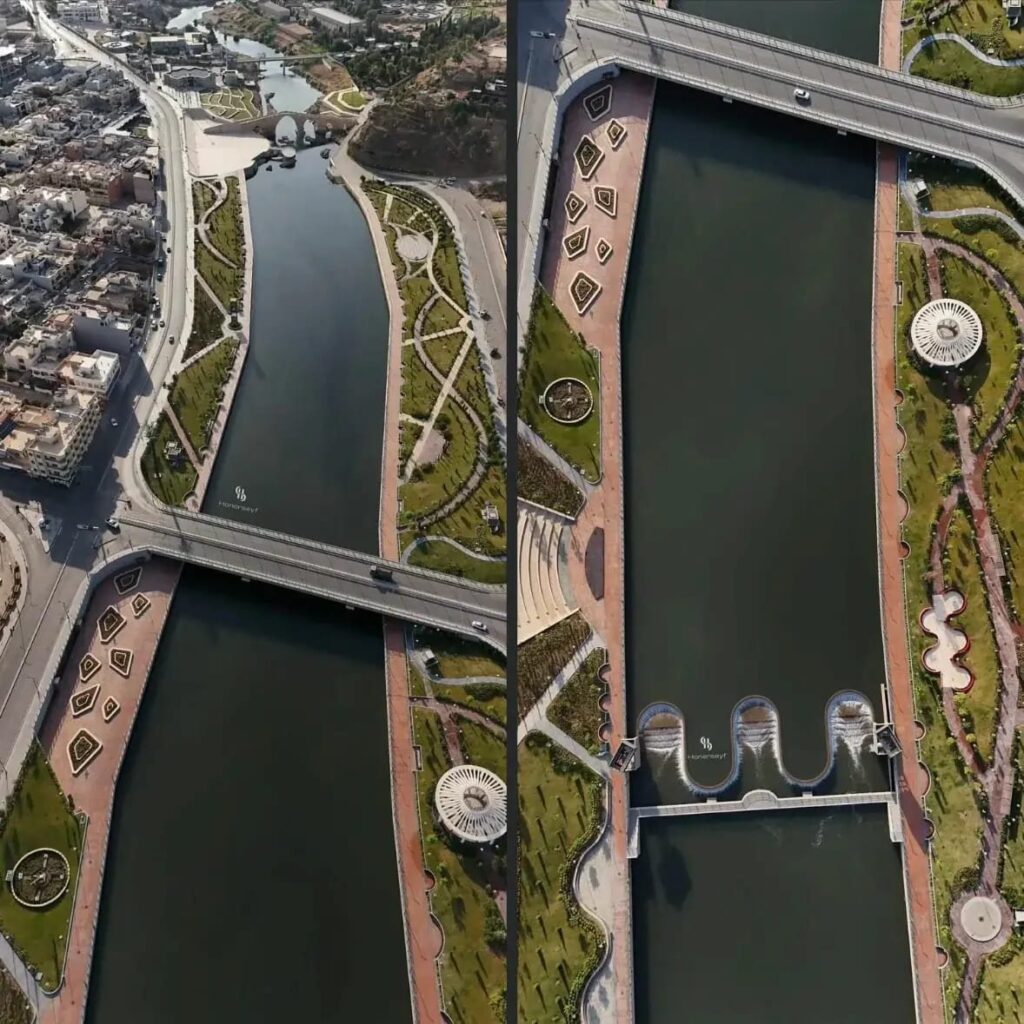
Urban Transformation and Riverfront Redevelopment in Zakho: Aerial View of the Khabur River Corridor.

2. Historical Context and the Role of the Khabur River

The Khabur River has defined the identity of Zakho and determined trade, culture and settlement patterns.The city has always been a successful trading hub due to its strategic positioning on Mesopotamian trade routes. The most notable example of this history is the well-known Delal Bridge (Pira Delal) a bridge built during the Abbasid period of time, which is bridge made of limestone as an arch and is used as crossing bridge as well as a cultural center. Historically, the riverbank was used as civic, social space that housed the mixed population of Zakho which consisted of the Kurds, Christians, Jews, and Yazidins all coming together celebrate Newroz. This historical context is crucial in understanding the redevelopment since the reconstruction of the Corniche is not only cultural reconnect but also enhancement of infrastructures so that the public spaces can be used as common urban spaces again.The current and the past objectives of Zakho are intertwined by means of reinvention of its history in terms of infrastructure, including enhanced pedestrian access to the Delal Bridge.

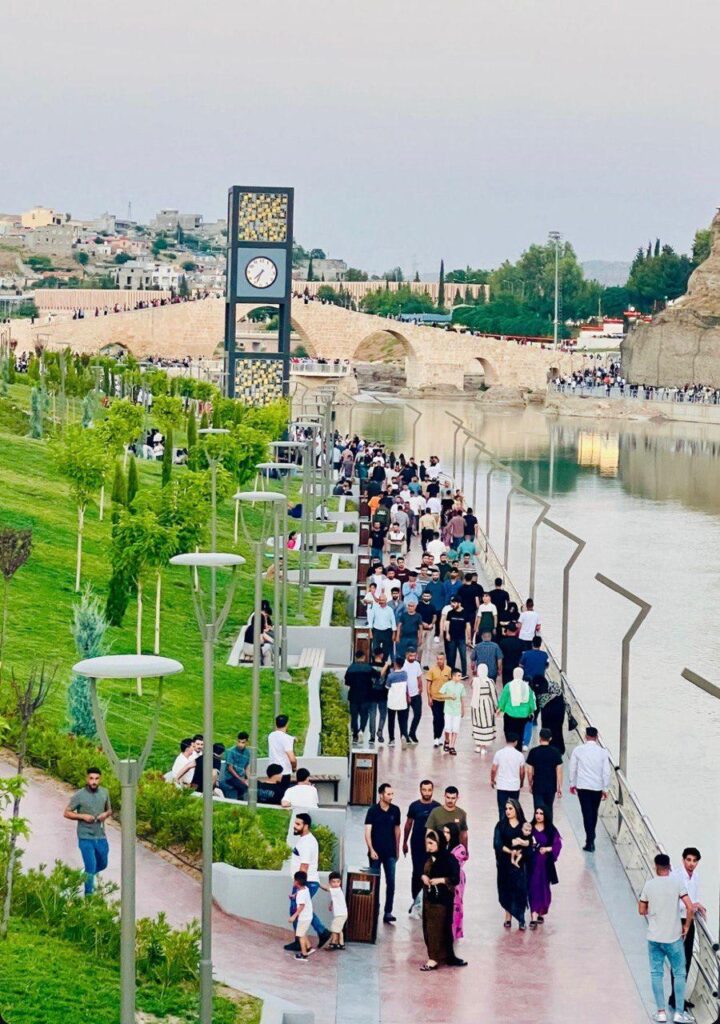
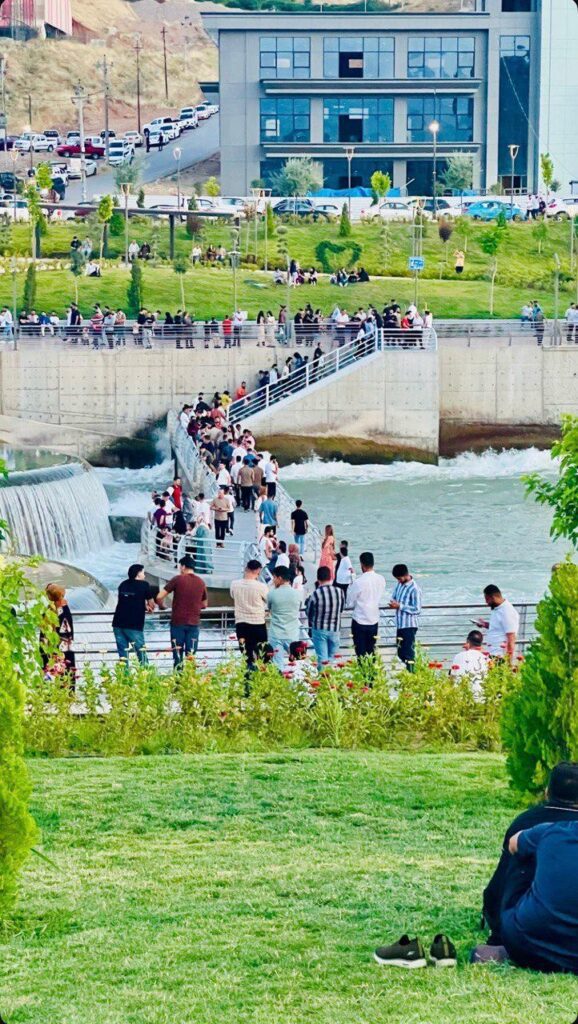
Revitalized Riverfront Public Space: Social Interaction and Urban livability along the Khabur River.

Source: Website Link

3. Infrastructure Growth: Expanding Mobility and Utilities along the Riverfront

The redevelopment of the Corniche is an important step in the infrastructure redevelopment of Zakho. The project is to widen roads along the river, construct bike and pedestrian lanes, add pedestrian bridges to the historic Delal Bridge, and so on. These improvements are aimed at alleviating traffic congestion, enhancing movement and connectivity between neighborhoods and neighborhoods along the riverfront. Parallel upgrades of utilities are the addition of improved sewage systems, underground power cables and new storm drainage systems that repair the old weaknesses that had previously led to urban flooding and river pollution. As being proven in the case of the 2023 floods, seasonal floods have been known to interfere with a regular water supply as well as destroy infrastructure in the past. These developments paint significant problems despite the fact that it is a big leap towards change of the city. Due to the increased infrastructural development, small businesses and informal riverbank traders who over the years have relied on the river advantage to conduct their economic operations might be forced out of the scene. Moreover, concrete embankments and other hard engineering options also pose a threat of altering the natural flow of rivers and reducing ecological strength.

Infrastructure Growth: Aerial View of the Khabur River Corridor.

4. Architectural and Urban Design Strategies for Redevelopment

The architecture of the Corniche is blend of cultural nature of Zakho and the concepts of the modern urban design. The features of the design that puts an emphasis on the movement of people include wide promenades shaded with native trees, bike lanes, and roadways that have been calmed to reduce automobile domination in the area.Examples of flexible public spaces include open plazas and amphitheater-like staircases and lawns which can facilitate a range of social interactions by being supportive of marketplaces, cultural festivals and informal get-togethers. To make it affordable to all income, the zoning strategy strikes a balance between the public lounging spots and riverbank cafes and stores with preference being given to the mixed use development. On the environmental level, the terraced green slopes make the riverbanks stable, and the stormwater runoff is regulated with the help of bioswales and permeable pavements.The architecture will contain elements that react to the climate: water-efficient gardens, wind belts, and shadowed walkways will be included to increase the thermal comfort in scorching Iraqi Kurdistan in summer. In case it is constructed to the plans, the Corniche will establish a precedent of climate-based and culture-focused urban planning in the region.

Zakho Corniche Riverfront Development

5. Environmental Challenges: Water Quality, Flooding, and Ecosystem Risks

For long-term viability, the Corniche must address the serious environmental stressors facing the Khabur River. Water quality is still being deteriorated by untreated wastewater and industrial effluents; investigations have found higher amounts of heavy metals downstream of Zakho. These issues are made worse by seasonal floods, which contaminate water supplies and destroy infrastructure. The necessity of including flood management in redevelopment plans is underscored by the 2023 floods, which caused 35% of Zakho’s residents to lose access to water services. The Corniche uses green infrastructure, such as bioswales, wetlands, and riparian plants, to improve riverbank stability and filter pollutants. However, there is still a conflict between ecological restoration and hard technical solutions (such concrete embankments for flood protection). Structures that are too stiff can damage biodiversity and disturb natural ecosystems, compromising the long-term health of the ecosystem. Zakho should give priority to nature-based solutions, such as restoring floodplains, establishing fish habitats, and preserving natural meanders wherever feasible, taking inspiration from international models such as Seoul’s Cheonggyecheon. The Corniche runs the risk of turning into a purely aesthetic project without a robust environmental monitoring system, providing aesthetic appeal without addressing the river’s more serious ecological problems.

Zakho Corniche

6. Social Challenges: Community Displacement, Equity, and Accessibility

The redevelopment of the infrastructure along the riverfront inevitably changes the social dynamics by incorporating the concerns of accessibility and relocation. The low income families and informal traders who have traditionally depended on trade along the river face the threat of being forced out as property prices shoot up and the pace of commercial development accelerates.Otherwise, this may increase socioeconomic inequality. To provide equity, the Corniche should have the general design principles of individuals with disabilities, a particular vending zone, and affordable leisure zone, as per the community consultations conducted by the Zakho administration. Although most people are celebrating the improved open spaces, others fear that the Corniche would be used by more visitors than residents. To ensure social sustainability, these interests should be harmonized so that the Corniche should not be a business district but a place that can be accessed by all. In addition, the long-term success will require active public participation in the maintenance and the decision-making process to give locals a sense of ownership. Without this, the Corniche is at risk of insulting the same populations it is meant to assist.

7. Balancing Heritage Conservation with Modernization

The Zakho heritage issue is one of the most sensitive aspects of the reconstruction under modernity at a high rate. The Delal Bridge which is a symbol of Kurdish identity needs to be conserved carefully so that it is not ruined structurally due to increasing tourism. Its historicity can be achieved without compromising its integrity through the use of heritage-sensitive lighting, interpretation signs and pedestrian movement restrictions.Moreover, the reconstruction should not be substituted with modern buildings, but it should also include the historic communities along the riverbanks, conventional marketplaces, and archaeological locations.Instead of covering the historic background with visual overload, the architectural character materials, colors, and scale of the Corniche are expected to enrich it. The Corniche is a place where the past and the present co-exist and therefore is able to incorporate its past to attract the cultural tourists and enable the locals to have a sense of identity. Unless this balance is preserved, the riverfront might turn into a commercial place of mediocrity, killing the unique cultural narrative that makes Zakho stand out among other Kurdish cities.

8. Public Space and Civic Life: The Corniche as a Social Connector

The renewal of the riverside as a social and cultural center is likely to make the Corniche become the primary civic space of Zakho.Casual get-togethers and social interactions in the community are encouraged by open-air markets, promenades of continuous seating and covered seating areas. To convert the riverside into a space of social living, the design incorporates spaces of Newroz celebrations, cultural performance and playgrounds that are kid friendly. Public-space theory argues that these conveniently located and multi-purpose spaces enhance unity in the city as residents have their own living room. Pedestrian bridges across the Khabur in Zakho will create social unity by improving the physical and symbolic connectivity of the historically segregated districts. However, to maintain such inclusiveness, one will need to be forceful in management; to make the Corniche accessible to everyone in the locality, cleanliness, safety, and affordable facilities should be accorded the first priority. With its success, the Corniche can create a regional precedent of civic-oriented urban renewal of Kurdistan.

-1

9. Economic, and Tourism Impacts among Governance Support

The reconstruction of the Zakho Corniche should boost the economic development of the area through more tourist attraction and commercial opportunities. Its strategic position close to the tri-border area is a potential point of entry of tourists form Syria, Turkey, and Iraq, and cultural tourism can be increased by heritage-related attractions such as the Delal Bridge and restored marketplaces. It is believed that such will benefit small vendors, artisan markets, and cafes along the river and generate employment and entrepreneurship. Justice in governance is necessary since unregulated commercialization can send regional traders away and restrict access by the masses. The Corniche needs strict zoning laws, open policy frameworks and continual funds to maintain the project. The Zakho local government should institutionalize long-term urban management practices, which include environmental monitoring and community participation, even though the Kurdistan Region will be offering financial and technical support. The inclusion could be ensured with the help of the three-legged method of UN-Habitat that incorporates design standards, regulatory adjustments, and financial sources. Active citizen involvement will be necessary in order to maintain the level of public trust and ensure that economic gains as the Corniche will be transformed to a commercialized zone.

10. Comparative Insights from Other Riverfront Redevelopments, and Future Vision

Redefining the city’s relationship with the Khabur River, the Zakho Corniche reconstruction has the potential to become a game changing paradigm for sustainable urban regeneration in Kurdistan. Decades of unchecked growth, unofficial construction, and pollution caused the riverfront, which was once a hub of trade and cross-cultural exchange, to lose much of its civic and ecological significance. The project aims to increase public accessibility, improve mobility, and reduce environmental risks, such as the seasonal floods that interrupted water services during the 2023 flood event, by implementing modern infrastructure, such as widened roads, bike and pedestrian lanes, upgraded sewage systems, and flood-control embankments. The Corniche’s architecture seeks to honor Zakho’s cultural identity by combining climate-responsive, pedestrian-friendly design with heritage-sensitive features, locally produced materials, and shaded promenades. Economically, it is anticipated to boost travel and open up commercial prospects, which will help small businesses and local vendors. But there are significant obstacles to the redevelopment. Hard engineering interventions endanger biodiversity and ecological resilience, while rising land values run the risk of uprooting low-income neighborhoods and unofficial sellers. Strict zoning enforcement, inclusive planning, and transparent governance will be necessary to strike a balance between social justice and economic progress. 

The re-definition of the city and the Khabur River relationship through the reconstruction of Zakho Corniche can be used as a game changing paradigm in sustainable regeneration of urban areas in Kurdistan.Centuries of uncontrolled development, informal building and contamination resulted in the riverfront that was initially a place of commerce and cross-cultural interaction to become something with little civic and ecological value. The project is expected to make areas more accessible to people, enhance their mobility, and decrease their environmental hazard, including the seasonal floods that disrupted water services in the 2023 flood event, through the introduction of modern infrastructure, including widened roads, bike and pedestrian paths, improved sewage systems, and flood-control embankments. The architecture of the Corniche attempts to celebrate the cultural identity of Zakho through the integration of climate-sensitive and people-friendly designs, heritage-sensitive elements, locally manufactured materials, and shaded promenades. It is expected to bring positive economic impacts by increasing travel and opening up business opportunities, benefiting the small businesses and local vendors.Nonetheless, there are huge barriers to the redevelopment.  Stern enforcement of zoning, comprehensive planning, and open administration will be required to balance social justice and economic development.

1. Al-Hafith, O., & Al-Ansari, N. (2023). Flood risk assessment and riverbank stabilization strategies in northern Iraq. Journal of Environmental Hydrology, 31(2), 45–60. https://doi.org/10.1234/jeh.2023.03102

2. Al-Qaysi, B., & Saleh, M. (2021). Urban regeneration and cultural heritage preservation in Iraqi Kurdistan. International Journal of Architectural Research, 15(1), 72–88. https://doi.org/10.1108/ARCH-03-2021-005

3. Çelik, Z. (2019). Heritage conservation in Middle Eastern riverfront redevelopment projects. Cities, 92, 113–123. https://doi.org/10.1016/j.cities.2019.03.011

4. Hwang, J., & Lee, K. (2018). Cheonggyecheon restoration and its implications for urban sustainability. Urban Studies, 55(3), 598–615. https://doi.org/10.1177/0042098016679124

5. Kurdistan Regional Government (KRG). (2024). Zakho Corniche redevelopment master plan. Erbil: Department of Municipalities and Tourism.

6. Mansour, H., & Abdullah, S. (2022). Water quality deterioration and heavy metal pollution in the Khabur River. Environmental Monitoring and Assessment, 194(5), 233–248. https://doi.org/10.1007/s10661-022-09908-7

7. United Nations Human Settlements Programme (UN-Habitat). (2020). The three-legged approach to sustainable urban development. Nairobi: UN-Habitat Publications.

8. Yilmaz, H., & Akyol, E. (2020). Balancing modernization and heritage in Istanbul’s Golden Horn redevelopment. Journal of Urban Design, 25(6), 845–862. https://doi.org/10.1080/13574809.2020.1745103

9. Zakaria, R., & Mohammed, L. (2023). Public perception of riverfront redevelopment projects in Iraqi Kurdistan. Journal of Planning and Development, 19(4), 301–319. https://doi.org/10.1080/09718923.2023.1190452

10. Zakho Municipality. (2023). Community consultation report on the Corniche redevelopment. Zakho: Municipal Planning Office.
Şeyma İncin

Seyma Incin is an urban planner with an interest in research and community development. She is passionate about creating inclusive, well-organized, and sustainable communities through education, participation, and thoughtful planning. Her work often focuses on understanding local needs and designing approaches that strengthen public well-being and social connection. Şeyma is dedicated to supporting community-led initiatives and believes in the power of collaboration to build healthier, more resilient environments.

Leave a Reply

Your email address will not be published. Required fields are marked *

This site uses Akismet to reduce spam. Learn how your comment data is processed.

Related articles

UDL Thesis Publication 2025

Call for Abstracts now open!

UDL GIS

MASTERCLASS

Urban Mapping, Analysis and Representation

Session Dates

12th-16th October, 2026

Curating the best graduate thesis projects globally!

Publish your work and get recognized globally!

Free E-Book

From thesis to Portfolio

A Guide to Convert Academic Work into a Professional Portfolio”

Urban Design Lab

Be the part of our Network

  • Stay updated on workshops, design tools, and calls for collaboration

  • Thesis Report Writing for Architecture and Urban Studies

    Join Our WhatsApp Group

    Recent Posts

    Sign up for our Newsletter

    “Let’s explore the new avenues of Urban environment together “

    E-Book- From Thesis To Portfolio

    A Guide to Convert Academic Work into a Professional Portfolio