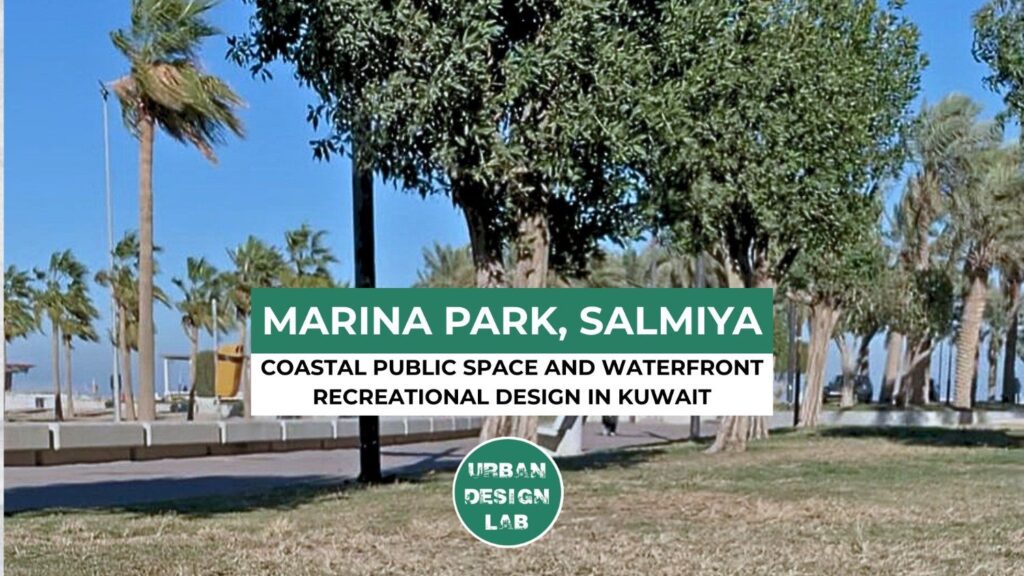
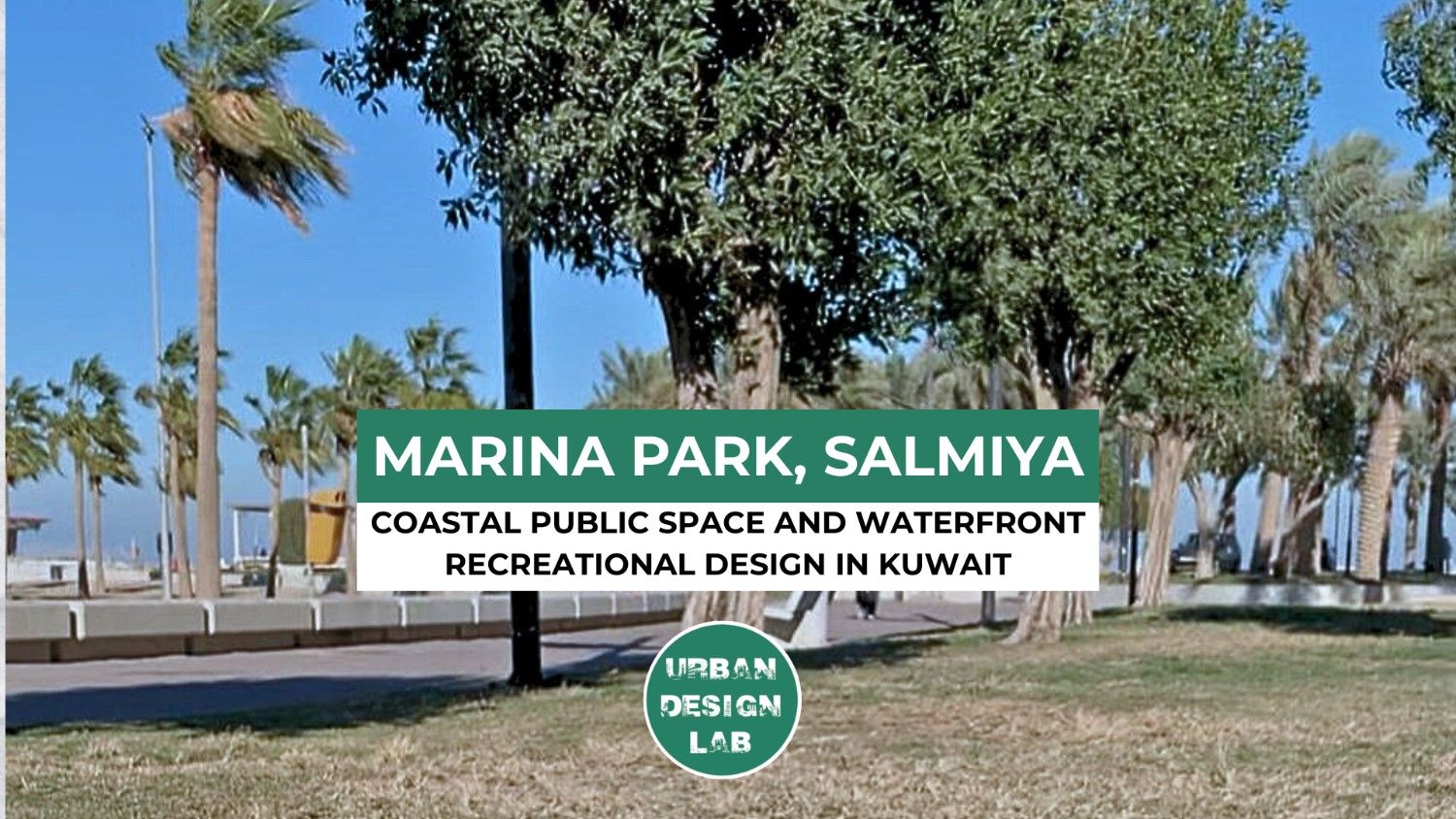
Marina Park in Salmiya, Kuwait, is a public coastal space that combines recreational design, green areas, and waterfront access. Salmiya’s coastal zone has transformed over the years from a small fishing community to a busy urban district with commercial, residential, and leisure developments. Marina Park provides an accessible green space for residents and visitors, offering lawns, shaded seating, activity zones such as a skatepark and basketball court, and a walking and cycling track that connects to the waterfront. These features encourage both physical activity and social interaction.
The park also reflects principles of blue-green urban design, where water and vegetation work together to create a comfortable microclimate, reduce heat, and enhance environmental quality. Socially, Marina Park supports gatherings, informal recreational activities, and community engagement, making it a flexible and inclusive public space. Studies indicate that parks with greenery and access to water tend to attract consistent use, even in areas with challenging climates.
By integrating natural, social, and recreational elements, Marina Park demonstrates how urban waterfronts can serve multiple functions. It highlights the value of accessible, well-designed coastal public spaces in supporting environmental resilience, community well-being, and quality of urban life.
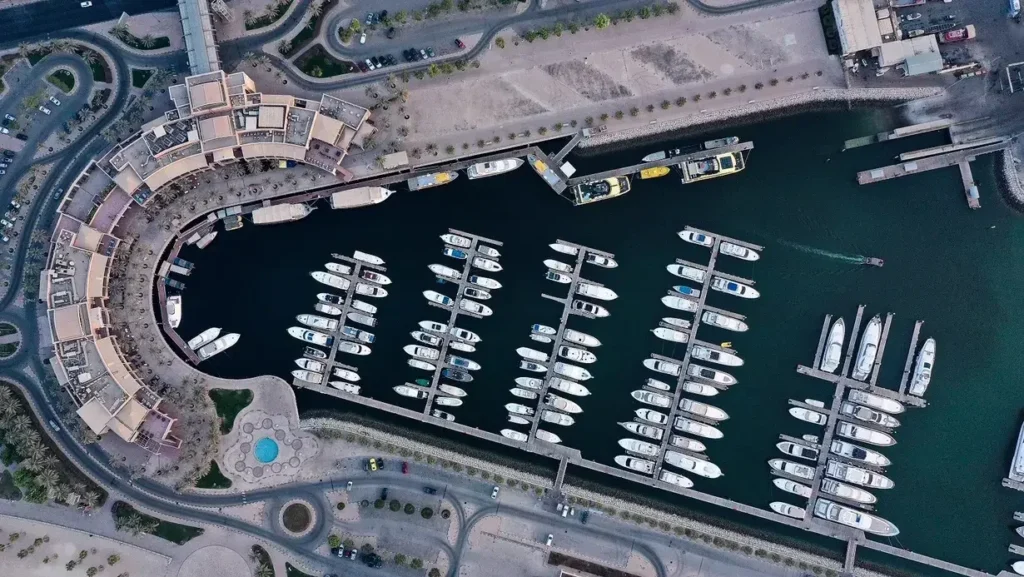
Evolving from a traditional fishing community to one of Kuwait’s most bustling, Salmiya’s coastal zone has undergone a significant transformation. Today, it stands as a lively urban district along the picturesque Gulf coast, with commercial areas lining the shoreline and residential neighborhoods located further inland. Since its opening in February 2002, Marina Mall has become a defining landmark of Salmiya, to the extent that the area is often synonymous with the mall itself. Combining traditional Middle Eastern culture and contemporary lifestyle experiences, it has played a pivotal role in showcasing the country’s rapid development. Marina Crescent was later extended, creating a waterfront corridor for leisure and upscale dining experiences (Travel Setu).
Nestled strategically between these key developments is Marina Park, playing a vital role in integrating green public spaces within a densely developed coastal context. Aligning with the Kuwait City Urban Development 2030 Plan, it reflects not just a green space but a sustainable and community-oriented environment. This is significant because coastal cities often face conflicts between preserving green spaces and accommodating urban development. Stakeholders may have differing perspectives on waterfront area allocation, making public access planning challenging (Gomez et al., 2017).
Top View of Marina Mall along with its Waterfront as a landmark in Salmiya, Kuwait.
Urban Accessibility and Waterfront Comfort in Marina Park
According to the UN SDG 11 Report, 2022, only 37.8% of urban residential neighborhoods are within a 400-meter walking distance to an open public space, affecting approximately 45.2% of the urban population. Although not within the ideal 400-meter walking distance for all residents, Marina Parks remains a crucial green space for the community, with a walking distance of approximately 500-800 meters for those in central and northern Salmiya.
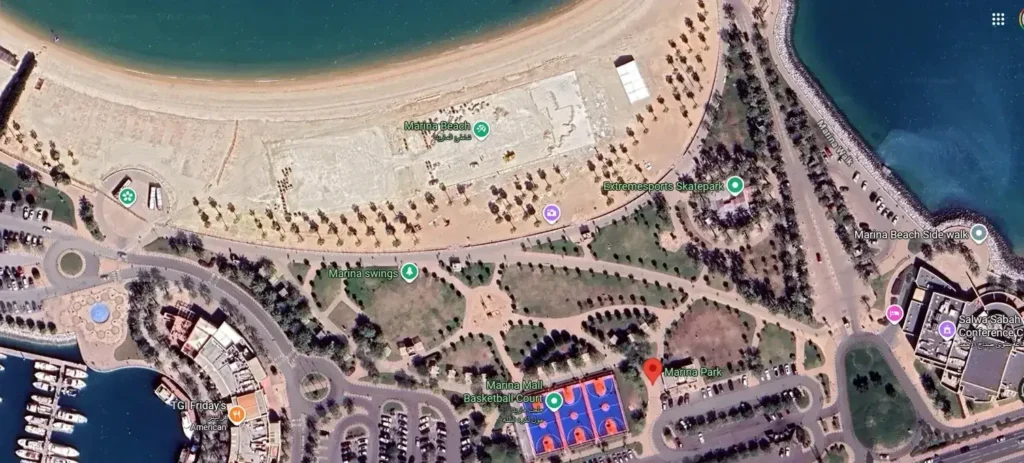
Marina Park offers a unique setting, where the open green space lies just meters away from the Marina Beach and the sea, creating an ideal environment for a leisurely walk or an evening picnic. With a long cycling and walking track that connects to the Marina waterfront sidewalk, shaded seating areas on the grass, public toilets, and small kiosks, the park caters to a wide variety of age groups and interests. The gentle sea breeze contributes to a refreshing microclimate, providing much-needed comfort in Kuwait’s hot and arid conditions. Together, all these features make the park not just a recreational space but a vital urban retreat that balances social, environmental, and aesthetic needs, showcasing the importance of accessible, well-designed green spaces in coastal cities.
Map showing Marina Park and its surroundings highlighting the unique green space near the beach.
Source: Website Link
Landscape Design and Coastal Integration
The park is divided into distinct zones with green spaces for relaxation, shaded seating areas, and activity spaces. The long cycling and walking track not only encourages physical activity but also serves as a connective green spaces that link the park to the larger Marine waterfront sidewalk, creating a blue-green recreational corridor.
Studies of Salmiya’s urban fabric highlight that, while public space activity across Kuwait is generally limited, parks that integrate greenery with coastal access, such as Marina Park, see more consistent community use, particularly during cooler evenings (Gomes, Al-Ragam & Alshalfan, 2021). At the same time, environmental research confirms that well-vegetated urban areas record significantly lower land surface temperatures compared to built-up surroundings, underscoring the microclimatic benefits of Marina Park’s tree cover and shaded lawns (Al-Rashidi et al., 2024). The design of Marina Park, with illuminated walking and cycling tracks, shaded lawns, and open courts, supports this pattern by allowing for both active recreation and leisurely social gatherings after dark, allowing a temporal pattern of use. Together, these qualities show how the park’s design integrates the natural advantages of its coastal location with resilient landscaping, creating a multifunctional public space that is both socially vibrant and ecologically valuable.
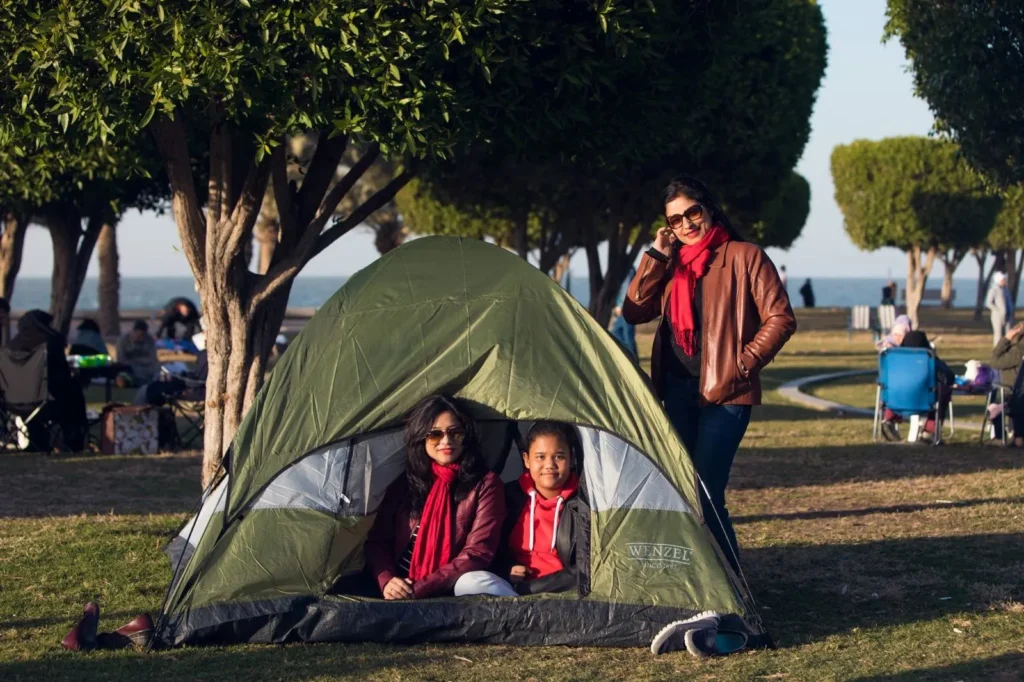
In Kuwait, there are a few niche, informal, yet culturally embedded social practices, such as daily women’s morning tea gatherings (chai itahha), men’s gatherings (diwaniya), and communities playing cricket. These practices play a large role in how public spaces are used in Kuwait (Alabdullah, 2020). While Marina Park may not explicitly have dedicated spaces for these activities, it creates an environment with benches for gathering, open lawns, shade, and courts that can seamlessly incorporate and support them. In this sense, the park functions as a flexible social stage that can adapt to Kuwait’s diverse cultural fabric.
Research emphasized that parks in Kuwait are not only used for walking or play, but also as social gathering spaces. Collective gatherings for rituals and informal community life increase users’ stay duration and attachment to the place, even under challenging climatic conditions. To add to this, an applied urban policy study in Salmiya highlights that pedestrian activity and walkability in Kuwait remain limited; however, spaces that feature a good mix of greenery and coastal access show more consistent use, especially during cooler evenings (Gomes, Al-Ragam, & Alshalfan, 2021). Marina Park, situated directly along the waterfront, is a socially resilient landscape integrated into everyday urban life.
Informal Social Gatherings in Marina Park.
Source: author
Coastal Identity and Blue-Green Futures
As one of the few freely accessible public parks along the Salmiya waterfront, the Marina Park offers a “window to the Gulf”, embracing the history and significance the sea has always had in the everyday life of the local people in Kuwait. For centuries, Kuwait’s coastal communities relied on the Gulf for fishing, trade, and pearl diving, shaping the social and economic life of the city. Marina Park connects residents to this maritime heritage, allowing them to experience the coast as a shared public resource rather than a privatized space.
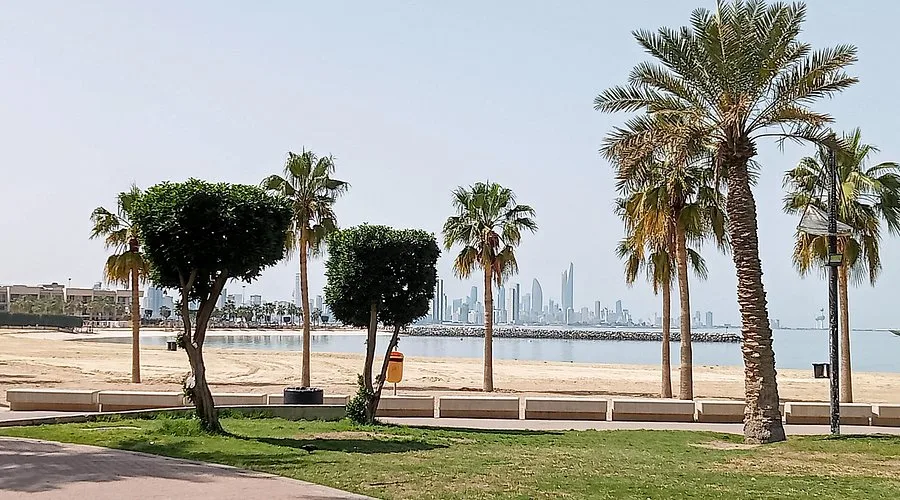
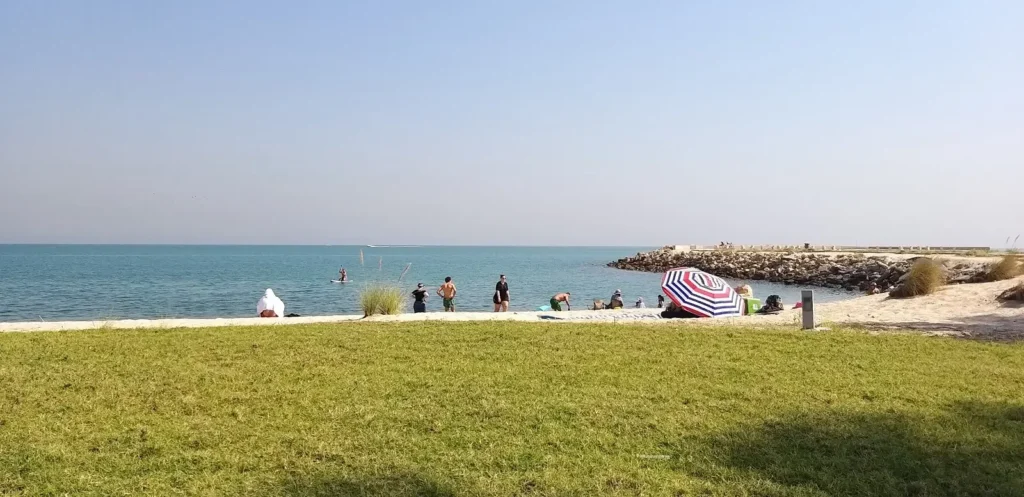
Due to the nature of the location of Marina Park, where the sea, beach, and green pockets all meet, it creates the perfect integration of blue-green urbanism concepts. The convergence of water and vegetation provides both environmental and social benefits, enhancing microclimates, mitigating urban heat, and offering cooling relief in Kuwait’s arid coastal setting (Al-Rashidi et al., 2024). Its success highlights the importance of accessible, resilient, and culturally meaningful blue-green infrastructure in Kuwait, offering a model for future waterfront developments that support both environmental sustainability and social vitality.
Where Sea, Sand, and Greenery Meet: Marina Park, Kuwait.
Marina Park demonstrates the potential of waterfront public spaces to shape the future of urban living in coastal cities. Its design highlights how careful planning can transform underutilized coastal areas into socially engaging, environmentally responsive, and culturally meaningful spaces. The park exemplifies how integrating natural features, such as the shoreline and greenery, with recreational infrastructure can create resilient urban landscapes that respond to climatic challenges while enhancing community engagement.
The experience of Marina Park offers important lessons for urban planners and policymakers in Kuwait and the Gulf region. Prioritizing public access along waterfronts ensures that coastal areas remain shared resources rather than being dominated by private developments. Incorporating blue-green infrastructure can address environmental concerns, such as urban heat and biodiversity loss, while simultaneously supporting social vitality.
References
Alabdullah, M. (2020). Cultural practices and social use of urban parks in Kuwait. Journal of Public Space, 5(3), 45–60. https://doi.org/10.32891/jps.v5i3.1234
Al-Faraj, F., & Salim, M. (2018). Urban green spaces and vegetation in arid coastal cities: Impacts on microclimate and public use. Environmental Management Review, 12(2), 78–92. https://doi.org/10.1007/s11356-018-1856-4
Al-Rashidi, S., Al-Harbi, A., & Al-Mutairi, H. (2024). Vegetation and surface temperature relationships in Kuwait urban areas. Journal of Arid Environments, 215, 104–119. https://doi.org/10.1016/j.jaridenv.2024.104119
Al-Mutairi, K. (2020). Coastal urbanization and public space challenges in Kuwait. Sustainable Cities and Society, 53, 101–116. https://doi.org/10.1016/j.scs.2020.101833
Gomes, R., Al-Ragam, R., & Alshalfan, N. (2021). Pedestrian movement and public space usage in Salmiya, Kuwait: Applied urban policy study. Urban Studies and Planning, 8(4), 211–225
Gomez, F., Al-Ragam, R., & Alshalfan, N. (2017). Waterfront allocation conflicts in Gulf coastal cities. Journal of Urban Planning and Development, 143(2), 1–13. https://doi.org/10.1061/(ASCE)UP.1943-5444.0000371
Al-Faraj, F., & Salim, M. (2019). Blue-green infrastructure in Gulf cities: Principles and case studies. Environmental Sustainability Journal, 14(1), 33–50.
Shubhangi Sharma
About the Author
Curious emerging researcher with a focus on sustainable development, spatial justice, and the everyday life of cities. With a background in architecture, Shubhangi Sharma’s work is grounded in real-world challenges and driven by a belief that design can and should do more.
“Let’s explore the new avenues of Urban environment together “
We use cookies on our website to give you the most relevant experience by remembering your preferences and repeat visits. By clicking “Accept”, you consent to the use of all the cookies. Read More
This website uses cookies to improve your experience while you navigate through the website. Out of these, the cookies that are categorized as necessary are stored on your browser as they are essential for the working of basic functionalities of the website. We also use third-party cookies that help us analyze and understand how you use this website. These cookies will be stored in your browser only with your consent. You also have the option to opt-out of these cookies. But opting out of some of these cookies may affect your browsing experience.
Necessary cookies are absolutely essential for the website to function properly. These cookies ensure basic functionalities and security features of the website, anonymously.
Cookie
Duration
Description
cookielawinfo-checkbox-analytics
11 months
This cookie is set by GDPR Cookie Consent plugin. The cookie is used to store the user consent for the cookies in the category "Analytics".
cookielawinfo-checkbox-functional
11 months
The cookie is set by GDPR cookie consent to record the user consent for the cookies in the category "Functional".
cookielawinfo-checkbox-necessary
11 months
This cookie is set by GDPR Cookie Consent plugin. The cookies is used to store the user consent for the cookies in the category "Necessary".
cookielawinfo-checkbox-others
11 months
This cookie is set by GDPR Cookie Consent plugin. The cookie is used to store the user consent for the cookies in the category "Other.
cookielawinfo-checkbox-performance
11 months
This cookie is set by GDPR Cookie Consent plugin. The cookie is used to store the user consent for the cookies in the category "Performance".
viewed_cookie_policy
11 months
The cookie is set by the GDPR Cookie Consent plugin and is used to store whether or not user has consented to the use of cookies. It does not store any personal data.
Functional cookies help to perform certain functionalities like sharing the content of the website on social media platforms, collect feedbacks, and other third-party features.
Performance cookies are used to understand and analyze the key performance indexes of the website which helps in delivering a better user experience for the visitors.
Analytical cookies are used to understand how visitors interact with the website. These cookies help provide information on metrics the number of visitors, bounce rate, traffic source, etc.
Advertisement cookies are used to provide visitors with relevant ads and marketing campaigns. These cookies track visitors across websites and collect information to provide customized ads.