

Evidence based urban policy article
Housing has returned to the centre of global urban policy because it is no longer credible to treat it as a narrow construction-sector issue. The UN-Habitat World Cities Report 2026 frames the global housing crisis as the accumulated result of inadequate investment, rapid urbanisation, economic instability, conflict, displacement and climate-related shocks. Its estimate is stark: up to 3.4 billion people lack access to secure, safe and adequate housing, including more than one billion people living in informal settlements and slums. The report also estimates that the global housing deficit increased from 251 million units in 2010 to 288 million in 2023. UN-Habitat World Cities Report 2026
These figures should be interpreted carefully. Housing inadequacy is not a single measurable condition. It can include homelessness, overcrowding, unsafe structures, insecure tenure, unaffordable rent, inadequate water and sanitation, exposure to heat or flooding, and long-distance displacement from work and services. A unit-deficit measure cannot capture all these conditions. Yet this complexity is precisely why the crisis demands a broader policy response.
This article argues that the future of housing policy cannot be reduced to increasing the number of dwellings. It must instead govern the relationship between land, infrastructure, tenure, finance, urban form, climate risk and public accountability. The most important shift proposed by UN-Habitat’s 2026 agenda is conceptual as much as operational: housing must be treated as essential urban infrastructure and a component of the right to an adequate standard of living, rather than solely an asset class or a residual welfare programme.
The 2026 Diagnosis Housing Inadequacy Is an Urban Systems Failure
The scale of housing need is linked to a structural mismatch between urban population growth and the capacity of cities to provide affordable, serviced and well-located homes. UN-Habitat identifies decades of underinvestment, insufficient supply, rising land values, displacement and recurrent crises as interconnected drivers. This diagnosis matters because it rejects the simplistic proposition that the crisis results only from a shortage of buildings. World Cities Report 2026
The global monitoring picture reinforces that concern. The UN reports that nearly 1.1 billion people lived in slums or slum-like urban conditions in 2022, while a further two billion people are expected to live in such conditions over the next 30 years if current patterns continue. The statistic is not evidence that every city will follow the same path. It does, however, show that the challenge is not confined to a small group of low-income countries or to informal settlements alone. United Nations SDG Goal 11
Housing pressure now appears in distinct but connected forms. In many lower-income cities, it takes the form of incremental self-built housing, insecure tenure and settlements without reliable basic services. In higher-income cities, it often takes the form of rent burdens, overcrowded shared accommodation, homelessness, limited social-rental provision and exclusion from locations near employment. In cities affected by conflict, disaster or climate stress, it takes the form of damaged homes, forced displacement and emergency shelter that too often becomes semi-permanent.
The common issue is not simply tenure. It is the failure to deliver adequate housing in places where households can sustain everyday life. The international human-rights framework is clear that housing is part of an adequate standard of living. Adequacy therefore extends beyond roof and walls to affordability, security, habitability, accessibility, location and cultural appropriateness. Universal Declaration of Human Rights Article 25
This perspective changes the policy question. Rather than asking how many homes can be delivered, governments must ask what combination of homes, land rights, services, mobility and neighbourhood conditions enables people to live securely and participate in urban life.
Why Supply Alone Will Not Resolve the Crisis
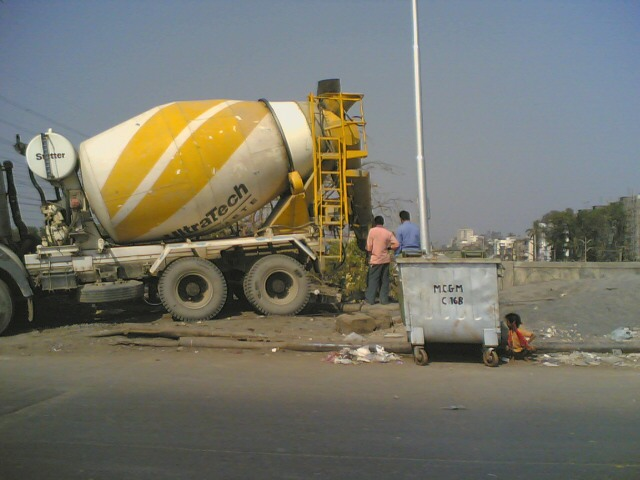
Increasing supply is necessary in many cities, but it is not sufficient. A housing programme can add large numbers of units while still failing lower-income households if homes are unaffordable, poorly connected, insecurely occupied or built where access to work and public services is weak. The same issue applies when private investment increases nominal supply but produces only high-cost ownership housing, short-term rentals or speculative vacancy.
UN-Habitat’s 2026 report is important because it places the housing deficit alongside insecurity, inadequate infrastructure and social exclusion rather than treating the deficit as a purely quantitative gap. This is a more defensible framework for policy because it recognises that households experience housing through recurring monthly costs and daily spatial conditions, not through national completion statistics. UN-Habitat World Cities Report 2026
The OECD similarly argues that effective housing reforms must address economic efficiency, social inclusion and environmental sustainability together. Its framework is especially relevant to cities where conventional measures have become politically attractive but analytically narrow: buyer subsidies, isolated peripheral estates, deregulation without affordability safeguards, or short-term emergency payments that do not expand long-term affordable stock. OECD An Agenda for Housing Policy Reform 2024
Supply-led policy also faces three practical limitations. First, land is not neutral. The price, ownership pattern and servicing condition of urban land determine whether new housing can be affordable. Second, housing markets are segmented. New private supply may relieve pressure in some parts of a metropolitan market, but its benefits do not necessarily reach households excluded by low or unstable incomes, discrimination, insecure employment or lack of access to formal credit. Third, location affects total affordability. A household may obtain a lower-cost dwelling on the urban fringe but face higher transport expenditure, longer travel times, unreliable access to schools and healthcare, and greater exposure to climate hazards.
The future policy challenge is not to abandon production. It is to make production accountable to occupancy, affordability, location and long-term public value.
Informality Must Be Treated as a Policy Starting Point Not a Planning Failure
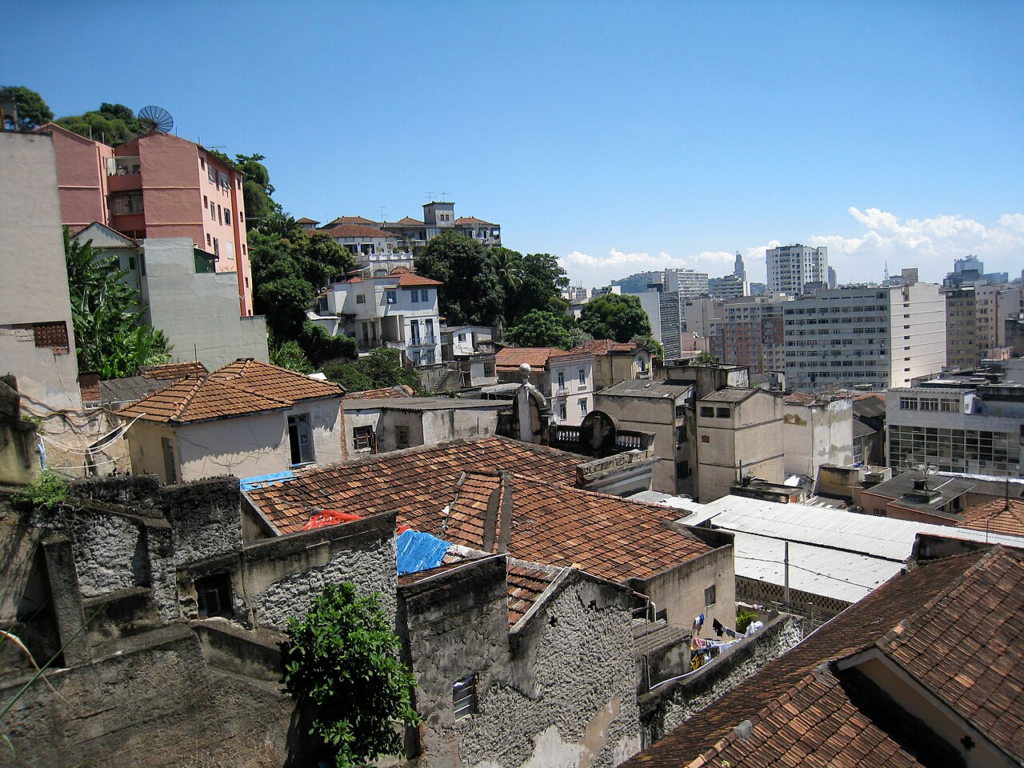
One of the strongest implications of UN-Habitat’s 2026 analysis is that informal housing cannot be addressed only through clearance, relocation or post hoc regularisation. More than one billion people live in informal settlements and slums, according to the report. Informality is therefore not peripheral to the urban housing question. It is one of its principal forms. UN-Habitat World Cities Report 2026
Informal settlements are diverse. Some are long-established, economically productive neighbourhoods with dense social networks and strong proximity to work. Others are located on hazardous land, lack drainage or sanitation, or are exposed to eviction. A policy that treats all informal settlements as interchangeable will fail both technically and socially.
The appropriate policy response depends on local evidence. In-situ upgrading may be preferable where neighbourhoods are viable but infrastructure, tenure security and housing safety are deficient. Managed relocation may be unavoidable where risks cannot reasonably be mitigated, but it should not be presented as successful merely because households have been moved. Its success must be judged by secure tenure, affordability, access to livelihoods, service quality and residents’ ability to remain in the new location.
UN-Habitat’s long-standing housing and slum-upgrading approach proposes a dual strategy: increase access to serviced land and new housing while undertaking city-wide upgrading and prevention programmes. The logic remains sound. Upgrading existing settlements without preventing new exclusions merely shifts the problem spatially. UN-Habitat Housing and Slum Upgrading
The core policy lesson is that informal housing should be incorporated into metropolitan planning, not treated as an exception to it. That requires parcel and tenure mapping, service planning, neighbourhood-level risk assessment, community participation and fiscal arrangements that enable local governments to maintain infrastructure after initial upgrading.
The Return of Public Social and Non Market Housing
The 2026 housing agenda points towards a renewed role for the public sector, but this should not be misunderstood as an argument for one uniform state-built model. The relevant question is institutional: which actors can retain affordability over time, acquire or assemble land, manage housing well, and prevent public subsidy from being converted into private windfall gains?
The OECD defines social rental housing as accommodation provided below market prices and allocated through rules rather than market mechanisms, while noting that its form and governance differ substantially across countries. This distinction is useful. A durable housing system does not require a single ownership model. It requires a portfolio that may include municipal housing, housing associations, cooperatives, community land trusts, limited-equity ownership and regulated private rental. OECD Affordable Housing Database 2024
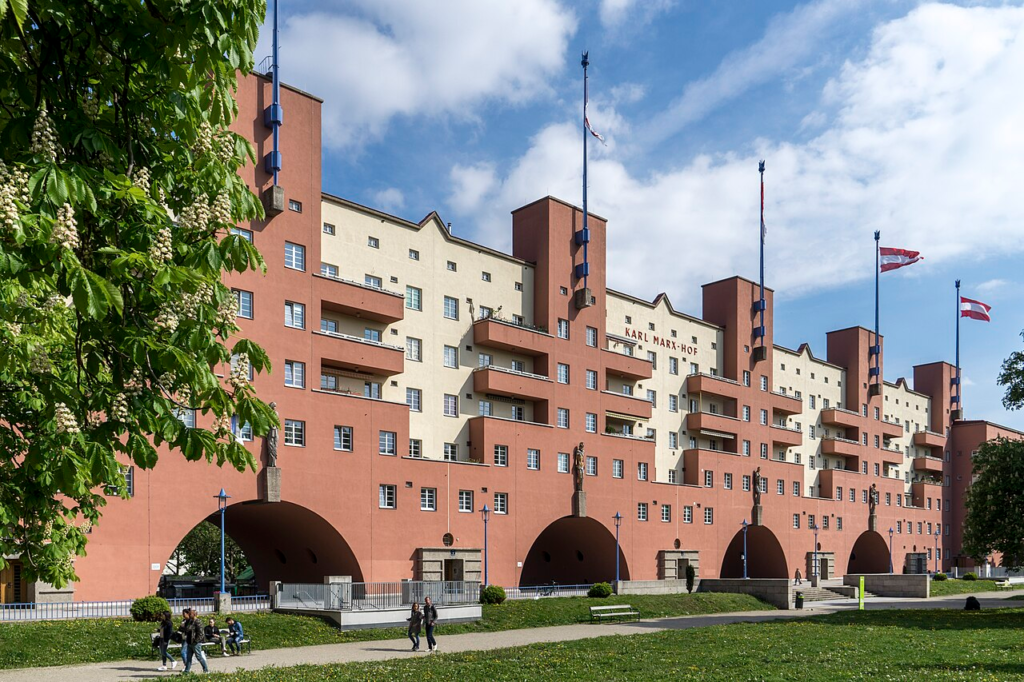
Vienna is frequently cited in housing debates because of its large municipal and limited-profit housing traditions. It should not be copied mechanically. The city’s approach rests on historical land policy, dedicated institutions, long-term finance and continuing public commitment, conditions that cannot simply be imported elsewhere. Nevertheless, it illustrates an important principle: governments can shape housing markets by maintaining permanent non-market or cost-controlled stock rather than relying exclusively on temporary subsidies.
UN-Habitat’s Strategic Plan for 2026 to 2029 identifies adequate housing as a pathway to poverty reduction, economic opportunity and social inclusion. The role of public policy is not merely to correct a market failure at the margins. It is to establish the institutional conditions under which housing can remain adequate and affordable through changing economic cycles. UN-Habitat Strategic Plan 2026 to 2029
Housing Policy Is Climate Transport and Public Health Policy
The policy future implied by the UN-Habitat report is not a separate housing silo. Housing choices determine exposure to heat, flood and landslide risk; the energy required for cooling and heating; access to work and education; and the capacity of households to recover from shocks.
UN-Habitat’s 2024 World Cities Report stresses that climate risks interact with urban inequality and that people in informal housing are often more exposed because of location, inadequate infrastructure and limited adaptive capacity. The implication is not that all low-income housing should be newly built. Retrofitting, drainage improvement, cool-roof measures, shade, water security and local energy upgrades may be more equitable and less disruptive than demolition and relocation. UN-Habitat World Cities Report 2024
Housing and transport policy must also be coordinated. Peripheral development may lower land acquisition costs, but it can increase household transport burdens and lock residents into long commutes. Compact, mixed-use urban form near high-capacity public transport can improve access, but only if land-value increases are managed so that lower-income households are not displaced.
A credible climate-responsive housing policy should include location-sensitive land-use planning that avoids predictable hazards; minimum standards for ventilation, thermal comfort, water, sanitation and structural safety; low-carbon materials and energy retrofits where locally appropriate; public transport and walking access as part of housing appraisal; protection against climate-related displacement; and resident participation in design, upgrading and maintenance. These measures have trade-offs. Higher standards may increase capital costs in the short term, but ignoring operating costs, disaster losses and health impacts creates a false economy.
From Targets to Accountability What Future Housing Policy Should Measure
Housing policy often fails at the monitoring stage. Governments may count homes sanctioned, loans approved or land parcels released, while households experience affordability through rent, debt, travel costs, service reliability and security of tenure. Better metrics are therefore essential.
The UN’s SDG target 11.1 calls for access for all to adequate, safe and affordable housing and basic services, alongside slum upgrading, by 2030. Yet the target cannot be assessed adequately through one national number. Cities require disaggregated data by income, gender, disability, age, migrant status, tenure, location and exposure to environmental risk. United Nations Sustainable Development Goal 11
A stronger accountability framework would measure affordability, including housing plus basic-service and transport costs; adequacy, including crowding, safety, ventilation, water, sanitation and energy; security, including tenure and eviction risk; location, including access to employment and public transport; resilience, including hazard exposure; and permanence, including whether affordability protections survive subsidy, resale, redevelopment or tenancy turnover.
The World Cities Report 2026 has emerged alongside a new UN-Habitat intergovernmental process on adequate housing. The expert working group is expected to develop comprehensive housing-policy recommendations for presentation to the UN-Habitat Assembly in 2029. The interval should be used not merely for global discussion but for city-level institutional reform: land inventories, rental regulation where justified by evidence, upgrading programmes, public land strategies, housing finance reform and transparent monitoring. UN-Habitat Expert Working Group on Adequate Housing for All
Conclusion
UN-Habitat’s 2026 global housing diagnosis is not simply a call to build more homes. It is a warning that housing systems have become disconnected from the conditions required for secure urban life. The evidence supports a more demanding policy agenda: expand affordable and serviced supply, upgrade viable informal settlements, secure tenure, protect residents from displacement, preserve non-market housing, integrate housing with transport and climate policy, and measure lived outcomes rather than completion numbers alone.
No single model can be transferred across all cities. Institutional capacity, land markets, household incomes, tenure structures and climate risks differ too greatly. But the central principle is widely applicable: adequate housing must be governed as durable social and urban infrastructure. The future of housing policy will be determined less by headline unit counts than by whether cities can make secure, affordable, well-located and climate-resilient homes a permanent part of their urban development systems.
References and Further Reading
- UN-Habitat World Cities Report 2026 The Global Housing Crisis Pathways to Action
- UN-Habitat Strategic Plan 2026 to 2029
- United Nations SDG Goal 11 Sustainable Cities and Communities
- UN-Habitat World Cities Report 2024 Cities and Climate Action
- OECD An Agenda for Housing Policy Reform
- OECD Affordable Housing Database Social Rental Housing Stock
- United Nations Universal Declaration of Human Rights
Related reading on Urban Design Lab: Public Land, Public Good: Leasing for Housing, Not Speculation; Inclusive Design Approaches in Brazilian Informal Settlements