UDL Thesis Publication 2026: From Thesis to Global Dialogue
About the UDL Thesis Publication
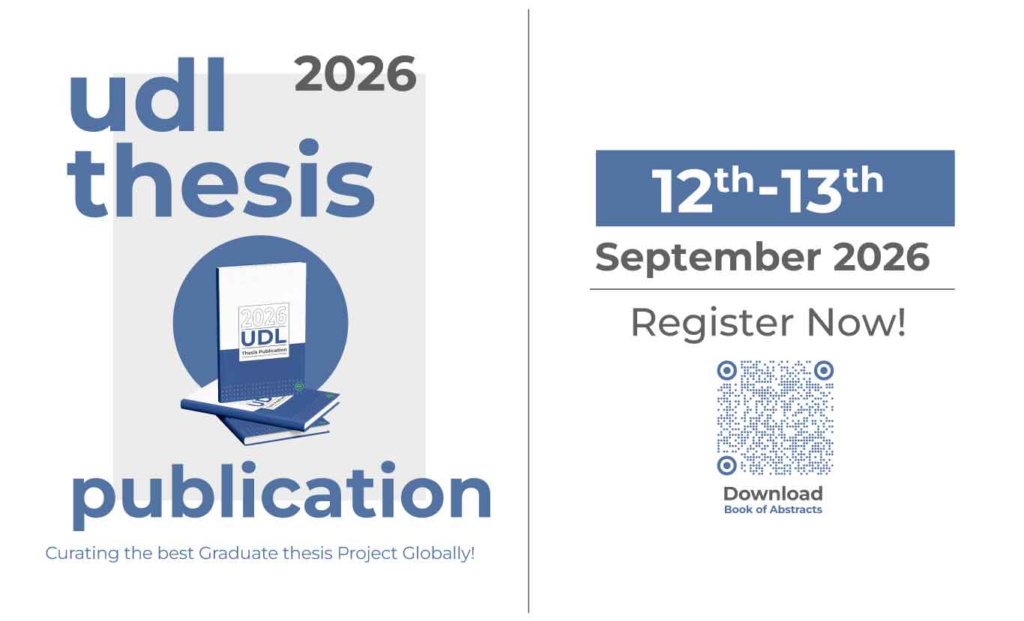
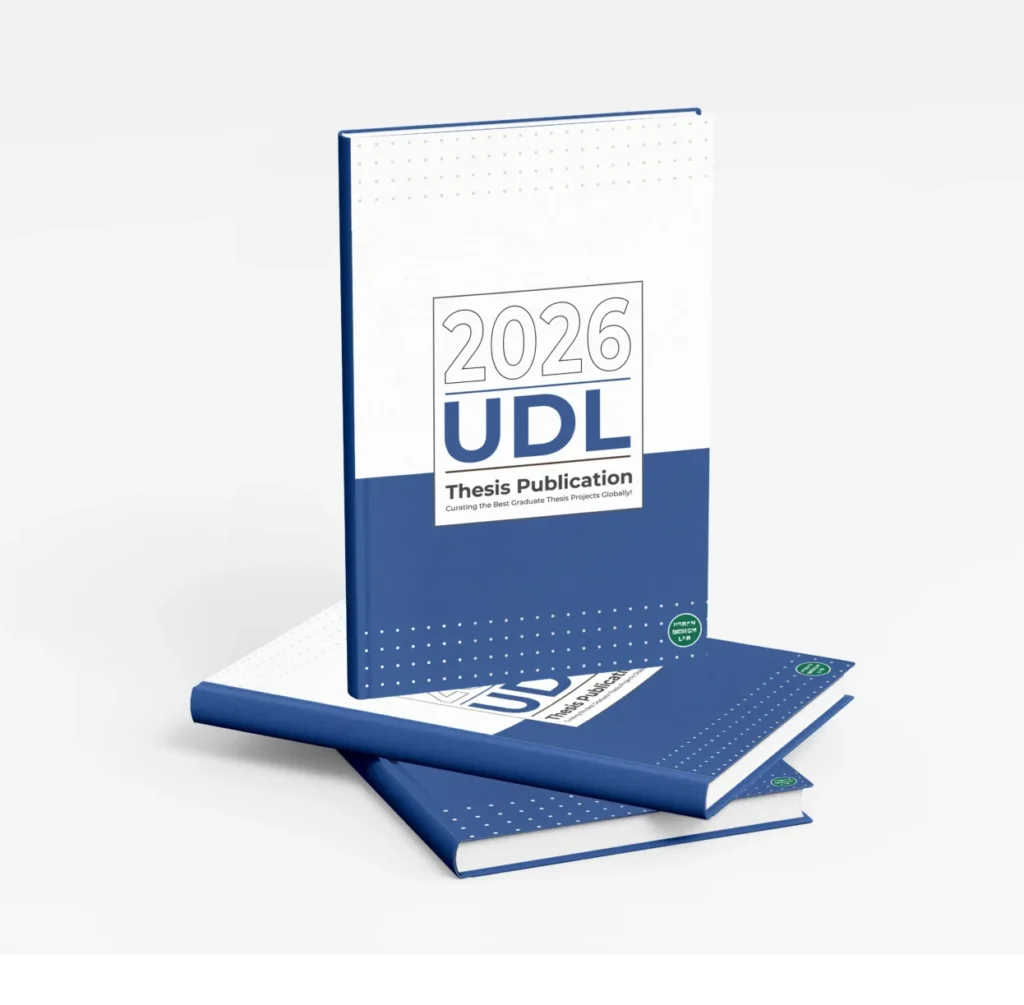
The UDL Thesis Publication 2026 is an international platform created by Urban Design Lab to identify, curate, and disseminate outstanding undergraduate and postgraduate thesis projects within the fields of urban design, landscape architecture, architecture, and planning. It provides emerging designers and researchers with an opportunity to extend the reach of their academic work beyond the boundaries of their individual universities and engage with a wider global audience.
Graduate theses often represent sustained periods of research, experimentation, critical inquiry, and design development, yet much of this work remains accessible primarily within academic institutions. The UDL Thesis Publication seeks to bridge this gap by bringing selected projects into a shared forum where their ideas can contribute to broader academic and professional conversations on contemporary urbanism.
By connecting design research with pressing urban challenges, the publication highlights how academic inquiry can generate new ways of interpreting, planning, designing, and managing cities. It also creates a point of exchange between students, researchers, educators, practitioners, and institutions operating across different disciplines and geographic contexts. Through publication, seminar discussions, and global dissemination, individual thesis projects become part of a larger collective discourse on the changing conditions and possible futures of cities.
The 2026 Edition
The UDL Thesis Publication 2026 brings together 40 selected thesis projects from undergraduate and postgraduate submissions across 15 countries, representing diverse approaches to urban design, landscape architecture, architecture, and planning. Eligible projects included theses completed within the previous five years and addressing issues related to the urban domain.
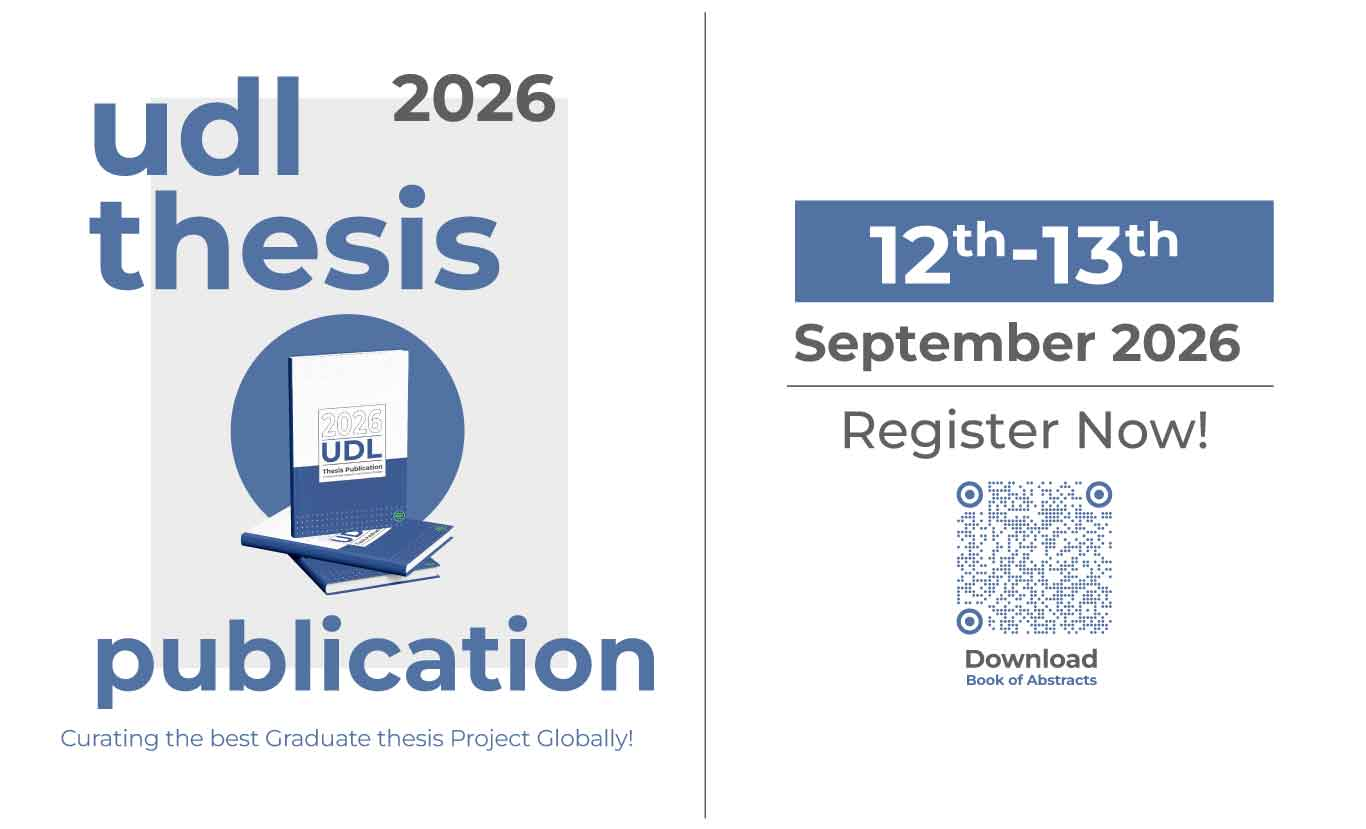
Following an international evaluation process, the selected works form the basis of the UDL Thesis Publication Seminar 2026, where participants will present their research and design propositions to an international seminar panel on 12 and 13 September 2026. The seminar extends the publication beyond a collection of projects by creating a space for presentation, critical discussion, and exchange between emerging researchers and experienced academics and practitioners.
The selected works will subsequently be developed into the comprehensive UDL Thesis Publication 2026, scheduled for release in December 2026 as an ISBN-attributed book, creating a lasting academic resource accessible to a global audience.
Four Themes Shaping the 2026 Publication
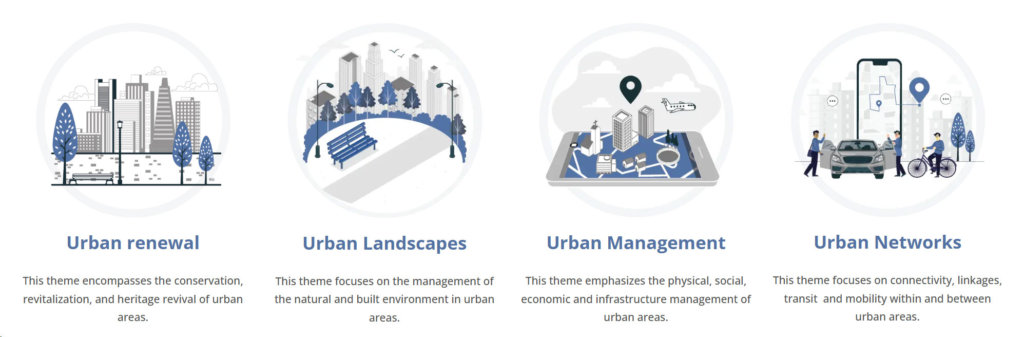
The thematic framework of the UDL Thesis Publication 2026 is organised around four domains: Urban Renewal, Urban Landscapes, Urban Management, and Urban Networks. Together, these themes reflect different yet interconnected dimensions of contemporary urbanism, ranging from the transformation of existing urban fabric and ecological systems to governance, infrastructure, mobility, and regional connectivity. The framework allows projects emerging from varied disciplinary and geographic contexts to contribute to a wider discussion on how cities can respond to changing social, cultural, environmental, and economic conditions.
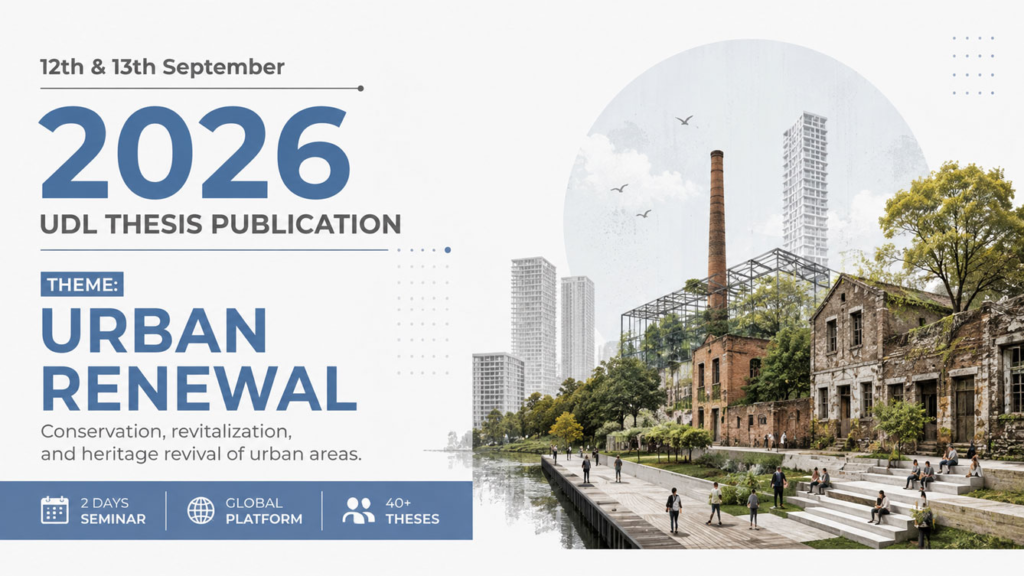
1. Urban Renewal
Urban Renewal critically examines the restructuring of existing urban fabric through conservation, regeneration, adaptive reuse, revitalisation, and redevelopment. It engages with contested questions of heritage, displacement, spatial continuity, land-value transformation, and socio-cultural identity, asking how intervention can enable contemporary urban change without producing erasure, homogenisation, or the loss of embedded local character.
2. Urban Landscapes
Urban Landscapes positions landscape as a performative ecological and socio-spatial system rather than a decorative urban layer. The theme interrogates climate vulnerability, green-blue infrastructure, environmental resilience, landscape heritage, public health, and open-space networks, with particular emphasis on how ecological processes can be spatially integrated with urban form, public life, and long-term environmental adaptation.
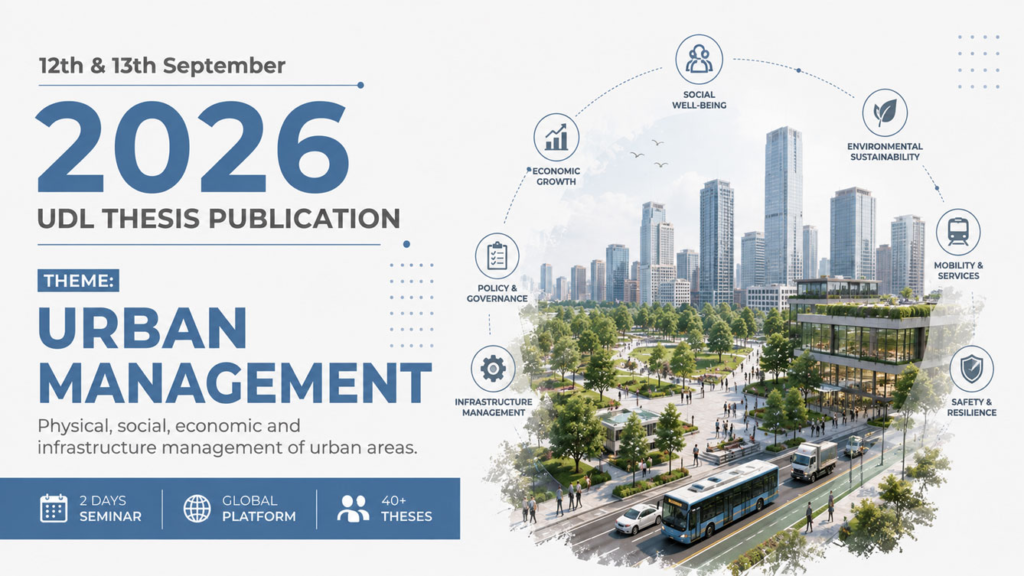
3. Urban Management
Urban Management addresses the institutional, infrastructural, social, and economic mechanisms through which urban systems are governed, serviced, and negotiated. It critically engages with resource allocation, housing, service delivery, risk, tourism pressures, social inclusion, and governance capacity, examining how planning, policy, and spatial intervention can mediate competing interests while improving urban equity, resilience, and operational effectiveness.
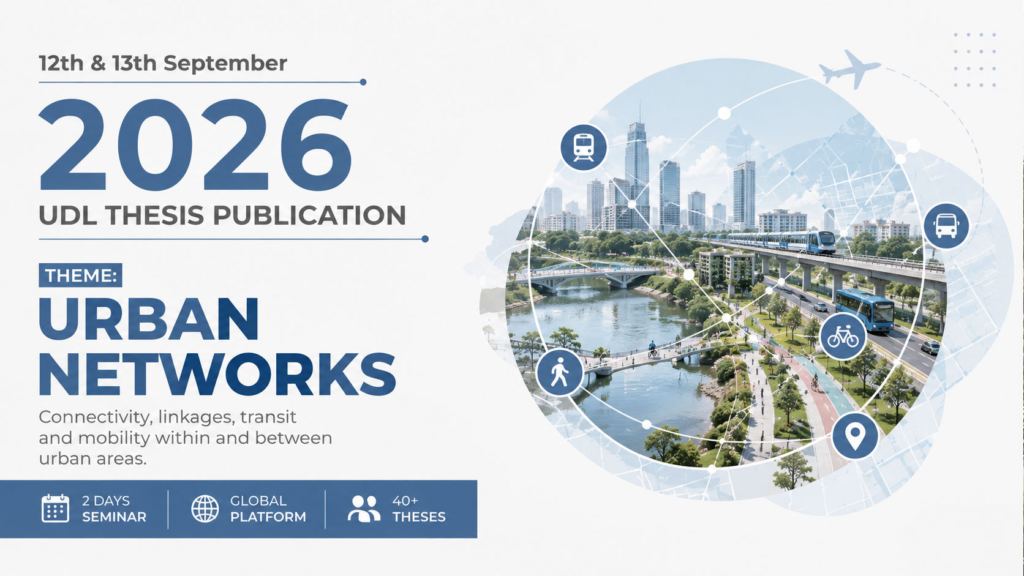
4. Urban Networks
Urban Networks investigates connectivity as a spatial, infrastructural, and socio-economic condition shaping accessibility, mobility, exchange, and metropolitan structure. The theme critically examines transit systems, regional linkages, multimodal movement, transport-oriented development, and network hierarchy, focusing on how connectivity can reduce spatial fragmentation, redistribute access to opportunities, and restructure relationships between urban centres, peripheries, and regions.

An International Panel of Urban Thinkers and Practitioners
The UDL Thesis Publication 2026 brings together a distinguished international panel of academics, urban designers, architects, landscape architects, planners, and practitioners from leading institutions and practices across the world. The panel includes Ujan Ghosh from Upalghosh Associates, Gayatri Nanda from the School of Planning and Architecture, Bhopal, Vikas Kanojia from Studio CoDe, Bejene S. Kothari from the College of Engineering Trivandrum, Mohammed Fekry from Effat University, Jeannette Sordi from the New York Institute of Technology, Fatouma Sarah El Phil from KCAP, Alessio Russo from Queensland University of Technology, César Tarazona from the Pontifical Catholic University of Peru, Karen L. Nelson from The Boston Architectural College, Giulia Setti from Politecnico di Milano, and Beta Paramita from Universitas Pendidikan Indonesia. Collectively, their expertise spans urban regeneration, landscape systems, mobility, governance, sustainability, heritage, public realm, housing, and ecological urbanism, creating a rigorous platform for critical dialogue around the selected thesis projects.
The Selected Thesis Projects of 2026
Urban Landscape: Selected Thesis Entries
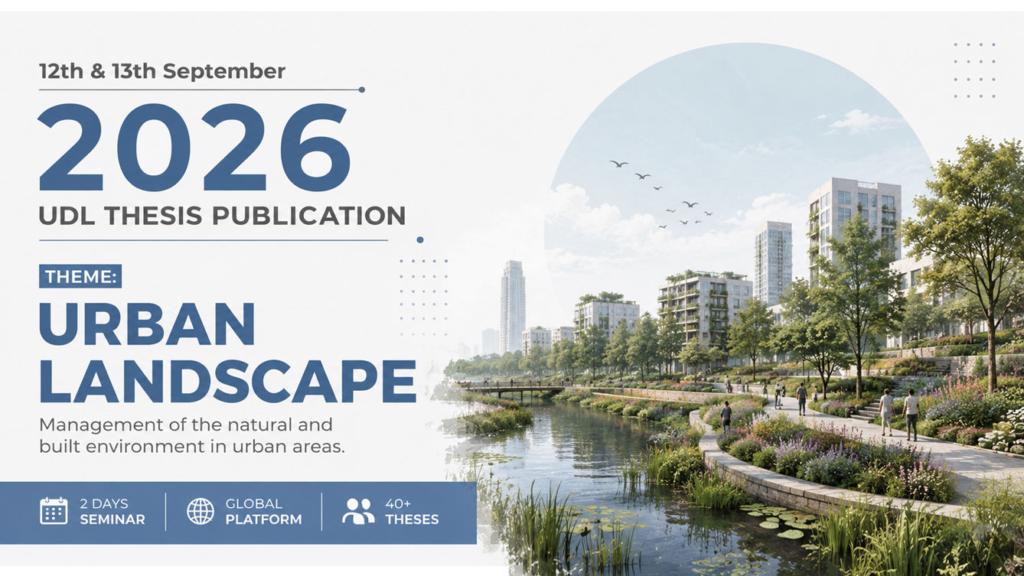
The Urban Landscape section of the UDL Thesis Publication 2026 comprises 14 selected projects addressing ecological systems, climate adaptation, water landscapes, cultural memory, productive territories, circularity, landscape heritage, and socio-ecological resilience across diverse geographic contexts.
1. Beyond the Threshold: Shaping a Park System in Baggio’s Peri-Urban Landscape, Milan, Italy
Authors: Abhinand Krishnakumar Menon, Arya Arun
Thesis Guide: Andrea Oldani
Institute: Politecnico di Milano, Milan, Italy
The thesis reimagines Baggio’s fragmented peri-urban edge as a connected park system structured around Milan’s historic fontanili, or spring-fed water channels. Through ecological restoration, reforestation, cycling and pedestrian connections, and the integration of agricultural and open-space systems, the project positions overlooked water landscapes as an armature for ecological connectivity, landscape heritage, biodiversity, and stronger relationships between peripheral neighbourhoods and Milan’s rural fringe.
2. Al Hujair Valley Natural Reserve: The Reclamation, Recovery, and Resurfacing of Threatened Natural Heritage
Authors: Fatima Hassan Suleiman, Maya Haidar, Clara Saliba
Thesis Guides: Mona Khechen, Paola Pilligrini
Institute: American University of Beirut, Lebanon
Addressing the ecological degradation and fragmentation of South Lebanon’s Hujair Valley, the thesis develops an integrated framework for landscape recovery and long-term resilience. Responding to quarrying, water extraction, urbanisation, weak environmental management, and recent conflict-related damage, it proposes ecological corridors, landscape restoration, territorial reclamation, and community stewardship. The valley is repositioned as part of a wider network of green-blue ecological systems connected to regional natural reserves.
3. Vanishing Urban Waters: Re-integrating Lakes into Urban Fabric as Shared Public Systems in Bengaluru
Author: Aswathi A
Thesis Guide: Ar. Ch Dheeraj Venkata Manikanta
Institute: School of Planning and Architecture, Vijayawada, India
Focusing on the Hulimavu Lake system in Bengaluru, the thesis investigates how increasingly fragmented lake edges can be reintegrated into everyday urban life. Through spatial, behavioural, and stakeholder analysis, it develops an Integrated Parameter Framework addressing accessibility, public realm, environmental conditions, programming, and temporal use. The resulting urban design strategy transforms the lake edge into a continuous and adaptable urban commons supported by pedestrian connectivity, activated nodes, and differentiated public interfaces.
4. Living in a Floodable Park: Leveraging Climate Change to Redesign Middelkerke’s Tourist Infrastructure
Author: Gautami Kasat
Thesis Guides: Professor Kelly Shannon, Professor Joris Moonen
Institute: KU Leuven, Belgium
The thesis challenges Middelkerke’s conventional flood-defence and seasonal tourism model by treating increasing wetness as a productive landscape condition. It proposes a Floodable Park composed of wetlands, floodable farmland, grazing areas, aquaculture, and adaptable tourism infrastructure. Mobile caravans and seasonal occupation replace portions of static camping development, allowing the landscape to shift between tourism and ecological functions while establishing a more adaptive relationship between coastal resilience, seasonality, and inhabitation.
5. Heat Stress in Informal Settlements: Strategies for Urban Climate Adaptation
Author: Jan Arzt
Thesis Guide: Alejandra Navarrete Llopis
Institute: KTH Royal Institute of Technology, Sweden
Situated in Rwezamenyo, Kigali, the thesis examines climate adaptation within informal settlements through incremental and socially just upgrading. Rather than imposing a conventional master plan, it builds upon residents’ existing autonomous adaptation practices and situated knowledge. Through participatory processes, the project develops strategic guidelines for reducing heat-related vulnerability while improving living conditions without displacement, framing climate adaptation as an incremental process integrating environmental performance, community agency, and social continuity.
6. The Edges of Architectural Control
Author: Jenda Simonsen
Thesis Guide: David Newton
Institute: University of Nebraska-Lincoln, USA
Set along the San Diego-Tijuana border, the thesis critically examines architecture as an instrument of territorial control regulating movement, visibility, interaction, and access. Instead of removing the border wall, the project reprograms its spatial conditions through walking, gathering, recreation, cultivation, observation, and other collective rituals. Landscape systems, seasonal planting, permeable surfaces, and tidal processes create changing boundaries, transforming an architecture of separation into a speculative public landscape structured around encounter and shared experience.
7. Itinerant: A Network of Mobile Architectures for the Preservation of Agricultural Heritage in the Lower Mala River Valley
Author: Reynaldo Siccha
Thesis Guide: Luis Elias Rodriguez Rivero
Institute: Pontificia Universidad Católica del Perú, Lima, Peru
Responding to the conversion of productive farmland into seasonal recreational development in Peru’s Lower Mala River Valley, the thesis proposes ITINERANTE, a network of mobile architectures operating as living territorial borders. Moving cyclically with agricultural calendars, these structures support post-harvest activity, agro-festivals, environmental monitoring, and soil remediation. The project reframes architecture as an active territorial caretaker capable of reinforcing agricultural economies, cultural memory, and ecological systems while resisting speculative urban expansion.
8. Ecologically Resilient Destination Development
Author: Merin J G
Thesis Guide: Ar. Sharat Sunder
Institute: College of Engineering Trivandrum, India
The thesis develops an ecological resilience framework for Velankanni, a major pilgrimage destination located within a vulnerable coastal delta landscape. It challenges development patterns that prioritise visitor demands over ecological systems and proposes a more balanced relationship between pilgrimage infrastructure, natural settings, and anthropogenic intervention. Drawing on theories of ecological resilience, Design with Nature, destination life cycles, and urban legibility, the project formulates a comprehensive strategy for environmentally responsive destination development.
9. Reimagining Industrial Heritage: Adaptive Reuse and Green Urbanism for Sustainable City Models
Authors: Paola Lacuzzi, Wei Qiang Massimo Hu
Thesis Guide: Luca María Francesco Fabris
Institute: Politecnico di Milano, Milan, Italy
Using Beijing’s former Shougang steel plant as a testing ground, the thesis proposes an alternative to regeneration through wholesale replacement. Landscape becomes the primary infrastructure of transformation, with phytoremediation, ecological corridors, water management, reforestation, mobility, and public space working alongside the adaptive reuse of industrial structures. The proposal integrates ecological repair, industrial memory, public life, and new mixed functions into an evolving post-industrial landscape capable of adapting over time.
10. Memory Builds the Landscape: Rural Imaginary of Ayacuchean Memory and Resistance
Author: Perla Elias
Thesis Guide: Luis Elías Rodriguez Rivero
Institute: Pontificia Universidad Católica del Perú, Lima, Peru
The thesis explores relationships between memory, territory, and community within the rural landscapes of Ayacucho, particularly areas marked by historical injustice and the violence of the 1980s. Through strategies of Highlight, Act, and Link, it connects places of memory with rituals, songs, protests, pilgrimages, and collective practices. Architectural artifacts and a mobile memory vehicle transform remembrance from static representation into an evolving territorial practice supporting identity, expression, resistance, and collective memory.
11. Beyond Concrete Horizons: Nurturing Bengaluru’s Green Identity through Green Wedge Strategy
Author: Sunaina Prasad
Thesis Guides: Fabiano Lemes de Oliveira, Dr. Anna Giulia Castaldo
Institute: Politecnico di Milano, Milan, Italy
Responding to the erosion of Bengaluru’s historically green urban identity under rapid urbanisation, the thesis evaluates alternative models for structuring future ecological growth. It critically compares the municipality’s proposed Green Ring with a Green Wedge strategy intended to preserve ecological continuity between the city and its peripheral landscapes. The research positions green infrastructure as a metropolitan-scale planning framework capable of addressing microclimatic change, environmental resilience, urban expansion, and long-term liveability.
12. Circular Urbanism
Authors: Peiying Han, Weiqiao Lin
Thesis Guide: Keller Easterling
Institute: Yale University, New Haven, USA
Circular Urbanism examines architecture as part of a larger urban material ecosystem encompassing deconstruction, transport, storage, processing, exchange, and reuse. Comparative research across New York City, Austin, and Vancouver generates a nested S-M-L framework: temporary reclaimed-material showrooms, a material marketplace, and a community land-trust model combining material stewardship with redevelopment and housing. The thesis positions circular design as an urban systems framework rather than an isolated material-reuse technique.
13. Ripples of the Past: Tracing the Cultural Footprints of Saraswati
Author: Shraddha Rathi
Thesis Guide: Paola Nella Branduini
Institute: Politecnico di Milano, Milan, Italy
The thesis approaches the revival of the Saraswati River as both an ecological restoration project and a recovery of cultural landscape and intangible heritage. Working across territorial, regional, and local scales, it combines river regeneration, cultural conservation, and landscape enhancement strategies. With Adi Badri in Haryana serving as a focused intervention area, the project demonstrates how hydrological restoration can simultaneously reinforce cultural memory, heritage awareness, and the long-term sustainability of a sacred landscape system.
14. Development Strategies for Anasagar Lake Precinct
Author: Ashima Mathur
Thesis Guide: Ar. Sonia Maheshwari
Institute: Aayojan School of Architecture and Design, Jaipur, India
Focusing on Ajmer’s historic Ana Sagar Lake, the thesis investigates how ecological conservation can be reconciled with urban development and public use. Through activity mapping, site surveys, built-form and land-use analysis, it identifies environmental pressures including wastewater, erosion, waste disposal, pollutants, and encroachment. The resulting strategy distinguishes sensitive ecological areas from feasible development zones, proposing a framework for lake-edge management that protects biodiversity and environmental systems while accommodating controlled public and urban development.
Urban Management: Selected Thesis Entries
The Urban Landscape section of the UDL Thesis Publication 2026 comprises 14 selected projects addressing ecological systems, climate adaptation, water landscapes, cultural memory, productive territories, circularity, landscape heritage, and socio-ecological resilience across diverse geographic contexts.
1. The Center for Unhoused People with Treatable Mental Health Disorders
Author: Berfin Sozer
Thesis Guides: Emeline Gaujac, Ian F. Taberner
Institute: Boston Architectural College, Boston, USA
The thesis investigates how architecture can integrate healthcare, housing, and community support for unhoused people with treatable mental health disorders. Located at Goose Park along the Charles River, the proposal combines therapeutic and medical spaces, wellness facilities, vocational training, education, community programs, and transitional and permanent housing. Organised around progressive stages of recovery, the project reframes supportive housing as social infrastructure, creating a coordinated environment that supports dignity, stability, social connection, and long-term pathways toward independent living.
2. Urban Isotopes: Reimagining a Fragmented Future for Public Space
Author: Shruti Tendulkar
Thesis Guide: Ar. Jai Bhadgaokar
Institute: Kamla Raheja Vidyanidhi Institute for Architecture and Environmental Studies, Mumbai, India
Urban Isotopes explores how transitional and underutilised urban land in Mumbai can support new forms of adaptable public space. Focusing on a temporary casting yard positioned between formal institutional development and an evolving informal settlement, the thesis examines hybridity, modularity, and incremental occupation. Drawing from Third Place theory and everyday urban practices, it proposes a flexible spatial system based on modular geometries, layered programming, service cores, bioswales, and greywater recycling. Rather than a fixed architectural object, the project develops a replicable toolkit for regenerating urban commons through adaptable and evolving public use.
3. Energy Infrastructure and Public Space: Architecture for Waste, Labor, and the Conscious City
Author: Brianna Ramey
Thesis Guide: Anthony Piermarini
Institute: Wentworth Institute of Technology, Boston, Massachusetts, USA
The thesis challenges the conventional separation of industrial infrastructure from civic life by proposing a hybrid public library and waste-to-energy facility on Boston’s waterfront. It investigates how architecture can make the hidden processes of waste management and urban labour visible, accessible, and educational. By combining infrastructural operations with civic and didactic programming, the project transforms waste infrastructure into a public institution, using visibility as a design strategy to increase environmental awareness, recognise essential urban labour, and integrate metropolitan service systems more directly into the public realm.
4. Whose Livability? Understanding How Different People Imagine the Livable City
Author: Manas Musale
Thesis Guide: Meghana Patil
Institute: L.S. Raheja School of Architecture, Mumbai, India
The thesis critically questions the assumption that urban livability can be measured through a universal set of standardised indicators. Combining comparative analysis of established livability frameworks with demographic surveys, the research examines how priorities vary according to age, gender, occupation, and everyday experience. While safety emerges as a consistently important concern, factors such as healthcare, housing, education, mobility, green space, community belonging, and accessibility vary across user groups. The project translates these differentiated perceptions into context-responsive urban design strategies, positioning livability as a situated and socially contingent condition.
5. Everyday Urbanism for Ageing in Place
Author: Tanika Kerkar
Thesis Guide: Teresa Arana Aristi
Institute: Lund University, Lund, Sweden
Focusing on Stora Högsbo in Gothenburg, the thesis examines how neighbourhood-scale urban design can support ageing in place by enabling older adults to remain independent, socially connected, and active within familiar environments. It critiques proximity-based planning models such as the 15-minute city by demonstrating that accessibility depends not only on distance to services, but also on the quality of streets, public spaces, mobility networks, and social infrastructure. The proposal integrates walkability, distributed neighbourhood nodes, inclusive public spaces, and intergenerational interaction to create more supportive and age-friendly urban environments.
6. Sonapur: City of Gold or City of the Dead?
Author: Urva Parmar
Thesis Guide: Alejandro Giménez Imirizaldu
Institute: Universitat Politècnica de Catalunya, Barcelona, Spain
The thesis investigates Sonapur, or Muhaisnah 2, one of Dubai’s largest migrant labour settlements, as a manifestation of spatial segregation and institutionalised precarity. Through morphological analysis, spatial mapping, fieldwork, and surveys, the research examines how settlements initially conceived as temporary workforce accommodation can become permanent landscapes of exclusion. It argues for transforming isolated labour camps into integrated urban neighbourhoods with greater access, dignity, agency, and quality of life. The project contributes to wider debates on migrant housing, labour rights, spatial justice, urban equity, and ethical city-making.
Urban Networks: Selected Thesis Entries
The Urban Networks section of the UDL Thesis Publication 2026 brings together six projects that examine mobility, transit, infrastructure, regional connectivity, public space, and sensory experience as interconnected systems shaping contemporary urban life.
1. The Cross Bronx Transit-Way: Integrating Ecology, Transport Networks and New Civic Futures
Authors: Melisa Ramlogan, Lillian Ayodele, Maggie Viti
Thesis Guide: Evan Shieh
Institute: New York Institute of Technology, Old Westbury, USA
The thesis reimagines the Cross Bronx Expressway as a layered multimodal corridor capable of addressing mobility inequities while reconnecting neighbourhoods historically divided by infrastructure. The proposal replaces the existing expressway condition with a system integrating regional movement, freight, light rail, bus shuttles, pedestrian routes, ecological landscapes, and distributed civic nodes. By combining transport infrastructure with green space and transit-oriented development, the project positions mobility networks as instruments for ecological repair, equitable accessibility, and new forms of civic life.
2. Sacred Movement: Reimagining Pilgrimage Transit in Velankanni
Author: Angelina Dominic
Thesis Guide: Ar. Darryl Christopher
Institute: Hindustan Institute of Technology and Science, Chennai, India
The thesis addresses the mobility pressures generated by large seasonal pilgrim flows in Velankanni and examines how movement can become the primary framework for reorganising the sacred precinct. Through analysis of circulation, land use, infrastructure, public space, and visitor patterns, the project identifies congestion, pedestrian-vehicular conflict, fragmented transit, and inadequate public-space systems. It proposes a Regional Arrival Gateway, shuttle-based last-mile connectivity, pedestrian-priority routes, reorganised processional movement, mixed-use nodes, and waterfront interventions to create a more connected, accessible, and resilient pilgrimage environment.
3. Vertical Commons
Author: Charudatta Patil
Thesis Guide: Ar. Shripad Bhalerao
Institute: IES’s College of Architecture, Mumbai, India
Vertical Commons investigates how the airspace above Mumbai’s railway infrastructure can be transformed into civic territory without disrupting transport operations. Focusing on Dombivli, the thesis studies pedestrian movement, behavioural patterns, sectional relationships, and informal occupation around the railway corridor. It proposes a vertically organised civic framework that accommodates public activity, social interaction, and collective occupation above the rail lines. The project reframes transport infrastructure from a divisive technical boundary into a shared urban resource capable of reconnecting fragmented neighbourhoods.
4. Transfer: An Inquiry into UK’s Regional System
Author: Ishaniben Shah
Thesis Guides: Lawrence Barth, Dominic Papa
Institute: Architectural Association School of Architecture, London, United Kingdom
The thesis explores infrastructure as a regional framework for the transfer of people, goods, knowledge, and stewardship. Using Harwich as its testing ground, it examines the layered relationships between ports, railways, industry, and wetlands, drawing from Cedric Price’s proposition of learning as an urban system rather than a fixed institution. The project investigates how architecture can mediate between hard logistical infrastructure and ecological landscapes, extending learning across the territory and creating an adaptable civic network structured around movement, exchange, and regional connectivity.
5. Leveraging Transit Hub for Commercial Development
Author: Khushi Mahesh Shirur
Thesis Guide: Nayana R Singh
Institute: School of Planning and Architecture, Bhopal, India
Situated adjacent to the redevelopment of Bengaluru Cantonment Railway Station, the thesis reinterprets Transit-Oriented Development through the concept of urban porosity. Rather than focusing solely on density and movement efficiency, it examines how porous edges, layered circulation, transitional spaces, and activated ground planes can improve accessibility and public engagement. The proposed mixed-use commercial development integrates offices, retail, adaptable public spaces, and informal economic activity, positioning the transit hub as a catalyst for urban intensification, social exchange, and a more permeable public realm.
6. Tonal Walks
Author: Chaitali Bedmutha
Thesis Guides: Roberto Bottazzi, Tasos Varoudis, Eirini Tsouknida, Vasileios Papalexopoulos, Margarita Chaskopoulou
Institute: UCL, London, United Kingdom
Tonal Walks investigates how sound, visual conditions, and emotional response influence pedestrian experience in dense urban environments. Using machine learning and big-data analysis, the thesis identifies areas in London affected by high noise levels, intense pedestrian activity, and environmental discomfort, with Elephant and Castle selected as the principal site. The proposal introduces sound-absorbing materials, landscape interventions, interactive elements, and responsive lighting to improve acoustic and perceptual quality. By integrating sensory analysis into urban design, the project expands the idea of connectivity beyond physical movement toward experiential and emotional networks.
Urban Renewal: Selected Thesis Entries
The Urban Renewal section of the UDL Thesis Publication 2026 comprises 14 selected projects examining regeneration through adaptive reuse, heritage, ecological repair, public realm transformation, productive landscapes, housing, infrastructure, and incremental urban development.
1. Port of Resilience, Pier 48
Author: Yulia Zarechkina
Thesis Guide: Rachel Berney
Institute: University of Washington, Seattle, USA
The thesis reimagines Seattle’s underutilised Pier 48 as an adaptive socio-ecological waterfront through a phased strategy beginning with temporary activation for the 2026 FIFA World Cup and evolving into a permanent resilient public landscape. Community programs, tactical interventions, a modular Resilience Hub, shoreline restoration, habitat islands, and salmon-supportive infrastructure demonstrate how temporary occupation can catalyse long-term ecological restoration, climate resilience, and public access to the waterfront.
2. Genua Liquens
Author: Giovanni Antonio Cappa
Thesis Guide: Francesca Rizzetto
Institute: TU Delft, Delft, Netherlands
Genua Liquens critically examines Genoa’s coastline as a contested interface shaped by port infrastructure, economic development, fragmented governance, and limited civic access. Rejecting conventional zoning and fixed masterplanning, the thesis develops a speculative, coevolutionary framework in which spatial transformation is linked to institutional change, local agency, and new socio-economic ecologies. It proposes reclaiming portions of the coastline for collective use while repositioning Genoa as an adaptable Mediterranean metropolis toward 2100.
3. Live-Work-Connect: An Industrial-Residential and Commercial-Residential Redevelopment Preserving the Pottery Networks of Dharavi
Author: Dev Suryakant Joshi
Thesis Guide: Ar. Paritosh Kumar
Institute: School of Planning and Architecture, Bhopal, India
The thesis investigates how Dharavi’s redevelopment can accommodate higher-density housing and commercial growth without dismantling the socio-economic networks sustaining its pottery community. The proposed Live-Work-Connect framework vertically integrates rehabilitation housing, offices, retail, and pottery workshops while recreating the social qualities of ground-level streets through terraces and vertical circulation. A Solar-Pottery Co-Op and cross-subsidisation model further position redevelopment as an environmentally and economically viable strategy for preserving livelihoods and community identity.
4. Re-interpreting Cultural Quarters of Kannur City Through Everyday Urbanism
Author: Fathimathul Rizma
Thesis Guide: Dr. Karthik Mohan
Institute: College of Engineering Trivandrum, Thiruvananthapuram, India
The thesis examines Kannur’s culturally layered urban fabric through the lens of everyday urbanism, focusing on rituals, informal economies, pedestrian movement, spatial appropriation, and collective practices. Using ethnographic fieldwork, participatory mapping, and spatial analysis, it identifies the erosion of cultural identity, heritage degradation, infrastructural gaps, and vehicular dominance. Incremental interventions, including activated thresholds, micro-cultural nodes, temporary installations, and support for local crafts, seek to reinforce public life while sustaining Kannur’s distinctive cultural quarters.
5. Beyond Rediscovery: Reclaiming Alijan Jute Mill as a Living Productive Landscape
Author: Fatiha Tanjim Oni
Thesis Guides: Mohammad Faruk, Iftekhar Ahmed, Mohammad Zillur
Institute: BRAC University, Dhaka, Bangladesh
The thesis repositions the abandoned Alijan Jute Mill in Narsingdi as a living productive heritage landscape rather than a static industrial relic. Through a New Contextualism framework, it integrates industrial memory, contemporary jute production, worker facilities, community programs, ecological restoration, and riverfront public space. Adaptive reuse of significant mill structures and the regeneration of the Meghna riverfront demonstrate how productive heritage can simultaneously sustain livelihoods, collective memory, ecology, and post-industrial urban renewal.
6. Itinerant Public Infrastructure: Urban Regeneration and Revitalization of the Ferrocarril Central Corridor
Author: Fiorella Noelia Fierro Chipana
Thesis Guide: Mg. Augusto Román Moncagatta
Institute: Pontificia Universidad Católica del Perú, Lima, Peru
The thesis reimagines Huancayo’s declining Ferrocarril Central corridor as a metropolitan spine for regeneration, mobility, and equitable service provision. Beginning with the adaptive reuse of disused railway wagons as a seed intervention, the proposal develops a phased system of itinerant public infrastructure that expands into a network of services, public spaces, and transport connections. It demonstrates how dormant railway heritage can become an inclusive urban commons connecting underserved neighbourhoods with essential civic infrastructure.
7. Reimagining Temple Precincts as Public Realms
Author: Kalyani Malla Todkar
Thesis Guide: Ar. Deepak Kumar
Institute: School of Planning and Architecture, Vijayawada, India
Focusing on Pandharpur’s Vitthal Rukmini Temple and Chandrabhaga riverfront, the thesis investigates how an intensely used pilgrimage precinct can function as an integrated sacred public realm. Responding to fragmented movement, inadequate holding spaces, crowd pressure, and weak temple-river connections, it proposes a loop-based pilgrimage system, courtyard holding spaces, a pedestrian-prioritised Mahadwar corridor, and an activated riverfront. The project integrates ritual continuity, crowd management, mobility, and public-space restructuring within the historic pilgrimage landscape.
8. Astronomy and Cultural Experience Centre, Sambhar
Author: Kirtika Sharma
Thesis Guide: Mahima Sharma
Institute: Aayojan School of Architecture and Design, Jaipur, India
The thesis explores how astronomy, cultural heritage, tourism, and ecological conservation can be integrated within Sambhar’s environmentally sensitive landscape. Responding to the salt lake ecosystem, harsh climate, regional heritage, and naturally dark night sky, it proposes an astronomy and cultural experience centre incorporating galleries, a planetarium, workshops, cultural spaces, and public landscapes. Eco-sensitive planning, dark-sky preservation, and climate-responsive design position the project as a model for responsible and place-specific tourism development.
9. A Cross-Border Urban Landscape: From Roman Heritage to a Concept for the Future
Author: Labdhi Shah
Thesis Guides: Dipl.-Ing. Christa Reicher, Prof. em. Dr.-Ing. Andrea Haase
Institute: RWTH Aachen University, Aachen, Germany
The thesis reinterprets the historic Roman Via Belgica as a continuous cross-border cultural landscape connecting territories in Germany and the Netherlands. Addressing fragmentation caused by national boundaries, infrastructure, private ownership, and differing planning systems, it develops a framework for an Archaeological Landscape Park between Heerlen and Aachen. Heritage routes, ecological habitats, productive landscapes, slow mobility, and social spaces are integrated to transform isolated archaeological remains into an active territorial system embedded within contemporary everyday life.
10. The Last Refugia: Wild Seeds Takeover the Riparian Buffer in North Central Wisconsin
Author: Liuyun Wang
Thesis Guide: Montserrat Bonvehi Rosich
Institute: Harvard University Graduate School of Design, Massachusetts, USA
The thesis investigates the fragmented riparian landscapes of Wisconsin’s Fox-Wolf watershed as critical refugia for wild seeds, wildlife, and ecological resilience. Drawing from Menominee land-stewardship and foraging practices, it proposes six typologies of collaborative stewardship responding to different ownership and landscape conditions. The resulting watershed-scale framework reframes landscape architecture as a platform for collective decision-making, linking agricultural production, biodiversity, ecological regeneration, community participation, and long-term land stewardship.
11. Re-incorporate the House: Typological Regeneration of the Terzo Palazzo
Author: Ricardo D. Ribeiro
Thesis Guide: Joana Restivo
Institute: University of Porto, Porto, Portugal
The thesis investigates housing obsolescence through the transformation of the 1973 Terzo Palazzo in San Donato Milanese. Rather than replacing the existing structure, it treats the building as an infrastructural support for lightweight, reversible, and self-built dwelling units organised around changing practices of relating, eating, breathing, and sleeping. Shared spaces, patios, technical systems, and adaptable domestic clusters create a process of silent mutation, allowing housing to evolve while reinforcing surrounding mobility, ecological, and public-space networks.
12. Reclaiming the Vertical: Catalysts for a Time-Starved City
Author: Struan Bentley Morrison
Thesis Guide: Ulrike Enslein
Institute: University of Strathclyde, Port of Leith, Edinburgh, Scotland
The thesis examines the relationship between long commuting times, time-poverty, and the scarcity of meaningful public space in Mumbai. Through surveys, transport analysis, site investigations, and a pilot intervention at One International Centre in Parel, it identifies underutilised commercial podiums as potential vertical extensions of the public realm. The project proposes architectural, operational, and regulatory strategies for converting parking-dominated podiums into accessible spaces for pause, recreation, social interaction, and psychological retreat.
13. The IntenCity
Author: Soumil Bobade
Thesis Guides: Esha Tipnis, Mitali Hindlekar
Institute: Rachana Sansad’s Academy of Architecture, Mumbai, India
The IntenCity critically examines how financing, political structures, and contemporary development models influence the morphology of large-scale urban regeneration. Tested through a post-industrial site in Leith, the thesis develops a three-tiered framework combining development principles, urban strategies, and hybrid block typologies. Rather than prescribing a finished masterplan, it proposes an open-ended urban structure capable of accommodating incremental growth, diversity, participation, and adaptation over time.
14. (re)Made in Bangladesh: Incremental Development of Shaoil Bazar Towards Conscious Making
Authors: Shimanto Goswami, Sean Meyer
Thesis Guide: Alejandra Navarrete Llopis
Institute: KTH Royal Institute of Technology, Stockholm, Sweden
The thesis investigates Shaoil Bazar, a handloom village whose craft economy depends on textile waste generated by Bangladesh’s ready-made garment industry. Through the concept of conscious incrementality, it develops phased interventions that strengthen logistics, worker facilities, makers’ spaces, vocational training, second-hand textile reuse, and indigenous weaving practices. By connecting local craft knowledge, circular material flows, community networks, and alternative production systems, the project proposes an incremental model for sustaining handloom livelihoods while reducing dependence on environmentally damaging fast-fashion waste streams.
From Publication to Dialogue: UDL Thesis Seminar 2026
The selected thesis works will move beyond the pages of the UDL Thesis Publication 2026 through the UDL Thesis Publication Seminar 2026, scheduled for 12 and 13 September 2026. Conducted as an online international seminar, the two-day programme will bring together selected undergraduate and postgraduate authors, seminar panel members, moderators, and invited professionals for a series of thematic presentations and critical discussions. Day 1 will focus on Urban Landscape and Urban Management, while Day 2 will bring together projects under Urban Networks and Urban Renewal.
Each selected author will present the central argument, methodology, design approach, and outcomes of their thesis to an international panel of academics and practitioners. The seminar is conceived not simply as a presentation forum, but as an extension of the publication process, where individual projects can be questioned, interpreted, and situated within wider conversations on contemporary urbanism. Panel discussions at the conclusion of each session will create opportunities to connect projects across geographies, disciplines, and scales, allowing recurring concerns around resilience, regeneration, mobility, ecology, public life, governance, heritage, and spatial justice to be examined collectively.
The seminar therefore marks an important transition from selection to scholarly exchange. What begins as an individual graduate thesis becomes part of a larger international discourse through publication, presentation, critique, and dialogue. Following the seminar, the selected works will progress toward the comprehensive UDL Thesis Publication 2026, scheduled for release in December 2026 as an ISBN-attributed book documenting the research, design processes, and outcomes of this year’s selected projects. In this progression from thesis to selection, seminar, dialogue, and publication, the 2026 edition seeks to build a lasting record of emerging ideas while creating meaningful connections between the next generation of urban thinkers and the wider academic and professional community.
Related articles
Top Countries by Number of UNESCO World Heritage Sites
July 25, 2026
How Generative AI Is Rewriting Architectural Representation
April 27, 2026
UDL GIS
MASTERCLASS
Urban Mapping, Analysis and Representation
Session Dates
7th-11th Sept, 2026
Free E-Book
From thesis to Portfolio
A Guide to Convert Academic Work into a Professional Portfolio”

Urban Design Lab
Be the part of our Network
Stay updated on workshops, design tools, and calls for collaboration






Recent Posts
- Article Posted:
- Article Posted:
- Article Posted:
- Article Posted:
- Article Posted:
- Article Posted:
- Article Posted:

- Article Posted:
- Article Posted:

Sign up for our Newsletter
“Let’s explore the new avenues of Urban environment together “